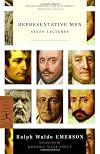
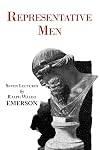
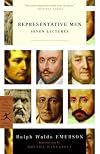
Representative Men
by Ralph Waldo Emerson 
On This Page
Description
Ralph Waldo Emerson was an American philosopher and poet, known for. A staunch advocate of individualism and clear-sighted critic of societal pressures, he led the early 19th century's Transcendentalist movement and greatly influenced the later New Thought movement. Representative Men contains the following seven lectures by Emerson:Uses of Great Men
Plato; or, the Philosopher
Swedenborg; or, the Mystic
Montaigne; or, the Skeptic
Shakspeare; or, the Poet
Napoleon; or, the Man of the World
show more Goethe; or, the Writer
. show less
Tags
Recommendations
























Member Reviews
Emerson is like Henry Adams--very confused most of the time and attempting to confuse his readers to make himself feel more comfortable. The grandiose style makes them look brilliant, unless you are brilliant and notice that it's a bunch of stupidity most of the time.
His essay on Montaigne, the Skeptic, is the classic here and is a welcome addition to any collection of secondary sources on the French essayist. He makes some valid points about Shakespeare, most of his essay about Plato is worthwhile.
That gets him four stars. But I'm subtracting one for his essay on Swedenborg, which is horrible. If I had balls, I'd subtract TWO stars for it. The problem is, if you haven't already read these authors, these essays make no sense; and even show more if you have, they add next to nothing to your knowledge of them. They don't help you make sense of them. They may even help you lose sense of them, if you're dumb enough to value Emerson over the authors themselves.
And who on Earth would put Plato, Swedenborg, Montaigne, Shakespeare, Goethe--and Napoleon--together? The categorization itself is the height of stupidity. And they're mostly in chronological order, but then he places Swedenborg before Montaigne rather than between Shakespeare and Napoleon, which makes no sense at all.
Most importantly, why in God's name would he give Swedenborg the longest essay and not any of the others?
Alas, because he is confused by the Swede and is using the press to try and sort his own thoughts out.
Oh, well. show less
His essay on Montaigne, the Skeptic, is the classic here and is a welcome addition to any collection of secondary sources on the French essayist. He makes some valid points about Shakespeare, most of his essay about Plato is worthwhile.
That gets him four stars. But I'm subtracting one for his essay on Swedenborg, which is horrible. If I had balls, I'd subtract TWO stars for it. The problem is, if you haven't already read these authors, these essays make no sense; and even show more if you have, they add next to nothing to your knowledge of them. They don't help you make sense of them. They may even help you lose sense of them, if you're dumb enough to value Emerson over the authors themselves.
And who on Earth would put Plato, Swedenborg, Montaigne, Shakespeare, Goethe--and Napoleon--together? The categorization itself is the height of stupidity. And they're mostly in chronological order, but then he places Swedenborg before Montaigne rather than between Shakespeare and Napoleon, which makes no sense at all.
Most importantly, why in God's name would he give Swedenborg the longest essay and not any of the others?
Alas, because he is confused by the Swede and is using the press to try and sort his own thoughts out.
Oh, well. show less
Good Card inside "Birthday Greetings Mina" MW stamp
HOMBRES REPRESENTATIVOS
«Hombres representativos» se publicó en 1850. En vida del autor llegaría a reeditarse en tres ocasiones (1857, 1876 y 1879), lo que indica la popularidad de un libro que había tenido su origen en una serie de conferencias pronunciadas durante los cinco años anteriores en Estados Unidos e Inglaterra. Emerson oponía la idea de los " grandes hombres " —Platón, el filósofo; Swedenborg, el místico; Montaigne, el escéptico; Shakespeare, el poeta; Napoleón, el hombre del mundo, y Goethe, el escritor— al " culto de los héroes " de Thomas Carlyle. Harold Bloom ha retomado la contraposición reelaborando el concepto de " Genio " , de clara inspiración romántica, pero los " grandes hombres " , de acuerdo show more con la escritura constitucional emersoniana, eran " representativos " . Tras las dos series de los «Ensayos» (1841-1844) y la publicación con su propio nombre de los escritos de juventud en 1849, «Hombres representativos» se sitúa en un momento crucial de la historia, tras las revoluciones europeas de 1848 —que Emerson presenció en París— y ante la década que terminaría en el acceso a la presidencia de Abraham Lincoln y el estallido de la Guerra de Secesión. show less
«Hombres representativos» se publicó en 1850. En vida del autor llegaría a reeditarse en tres ocasiones (1857, 1876 y 1879), lo que indica la popularidad de un libro que había tenido su origen en una serie de conferencias pronunciadas durante los cinco años anteriores en Estados Unidos e Inglaterra. Emerson oponía la idea de los " grandes hombres " —Platón, el filósofo; Swedenborg, el místico; Montaigne, el escéptico; Shakespeare, el poeta; Napoleón, el hombre del mundo, y Goethe, el escritor— al " culto de los héroes " de Thomas Carlyle. Harold Bloom ha retomado la contraposición reelaborando el concepto de " Genio " , de clara inspiración romántica, pero los " grandes hombres " , de acuerdo show more con la escritura constitucional emersoniana, eran " representativos " . Tras las dos series de los «Ensayos» (1841-1844) y la publicación con su propio nombre de los escritos de juventud en 1849, «Hombres representativos» se sitúa en un momento crucial de la historia, tras las revoluciones europeas de 1848 —que Emerson presenció en París— y ante la década que terminaría en el acceso a la presidencia de Abraham Lincoln y el estallido de la Guerra de Secesión. show less
Aug 4, 2024Spanish
Conferencias pronunciadas por Emerson y ensayos
Sep 6, 2020Spanish
Ratings
Members
- Recently Added By
Lists

Filosofía - Clásicos
217 works; 1 member

Harold Bloom - The Western Canon: C. The Democratic Age
336 works; 15 members

Trinity College Booklist (1951): Class Ten, English Literature
358 works; 5 members

Tom's Bookstore
346 works; 2 members

How to Read a Book's Recommended Reading List
309 works; 10 members

Recommended Reading : 600 Classics Reviewed, Editors of Salem Press, 2015
634 works; 6 members
Author Information

797+ Works 21,107 Members
Known primarily as the leader of the philosophical movement transcendentalism, which stresses the ties of humans to nature, Ralph Waldo Emerson, American poet and essayist, was born in Boston in 1803. From a long line of religious leaders, Emerson became the minister of the Second Church (Unitarian) in 1829. He left the church in 1832 because of show more profound differences in interpretation and doubts about church doctrine. He visited England and met with British writers and philosophers. It was during this first excursion abroad that Emerson formulated his ideas for Self-Reliance. He returned to the United States in 1833 and settled in Concord, Massachusetts. He began lecturing in Boston. His first book, Nature (1836), published anonymously, detailed his belief and has come to be regarded as his most significant original work on the essence of his philosophy of transcendentalism. The first volume of Essays (1841) contained some of Emerson's most popular works, including the renowned Self-Reliance. Emerson befriended and influenced a number of American authors including Henry David Thoreau. It was Emerson's practice of keeping a journal that inspired Thoreau to do the same and set the stage for Thoreau's experiences at Walden Pond. Emerson married twice (his first wife Ellen died in 1831 of tuberculosis) and had four children (two boys and two girls) with his second wife, Lydia. His first born, Waldo, died at age six. Emerson died in Concord on April 27, 1882 at the age of 78 due to pneumonia and is buried in Sleepy Hollow Cemetery in Concord, Massachusetts. (Bowker Author Biography) show less
Ralph Waldo Emerson has a Legacy Library. Legacy libraries are the personal libraries of famous readers, entered by LibraryThing members from the Legacy Libraries group.
Some Editions
Awards and Honors
Notable Lists
Series
Belongs to Publisher Series
Work Relationships
Common Knowledge
- Original title
- Representative Men: Seven Lectures
- Original publication date
- 1850
- Original language
- English
Classifications
Statistics
- Members
- 338
- Popularity
- 93,989
- Reviews
- 4
- Rating
- (3.67)
- Languages
- 5 — English, Estonian, Finnish, German, Spanish
- Media
- Paper, Ebook
- ISBNs
- 44
- ASINs
- 32