On This Page
Description
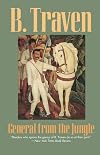
The sixth and last of the legendary Jungle Novels, and a masterpiece on guerrilla warfare. The book is filled with marvelously drawn characters, yet the true hero is the rebel army-illiterate, uneducated, and poor, but resourceful and dangerous.Tags
Recommendations


























Member Reviews
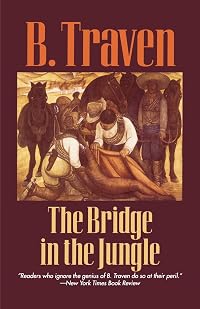
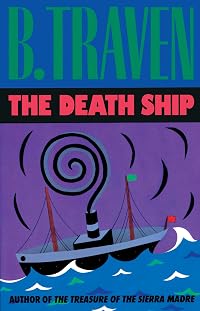
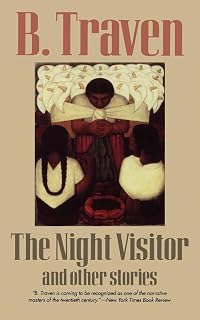
General From the Jungle -- note the lack of a definite article -- is the sixth and final book in B. Traven's Jungle series about how the Mexican Revolution began organically among the debt-enslaved Indians of the south. The editors of Time-Life Books, which published an edition of Traven's most famous novel, Treasure of the Sierra Madre, in 1963 (when Time and Life co-founder, editor-in-chief and publisher, Henry "Let's Christianize China!" Luce was still alive and kicking), labelled Traven's weltanschauüng, in the anonymous introduction to Treasure, as "slanted and narrow" (and further described it as "antibourgeois, anticlerical, antibureaucratic") and dismissed his subsequent work pretty much in toto as having embedded itself in the show more "quagmire of doctrinaire Communism." Upon the strength of the first book in the Jungle series, Government (1931), I was sure that this was merely Luce's allergic reaction to anything remotely smacking of socialism, let alone communism (it's rather difficult to take seriously the geo-political views of a man who openly admired Mussolini, thought that Hitler was something of a comic opera buffoon but that he otherwise had all the right ideas, and, oh yeah, thought that the United States should forcibly Christianize China); after having read the entire uneven Jungle series, I have to sadly conclude that the anonymous author of that preface was not entirely wrong.
Traven gives free reign in General to much windy bloviation on revolution, on a corrupt government that rules by dint of fear (and is in its turn ruled by fear: fear of dissent, fear of the people it dominates challenging its authority, fear of an educated citizenry, fear of impoverished and illiterate peasants and Indians, and, most especially, fear of its own lickspittle toadys and laughable excuses for an army and a police force, by which it rules), the necessity for driving it from power, and how the wholesale slaughter of any and all who stand in the revolution's way is more than necessary, it is just and good. What made Traven's jeremiads in some of the earlier books of the Jungle series (Government, March to the Montería and Trozas) and in Treasure of the Sierra Madre so palatable was the liberal dose of irony and cynicism with which he regarded everybody's viewpoint; the second book in the series, The Carreta ("The Ox-Cart;" 1931), fell off the biercian/menckenesque bandwagon into a shallow pool of sentimentalized, romantic twaddle about the "noble savage," but an experiment with "Zapatista noir" in the third book, March to the Montería (1933), and the promising return of the satirical sneer in the fourth book, Trozas (1936), were permanently abandoned by the fifth book, The Rebellion of the Hanged (1936), when the revolution -- finally -- arrives, in the last third of the book. While General From the Jungle -- the book is named for a rebellious sergeant who is simply called "General," owing to the fact that he is the fellow with far and away the most concrete military experience in this particular group of revolting mahogany plantation (montería) workers -- isn't quite as much of a bald-faced screed as Rebellion, it is still pretty frickin' dogmatic: if the rebels, no matter how uneducated, aren't up on their hind legs spouting slogans, they're uttering a string of foul Spanish curses; if the latter are translated at all, it's in a marvelously coy form, as in: "Que chinguen todas las madres, curse it" (p. 51).
General offers hints that Traven is under no illusion as to what a government may accomplish -- he swipes at Hitler (p. 101), the way in earlier books he took potshots at socialists in general and labor unions in particular -- and yet for all that he doesn't treat the rebels to the rough side of his tongue; his hectoring lectures would be far easier to take if he more clearly demonstrated that he was aware that the rebels were on morally dubious ground themselves, if he refused to absolve them of any and all responsibility for their actions. Granted that the Jungle series is essentially a series of polemics with fictional interludes with varying degrees of interest, and that plot is nearly as foreign to it as is character development, some readers may well be offended by Traven's treatment of women: if they are not noble Indians standing by their male relatives (or sweethearts) through thick and thin, they are carping, grasping hausfraus or drunken, bloody-minded whores. It's a man's man's man's world in Traven-land, and women shouldn't be too terribly surprised if they're seen, no matter what their character, as less useful livestock, to be pillaged, possessed, and massacred at will. (A smaller inconsistency is that a character introduced in The Carreta as "Andrés," and who appears in the subsequent three novels under that name, appears in General as "Andreu." One is tempted to chalk this up to the vagaries of a different translator.)
That Traven shelters the rebels from his irony and sarcasm undercuts the ending of General, where they come in for his patented "the gods laughed" punchline when they discover that Mexico's president Porfirio Díaz had already abdicated and fled to Europe before their back-country rebellion had even started; nonetheless, they're still left fat, dumb and happy in their little village that they built (Solipaz: "sun and peace"), simply because they are so inaccessible to the central authorities (not that there are any central authorities at this point, c. 1912-13...). It was a disappointment for me that the man who had so many interesting and profound things to say about government in the first book of the series (Government) fell back on a variation of the Russian proverb, "God bless the czar, and keep him from my doorstep" in the last book. This isn't anarchy; it's cocooning. show less
Traven gives free reign in General to much windy bloviation on revolution, on a corrupt government that rules by dint of fear (and is in its turn ruled by fear: fear of dissent, fear of the people it dominates challenging its authority, fear of an educated citizenry, fear of impoverished and illiterate peasants and Indians, and, most especially, fear of its own lickspittle toadys and laughable excuses for an army and a police force, by which it rules), the necessity for driving it from power, and how the wholesale slaughter of any and all who stand in the revolution's way is more than necessary, it is just and good. What made Traven's jeremiads in some of the earlier books of the Jungle series (Government, March to the Montería and Trozas) and in Treasure of the Sierra Madre so palatable was the liberal dose of irony and cynicism with which he regarded everybody's viewpoint; the second book in the series, The Carreta ("The Ox-Cart;" 1931), fell off the biercian/menckenesque bandwagon into a shallow pool of sentimentalized, romantic twaddle about the "noble savage," but an experiment with "Zapatista noir" in the third book, March to the Montería (1933), and the promising return of the satirical sneer in the fourth book, Trozas (1936), were permanently abandoned by the fifth book, The Rebellion of the Hanged (1936), when the revolution -- finally -- arrives, in the last third of the book. While General From the Jungle -- the book is named for a rebellious sergeant who is simply called "General," owing to the fact that he is the fellow with far and away the most concrete military experience in this particular group of revolting mahogany plantation (montería) workers -- isn't quite as much of a bald-faced screed as Rebellion, it is still pretty frickin' dogmatic: if the rebels, no matter how uneducated, aren't up on their hind legs spouting slogans, they're uttering a string of foul Spanish curses; if the latter are translated at all, it's in a marvelously coy form, as in: "Que chinguen todas las madres, curse it" (p. 51).
General offers hints that Traven is under no illusion as to what a government may accomplish -- he swipes at Hitler (p. 101), the way in earlier books he took potshots at socialists in general and labor unions in particular -- and yet for all that he doesn't treat the rebels to the rough side of his tongue; his hectoring lectures would be far easier to take if he more clearly demonstrated that he was aware that the rebels were on morally dubious ground themselves, if he refused to absolve them of any and all responsibility for their actions. Granted that the Jungle series is essentially a series of polemics with fictional interludes with varying degrees of interest, and that plot is nearly as foreign to it as is character development, some readers may well be offended by Traven's treatment of women: if they are not noble Indians standing by their male relatives (or sweethearts) through thick and thin, they are carping, grasping hausfraus or drunken, bloody-minded whores. It's a man's man's man's world in Traven-land, and women shouldn't be too terribly surprised if they're seen, no matter what their character, as less useful livestock, to be pillaged, possessed, and massacred at will. (A smaller inconsistency is that a character introduced in The Carreta as "Andrés," and who appears in the subsequent three novels under that name, appears in General as "Andreu." One is tempted to chalk this up to the vagaries of a different translator.)
That Traven shelters the rebels from his irony and sarcasm undercuts the ending of General, where they come in for his patented "the gods laughed" punchline when they discover that Mexico's president Porfirio Díaz had already abdicated and fled to Europe before their back-country rebellion had even started; nonetheless, they're still left fat, dumb and happy in their little village that they built (Solipaz: "sun and peace"), simply because they are so inaccessible to the central authorities (not that there are any central authorities at this point, c. 1912-13...). It was a disappointment for me that the man who had so many interesting and profound things to say about government in the first book of the series (Government) fell back on a variation of the Russian proverb, "God bless the czar, and keep him from my doorstep" in the last book. This isn't anarchy; it's cocooning. show less
Not as great a read as Rebellion of the Hanged or Treasure of the Sierra Madre but still good work from a master of proletarian lit. Traven took poor people and revolution seriously as protagonists and worthy subjects of fiction: what a gift.
Ratings
Members
- Recently Added By
Author Information

131+ Works 4,299 Members
Some Editions
Series


Belongs to Publisher Series
Common Knowledge
- Canonical title
- The General from the Jungle
- Original title
- Ein General kommt aus dem Dschungel
- Alternate titles*
- Een generaal uit de wildernis
- Original publication date
- 1940
- Important places*
- Mexico
- First words*
- 'Tierra y Libertad!' Mit diesem Kriegsruf marschierte ein Heer von Indianern aus dem Dschungel im Süden der Republik hinaus, die Diktatur zu stürzen und Land und Freiheit für sich zu erobern.
- Last words*
- (Click to show. Warning: May contain spoilers.)Und die Muchachos antworteten wie mit einer Stimme: "Tierra y Libertad!"
- Original language*
- Duits
*Some information comes from Common Knowledge in other languages. Click "Edit" for more information.
Classifications
Statistics
- Members
- 159
- Popularity
- 204,822
- Reviews
- 2
- Rating
- (3.97)
- Languages
- 5 — Dutch, English, French, German, Swedish
- Media
- Paper, Ebook
- ISBNs
- 14
- ASINs
- 3