On This Page
Description
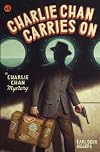
Inspector Duff works with the Scotland Yard. He is called in to investigate a mysterious murder that occurred at a famous local London hotel. A deaf old man, traveling on pleasure trip from America with his daughter and granddaughter, has been murdered during the night. At first, the investigation seems to be pointing towards Doctor Lofton, the leader of the tour group, as the culprit. Much to the chagrin of the other travelers in the group, they are all subjected to questioning and show more investigation by Inspector Duff. A few look good for the murder - an infamous Chicago gangster, an exceedingly nervous man, a few people in the wrong place at the time of the murder. Without evidence, Duff is unable to detain the group from continuing on with their tour. He finds himself wishing for the assistance of his old friend, Charlie Chan, who now resides in Hawaii. The plot thickens when one of the suspects is found dead at a further stop on the trip. Duff finds himself traveling to investigate the new murder, quickly followed by another murder. Duff plans to meet with the group again when they arrive in Hawaii, hoping to get the help of Charlie Chan, as well. When they arrive in Hawaii, Charlie Chan not only helps; he finds himself taking over the investigation. show lessTags
Recommendations











Member Reviews
This particular Charlie Chan mystery got a bit stuffy towards the end. Needed a bit of airing out. But still it made for a good extension of the series. And, yes, there is a payoff to reading these Charlie Chan novels in the order they were published. It's possible, of course, to read them independently in any way or fashion. But there is an extra appreciation that comes from reading them in order, especially with Charlie Chan Carries On.
Earl Derr Biggers made a bit of an experiment in this book, bringing back the Scotland Yard detective, Inspector Duff, who featured so prominently in Behind That Curtain and allowing him to dominate the first half of the mystery. Only in the second half does Charlie reassert himself. But when he does show more so, Chan arrives as a dominant force.
By this time, in the series, there is no doubt. Charlie will get his man. It's just a matter of time. Charlie has left the somewhat hesitant Sgt. Chan of the early novels far behind. And while the earlier formula for Biggers' fiction is still at work--with the romance between high society lawyer Mark Kennaway and a beautiful young woman--that formula has seen its proportions severely changed. Kenneway is at this point in the series mere window dressing, an ornament through which only a few threads of the plot are processed. Those earlier novels, where Charlie worked hand in hand or even depended upon the high society White aristocrat are long gone. In fact, at the end of Charlie Chan Carries On, the Boston Brahmin, Kenneway, has agreed to abdicate his throne, so to speak, unlike, say, John Quincy Winterslip of The House Without a Key, who proves himself worthy of his inheritance in that book.
Still, things don't really work out as well in this book as the dedicated reader of Chan fiction might hope. So interesting had Duff's tale become that you regret his disappearance into the background during the mystery's second half. And Charlie himself operates in a more methodical workmanlike manner than in the earlier novels. The conclusion, as a result, did just that, conclude. There is not nearly the excitement of the solving of the case as in the four earlier books.
One thing of note: the mention of the Great Depression for the first time makes its way into the pages of a Charlie Chan mystery. It hovers in the background of the novel. Perhaps that is why some of the twinkle and glitter of the earlier books seem to have disappeared. show less
Earl Derr Biggers made a bit of an experiment in this book, bringing back the Scotland Yard detective, Inspector Duff, who featured so prominently in Behind That Curtain and allowing him to dominate the first half of the mystery. Only in the second half does Charlie reassert himself. But when he does show more so, Chan arrives as a dominant force.
By this time, in the series, there is no doubt. Charlie will get his man. It's just a matter of time. Charlie has left the somewhat hesitant Sgt. Chan of the early novels far behind. And while the earlier formula for Biggers' fiction is still at work--with the romance between high society lawyer Mark Kennaway and a beautiful young woman--that formula has seen its proportions severely changed. Kenneway is at this point in the series mere window dressing, an ornament through which only a few threads of the plot are processed. Those earlier novels, where Charlie worked hand in hand or even depended upon the high society White aristocrat are long gone. In fact, at the end of Charlie Chan Carries On, the Boston Brahmin, Kenneway, has agreed to abdicate his throne, so to speak, unlike, say, John Quincy Winterslip of The House Without a Key, who proves himself worthy of his inheritance in that book.
Still, things don't really work out as well in this book as the dedicated reader of Chan fiction might hope. So interesting had Duff's tale become that you regret his disappearance into the background during the mystery's second half. And Charlie himself operates in a more methodical workmanlike manner than in the earlier novels. The conclusion, as a result, did just that, conclude. There is not nearly the excitement of the solving of the case as in the four earlier books.
One thing of note: the mention of the Great Depression for the first time makes its way into the pages of a Charlie Chan mystery. It hovers in the background of the novel. Perhaps that is why some of the twinkle and glitter of the earlier books seem to have disappeared. show less
Jók ezek a békebeli detektívtörténetek. Megnyugtatóak. Itt a rendőrség még nem a korrupció melegágya, hanem tiszteletre méltó testület*, a társadalom pedig nincs jóvátehetetlenül elcseszve, a gonosztett kivétel, nem szabály, a nyomozó pedig ezért van, hogy izolálja azt, kimetssze a testből, a beteg pedig gyógyultan távozik.
Az ügy maga izgalmas. Egy kupac amerikai elindul világkörüli útra, hogy aztán Londonban egyikük botor módon meggyilkolódjon. A szimpatikus és ügyes Duff felügyelő rámakkan a témára, követi is a turistacsoportot Franciaországig, ahol újabb gonosztettek követődnek el az ismeretlen tettes ismeretlenségéből kifolyólag. Szegény Duff tehetetlen (bár mint mondottam volt, show more szimpatikus és ügyes, mi több, még elszánt és mérges is), szerencsére ott van neki jó barája, Charlie Chan, aki épp Honoluluban unatkozik (de szívesen unatkoznék Honoluluban! mint egy kevésbé szőrös és kevésbé bajszos Thomas Magnum!). Aki a kötet felénél méltóztatik is megjelenni a cselekményben.
És akkor most ejtsünk pár szót Charlie Chanról. Mert ugye a detektívtörténetek alfája és omegája a zseniális detektív. Hogy mennyire zseniális, no és persze: hogy mennyire érdekes figura. No most ez a Charlie nekem nagyon bejött. Egy nagy kövér Buddha a szentem, ajkán mosoly, szemében évezredek bölcsessége, szájától pedig illatos szóvirágokkal teletűzdelt mondatgirlandok tekerednek elő. Lótuszülésben üldögél az információk, tények és félrevezetések zűrzavarában, és addig meditál (ommmmm, ommmmm), amíg ki nem bogozza a szálakat. És kibogozza! Azt a kutyafáját!
Kellemes történet, bájos humorral, mindazonáltal kellően komolyan vesz egy olyan megbocsáthatatlan dolgot, mint amilyen a gyilkosság. Chan figurája ugyan kissé sztereotip, cukin az - és legalább nem kung-fuzik.
* Konkrétan ebben a kötetben a hivatalos szerv még csak nem is jó szándékú debilek gyülekezőhelye, mint Holmes vagy Poirot esetében, hanem profi gárda. Legalábbis a Scottland Yard, mert a kontinentális kollégák kissé komolytalan bagázs. show less
Az ügy maga izgalmas. Egy kupac amerikai elindul világkörüli útra, hogy aztán Londonban egyikük botor módon meggyilkolódjon. A szimpatikus és ügyes Duff felügyelő rámakkan a témára, követi is a turistacsoportot Franciaországig, ahol újabb gonosztettek követődnek el az ismeretlen tettes ismeretlenségéből kifolyólag. Szegény Duff tehetetlen (bár mint mondottam volt, show more szimpatikus és ügyes, mi több, még elszánt és mérges is), szerencsére ott van neki jó barája, Charlie Chan, aki épp Honoluluban unatkozik (de szívesen unatkoznék Honoluluban! mint egy kevésbé szőrös és kevésbé bajszos Thomas Magnum!). Aki a kötet felénél méltóztatik is megjelenni a cselekményben.
És akkor most ejtsünk pár szót Charlie Chanról. Mert ugye a detektívtörténetek alfája és omegája a zseniális detektív. Hogy mennyire zseniális, no és persze: hogy mennyire érdekes figura. No most ez a Charlie nekem nagyon bejött. Egy nagy kövér Buddha a szentem, ajkán mosoly, szemében évezredek bölcsessége, szájától pedig illatos szóvirágokkal teletűzdelt mondatgirlandok tekerednek elő. Lótuszülésben üldögél az információk, tények és félrevezetések zűrzavarában, és addig meditál (ommmmm, ommmmm), amíg ki nem bogozza a szálakat. És kibogozza! Azt a kutyafáját!
Kellemes történet, bájos humorral, mindazonáltal kellően komolyan vesz egy olyan megbocsáthatatlan dolgot, mint amilyen a gyilkosság. Chan figurája ugyan kissé sztereotip, cukin az - és legalább nem kung-fuzik.
* Konkrétan ebben a kötetben a hivatalos szerv még csak nem is jó szándékú debilek gyülekezőhelye, mint Holmes vagy Poirot esetében, hanem profi gárda. Legalábbis a Scottland Yard, mert a kontinentális kollégák kissé komolytalan bagázs. show less
Charlie Chan Carries On is the penultimate Charlie Chan mystery written by Biggers. Chan does not even appear until the last quarter of the book. I found the build up to his appearance, even with homicides galore, to be boring. When the explanations finally come, it is oddly haphazard. As if Biggers did not know how to tie everything together and tacked on an ending inspired by one of the Sherlock Holmes mysteries. I honestly never know what to make of these Charlie Chan mysteries. On one hand, given that these were written between the 1920’s and 30’s, these are progressive. That is worth something as it is nearly miraculous to find a foreigner portrayed as an “intelligent” person during that period. On the other hand, it is show more racist in its portrayal of Chan as the stereotypical “oriental” man. This book doubles down on stereotypes as everyone from American gangsters to the French and Italian police come off as bad caricatures rather than fleshed out characters. Overall, this was an unsatisfying experience. show less
Not one of my favorites. Charlie Chan doesn't really even enter the picture until quite late in the book, but that's not the worst of it. I can usually suspend disbelief quite easily, but the fact that the first murder victim's daughter and granddaughter continued on their round the world journey for months after he died just seemed so weird! Where did they send the body? No funeral until a year later? These two women seemed like nice enough individuals, but they mourned for him for about five seconds and that was it. Harsh! I just couldn't get past that.
Although this is a Charlie Chan book, Charlie doesn't actually show up until the second-half of the book. Rather, Inspector Duff of Scotland Yard, whom we met in Charlie's third adventure in San Francisco, is the major protagonist in the first-half of the book.
A member of a party on a round-the-world tour is murdered in a London hotel. Inspector Duff investigates, but can't pin the crime on any of the members of the party and eventually has to let them continue on with the trip. Duff gets leave to join them and continues around the world with the tour through the middle east, India and south east Asia. He's still with them by the time they get to Hawaii, by which time several more murders have happened. While consulting with Charlie, show more Duff himself is shot (not fatally) and Charlie takes over the investigation. Charlie, of course, figures things out on the 6-day voyage from Hawaii to San Francisco.
I dunno, this was a decent enough book, but I don't think it was as good as the first few books in the series, nor the last one for that matter. show less
A member of a party on a round-the-world tour is murdered in a London hotel. Inspector Duff investigates, but can't pin the crime on any of the members of the party and eventually has to let them continue on with the trip. Duff gets leave to join them and continues around the world with the tour through the middle east, India and south east Asia. He's still with them by the time they get to Hawaii, by which time several more murders have happened. While consulting with Charlie, show more Duff himself is shot (not fatally) and Charlie takes over the investigation. Charlie, of course, figures things out on the 6-day voyage from Hawaii to San Francisco.
I dunno, this was a decent enough book, but I don't think it was as good as the first few books in the series, nor the last one for that matter. show less
It's chapter 13, nearly half way through the book, before Charlie puts in an appearance, but this is one of the best of the Charlie Chan mysteries so far.
This story is set during a world tour with crimes in London, the Riviera, Calcutta, San Remo, and Yokohama, culminating with the murder of Inspector Duff of Scotland Yard in Chan's office in Hawaii. I prefer Chan cases set entirely in Hawaii, but at least the second half (roughly) of this one is set there. This is the second time Chan completes an investigation for a murdered Scotland Yard detective, the first being Behind That Curtain.
Members
- Recently Added By
Lists

Global Mysteries
90 works; 6 members

Books Read in 2019
4,052 works; 108 members
Author Information

68+ Works 2,410 Members
Earl Derr Biggers was born in 1884 in Warren, Ohio. He graduated from Harvard University in 1907 with a Bachelor of Arts degree. After college, Biggers went to work at The Boston Traveler, where he wrote a humorous column, and then reviews, until 1911. By that time he had finished his first novel, "Seven Keys To Baldpate," migrated to New York show more with his first novel and also his first comedy, "If You're Only Human" and began writing plays. Biggers wrote magazine articles, stories, novels and plays, including a war play, "Inside The Lines," which ran 500 nights in London in 1915 and 1916. He published two more novels during the 1910s, Love Insurance in 1914 and The Agony Column in 1916, but his main activity was focused on humor writing, particularly in magazines and short stories. In 1919, Biggers decided to quit playwriting and go to California to write for motion pictures. His reputation spread among the public with his most famous creation, Charlie Chan. He developed the character of Charlie Chan for his novel "The House Without A Key" in 1925. He wrote six Charlie Chan novels, all moderately popular. All were adapted to the cinema, except for "Keeper Of The Keys". The Charlie Chan movies were one of the most successful screen series in history, with over 40 movies based on the character. There were also numerous Chan radio adaptations and comic strips, as well as attempts to bring the character to television. Earl Biggers died in Pasadena, California, in April of 1933 at the age of 48, from a heart attack. (Bowker Author Biography) show less
Awards and Honors
Notable Lists
Series

Belongs to Publisher Series
Work Relationships
Is contained in
Has the adaptation
Common Knowledge
- Canonical title
- Charlie Chan Carries On
- Original title
- Charlie Chan Carries On
- Original publication date
- 1930
- People/Characters
- Charlie Chan; Inspector Duff
- Important places
- Honolulu, O'ahu, Hawai'i, USA; Hawai'i, USA
- Related movies
- Eran trece (1931 | IMDb)
- First words
- Chief Inspector Duff, of Scotland Yard, was walking down Piccadilly in the rain.
- Last words
- (Click to show. Warning: May contain spoilers.)He shook hands with Kennaway, picked up his bag, and disappeared quickly around the corner.
Classifications
Statistics
- Members
- 211
- Popularity
- 154,777
- Reviews
- 8
- Rating
- (3.69)
- Languages
- 9 — Czech, Dutch, English, Finnish, French, German, Hungarian, Italian, Swedish
- Media
- Paper, Audiobook, Ebook
- ISBNs
- 23
- ASINs
- 19