On This Page
Description
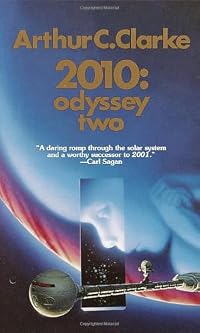
The celebrated author continues his Space Odyssey with this Hugo Award winner. In 1968, Arthur C. Clarke's bestselling 2001: A Space Odyssey captivated the world and was adapted into the classic film by Stanley Kubrick. Fourteen years later, fans and critics were thrilled by the release of 2010: Odyssey Two. Nine years after the ill-fated Discovery One mission to Jupiter, a joint Soviet-American crew travels to the planet to investigate the mysterious monolith orbiting the planet, the cause show more of the earlier mission's failure-and what became of astronaut David Bowman. The crew includes project expert Heywood Floyd, and Dr. Chandra, the creator of HAL 9000. What they discover is an unsettling alien conspiracy tampering with the evolution of life on Jupiter's moons as well as that of humanity itself. Meanwhile, the being that was once Dave Bowman-the only human to unlock the mystery of the monolith-streaks toward Earth on a vital mission of its own . . . show lessTags
Recommendations





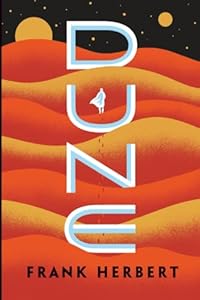
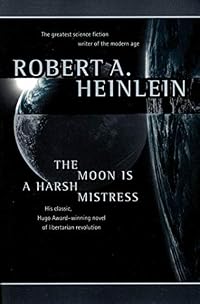
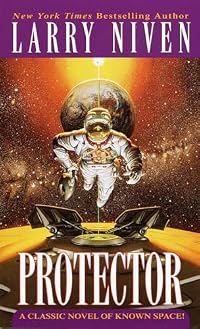
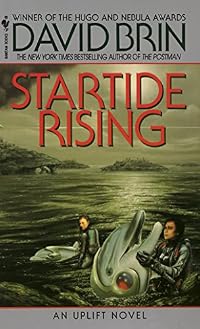



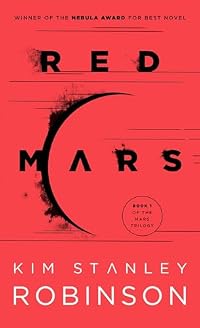

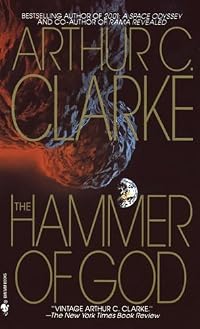
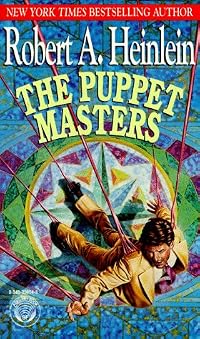
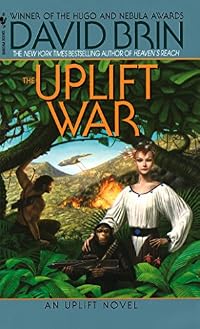


Member Recommendations
Member Reviews
2010, Arthur C. Clarke's sequel to 2001: A Space Odyssey, is a difficult book to appraise. It is both lesser and greater than its more famous predecessor, which is perhaps the most iconic and influential story in all of science fiction. (And not only science fiction – Apollo astronauts have related their itch to playfully report black monoliths on the Moon, anecdotes which must have felt like glowing manna to Clarke.) At times, it seems like attempts to penetrate 2010 and weigh it in the balance are almost as futile as those of the humans in the book, when trying to assess the enigmatic Monoliths themselves.
The lesser parts of the story are, thankfully, at the start, after which the story improves. (Interestingly, Clarke wrote the show more first part of the story on a typewriter before turning to a new Eighties technology called a computer…) Some of the exposition is clumsy in the opening act, and there's a rehash of the events of 2001 – Clarke, peculiarly, decides to follow the plot of the Kubrick film as canon rather than his own novel. The characters are not the book's greatest strength; the same was said of 2001, and 2010 is an improvement in this regard, but it's a great shame that HAL, one of the great villains of book and screen (precisely because he is rational, competent and relatable), is rather neutered here. 2010 is overall much less iconic than its storied predecessor; rather less of an event to read.
But this is where the Monolith-like enigma of the story begins to come to the fore for any reviewer. The differences to 2001, both book and film, actually work to 2010's advantage. They allow the story to step out of that over-imposing shadow of 2001 and be judged on its own merits. This can be an uncanny feeling for the reader, with 2010 less a child of 2001 than a sort of familiar cousin, a black sheep of the family who still retains the characteristic physical features of his genetic line. Perhaps that is where the oddity of the appraisal can be sourced; without Kubrick's visuals or the sound of 'Also Sprach Zarathustra', 2010 can feel oddly weighted, even though, if you think about it, this is only its more natural, unfettered weight.
Elsewhere, the story is resolutely Clarke: 2010 is particularly great at communicating concepts and weaving scientific realities into the narrative. Clarke seizes the opportunity to relate the then-current discoveries of the Voyager space probes with gusto, and his ability to dramatize that Voyager-induced information about Jupiter and its moons is a key part of his enduring influence. Few people, relatively speaking, would have read about what Voyager was observing on Europa, but many would have had their understanding of Europa informed by the popular fiction of 2010.
But the story is more than mere influence. It's a tight narrative on display here; the plot is quick and lean, which covers up some of the deficiencies in dialogue and characterization, and it is never boring. The dramatic moments of the story might not be on par with the best in 2001 (Daisy, Daisy, give me your answer do…), but some of them still generate a thrill. Providing closure for Bowman's relatives shows that Clarke had a heart, for all the conventional wisdom that he was an ideas man, and the story's final act of destruction, rebirth and the interplay of hope and foreboding inherent in civilization is science fiction at its regal best. Even though the book follows the film's canon, Kubrick and Strauss fade in the reader's memory here. 2010 is impressive not for the extent it successfully follows 2001, but in how much it stands apart. show less
The lesser parts of the story are, thankfully, at the start, after which the story improves. (Interestingly, Clarke wrote the show more first part of the story on a typewriter before turning to a new Eighties technology called a computer…) Some of the exposition is clumsy in the opening act, and there's a rehash of the events of 2001 – Clarke, peculiarly, decides to follow the plot of the Kubrick film as canon rather than his own novel. The characters are not the book's greatest strength; the same was said of 2001, and 2010 is an improvement in this regard, but it's a great shame that HAL, one of the great villains of book and screen (precisely because he is rational, competent and relatable), is rather neutered here. 2010 is overall much less iconic than its storied predecessor; rather less of an event to read.
But this is where the Monolith-like enigma of the story begins to come to the fore for any reviewer. The differences to 2001, both book and film, actually work to 2010's advantage. They allow the story to step out of that over-imposing shadow of 2001 and be judged on its own merits. This can be an uncanny feeling for the reader, with 2010 less a child of 2001 than a sort of familiar cousin, a black sheep of the family who still retains the characteristic physical features of his genetic line. Perhaps that is where the oddity of the appraisal can be sourced; without Kubrick's visuals or the sound of 'Also Sprach Zarathustra', 2010 can feel oddly weighted, even though, if you think about it, this is only its more natural, unfettered weight.
Elsewhere, the story is resolutely Clarke: 2010 is particularly great at communicating concepts and weaving scientific realities into the narrative. Clarke seizes the opportunity to relate the then-current discoveries of the Voyager space probes with gusto, and his ability to dramatize that Voyager-induced information about Jupiter and its moons is a key part of his enduring influence. Few people, relatively speaking, would have read about what Voyager was observing on Europa, but many would have had their understanding of Europa informed by the popular fiction of 2010.
But the story is more than mere influence. It's a tight narrative on display here; the plot is quick and lean, which covers up some of the deficiencies in dialogue and characterization, and it is never boring. The dramatic moments of the story might not be on par with the best in 2001 (Daisy, Daisy, give me your answer do…), but some of them still generate a thrill. Providing closure for Bowman's relatives shows that Clarke had a heart, for all the conventional wisdom that he was an ideas man, and the story's final act of destruction, rebirth and the interplay of hope and foreboding inherent in civilization is science fiction at its regal best. Even though the book follows the film's canon, Kubrick and Strauss fade in the reader's memory here. 2010 is impressive not for the extent it successfully follows 2001, but in how much it stands apart. show less
Arthur C. Clarke's "Odyssey sequence" straddles strangely the media of cinema features and text novels. 2001: A Space Odyssey was plotted by the author in collaboration with filmmaker Stanley Kubrick and then written in dialogue with the production of the movie. The mutually-informing parallel products were not identical; a few significant differences separated their plots. Clarke's book 2010: Odyssey Two is a sequel to the 2001 movie. In every case where narrative continuity forces him to choose, he follows the film. No doubt he was motivated by the hope (fulfilled in 1984) that 2010 would also be a movie, and he wanted to make the book digestible into a screenplay without extra retconning.
In fairness, it's likely that many more people show more saw the 2001 movie than read the novel. So the choice made sense for their sake as potential 2010 readers also. Still, it creates some strangeness for a 21st-century reader now approaching the books as a series.
After reading 2001 and detecting an esoteric pattern in its structure, I wondered if there would be similar references and effects in the next book. I believe there are. The most conspicuous of these is the title shared by the final section and its last chapter: "Lucifer Rising." While it seems unlikely that Clarke took this title from the 1972 avant-garde film by Kenneth Anger, they may have had some occult inspiration in common. Another echo of magick was in the title of the second section "Tsien" (the name of the Chinese spaceship in the story) after the onetime GALCIT rocketry colleague of Jack Parsons in Pasadena.
The central character of 2010 is Heywood Floyd, the protagonist of the early lunar "TMA-1" section of 2001. Understood via a Rosicrucian-Thelemite template, Floyd is an astronaut-initiate who becomes an adept by means of his 2010 adventure to Jupiter, in a mission to recover the lost Discovery and to advance human knowledge regarding the great black monolith at the Lagrange-1 point in the Jupiter-Io system. The Star Child who had been Dave Bowman serves as a magus of the ineffable gods, giving a Word to humanity, who struggle to comprehend it.
Floyd's 2010 expedition is a joint USSR-USA undertaking, which had become historically impossible before the end of the 20th century. But Clarke could duck any plot adjustments for those political eventualities in the next book 2061: Odyssey Three, which he managed to write a few years prior to the end of the Soviet Union. Of greater concern to Clarke was accounting for scientific developments, especially the 1979 disclosures from the probe Voyager.
Although the pacing and voice of 2010 are very similar to those of 2001, I thought the effect of the second book was much different than the first. Bowman's ascension had been awfully lonely. The crew of the Leontov, by contrast, produce two marriages, and they witness the appearance of a new "companion" on an astronomical scale, and even the solitary Star Child redeems an old friend in 2010.
Although I know that the set-up in the first two books differs enough from the reality of our 21st century that 2061 will tell an impossible tale, I am looking forward to the first book of the sequence that we haven't already caught up with on the calendar. show less
In fairness, it's likely that many more people show more saw the 2001 movie than read the novel. So the choice made sense for their sake as potential 2010 readers also. Still, it creates some strangeness for a 21st-century reader now approaching the books as a series.
After reading 2001 and detecting an esoteric pattern in its structure, I wondered if there would be similar references and effects in the next book. I believe there are. The most conspicuous of these is the title shared by the final section and its last chapter: "Lucifer Rising." While it seems unlikely that Clarke took this title from the 1972 avant-garde film by Kenneth Anger, they may have had some occult inspiration in common. Another echo of magick was in the title of the second section "Tsien" (the name of the Chinese spaceship in the story) after the onetime GALCIT rocketry colleague of Jack Parsons in Pasadena.
The central character of 2010 is Heywood Floyd, the protagonist of the early lunar "TMA-1" section of 2001. Understood via a Rosicrucian-Thelemite template, Floyd is an astronaut-initiate who becomes an adept by means of his 2010 adventure to Jupiter, in a mission to recover the lost Discovery and to advance human knowledge regarding the great black monolith at the Lagrange-1 point in the Jupiter-Io system. The Star Child who had been Dave Bowman serves as a magus of the ineffable gods, giving a Word to humanity, who struggle to comprehend it.
Floyd's 2010 expedition is a joint USSR-USA undertaking, which had become historically impossible before the end of the 20th century. But Clarke could duck any plot adjustments for those political eventualities in the next book 2061: Odyssey Three, which he managed to write a few years prior to the end of the Soviet Union. Of greater concern to Clarke was accounting for scientific developments, especially the 1979 disclosures from the probe Voyager.
Although the pacing and voice of 2010 are very similar to those of 2001, I thought the effect of the second book was much different than the first. Bowman's ascension had been awfully lonely. The crew of the Leontov, by contrast, produce two marriages, and they witness the appearance of a new "companion" on an astronomical scale, and even the solitary Star Child redeems an old friend in 2010.
Although I know that the set-up in the first two books differs enough from the reality of our 21st century that 2061 will tell an impossible tale, I am looking forward to the first book of the sequence that we haven't already caught up with on the calendar. show less
It was almost impossible for Arthur Clarke to follow 2001. Anything was going to be a disappointment to some. But he had invented something great -- the black monolith.
2010 is good. It does begin a kind of "technolgical-ization" of the monolith which I have to admit bothers me a little bit. The monolith to me was the unknowable. Something unmeasurably beyond our ken. It's an interesting struggle between the compulsion to explain and the original idea of the inscrutable monolith. If he continued to write about it, he was going to have to reveal something about it.
Here Clarke doesn't go too far. The monolith clearly has an intention behind it, and it is described as a kind of "swiss army knife" of incomprehensibly advanced technology. As show more that intention is revealed here, its creators take on almost godlike roles. Clarke had touched on the relationship between religion and technology in Childhood's End, and I think he (rightly) never resolved the tension.
All that said, this is a fun read, as are all the books in the 2001 series. It's rare that someone invents a concept so compelling and fertile as the black monolith, and I would read anything Clarke wrote to develop it. show less
2010 is good. It does begin a kind of "technolgical-ization" of the monolith which I have to admit bothers me a little bit. The monolith to me was the unknowable. Something unmeasurably beyond our ken. It's an interesting struggle between the compulsion to explain and the original idea of the inscrutable monolith. If he continued to write about it, he was going to have to reveal something about it.
Here Clarke doesn't go too far. The monolith clearly has an intention behind it, and it is described as a kind of "swiss army knife" of incomprehensibly advanced technology. As show more that intention is revealed here, its creators take on almost godlike roles. Clarke had touched on the relationship between religion and technology in Childhood's End, and I think he (rightly) never resolved the tension.
All that said, this is a fun read, as are all the books in the 2001 series. It's rare that someone invents a concept so compelling and fertile as the black monolith, and I would read anything Clarke wrote to develop it. show less
This one is definitely less polished and sharp than the first one. It seems to show its age a bit more, too, particularly with character attitudes. There was also a note of condescension, I think. Not sure if that was just because one of the main characters were just kind of a dick or if it was from the overall slightly misogynist and outdated views of the author (but it was written a long time ago, so I'm just gonna gloss over it.) Speaking of characters, there were a bit too many - I kept getting them confused. Also, I was constantly annoyed that the book follows MOVIE cannon, not the first book. WTF. No seriously. WTF. Who does that? But I'm still gonna read the next one.
I liked this book so much more than the first one. It's one of those that reminded me why sci-fi is so much fun to read.
The first book seems more like a vague introduction and scene-setting device, compared to this one. Here is where things actually HAPPEN, and get explained such as why did HAL kill its crew in the first book .
OK, so I can't say I necessarily understand the deal with the monoliths, but there are still two more books left in the series. Plus, the ending definitely left us a very interesting theory to ponder.
============================================
review of book 1: 2001: A Space Odyssey
The first book seems more like a vague introduction and scene-setting device, compared to this one. Here is where things actually HAPPEN, and get explained
OK, so I can't say I necessarily understand the deal with the monoliths, but there are still two more books left in the series. Plus, the ending definitely left us a very interesting theory to ponder.
============================================
review of book 1: 2001: A Space Odyssey
...And because in all the galaxy, they had found nothing more precious than Mind, they encouraged its dawning everywhere. They became farmers in the fields of stars; they sowed, and sometimes they reaped.
And sometimes, dispassionately, they had to weed.
Heywood Floyd and a crew of Russian astronauts are on a mission to the outer reaches of our solar system to retrieve a dilapidated spaceship and to salvage whatever information that was left behind by the long dead crew of the Discovery. Furthermore, they are to monitor and study the twin monolith, dubbed Big Brother that has been circulating Jupiter since the discovery of an exact replica was unearthed on Earth's moon. The mission should be a routine event with their objectives clearly show more defined and outlined by mission control on earth but everything begins to unravel when Floyd receives an ominous warning from a crew member on the Discovery, who should by all accounts be dead. With an unknown threat forcing the team to abort the mission early, the crew of the Russian spaceship Leonov unexpectedly become front row spectators in the cataclysmic destruction of Jupiter and the creation of a new star within our own solar system. The question of whether we are truly alone in the universe is answered; the answer a loud and resounding no.
The second instalment of Odyssey series is just as good, if not better than 2001: A Space Odyssey. Questions and mysteries left unanswered in the first book are explained in 2010, but like any compelling story, events that transpire in the book lead us to ask even more questions. The subtle presence of an intelligence higher than our own creates an enjoyable tension that undoubtedly will leave me searching for the explanations in the subsequent followup books in the series. I have a sense, the journey is just beginning and I can't wait to see how Clarke will resolve the age old question - are we alone, and if we are not, who is out there and what do they want with us? show less
And sometimes, dispassionately, they had to weed.
Heywood Floyd and a crew of Russian astronauts are on a mission to the outer reaches of our solar system to retrieve a dilapidated spaceship and to salvage whatever information that was left behind by the long dead crew of the Discovery. Furthermore, they are to monitor and study the twin monolith, dubbed Big Brother that has been circulating Jupiter since the discovery of an exact replica was unearthed on Earth's moon. The mission should be a routine event with their objectives clearly show more defined and outlined by mission control on earth but everything begins to unravel when Floyd receives an ominous warning from a crew member on the Discovery, who should by all accounts be dead. With an unknown threat forcing the team to abort the mission early, the crew of the Russian spaceship Leonov unexpectedly become front row spectators in the cataclysmic destruction of Jupiter and the creation of a new star within our own solar system. The question of whether we are truly alone in the universe is answered; the answer a loud and resounding no.
The second instalment of Odyssey series is just as good, if not better than 2001: A Space Odyssey. Questions and mysteries left unanswered in the first book are explained in 2010, but like any compelling story, events that transpire in the book lead us to ask even more questions. The subtle presence of an intelligence higher than our own creates an enjoyable tension that undoubtedly will leave me searching for the explanations in the subsequent followup books in the series. I have a sense, the journey is just beginning and I can't wait to see how Clarke will resolve the age old question - are we alone, and if we are not, who is out there and what do they want with us? show less
The Universe isn't just stranger than you ever imagined. The Universe is stranger than you CAN imagine.
This novel is a slow-build, a slowly revealed unraveling of cosmic triggers.
Clarke writes a narrative that doesn't just entertain--it informs, it elucidates and it expands the mind beyond its narrowly defined corridors. And that's the point.
This novel is a slow-build, a slowly revealed unraveling of cosmic triggers.
Clarke writes a narrative that doesn't just entertain--it informs, it elucidates and it expands the mind beyond its narrowly defined corridors. And that's the point.
Members
- Recently Added By
Published Reviews
ThingScore 50
MEMO TO: Sr. Jorge Luiz Calife of Rio de Janeiro RE: Advisability of sequel to ''2001: A Space Odyssey.'' According to a note at the end of Arthur C. Clarke's new novel, you are partly responsible for persuading the author that a sequel to ''2001'' would be a good idea, long after Mr. Clarke had concluded that such a sequel would be ''clearly impossible.'' I don't know exactly what you said to show more him in your letter, Sr. Calife, but I wish you hadn't. show less
added by stephmo
Clarke deftly blends discovery, philosophy and a newly acquired sense of play that manifests itself in references to films like Alien and Star Wars, and snippets from recent headlines. If, by the end, he leaves readers as bewildered as his astronauts, they can at least claim to have been better entertained.
added by Shortride
Lists

Best Science Fiction Novels
816 works; 430 members

The Novels of Arthur C. Clarke
21 works; 2 members

Моноліт
4 works; 1 member

Speculative Fiction to Read
706 works; 32 members

Unread books
1,063 works; 83 members

Solar System
12 works; 3 members

Books Read in 2017
4,249 works; 129 members

Books Read in 2023
5,547 works; 145 members

Books Read in 2024
4,623 works; 126 members

TBR - Older Books
92 works; 1 member

Books Read in 2025
4,090 works; 97 members
Talk Discussions
Past Discussions
Found: Arthur C Clarke quote - which book? in Name that Book (July 2021)
Author Information

862+ Works 130,034 Members
Arthur C. Clarke was born in Minehead, Somerset, England, on December 16, 1917. During World War II, he served as a radar specialist in the RAF. His first published piece of fiction was Rescue Party and appeared in Astounding Science, May 1946. He graduated from King's College in London with honors in physics and mathematics, and worked in show more scientific research before turning his attention to writing fiction. His first book, Prelude to Space, was published in 1951. He is best known for his book 2001: A Space Odyssey, which was later turned into a highly successful and controversial film under the direction of Stanley Kubrick. His other works include Childhood's End, Rendezvous with Rama, The Garden of Rama, The Snows of Olympus, 2010: A Space Odyssey II, 2062: Odyssey III, and 3001: The Final Odyssey. During his lifetime, he received at least three Hugo Awards and two Nebula Awards. He died of heart failure on March 19, 2008 at the age of 90. (Bowker Author Biography) show less
Some Editions
Awards and Honors
Awards
Distinctions
Series

Belongs to Publisher Series
Work Relationships
Is contained in
Has the adaptation
Common Knowledge
- Canonical title*
- 2010 : Odyssée deux
- Original title
- 2010: Odyssey Two
- Alternate titles*
- 2010 : Odyssee 2
- Original publication date
- 1982-10
- People/Characters
- Heywood Floyd (Dr.); H.A.L.; Sivasubramanian Chandrasegarampillai (Dr. Chandra); David Bowman; Andrei Dmitrievich Sakharov (mentioned); Alexey Leonov (mentioned) (show all 17); Tsien Hsue-shen (mentioned); Tanya Orlova; Max Brailovsky; Nikolai Ternovsky; Alexander Kovalev; Katerina Rudenko; Walter Curnow; Vasili Orlov; Caroline Floyd; Christopher Floyd; Zenia Marchenko
- Important places
- Jupiter; Europa, a moon of Jupiter; Cosmonaut Alexei Leonov (ship); Discovery One; USSR; Discovery Two (show all 16); China; Earth; Tsien; Great Black Spot; Lucifer; Sol; Farside, Europa; Io; Callisto; Ganymede
- Related movies
- 2010: The Year We Make Contact (1984 | IMDb)
- Dedication
- Dedicated, with respectful admiration, to two great Russians, both depicted herein:
General Alexei Leonov - Cosmonaut, Hero of the Soviet Union, Artist
and
Academician Andrei Sakharov - Scientist, Nobel Laureate,... (show all) Humanist. - First words
- Even in this metric age, it was still the thousand-foot telescope, not the three-hundred-meter one.
- Quotations
- ALL THESE WORLDS
ARE YOURS EXCEPT
EUROPA
ATTEMPT NO
LANDING THERE - Last words
- (Click to show. Warning: May contain spoilers.)Which it will be, not even the Gods know - yet.
- Blurbers
- Sagan, Carl
- Original language
- English
*Some information comes from Common Knowledge in other languages. Click "Edit" for more information.
Classifications
Statistics
- Members
- 7,859
- Popularity
- 1,431
- Reviews
- 89
- Rating
- (3.64)
- Languages
- 18 — Czech, Danish, Dutch, English, Estonian, Finnish, French, German, Hebrew, Hungarian, Italian, Japanese, Polish, Portuguese, Romanian, Spanish, Swedish, Turkish
- Media
- Paper, Audiobook, Ebook
- ISBNs
- 79
- ASINs
- 43