On This Page
Description
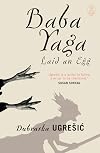
"Baba Yaga Laid an Egg takes a traditional myth and spins it afresh. The result is an extraordinary meditation on femininity, aging, identity, secrets and love." -- taken from jacket front flap.Tags
Recommendations

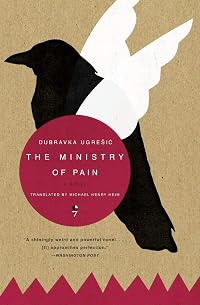
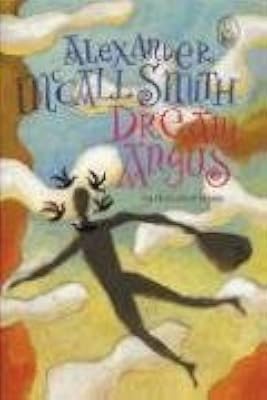
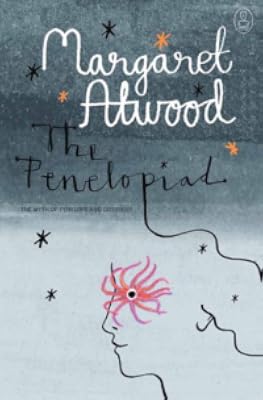
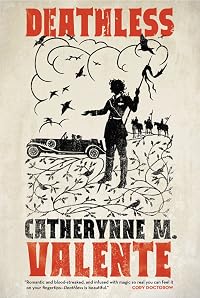

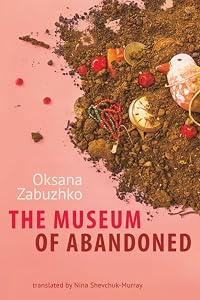
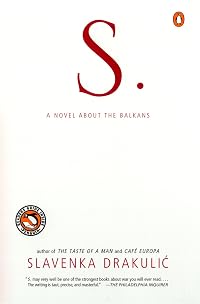
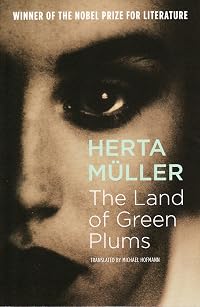
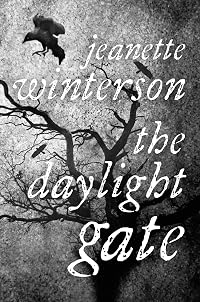

Member Recommendations
Member Reviews
‘’Sweet little old ladies. At first you don’t see them. And then, there they are, on the tram, at the post office, in the shop, at the doctor’s surgery, on the street, there is one, there is another, there is a fourth over there, a fifth, a sixth, how could there be so many of them all at once?’’
Having read Fox, which proved to be a religiously profound experience, I couldn't wait to get my hands on another Ugrešić book. This one tempted me with its title and folklore and whatnot and I was certain I would adore it. But. My hopes were crushed under the boot of inexplicably offensive writing and a few of the most trashy chapters I’ve ever read.
Baba Yaga Laid An Egg can be seen as an interesting combination of show more autobiography, Fiction, and pseudo-folklore research. Part One is the reason I finished the book and it is a great token of Ugrešić’s writing shining in all its glory. A mother is fighting against Alzheimer’s and a daughter is giving herself to helping and protecting her. These chapters are a hymn to mother-daughter relationship and love, and the strength of the human soul that refuses to let go. There are instances that seem funny but deep down they are actually bittersweet. Ugrešić takes a daily act, like setting the table or cooking and graces it with literary value, immediacy and beauty. The trip in Bulgaria provides the chance for some of the most lyrical paragraphs.
‘’A powerful storm blew in. I watched through the window as the wind snapped the tree branches. While plastic bags flitted through the air like little phantoms. The rain whipped the windowpane so powerfully it seemed likely to smash the glass.’’
Part Two is taking place in a hotel spa and three elderly women are our protagonists, along with three men who are given secondary parts. Thank God. Here, the theme of growing old and retaining your dignity in addition to the ways old age is perceived by society is in full swing and masterfully depicted. There is an elegant, sassy kind of humor, there are references to Art and to Pushkin’s poem Ruslan and Lyudmila and the narration is properly darkened by a very pragmatic view on the conflicts during the 90s and a heartbreaking narration of the nightmare of the persecution and, eventually, the genocide against Serbs, Jews and Roma by the Ustaše monsters during the years of the Nazi puppet NDH between 1941 and 1945.
And in Part Two we find Disaster No.1…
His name? Mevlo or something like that. Who cares? Now, this was the epitome of disgusting. A misogynist, a brute, the personification of filth. I skipped every page that ''contained'' him and his insufferable musings. Too bad the bomb didn't find its target. Actually, I pity the bomb that had to fall on such a trashy character. One star flew away with quality...
And now, Disaster No2...
Part Three. I suppose it aimed to demonstrate and explain the cultural treasure of Slavic Folklore in relation to witches but many parts were extremely problematic. Scratch that, it's too gentle. In fact, it proved to be a nightmare. The narrator is supposed to be a man, so this may explain the fixation an explaining 70% of the myths through sex and penis references but ut was rude and, in a few cases, extremely inaccurate. The interesting information was very few and far between.
There was an interesting fable from Crna Gora (Montenegro) about an old witch that gave shelter to Jesus, information on the origins of the word ‘’Baba’’ and the Baba Yaga figure. The reader learns of the Baba Korizma - the Lent- that walks with seven sticks, throwing away a stick for every week of fasting. This is a Serbian tradition and we also have a similar custom in Greece. Snowy days in March are called ‘’baba’s days’’, and her belt is a metaphor for the rainbow. There is much information on similar witches in World Mythology e.g. The Befana, widely loved in Italy, Baubo, the old woman who made the goddess Demeter laugh, and a mention of The Feather of Finist the Grey Falcon which is one my favourite Russian tales.
And then…?
References to potential symptoms of autism in relation to the myth of Baba Yaga is ridiculous, to say the least. Blood transfusion is compared to the belief that witches drink blood. Every symbolism is seen through castration fantasies and pseudo-Freudian syndromes, which is wrong. Plain and simple and outrageously so. The traditional Chinese belief of the footsteps of the gods on rocks has nothing to do with a ‘’ missing penis’’ (my friend who lives in China would like a word with the supposed ‘’writer’’ of the section…) and by that point, I was positively and irreversibly disgusted. The heroes of the fairy tales became…’’ guys’’. Yes, it’s not a football team.
The image of the Virgin Mary is compared to Paris Hilton.
I am speechless.
How could this come from Ugrešić’ pen? And yes, dear writer, you’re an atheist. We get that. I don’t care. I respect your decision. But insulting the readers who believe is WRONG. I will stress this every time I find a book that offends me as a person. I pray to a male God who taught love and compassion. Forgive me for not sacrificing newborns to a dark goddess.
If the writer had chosen to expand Part One this would have been a beloved book of mine. Even if the book had ended with Part Two, I would have thought of it as an absolutely satisfying reading experience. But Part Three was a catastrophe. An offensive, absurd array of disjointed drivel. I cannot believe I am giving this rating to a book by Ugrešić but in truth, this was a one-star for me. So two stars seem generous…
My reviews can also be found on https://theopinionatedreaderblog.wordpress.com/ show less
Having read Fox, which proved to be a religiously profound experience, I couldn't wait to get my hands on another Ugrešić book. This one tempted me with its title and folklore and whatnot and I was certain I would adore it. But. My hopes were crushed under the boot of inexplicably offensive writing and a few of the most trashy chapters I’ve ever read.
Baba Yaga Laid An Egg can be seen as an interesting combination of show more autobiography, Fiction, and pseudo-folklore research. Part One is the reason I finished the book and it is a great token of Ugrešić’s writing shining in all its glory. A mother is fighting against Alzheimer’s and a daughter is giving herself to helping and protecting her. These chapters are a hymn to mother-daughter relationship and love, and the strength of the human soul that refuses to let go. There are instances that seem funny but deep down they are actually bittersweet. Ugrešić takes a daily act, like setting the table or cooking and graces it with literary value, immediacy and beauty. The trip in Bulgaria provides the chance for some of the most lyrical paragraphs.
‘’A powerful storm blew in. I watched through the window as the wind snapped the tree branches. While plastic bags flitted through the air like little phantoms. The rain whipped the windowpane so powerfully it seemed likely to smash the glass.’’
Part Two is taking place in a hotel spa and three elderly women are our protagonists, along with three men who are given secondary parts. Thank God. Here, the theme of growing old and retaining your dignity in addition to the ways old age is perceived by society is in full swing and masterfully depicted. There is an elegant, sassy kind of humor, there are references to Art and to Pushkin’s poem Ruslan and Lyudmila and the narration is properly darkened by a very pragmatic view on the conflicts during the 90s and a heartbreaking narration of the nightmare of the persecution and, eventually, the genocide against Serbs, Jews and Roma by the Ustaše monsters during the years of the Nazi puppet NDH between 1941 and 1945.
And in Part Two we find Disaster No.1…
His name? Mevlo or something like that. Who cares? Now, this was the epitome of disgusting. A misogynist, a brute, the personification of filth. I skipped every page that ''contained'' him and his insufferable musings. Too bad the bomb didn't find its target. Actually, I pity the bomb that had to fall on such a trashy character. One star flew away with quality...
And now, Disaster No2...
Part Three. I suppose it aimed to demonstrate and explain the cultural treasure of Slavic Folklore in relation to witches but many parts were extremely problematic. Scratch that, it's too gentle. In fact, it proved to be a nightmare. The narrator is supposed to be a man, so this may explain the fixation an explaining 70% of the myths through sex and penis references but ut was rude and, in a few cases, extremely inaccurate. The interesting information was very few and far between.
There was an interesting fable from Crna Gora (Montenegro) about an old witch that gave shelter to Jesus, information on the origins of the word ‘’Baba’’ and the Baba Yaga figure. The reader learns of the Baba Korizma - the Lent- that walks with seven sticks, throwing away a stick for every week of fasting. This is a Serbian tradition and we also have a similar custom in Greece. Snowy days in March are called ‘’baba’s days’’, and her belt is a metaphor for the rainbow. There is much information on similar witches in World Mythology e.g. The Befana, widely loved in Italy, Baubo, the old woman who made the goddess Demeter laugh, and a mention of The Feather of Finist the Grey Falcon which is one my favourite Russian tales.
And then…?
References to potential symptoms of autism in relation to the myth of Baba Yaga is ridiculous, to say the least. Blood transfusion is compared to the belief that witches drink blood. Every symbolism is seen through castration fantasies and pseudo-Freudian syndromes, which is wrong. Plain and simple and outrageously so. The traditional Chinese belief of the footsteps of the gods on rocks has nothing to do with a ‘’ missing penis’’ (my friend who lives in China would like a word with the supposed ‘’writer’’ of the section…) and by that point, I was positively and irreversibly disgusted. The heroes of the fairy tales became…’’ guys’’. Yes, it’s not a football team.
The image of the Virgin Mary is compared to Paris Hilton.
I am speechless.
How could this come from Ugrešić’ pen? And yes, dear writer, you’re an atheist. We get that. I don’t care. I respect your decision. But insulting the readers who believe is WRONG. I will stress this every time I find a book that offends me as a person. I pray to a male God who taught love and compassion. Forgive me for not sacrificing newborns to a dark goddess.
If the writer had chosen to expand Part One this would have been a beloved book of mine. Even if the book had ended with Part Two, I would have thought of it as an absolutely satisfying reading experience. But Part Three was a catastrophe. An offensive, absurd array of disjointed drivel. I cannot believe I am giving this rating to a book by Ugrešić but in truth, this was a one-star for me. So two stars seem generous…
My reviews can also be found on https://theopinionatedreaderblog.wordpress.com/ show less
I love Baba Yaga, the old fairy tale witch who lives in a house with chicken legs and threatens to eat the heroine or hero if they don't complete certain tasks. So, when I saw this book I knew I had to read it.
Although, it turned out to be nothing at all like I expected, with the fairy tale and fantastic aspects nearly nonexistent, providing what at first seems a mundane picture of women's lives. The introduction, "At First You Don't See Them...", is the eeriest part of the book in the way it describes the old women around us everyday, invisible and ready to latch on to us like flimsy leeches at any moment.
In Part I, the narrator is a woman describing how she has turned into a caretaker for her mother, who is clinging to her home and show more demanding acknowledgement of her existence in whatever blunt way she can.
In Part II, the POV and tone shifts. Here an omniscient narrator reveals the mother, Pupa, on a trip with two other elderly friends to a Grand Hotel with a wellness center. Why they have come is not clear, but they meet many quirky characters along the way. Though anchored in some semblance of reality, this section has a fairy tale tone, with the narrator interjecting rhymes at the end of each section, each variants of the following: "What about us? We carry on. While the meaning of life may slip from our hold, the purpose of a tale is to be told!"
The third and final Part gets meta. It is written in the form of an introduction to Baba Yaga folklore an an analysis of the stories that appear in Part I and Part II of the novel. It's very strange reading these, since the academic writing them, Aba, is a young woman who appears in Part I, having met both the mother Pupa and the daughter/narrator. This section can drag a bit with the amount of detail it goes into, but the information on folklore and tales is fascinating (to me at least) and provides some insight into the symbolism of the first two parts, allowing me to think about them from an entirely new perspective.
Though reading Baba Yaga Laid an Egg was a slightly strange experience, I enjoyed it overall. It has me wanting to go out and read oodles of folktales now and has inspired me to write some reinterpretations of my own. show less
Although, it turned out to be nothing at all like I expected, with the fairy tale and fantastic aspects nearly nonexistent, providing what at first seems a mundane picture of women's lives. The introduction, "At First You Don't See Them...", is the eeriest part of the book in the way it describes the old women around us everyday, invisible and ready to latch on to us like flimsy leeches at any moment.
In Part I, the narrator is a woman describing how she has turned into a caretaker for her mother, who is clinging to her home and show more demanding acknowledgement of her existence in whatever blunt way she can.
In Part II, the POV and tone shifts. Here an omniscient narrator reveals the mother, Pupa, on a trip with two other elderly friends to a Grand Hotel with a wellness center. Why they have come is not clear, but they meet many quirky characters along the way. Though anchored in some semblance of reality, this section has a fairy tale tone, with the narrator interjecting rhymes at the end of each section, each variants of the following: "What about us? We carry on. While the meaning of life may slip from our hold, the purpose of a tale is to be told!"
The third and final Part gets meta. It is written in the form of an introduction to Baba Yaga folklore an an analysis of the stories that appear in Part I and Part II of the novel. It's very strange reading these, since the academic writing them, Aba, is a young woman who appears in Part I, having met both the mother Pupa and the daughter/narrator. This section can drag a bit with the amount of detail it goes into, but the information on folklore and tales is fascinating (to me at least) and provides some insight into the symbolism of the first two parts, allowing me to think about them from an entirely new perspective.
Though reading Baba Yaga Laid an Egg was a slightly strange experience, I enjoyed it overall. It has me wanting to go out and read oodles of folktales now and has inspired me to write some reinterpretations of my own. show less
Baba Yaga is a witch of Slavic legend. I've always thought it sounded cool as hell. Baba Roga is the Serbian equivalent, though that is disputed.
Ugresic's novel is a meditation on women and ageing, and moreso the parenthetical threat in such. The feminism within appears honest. (as if i could judge, as if i were willing) The narrative concerns a series of situations. The "author" is concerned about her elderly mother living in Zagreb (Croatia). The mother is suffer aphasia and possibly dementia. The "author" receives a fan letter from a Bulgarian folklorist completing her doctorate. The folklorist is coming to Zagreb for a conference and wishes to arrange a meeting. The "author" regretfully declines, citing travel obligations but show more suggests that the folklorist may wish to stay with her own mother, whose has family in Bulgaria, thus allowing the "fan" a free lodging if she looks after her mum. Doesn't that sound a bit kooky?
Well the "author" and the folklorist ultimately make a trip back to Bulgaria which only serves to further illustrate the questionable attitude of the "author." It also serves to pencil in a cast of characters which feature in the next section. This section occurs at a former spa in the Czech Republic, now rebranded as a wellness center. What ensues is a fairy tale and a delightful one. The final section is a treatise by the folklorist on the titular phenomenon of Baba Yaga
Let us imagine women (that hardly negligible half of humankind, after all), those Baba Yagas, plucking the swords from beneath their heads and sallying forth to settle the accounts?! For every smack in the face, every rape, every affront, every hurt, every drop of spittle on their faces. can we imagine al those Indian brides and widows rising form the ashes where they were burned alive and going forth into the world with drawn swords int heir hands?! Let's try to imagine all those invisible women peering out between their woven bars, from their dark bunker-burkas, and the ones who keep their mouths hidden behind the burka's miniature curtains even when they are speaking, eating and kissing. Let's imagine a million-strong army of 'madwomen', homeless women, beggar women; women with faces scorched by acid, because self-styled righteous men took offense at the expression on a bare female face; women whose lives are completely in the power of their husbands, fathers and brothers; women who were stoned and survived, and others who perished at the hands of male mobs. Let's now imagine all those women lifting their robes and drawing their swords. . .
That vein proceeds for another half of a page. I admired tha admixture of poetry, faux-academic analysis and the quotidian. show less
This peculiar trio of tales—by turns tragedy and comedy—is about old age, and misogyny, and loneliness, and mothers and daughters, and young men. They are the Baba Yaga stories, not so much retold as decomposed into their elements and then reformed into new, modern stories.
It's easy to read the first two of the tales just on the surface, to see the first as a story of a daughter struggling with a mother who has Alzheimer's, to see the second as the story of three old women on a spa vacation, trying to coming to terms with their regrets and their pasts. If you've read any Slavic stories about Baba Yaga, you see the coincidences of the old women and spot the references to the familiar elements of those tales: the mortar and pestle, show more the single leg, the male adversaries, the giant breasts, love contained in an egg. And, yet, unless you are paying rather close attention, it doesn’t sink in fully until you read the third piece.
That one is couched as a primer on myth and analysis of the first two stories by one anagrammatic Dr. Aba Bagay, who practically bores you with detail about folklore. But, even before she finally (with an amused tone) tells you that she's an unreliable narrator whose analysis might be reading too much or too little, you've realized it for yourself. You've started to see connections that Dr. Bagay (quite deliberately, I believe) never mentions.
You realize that the characters, like Baba Yaga, aren't just themselves, they are also players in archetypical dramas about women as a whole…that Kukla, Beba and Pupa, despite being octogenarians, are also easily read as Maiden, Mother and Crone, standing simultaneously as figures of old women and of all women. You see that they, also like Baba Yaga, can suffer from the world and inflict suffering in return. From a different viewpoint, ordinary occurrences in their lives become more, summoning wealth or destruction from seeming thin air. They are, in a sense, witches.
The two stories become dramas about society's fear and revulsion toward old women. They become stories of both motherhood and mothers destroying their offspring, just as Baba Yaga eats children. They become stories of subservience to men, Baba Yaga unable to resist a handsome man who is forceful in telling her what to do. They also become stories of retribution against the same, Baba Yaga killing men who do not show her respect. In short, they become stories about sexism and ageism and feminism.
It's simply written as befits a folk tale. It's about old age but, like the best of those tales, it's never maudlin or sentimental about it, preferring to approach from Bette Davis' viewpoint, "Old age is no place for sissies."
It's about patriarchy—"let us not forget that all of these ugly, sexist notions…involving 'grandmas' were thought up by 'grandpas'. Who, naturally, reserved the more heroic parts for themselves."—but, also like the best of those tales, never lets us forget the other edge of that sword: Baba Yaga's hut was built from the skulls and bones of the men she slew so casually.
It's a book that becomes better as you finish it.
It won the Tiptree Award in 2010 and, while I can see that some might feel that this was a misjudgment, it makes sense to me. show less
It's easy to read the first two of the tales just on the surface, to see the first as a story of a daughter struggling with a mother who has Alzheimer's, to see the second as the story of three old women on a spa vacation, trying to coming to terms with their regrets and their pasts. If you've read any Slavic stories about Baba Yaga, you see the coincidences of the old women and spot the references to the familiar elements of those tales: the mortar and pestle, show more the single leg, the male adversaries, the giant breasts, love contained in an egg. And, yet, unless you are paying rather close attention, it doesn’t sink in fully until you read the third piece.
That one is couched as a primer on myth and analysis of the first two stories by one anagrammatic Dr. Aba Bagay, who practically bores you with detail about folklore. But, even before she finally (with an amused tone) tells you that she's an unreliable narrator whose analysis might be reading too much or too little, you've realized it for yourself. You've started to see connections that Dr. Bagay (quite deliberately, I believe) never mentions.
You realize that the characters, like Baba Yaga, aren't just themselves, they are also players in archetypical dramas about women as a whole…that Kukla, Beba and Pupa, despite being octogenarians, are also easily read as Maiden, Mother and Crone, standing simultaneously as figures of old women and of all women. You see that they, also like Baba Yaga, can suffer from the world and inflict suffering in return. From a different viewpoint, ordinary occurrences in their lives become more, summoning wealth or destruction from seeming thin air. They are, in a sense, witches.
The two stories become dramas about society's fear and revulsion toward old women. They become stories of both motherhood and mothers destroying their offspring, just as Baba Yaga eats children. They become stories of subservience to men, Baba Yaga unable to resist a handsome man who is forceful in telling her what to do. They also become stories of retribution against the same, Baba Yaga killing men who do not show her respect. In short, they become stories about sexism and ageism and feminism.
It's simply written as befits a folk tale. It's about old age but, like the best of those tales, it's never maudlin or sentimental about it, preferring to approach from Bette Davis' viewpoint, "Old age is no place for sissies."
It's about patriarchy—"let us not forget that all of these ugly, sexist notions…involving 'grandmas' were thought up by 'grandpas'. Who, naturally, reserved the more heroic parts for themselves."—but, also like the best of those tales, never lets us forget the other edge of that sword: Baba Yaga's hut was built from the skulls and bones of the men she slew so casually.
It's a book that becomes better as you finish it.
It won the Tiptree Award in 2010 and, while I can see that some might feel that this was a misjudgment, it makes sense to me. show less
This is a novel in three parts. The first part features a narrator's concerns about dementia in her aging mother, and traveling to her mother's childhood home in Bulgaria with a young folklore scholar. The second part details the comedy of errors in a journey of three elderly women to a spa resort. The final part is a satirical analysis of the Baba Yaga myth expressed in the first two parts written in the persona of the Dr. Aba Bagay (note the anagram), the young folklorist from part 1. Themes of the novel deal with aging, motherhood, and the Balkan past. It is often funny, but then punctured by moments of stunning tragedy. And one learns an awful lot about Baba Yaga, the legend of Slavic folklore who manifests as an old, evil woman show more living in a hut on chicken legs.
Favorite Passages:
"It was all too much, too much even for a very bad novel, though Kukla. But, then again, things happened, and, besides, life had never claimed to have refined taste." p. 210 show less
Favorite Passages:
"It was all too much, too much even for a very bad novel, though Kukla. But, then again, things happened, and, besides, life had never claimed to have refined taste." p. 210 show less
This falls into the well-established tradition of modern (feminist) re-workings of traditional stories, taking a look at the way in which our perception of the world is shaped by myths, in particular how the Baba Yaga story fits in with the way we assign roles to older women. The book is in three stylistically separate parts. The first part is in the style of a memoir, in which a Croatian writer living abroad describes visiting her elderly mother in Zagreb and going on her behalf to visit the town in Bulgaria where the mother grew up; the second is a tale of three elderly ladies going on a quest to a decayed Czech spa town; and the third is a Nabokovian mock-academic commentary on the Baba Yaga references in the first two parts, written show more in the persona of the Bulgarian folklorist Dr Aba Bagay, whom the narrator has met in the first part. Interestingly, in the English edition, the three parts are all credited to different translators, something that probably adds to the layers of postmodern complexity, though as LolaWalser points out in her review we undoubtedly miss some of the clever wordplay in translation.
The third part, although it looks dry and academic at first sight, is where the various threads come together. Ugrešić obviously had fun creating the obsessive Dr Bagay, who knows perfectly well that she's giving us too much information, but can't stop herself piling on the cross-references to other Slavic folklore traditions and winkling out the obscurer bits of Baba Yagery in the text. Obviously, we will have to decide for ourselves as readers which parts are Ugrešić telling us what she was really about in the book, and which are Dr Bagay pedantically-on-purpose missing the point to mislead us.
Although a major theme in the book is ageing and the way elderly women (in particular) are perceived, this is not a depressing book. Ugrešić has a lively and intelligent voice in all the different personae she adopts in the book, and if this is a book that makes you think, it is also one that makes you laugh. show less
The third part, although it looks dry and academic at first sight, is where the various threads come together. Ugrešić obviously had fun creating the obsessive Dr Bagay, who knows perfectly well that she's giving us too much information, but can't stop herself piling on the cross-references to other Slavic folklore traditions and winkling out the obscurer bits of Baba Yagery in the text. Obviously, we will have to decide for ourselves as readers which parts are Ugrešić telling us what she was really about in the book, and which are Dr Bagay pedantically-on-purpose missing the point to mislead us.
Although a major theme in the book is ageing and the way elderly women (in particular) are perceived, this is not a depressing book. Ugrešić has a lively and intelligent voice in all the different personae she adopts in the book, and if this is a book that makes you think, it is also one that makes you laugh. show less
A modern fairy tale in the key of Baba Yaga is couched between a slice of reality (author's mother's waning days) and a short critical explication of the myth ("Baba Yaga for Beginners"). We see which elements of reality give rise to the myth, and are instructed on how to use myth in order to understand reality. A girl's own mytho-biological initiation in the form of a book. Of all the avian references, I'd like to draw attention to the one likely to suffer in translation: the fact that "pero" means both feather and pen. The pen is mightier than the sword. The feather is mightier than...
Members
- Recently Added By
Published Reviews
ThingScore 75
Expatriate Croatian novelist and essayist Ugresic (Nobody’s Home, 2008, etc.) spins contemporary fiction from a popular figure in Slavic folklore.... Although she is usually depicted as a villain, Baba Yaga can also be a benefactor. The author plays with this ambivalence as she weaves the witch into interconnected stories of women living in present-day Eastern Europe.... A playful, inventive show more and humane look at women and aging. show less
added by Lemeritus
Ugresic's meditations of the attempts of aging women to avoid becoming either short-haired desexualized hags or dotty creatures surround by cats are worth the overly esoteric tone that keeps the characters from becoming entirely engrossing.
added by Lemeritus
If the first section is rather gray, the second is drenched in Technicolor, and because I skipped ahead, Baba Yaga's leering face peered through it all, giving depth and weight to what otherwise might've been a too-kooky, too-cute tale insistently peppered with rhymes like "While life gets tangled in the human game, the tale hastens to reach its aim!"
added by Shortride
Lists

Speculative Fiction from around the World
610 works; 18 members

Mothers and Daughters
114 works; 11 members

Put a Bird On It
75 works; 12 members

Books written in uncommon languages
97 works; 8 members

Books Read in 2019
4,052 works; 110 members
Author Information

30+ Works 2,599 Members
Dubravka Ugresic was born and raised in what used to be Yugoslavia. In 1993, she left Croatia for political reasons. She has taught in several American and European universities and been awarded many international prizes for her writing
Some Editions
Awards and Honors
Awards
Series

Belongs to Publisher Series
Common Knowledge
- Canonical title
- Baba Yaga Laid an Egg
- Original title
- Baba Jaga je snijela jaje
- Original publication date
- 2007 (Croatian) (Croatian); 2009-05 (English translation) (English translation)
- People/Characters
- Baba Yaga; Dubravka Ugresic; Aba Bagay; Pupa; Beba; Kukla (show all 9); Mr. Shaker; Dr. Topolanek; Mevludin
- Important places
- Zagreb, Croatia; Varna, Bulgaria; Czech Republic
- Epigraph*
- Ik schrijf om meer geliefd te zijn.
Dat acht ik het fundamentele verlangen van de schrijver.
GABRIEL GARCÍA MÁRQUEZ - First words
- You don't see them at first.
- Last words
- (Click to show. Warning: May contain spoilers.)Not to remind you of me, but of that sword under Baba Yaga's sleeping head.
- Original language
- Croatian
- Canonical DDC/MDS
- 891.8335
- Canonical LCC
- PG1619.G7
- Disambiguation notice
- Original title: Baba Jaga je snijela jaje
*Some information comes from Common Knowledge in other languages. Click "Edit" for more information.
Classifications
- Genres
- General Fiction, Fiction and Literature, Fantasy
- DDC/MDS
- 891.8335 — Literature & rhetoric Literatures of other languages East Indo-European and Celtic literatures West and South Slavic languages (Bulgarian, Slovene, Polish, Czech, Slovak, Serbo-Croatian, and Macedonian) Croatian and other Shtokavian languages Croatian fiction 1900–1991
- LCC
- PG1619 .G7 — Language and Literature Slavic languages and literatures. Baltic languages. Albanian language Slavic. Baltic. Albanian Serbo-Croatian
- BISAC
Statistics
- Members
- 481
- Popularity
- 63,280
- Reviews
- 24
- Rating
- (3.53)
- Languages
- 11 — Dutch, English, French, German, Italian, Polish, Portuguese, Russian, Spanish, Swedish, Turkish
- Media
- Paper, Ebook
- ISBNs
- 24
- ASINs
- 6