
Krik? Krak!
by Edwidge Danticat
On This Page
Description
American Book Award-winning author Edwidge Danticat earned a National Book Award nomination for this brilliant collection of stories, which includes Pushcart Prize winner "Between the Pool and the Gardenias." A "remarkably gifted writer" (Publishers Weekly), Danticat examines the brutality of her native Haiti, particularly as it affects women, in tales that soar with raw emotion. "Spare, elegant and moving, these stories cohere into a superb collection." -Publishers Weekly.Tags
Recommendations


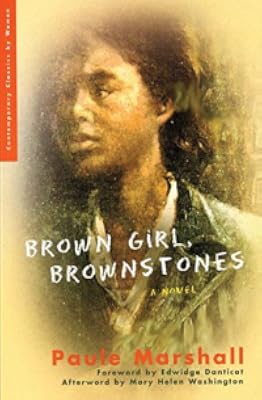

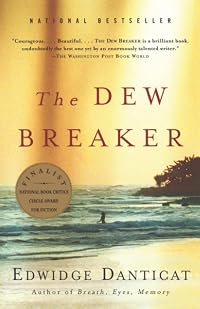
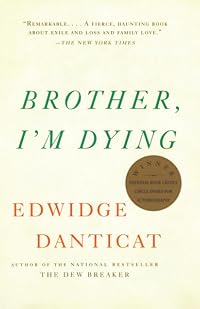
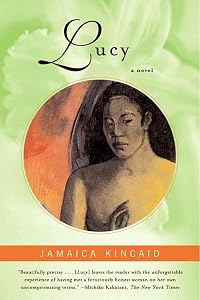











Member Recommendations
Othemts In a superficial way this book reminds me of the stories of Amy Tan in that they show the strains of relationships between mothers and daughters, immigrants and American-born.
20
whymaggiemay Tim O'Brien's wonderfully written stories about Vietnam.
11
Member Reviews
Right away, you know you are in the presence of a great writer when you read the very first short story of Krik? Krak! In "Children of the Sea" two teenagers who are in love keep journals when they are separated by dictatorship. Danticat keeps the two first person narratives clear by using capitalization and punctuation for one voice but not the other. The educated boy, a member of the Youth Federation, has escaped Haiti on a boat bound for Miami, Florida, while his young love (who does not use capitalization of punctuation) is left behind to endure military abuses. This was probably one of my favorites. Each subsequent story builds upon the next with the tiniest of threads. A minute detail will tie one story back to another.
"Nineteen show more Thirty-Seven" is a painful story about a woman visiting her mother in prison. Her mother is accused of flying. The government believes she is a witch, capable of rising like a bird on fire.
"A Wall of Fire Rising" tells the short but devastating story of a family barely making ends meet.
"Night Women" demonstrates the lengths a woman will go in order to provide for her child.
"Between the Pool and the Gardenias" is another heartbreaking story about loss.
"The Missing Peace" illuminates innocence abandoned.
"Seeing Things Simply" shares the story of an artist looking for beauty while ugliness crowds all around her.
"New York Day Women" demonstrates just how much a mother's love can suffocate a daughter.
"Caroline's Wedding" weaves a tale of expectation in age old customs.
"Women Like Us" is a message to daughters.
"In the Old Days" is an additional story for the twentieth anniversary edition of Krik? Krak! It tells the story of a woman asked to visit her dying father, a man she has never met. show less
"Nineteen show more Thirty-Seven" is a painful story about a woman visiting her mother in prison. Her mother is accused of flying. The government believes she is a witch, capable of rising like a bird on fire.
"A Wall of Fire Rising" tells the short but devastating story of a family barely making ends meet.
"Night Women" demonstrates the lengths a woman will go in order to provide for her child.
"Between the Pool and the Gardenias" is another heartbreaking story about loss.
"The Missing Peace" illuminates innocence abandoned.
"Seeing Things Simply" shares the story of an artist looking for beauty while ugliness crowds all around her.
"New York Day Women" demonstrates just how much a mother's love can suffocate a daughter.
"Caroline's Wedding" weaves a tale of expectation in age old customs.
"Women Like Us" is a message to daughters.
"In the Old Days" is an additional story for the twentieth anniversary edition of Krik? Krak! It tells the story of a woman asked to visit her dying father, a man she has never met. show less
These are painful, beautiful stories of families struggling under the reign of the Tonton Macout. Most are set in Haiti; others take place where exiles have sought safety.
Many of the stories show the strain on families in these terrible times: a woman who lives by prostitution prays that her son won't hear the noise from the corner where he sleeps; people attempt escapes on leaky boats; a daughter visits her mother in prison, where she stands accused of witchcraft even after she dies; a woman unable to hold a pregnancy picks up a dead infant left on the street, and pretends the child is simply quiet. Threats are everywhere, and illogical. These are pictures of a country in the midst of trauma, and families trying not to look, not to be show more targets themselves. show less
Many of the stories show the strain on families in these terrible times: a woman who lives by prostitution prays that her son won't hear the noise from the corner where he sleeps; people attempt escapes on leaky boats; a daughter visits her mother in prison, where she stands accused of witchcraft even after she dies; a woman unable to hold a pregnancy picks up a dead infant left on the street, and pretends the child is simply quiet. Threats are everywhere, and illogical. These are pictures of a country in the midst of trauma, and families trying not to look, not to be show more targets themselves. show less
Krik? Krak!, a book of short stories about Haitian women, is my favorite of Edwidge Danticat's works. Aside from the first and middle stories, men are tangential to women's lives, being portrayed only as love objects, parental figures or feared oppressors. The stories show Haitians living lives filled with beauty, love, intelligence and fear, in an environment of the most severe poverty and oppression. I would recommend it to anyone as an introduction to Danticat. Then if they could stand the mother in the last story they could move on to Breath, Eyes and Memory where her personality is multiplied by 10.
In the wake of the recent tragedy in Haiti, I picked this book from my shelves hoping to learn more about the island than what’s routinely published and/or reported. I believe some of the incidents in the stories relate to the author’s own experiences and/or personal observations. These tales of sadness have allowed me to see beyond the peaceful countenance prevalent on many of Danticat’s jacket cover photos. They confirm the wistfulness I thought I detected under her peaceful expression. I’m convinced this complex of emotions contributes to her skill as a writer.
A “Krik? Krak!” session is a celebration of Haiti’s oral culture. The storyteller will inquire of the audience, “Krik?” (pronounced “cree”). The show more collective response, “Krak!” (pronounced “crock”) signals the storyteller to begin.
Though some of the stories are quite depressing, I appreciate the author’s use of the playful, love-struck, parent-defying characters usually found in more light-hearted works. Writing is in Danticat’s blood; and her love for it is subtly revealed throughout this fictional collection by the connecting thread of an underlying reference to writers, journalists, tourists, etc. I was pleased at the reappearance of some of the characters in subsequent stories. It introduced a cohesiveness throughout the collection that I did not expect.
I was intrigued by Danticat’s use of undated journal entries in “Children of the Sea,” a charming tale of distant lovers. It opens tenderly with an entry from the young man’s journal. He has been forced to the sea, in escape of authorities for acts of civil disobedience. The young girl is at home with her protective parents. As I read through the couple’s exchanges, I came to the understanding that their separation was merely physical. Through their journal entries, they were essentially communicating soul-to-soul. I think the author used this form to demonstrate the power of the written word on the heart.
Other favorites in this collection were “New York Day Women” and “Caroline’s Wedding.” I would have liked to read about hope or promise in the epilogue. Instead it was a narration based on the prior generation’s viewpoint; and, therefore, equally depressing -- offering only doses of mother-wit and discouragement for an aspiring writer.
Krik? Krak! satisfied my quest for a working knowledge of the culture, customs, and political oppression in Haiti. After viewing the author’s suggested reading list, I have potentially selected The Rainy Season: Haiti Since Duvalier by Amy Wilentz as a trusted and documented source for more information.
Due to problems I have with religious differences that became apparent in this work, I recommend it with reservations. Danticat is a very talented writer. But I don’t think I want to tackle, Breath, Eyes, Memory just yet. I've begun reading The Farming of Bones which, from all appearances, will merit a more favorable review of this great young author’s talent. (1995, 224 pages, $20.00) show less
A “Krik? Krak!” session is a celebration of Haiti’s oral culture. The storyteller will inquire of the audience, “Krik?” (pronounced “cree”). The show more collective response, “Krak!” (pronounced “crock”) signals the storyteller to begin.
Though some of the stories are quite depressing, I appreciate the author’s use of the playful, love-struck, parent-defying characters usually found in more light-hearted works. Writing is in Danticat’s blood; and her love for it is subtly revealed throughout this fictional collection by the connecting thread of an underlying reference to writers, journalists, tourists, etc. I was pleased at the reappearance of some of the characters in subsequent stories. It introduced a cohesiveness throughout the collection that I did not expect.
I was intrigued by Danticat’s use of undated journal entries in “Children of the Sea,” a charming tale of distant lovers. It opens tenderly with an entry from the young man’s journal. He has been forced to the sea, in escape of authorities for acts of civil disobedience. The young girl is at home with her protective parents. As I read through the couple’s exchanges, I came to the understanding that their separation was merely physical. Through their journal entries, they were essentially communicating soul-to-soul. I think the author used this form to demonstrate the power of the written word on the heart.
Other favorites in this collection were “New York Day Women” and “Caroline’s Wedding.” I would have liked to read about hope or promise in the epilogue. Instead it was a narration based on the prior generation’s viewpoint; and, therefore, equally depressing -- offering only doses of mother-wit and discouragement for an aspiring writer.
Krik? Krak! satisfied my quest for a working knowledge of the culture, customs, and political oppression in Haiti. After viewing the author’s suggested reading list, I have potentially selected The Rainy Season: Haiti Since Duvalier by Amy Wilentz as a trusted and documented source for more information.
Due to problems I have with religious differences that became apparent in this work, I recommend it with reservations. Danticat is a very talented writer. But I don’t think I want to tackle, Breath, Eyes, Memory just yet. I've begun reading The Farming of Bones which, from all appearances, will merit a more favorable review of this great young author’s talent. (1995, 224 pages, $20.00) show less
Breathtaking. I find that Danticat creates rich scenes, characters, dialogues, and ideas in her vignettes, but they somehow weave together to create a cohesive story collection. While I typically give short story collections 3 or 4 stars, this one wrapped the stories together, not by character or cohesiveness of plot, but by the beauty of the idea ("Krik?" "Krak!") as a means of how we tell stories about ourselves and our histories. Highly recommended.
a friend gave me this book during rather a difficult time in my life - witnesses have said that my eyes were pointing in different directions, whatever - and what i remember appreciating most is the fact that they were short stories, so i could set the book down at regular intervals.
but. then i started reading it. and the stories, they were wonderful. touching, enigmatic (but that might not have all been the stories), and written in a crystalline style that i have always appreciated. the book never got put down for any significant length of time.
but. then i started reading it. and the stories, they were wonderful. touching, enigmatic (but that might not have all been the stories), and written in a crystalline style that i have always appreciated. the book never got put down for any significant length of time.
These stories didn't give me the emotional experience I thought was in store. A few brief tugs on the heartstrings here and there, but at the end of the book I thought, "That's it? That's all she's got?" My suspicion is that these stories have more going on beneath the surface, and if you can decipher the symbolism you'll get a lot more bang from this book. I'm more of a surface reader - I enjoy the actual story being told and am not willing or able to look for extra meaning in a river or a cat or a cloud - and so this book didn't give me much enjoyment at all.
Members
- Recently Added By
Lists

Favorite Short Fiction
228 works; 99 members

1990s
309 works; 17 members

Black Authors
384 works; 32 members

100 New Classics
101 works; 13 members

Books Read in 2015
3,299 works; 129 members

Reading Globally
136 works; 16 members

Blue Pyramid 1,276 Best Books of All Time
1,248 works; 32 members

National Book Award Finalists - Fiction
377 works; 12 members
Author Information

43+ Works 12,810 Members
Edwidge Danticat was born in Haiti in 1969 and came to America at age twelve to live with her parents in Brooklyn. She studied French literature at Barnard College and received her M.F.A. from Brown University. Her work has achieved both popular and critical acclaim. Breath, Eyes, Memory (1994), her first novel and master's thesis, garnered show more Danticat a Granta Regional Award for Best Young American Novelist and was chosen as an Oprah Book Club selection, a singular honor. Her collection of short stories Krik? Krak! (1995) was nominated for the National Book Award. Along with awards for fiction from Seventeen and Essence and the 1995 Pushcart Short Story Prize, Danticat was chosen by Harper's Bazaar as "one of 20 people in their twenties who will make a difference," and by the New York Times Magazine as one of "30 Under 30" people to watch. Her second novel, The Farming of Bones (1998), concerns a massacre in Haiti in 1937. (Bowker Author Biography) show less
Some Editions
Awards and Honors
Common Knowledge
- Canonical title
- Krik? Krak!
- Original title
- Krik? Krak!
- Original publication date
- 1996-04-02
- Important places
- Haiti; Hispaniola
- Epigraph
- Krik? Krak! Somwhere by the seacoast I feel a breath
of warm sea air and hear the laughter of children.
An old granny smokes her pipe,
surrounded by the village children . . .
"We tell the stories so that the you... (show all)ng ones
will know what came before them.
They ask Krik? we say Krak!
Our stories are kept in our hearts."
--Sal Scalora,
"White Darkness/Black Dreamings"
Haiti: Feeding The Spirit - First words
- They say behind the mountains are more mountains.
- Last words
- (Click to show. Warning: May contain spoilers.)And this was your testament to the way that these women lived and died and lived again.
- Blurbers
- Marshall, Paule; Ansa, Tina McElroy; Santiago, Esmeralda
Classifications
Statistics
- Members
- 1,370
- Popularity
- 17,354
- Reviews
- 26
- Rating
- (4.06)
- Languages
- 6 — Danish, Dutch, English, French, Italian, Spanish
- Media
- Paper, Audiobook, Ebook
- ISBNs
- 21
- ASINs
- 9