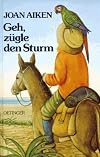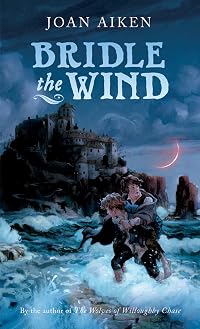
On This Page
Description
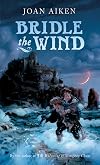
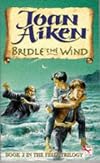
His journey back to Spain interrupted by shipwreck, loss of memory, and a stay in a forbidding French monastery, twelve-year-old Felix finally continues his journey in the company of a mysterious boy that he had rescued from hanging.Tags
Recommendations










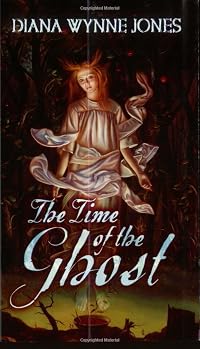

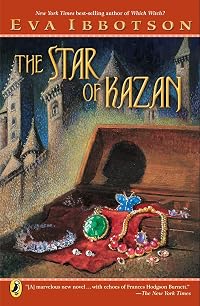
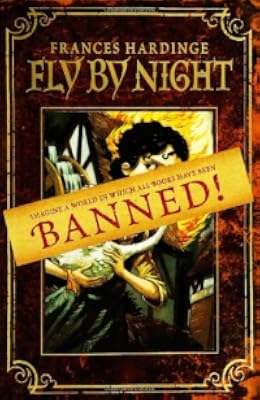

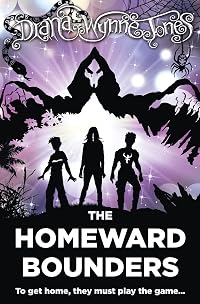




Member Recommendations

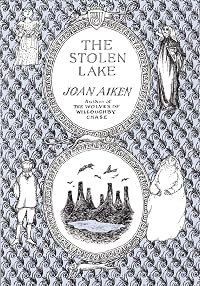
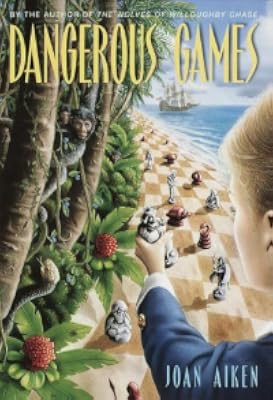
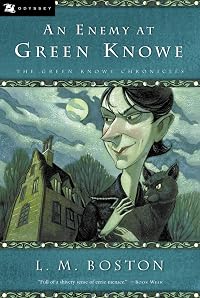
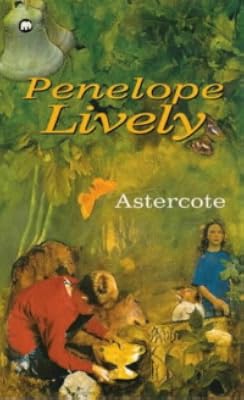
themulhern "Bridle the Wind" is just so clearly an homage to "The Black Arrow".
Member Reviews
In the chaotic years that are the aftermath of the Napoleonic Wars young Felix Brooke is journeying from England to his home in Galicia in Spain when he is shipwrecked off the Basque coast of France, thus precipitating the strange sequence of events in this novel. He convalesces at the fictional Abbey of St Just de Seignanx, on the French coast near Bayonne (very much like Mont-St-Michel in France or St Michael’s Mount in Cornwall) but finds that due to a form of amnesia partly brought on by a supernatural happening he has lost three months of his life. Rescuing Juan, a youngster his own age, from hanging, he helps them both escape the terrifying Abbot Father Vespasian by trekking east before crossing the Pyrenees on their way to show more hoped-for freedom in Spain. But, not unexpectedly, things don’t go to plan as they are haunted by the memory of the Abbot and chased by a group of brigands.
As always with Joan Aiken there is a comforting depth of assurance in her handling of people, places and plotting. Her evocation of the early nineteenth-century Basque country feels very realistic, both through historic details such as costume and language as well as through geography (it’s possible to follow most of the two youngsters’ journey on modern maps); having done family walks on the French side of the Pyrenees and gone skiing on the Spanish side, I loved being reminded of the wild, picturesque and still very Romantic scenery typical of these mountains. Aiken also conjures up an authentic sense of the supernatural, from folk charms to Felix’s sense of Fate, from Gothick descriptions of landscape to physical portrayals of their pursuers who uncannily appear when least expected.
Into all of this she weaves sheer poetry, from short epigrams through snatches of ballads to epic prose, as the two fugitives traverse the singular terrain of the Atlantic Pyrenees. This is magic realism of a distinct quality, all the more effective for being aimed without condescension at a young adult audience. Aiken doesn’t minimise the existence of cruelty and death in her world, but she does so without gratuitous violence or crudity.
The middle tale of a trilogy featuring Felix Brooke (Go Saddle the Sea was the first of the three), Bridle the Wind also introduces us to the intriguing figure of Juan, whose secret we discover in the closing pages of the novel. Having invested so much in the latter, we are to hope that we will meet Juan again in the final part, The Teeth of the Gale. That this is virtually certain to be the case is suggested by Aiken’s elder brother John being the dedicatee; Juan is of course the Spanish form of John, while Joan is the female version of the same name. Investing your fiction with aspects of your personal life and experiences is often a guarantee of commitment to your creations and, as here, inspires confidence in your readers that behind the fiction lie authentic emotions.
The Puffin edition has the wonderful line drawings of Pat Marriott which add hugely to the atmosphere of the books. The illustrations reminded me somewhat of the equally wonderful Edward Ardizzone; but though it’s been claimed that American artist Edward Gorey illustrated early Joan Aiken books “as Pat Marriott”, the truth of the matter is that Pat Marriott did indeed produce the pictures credited to her (she died in 2002, two years before Aiken) while Gorey illustrated many of the US editions of Aiken’s Wolves books. (I am indebted to Ann Giles, aka as Bookwitch, for putting me right on this.) I would strongly recommend searching out illustrated editions of these works because, as a certain young lady said, what is the use of a book without pictures? But, at the very least, seek out these new editions.
http://wp.me/s2oNj1-bridle show less
As always with Joan Aiken there is a comforting depth of assurance in her handling of people, places and plotting. Her evocation of the early nineteenth-century Basque country feels very realistic, both through historic details such as costume and language as well as through geography (it’s possible to follow most of the two youngsters’ journey on modern maps); having done family walks on the French side of the Pyrenees and gone skiing on the Spanish side, I loved being reminded of the wild, picturesque and still very Romantic scenery typical of these mountains. Aiken also conjures up an authentic sense of the supernatural, from folk charms to Felix’s sense of Fate, from Gothick descriptions of landscape to physical portrayals of their pursuers who uncannily appear when least expected.
Into all of this she weaves sheer poetry, from short epigrams through snatches of ballads to epic prose, as the two fugitives traverse the singular terrain of the Atlantic Pyrenees. This is magic realism of a distinct quality, all the more effective for being aimed without condescension at a young adult audience. Aiken doesn’t minimise the existence of cruelty and death in her world, but she does so without gratuitous violence or crudity.
The middle tale of a trilogy featuring Felix Brooke (Go Saddle the Sea was the first of the three), Bridle the Wind also introduces us to the intriguing figure of Juan, whose secret we discover in the closing pages of the novel. Having invested so much in the latter, we are to hope that we will meet Juan again in the final part, The Teeth of the Gale. That this is virtually certain to be the case is suggested by Aiken’s elder brother John being the dedicatee; Juan is of course the Spanish form of John, while Joan is the female version of the same name. Investing your fiction with aspects of your personal life and experiences is often a guarantee of commitment to your creations and, as here, inspires confidence in your readers that behind the fiction lie authentic emotions.
The Puffin edition has the wonderful line drawings of Pat Marriott which add hugely to the atmosphere of the books. The illustrations reminded me somewhat of the equally wonderful Edward Ardizzone; but though it’s been claimed that American artist Edward Gorey illustrated early Joan Aiken books “as Pat Marriott”, the truth of the matter is that Pat Marriott did indeed produce the pictures credited to her (she died in 2002, two years before Aiken) while Gorey illustrated many of the US editions of Aiken’s Wolves books. (I am indebted to Ann Giles, aka as Bookwitch, for putting me right on this.) I would strongly recommend searching out illustrated editions of these works because, as a certain young lady said, what is the use of a book without pictures? But, at the very least, seek out these new editions.
http://wp.me/s2oNj1-bridle show less
I don't especially enjoy the supernatural bits that Aiken sometimes works into her books, or really understand her motivation for doing so. Nevertheless, I enjoyed it.
After visiting his family in England, Felix is on his way back to Spain when he's shipwrecked off the coast of France. He is taken in by monks to recover from his ordeal--but it soon becomes clear to him that he is actually being held prisoner. Felix encounters an injured boy, Juan, on the grounds of the monastery and saves him from death. The two boys escape and continue on to Spain together--but a gang is pursuing Juan, and the journey is more dangerous than they imagined.
Ratings
Members
- Recently Added By
Author Information

216+ Works 19,854 Members
Joan Delano Aiken was born in Rye, Sussex, England, on September 4, 1924, the daughter of the Pulitzer Prize winner, writer Conrad Aiken. She was raised in a rural area and home schooled by her mother until the age 12. She then attended Wychwood School, a boarding school in Oxford. Her work first appeared in 1941 when the British Broadcasting show more Corporation, where she worked as a librarian, broadcast some of her short stories on their Children's Hour program. Aiken also worked at St. Thomas's Hospital, and in 1943 she moved to the reference department of the London office of the United Nations, where she collected information about resistance movements. She worked for the UN until 1949, all the while continuing to write stories. In 1953 a collection of short fiction called All You've Ever Wanted and Other Stories was published. While writing The Wolves of Willoughby Chase, begun in 1952, her husband became ill and died of lung cancer in 1955. After working for five years as a copy editor at Argosy Magazine, and at the J. Walter Thompson Advertising Firm, she returned and finished the book in 1963. The Wolves of Willoughby Chase won the Lewis Carroll Shelf Award and was made into a successful film in 1988. In 1969 The Whispering Mountain won the Guardian Children's Book Award, and in 1972, Night Fall won America's Edgar Allen Poe Award for juvenile mystery. Aiken is best known for her adult "fantasy" stories. She has received awards for children's fiction and for mystery fiction, and has also written ''sequels'' to Jane Austen books. She collaborated with her daughter to write many episodes of her Arabel and Mortimer the raven series for the BBC. In all, Aiken wrote 92 novels - including 27 for adults - as well as plays, poems and short stories, although she was best known as a writer of children's stories. Joan Aiken died in January of 2004 at the age of 79. (Bowker Author Biography) show less
Awards and Honors
Series

Work Relationships
Is contained in
Common Knowledge
- Original title
- Bridle the Wind
- Original publication date
- 1983
- People/Characters
- Felix Brooke
- Dedication
- To my brother John
who asked for it
Classifications
- Genres
- Fiction and Literature, Kids, Children's Books, Tween
- DDC/MDS
- 823.914 — Literature & rhetoric English & Old English literatures English fiction 1900- 1901-1999 1945-1999
- LCC
- PZ7 .A2695 .B — Language and Literature Fiction and juvenile belles lettres Fiction and juvenile belles lettres Juvenile belles lettres
- BISAC
Statistics
- Members
- 180
- Popularity
- 182,601
- Reviews
- 4
- Rating
- (4.03)
- Languages
- English, German, Spanish
- Media
- Paper, Ebook
- ISBNs
- 13
- ASINs
- 2