
The Black Arrow
by Robert Louis Stevenson
On This Page
Description
Richard Shelton is a young knight during the Wars of the Roses. We see him ascend and rescue his lady love. He then seeks revenge against his father's murderer, but when the evidence points towards his guardian he is forced to go into hiding. He joins the band of outlaws known as the Black Arrow.Tags
Recommendations

















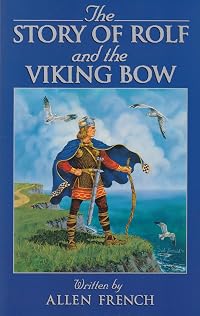
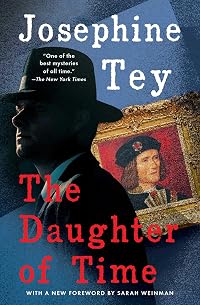



Member Recommendations

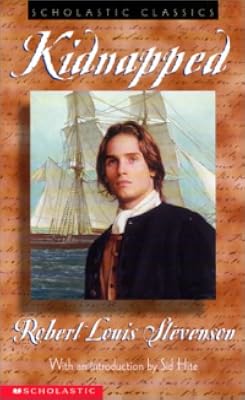
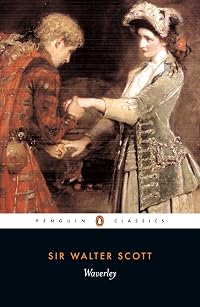
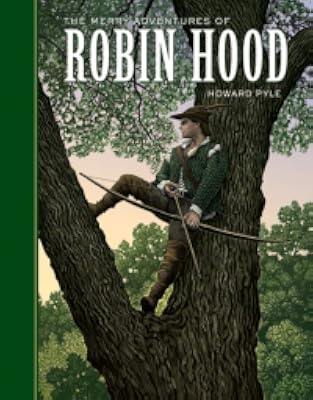
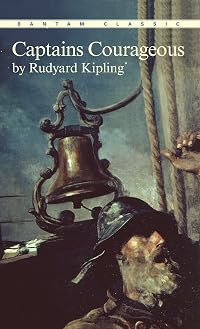
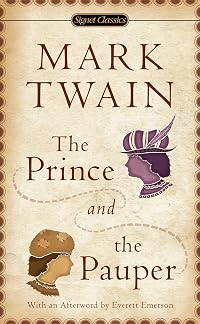
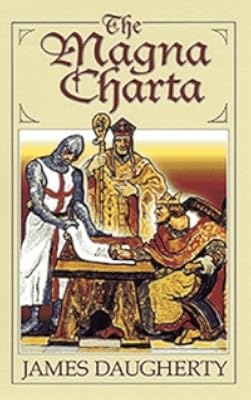
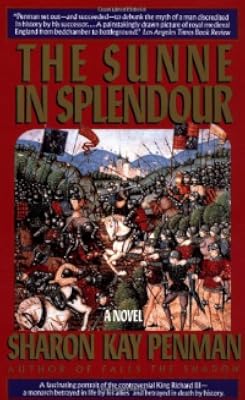
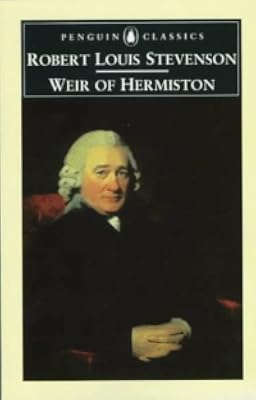
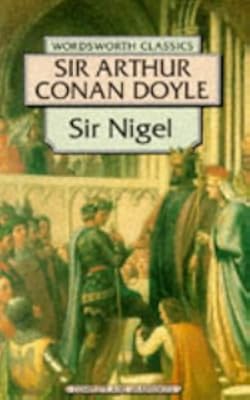
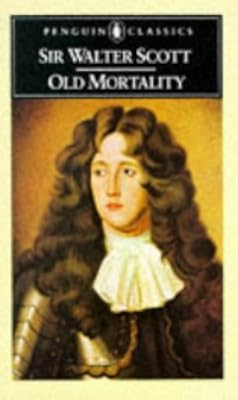
stevemaynard Many common themes of honor and manhood in both books. Both are great adventures filled with challenges and dangers.

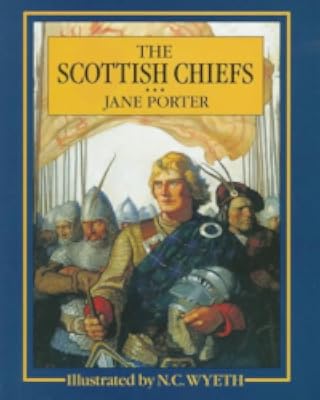
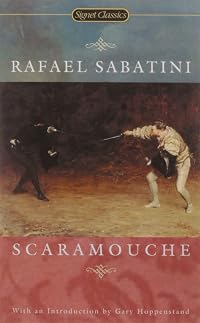
stevemaynard Here the common theme of revenge and honor are on full display. Adventures in the Middle Ages through the lens of the Victorian era. Great reads for young people.
themulhern "Bridle the Wind" is just so clearly an homage to "The Black Arrow".
Member Reviews
A rattling tale. Swashes are not buckled because (i) that would be anachronistic, and (ii) of all wars, civil wars are possibly the most cruel and backstabby, although the gentle folk behave chivalrously and courteously when they can, and everyone else survives the best they can. I don't know how accurate the dialogue is, but the author uses now-obsolete words and meanings cheerfully and unapologetically (churl, gossip, incontenent, links, murrain, murrey, rood and shent come to mind). All in all I enjoyed it. The only sour note is that the author has drunk too deep of Tudor propaganda (=US 'Kool Aid'? and one of the foundation stones of the later British imperial project), and can't mention 'Richard Crookback' (Richard, duke of show more Gloucester) without gently pushing the line that a (probably non-existent) outer physical defect reflects an inner character defect, such as "the lad, who was afterwards to be handed down to the execration of posterity under the name of Richard III., had won his first considerable fight". show less
This is a rowdy boy's adventure story set during the Wars of the Roses between the Yorkists and the Lancastrians in England. (My 15 year old had never heard of the War of the Roses, so I'm offering a little explanation here.) Dick Shelton is an orphan who is being fostered by a tough warrior type. Then he finds out that a band of outlaws has targeted his benefactor and others as being responsible for the deaths of many people, including Dick's father.
So who can Dick trust? Practically no one, it seems. That part is kind of dark. But there's a romance too, and plenty of fight scenes thrown in for no apparent reason whenever the story slows down. Don't look for a lot of plot continuity in here. There isn't much. But there are plenty of show more sword fights, being captured and then daring escapes, a guy disguised as a leper, and lots more. I got kind of tired of it, really. Too much going on. I was glad to be at the part with Richard of Gloucester, the Crookback, who became King Richard III. But he doesn't show up until the end of the book.
I would recommend this if you like adventure type stories and if you don't mind loosely plotted book. Or if you want to see what kid's books were like once upon a time. For the modern reader, I think it's a little tougher going. show less
So who can Dick trust? Practically no one, it seems. That part is kind of dark. But there's a romance too, and plenty of fight scenes thrown in for no apparent reason whenever the story slows down. Don't look for a lot of plot continuity in here. There isn't much. But there are plenty of show more sword fights, being captured and then daring escapes, a guy disguised as a leper, and lots more. I got kind of tired of it, really. Too much going on. I was glad to be at the part with Richard of Gloucester, the Crookback, who became King Richard III. But he doesn't show up until the end of the book.
I would recommend this if you like adventure type stories and if you don't mind loosely plotted book. Or if you want to see what kid's books were like once upon a time. For the modern reader, I think it's a little tougher going. show less
Brilliant! Stevenson's superb use of language would have been enough to keep me turning the pages, but there is so much more. A rousing adventure story, a believable, well wrought world and characters, and a view of war not as good against evil but as something infinitely more complex. Dick Shelton is neither hero nor buffoon, but a young human being in challenging circumstances who succeeds, fails, and learns lessons about war and consequences that never border on preaching. I am so glad I finally discovered this book--so many lesser lights pale in memory! (Actually, a lot of them were pretty pale to begin with.)
The Black Arrow is a fairly typical swashbuckling tale of knights, battles and courtly love. The romantic love interest was a bit on the silly side, but other than that, an enjoyable read.
Очень занятный фанфик Стивенсона по Шекспиру. Я благодаря этому роману впервые познакомился с тематикой войны Алой и Белой роз. Само приключение несколько менее интересно, чем тот же "Остров сокровищ", а романтическая линия довольно наивная. Но я даже выписал кое-какие интересные мысли по поводу морали.
Another wonderful tale by the British author R.L. Stevenson who excelled in producing historical novels like Kidnapped. In this work, he weaves the tale of a Richard Shelton & his quest for justice during the time of the Wars of the Roses. In the midst of this tale, a black arrow strikes its intended victims released by another whose quest for revenge gets Shelton into trouble. All in all, a tale with twists & turns keeps one awake wondering who done it & will Shelton get his girl?
Picked this up while on holiday and running short on reading material.
The story is set during the Wars of the Roses and details the struggles of a young man against his cruel foster-father and to find his place in the world.
It's about what you'd expect from an adventure story. The language was very archaic in line with the setting - I only knew what "salet" meant thanks to Wordle!
The main character seemed quite naive and as I neared the end of the book I did feel that he was just going with the flow and not considering the consequences of his actions - just as I began to feel that way, I reached the one scene where he does get confronted with how his actions have ruined someone's life.
He still gets of pretty scot free in the end, gets show more the girl and all that. Not that I ever doubted he would. It's a fun book for what it is, and a pleasant way to spend a sunny holiday afternoon. show less
The story is set during the Wars of the Roses and details the struggles of a young man against his cruel foster-father and to find his place in the world.
It's about what you'd expect from an adventure story. The language was very archaic in line with the setting - I only knew what "salet" meant thanks to Wordle!
The main character seemed quite naive and as I neared the end of the book I did feel that he was just going with the flow and not considering the consequences of his actions - just as I began to feel that way, I reached the one scene where he does get confronted with how his actions have ruined someone's life.
He still gets of pretty scot free in the end, gets show more the girl and all that. Not that I ever doubted he would. It's a fun book for what it is, and a pleasant way to spend a sunny holiday afternoon. show less
Members
- Recently Added By
Lists

Books Read in 2013
1,630 works; 51 members

Favorite Childhood Books
1,651 works; 515 members
Honey For a Child's Heart
1,152 works; 25 members

Book Titles Mentioned In Newberry Medal And Honor Books
884 works; 3 members

THE WAR ROOM
813 works; 24 members

Books Read in 2006
424 works; 7 members

Ambleside Year 7
69 works; 1 member

Read in 2006
140 works; 1 member

Books We Couldn't Put Down
443 works; 197 members

Books We Loved As Children
603 works; 253 members

HMS: Make Your Child a Lover of Books, Books for Boys
28 works; 2 members
Author Information

2,825+ Works 139,901 Members
Novelist, poet, and essayist Robert Louis Stevenson was born in Edinburgh, Scotland. A sickly child, Stevenson was an invalid for part of his childhood and remained in ill health throughout his life. He began studying engineering at Edinburgh University but soon switched to law. His true inclination, however, was for writing. For several years show more after completing his studies, Stevenson traveled on the Continent, gathering ideas for his writing. His Inland Voyage (1878) and Travels with a Donkey (1878) describe some of his experiences there. A variety of essays and short stories followed, most of which were published in magazines. It was with the publication of Treasure Island in 1883, however, that Stevenson achieved wide recognition and fame. This was followed by his most successful adventure story, Kidnapped, which appeared in 1886. With stories such as Treasure Island and Kidnapped, Stevenson revived Daniel Defoe's novel of romantic adventure, adding to it psychological analysis. While these stories and others, such as David Balfour and The Master of Ballantrae (1889), are stories of adventure, they are at the same time fine studies of character. The Master of Ballantrae, in particular, is a study of evil character, and this study is taken even further in The Strange Case of Dr. Jekyll and Mr. Hyde (1886). In 1887 Stevenson and his wife, Fanny, went to the United States, first to the health spas of Saranac Lake, New York, and then on to the West Coast. From there they set out for the South Seas in 1889. Except for one trip to Sidney, Australia, Stevenson spent the remainder of his life on the island of Samoa with his devoted wife and stepson. While there he wrote The Wrecker (1892), Island Nights Entertainments (1893), and Catriona (1893), a sequel to Kidnapped. He also worked on St. Ives and The Weir of Hermiston, which many consider to be his masterpiece. He died suddenly of apoplexy, leaving both of these works unfinished. Both were published posthumously; St. Ives was completed by Sir Arthur Quiller-Couch, and The Weir of Hermiston was published unfinished. Stevenson was buried on Samoa, an island he had come to love very much. Although Stevenson's novels are perhaps more accomplished, his short stories are also vivid and memorable. All show his power of invention, his command of the macabre and the eerie, and the psychological depth of his characterization. (Bowker Author Biography) show less
Some Editions
Awards and Honors
Series
Belongs to Publisher Series
Skerryvore Edition (v. VIII)
KOD (33)
Airmont Classics (20)
Corticelli [Mursia] (20; 158)
Geração Público (22)
Dean's Classics (33)
El País Aventuras (39)
Tus libros (104)
Scholastic T (75)
Work Relationships
Is contained in
R. L. Stevenson. L'Ile au trésor : . Traduit de l'anglais sous la direction de P. Lorain. La Flèche noire. Texte français de Jacques Brécard. L'Évadé d'Edimbourg. Traduction de T. de Wyzewa by Robert Louis Stevenson
Has the adaptation
Is abridged in
Common Knowledge
- Canonical title*
- La freccia nera
- Original title
- The Black Arrow: A Tale of the Two Roses
- Alternate titles
- The Black Arrow : a tale of Tunstall Forest by Captain George North [serialized June - ~October 1883 in Young Folks magazine]
- Original publication date
- 1883-06-30 to 1883-10-20 (serialised as "The Black Arrow: A Tale of Tunstall Forest") (serialised as "The Black Arrow: A Tale of Tunstall Forest"); 1888 (book as "The Black Arrow: A Tale of the Two Roses") (book as "The Black Arrow: A Tale of the Two Roses")
- People/Characters
- Dick Shelton; Clipsby; Bennet Hatch; Nicholas Appleyard; Sir Oliver Oates; Sir Daniel Brackley (show all 15); Joanna Sedley (John Matcham); Will Lawless; Ellis Duckworth; Kit Greensheve; John Capper; Goody Hatch; Richard III, King of England (as Richard, Duke of Gloucester); Alicia Risingham; Foxham
- Important places
- Tunstall Forest, Suffolk, England, UK; Tunstall Moat House, Tunstall, Suffolk, England, UK; Shoreby-on-the-Till, Suffolk, England, UK (fictional, but based on Orford); Holywood, Suffolk, England, UK (fictional, but based on Leiston)
- Important events
- Wars of the Roses (1455 | 1485); 15th century; 1460s
- Related movies
- The Black Arrow (1911 | IMDb); The Black Arrow (1948 | IMDb); Black Arrow (1985 | IMDb); Chyornaya strela (1987 | IMDb); The Black Arrow (1951 | IMDb); La freccia nera (2006 | IMDb)
- Epigraph
- [None]
- Dedication
- Critic on the Hearth,
No one but myself knows what I have suffered, nor what my books have gained, by your unsleeping watchfulness and admirable pertinacity. . . . Mr. Alfred R. Phillips. . . . - First words
- On a certain afternoon, in the late spring time, the bell upon the Tunstall Moat House was heard singing at an unaccustomed hour.
- Last words
- (Click to show. Warning: May contain spoilers.)The other, who had been a bit of everything, turned in the end towards piety, and made a most religious death under the name of Brother Honestus in the neighbouring abbey. So Lawless had his will, and died a friar.
- Original language
- English
- Disambiguation notice
- This is the main work for The Black Arrow by Robert Louis Stevenson. Please do not combine with any adaptation, abridgement, etc.
*Some information comes from Common Knowledge in other languages. Click "Edit" for more information.
Classifications
Statistics
- Members
- 4,380
- Popularity
- 3,431
- Reviews
- 60
- Rating
- (3.59)
- Languages
- 18 — Catalan, Chinese, Czech, Dutch, English, Estonian, Finnish, French, German, Hungarian, Italian, Norwegian (Bokmål), Polish, Portuguese, Russian, Serbian, Spanish, Swedish
- Media
- Paper, Audiobook, Ebook
- ISBNs
- 349
- UPCs
- 2
- ASINs
- 226