On This Page
Description
Stunning Japanese thriller with a chilling supernatural twist - the follow-up to Ring. Pathologist Ando is at a low point in his life. His small son's death from drowning has resulted in the break-up of his marriage and he is suffering from traumatic recurrent nightmares. Work is his only escape, and his depressing world of loneliness and regret is shaken up when an old rival from medical school, Ryuji Takayama, turns up on his slab ready to be dissected. Through Ryuji's bizarre demise Ando show more learns of a series of mysterious deaths that seem to have been caused by a sinister virus. From beyond the grave Ryuji appears to be leading Ando towards a suspicious videotape - could this hold the answer to the riddle of the strange deaths? Or is it merely the first clue? When Ando meets Mai, an attractive former student of Ryuji's, his desire to solve the puzzle transcends curiosity and becomes a matter of life or death. 'Spiral' is the stunning sequel to the highly acclaimed 'Ring', and can also be read as a standalone. show lessTags
Recommendations






















Member Recommendations
by anonymous user
Member Reviews
Spiral begins hours after Ring's ending and stars Ando, a medical examiner who was once classmates with Ryuji, one of the main characters in Ring. Ando performs Ryuji's autopsy and is intrigued by several findings. First, Ryuji died of sudden heart failure despite being otherwise very healthy. Second, he has a mysterious ulcer in his throat. Further tests eventually reveal that Ryuji may have been killed by a virus that bears an eerie resemblance to smallpox. As Ando investigates, he learns of several other victims. But how is the virus transmitted? What does it do? And why did one man who was exposed to it, Asakawa, survive? The case takes on greater urgency when Mai, Ryuji's lover, disappears. Was she exposed via Ryuji somehow, and show more can she still be saved?
I highly recommend that those who haven't read the first book, Ring, do so before reading this one. And then maybe just stop there. Although Spiral tied up a few of Ring's loose ends, I didn't consider it to be a worthwhile continuation.
Suzuki attempted to make Sadako's curse more scientific rather than supernatural in this book, and it really didn't work for me. I could accept that the curse was virus-like in its transmission and requirements, but Suzuki also had it behavingboth like a sperm and an egg (just because it happened to sort of look like them?). Also, Suzuki envisioned DNA producing exact replicas of people, right down to their memories up to some point before their original death ("junk DNA" is a recording of a person's memories, or some nonsense like that). This went way beyond what I was willing to accept, even in a horror series featuring a killer videotape.
And the part where Suzuki gave Ryuji a special ability to communicate with Sadako made me want to bite something. There was no sign that Ryuji had any kind of paranormal abilities - he should not have been able to form an agreement with Sadako the way he did, or use his own corpse to create codes for Ando to decipher. And Sadako, considering her history, should have hated a rapist like Ryuji too much to let him somehow use her own abilities.
There were a few nicely creepy scenes, but for the most part Ring had a better and more unnerving atmosphere than Spiral. Ando spent a lot of time trying to figure out the stuff Asakawa had already figured out in the first book, and a little more time trying to figure out what Asakawa hadn't gotten wrong. There were a couple code deciphering sections that reminded me of parts of works like Soji Shimada's The Tokyo Zodiac Murders, inviting readers to decipher the codes along with Ando, but those ended up feeling more like filler than anything particularly useful. And speaking of filler, there was a excruciating 20-page summary of everything that happened in Ring, because apparently Suzuki couldn't trust that readers of Spiral had read the book before it. Yes, this section tied in with a discovery later in the book, but Suzuki could have accomplished the same thing in a couple pages.
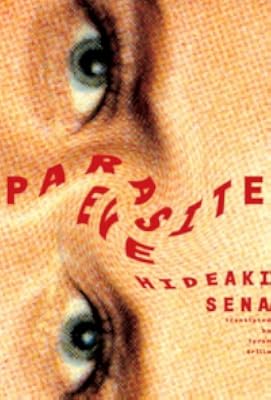
Spiral reminded me a great deal of Hideaki Sena's Parasite Eve in the way it tried to incorporate science into its horrific supernatural developments, and also in the way it crapped on most of its few female characters.
I was cautiously optimistic that Mai would be a main character I could actually root for, despite her unfortunate affection for Ryuji. She seemed to be reasonably intelligent and not too much of a wet washcloth. Whereas Ando developed an instant crush on Mai, she spoke to him mostly out of a wish to maintain a connection to Ryuji and wasn't the slightest bit interested in any other sort of relationship with him. At the same time, she wasn't so attached to Ryuji as to fall completely apart after his death. She kept her professional commitments in mind and tried to fulfill them.
Unfortunately, my expectation that Mai would turn out to be one of the main characters of this book, working with Ando the way Ryuji worked with Asakawa in the first book, turned out to be way off the mark. After a couple on-page appearances, she disappeared from the text except as occasional motivation for Ando. Her ultimate fate depressed me, as didSuzuki's reduction of women of child-bearing age to nothing more than potential incubators for Sadako.
Some of Ando's thoughts about Mai were bizarre and made me wonder if Suzuki had any idea about how female bodies work. When I first started the book, I snickered at the way Ando instantly concluded that Mai must be having her period because of one vague sentence from her and the fact that she looked pale. While I realize that some women have overly heavy or lengthy periods that can give them anemia, considering the situation I'd have assumed that Mai was pale because she was in shock at having discovered Ryuji's body only a few hours earlier. This thing about Mai having her period came up multiple times in the book, with Ando concluding each time that his intuition must have been correct. Ando also seemed to think it was perfectly natural for a grown woman's used underwear to smell like milk (yes, there's a part where he sniffs her underwear - it's one of the first things he does when he's left alone in her apartment).
I doubt I'll be continuing this series, and I kind of wish I had stopped after reading Ring. The new developments in Spiral made me more angry than excited. One thing I was left with was a desire to find and read more Japanese horror written by women. Unfortunately, it doesn't seem like much has been translated into English. I've already read Mariko Koike's The Graveyard Apartment and would welcome other recommendations.
(Original review posted on A Library Girl's Familiar Diversions.) show less
I highly recommend that those who haven't read the first book, Ring, do so before reading this one. And then maybe just stop there. Although Spiral tied up a few of Ring's loose ends, I didn't consider it to be a worthwhile continuation.
Suzuki attempted to make Sadako's curse more scientific rather than supernatural in this book, and it really didn't work for me. I could accept that the curse was virus-like in its transmission and requirements, but Suzuki also had it behaving
And the part where Suzuki gave Ryuji a special ability to communicate with Sadako made me want to bite something. There was no sign that Ryuji had any kind of paranormal abilities - he should not have been able to form an agreement with Sadako the way he did, or use his own corpse to create codes for Ando to decipher. And Sadako, considering her history, should have hated a rapist like Ryuji too much to let him somehow use her own abilities.
There were a few nicely creepy scenes, but for the most part Ring had a better and more unnerving atmosphere than Spiral. Ando spent a lot of time trying to figure out the stuff Asakawa had already figured out in the first book, and a little more time trying to figure out what Asakawa hadn't gotten wrong. There were a couple code deciphering sections that reminded me of parts of works like Soji Shimada's The Tokyo Zodiac Murders, inviting readers to decipher the codes along with Ando, but those ended up feeling more like filler than anything particularly useful. And speaking of filler, there was a excruciating 20-page summary of everything that happened in Ring, because apparently Suzuki couldn't trust that readers of Spiral had read the book before it. Yes, this section tied in with a discovery later in the book, but Suzuki could have accomplished the same thing in a couple pages.
Spiral reminded me a great deal of Hideaki Sena's Parasite Eve in the way it tried to incorporate science into its horrific supernatural developments, and also in the way it crapped on most of its few female characters.
I was cautiously optimistic that Mai would be a main character I could actually root for, despite her unfortunate affection for Ryuji. She seemed to be reasonably intelligent and not too much of a wet washcloth. Whereas Ando developed an instant crush on Mai, she spoke to him mostly out of a wish to maintain a connection to Ryuji and wasn't the slightest bit interested in any other sort of relationship with him. At the same time, she wasn't so attached to Ryuji as to fall completely apart after his death. She kept her professional commitments in mind and tried to fulfill them.
Unfortunately, my expectation that Mai would turn out to be one of the main characters of this book, working with Ando the way Ryuji worked with Asakawa in the first book, turned out to be way off the mark. After a couple on-page appearances, she disappeared from the text except as occasional motivation for Ando. Her ultimate fate depressed me, as did
Some of Ando's thoughts about Mai were bizarre and made me wonder if Suzuki had any idea about how female bodies work. When I first started the book, I snickered at the way Ando instantly concluded that Mai must be having her period because of one vague sentence from her and the fact that she looked pale. While I realize that some women have overly heavy or lengthy periods that can give them anemia, considering the situation I'd have assumed that Mai was pale because she was in shock at having discovered Ryuji's body only a few hours earlier. This thing about Mai having her period came up multiple times in the book, with Ando concluding each time that his intuition must have been correct. Ando also seemed to think it was perfectly natural for a grown woman's used underwear to smell like milk (yes, there's a part where he sniffs her underwear - it's one of the first things he does when he's left alone in her apartment).
I doubt I'll be continuing this series, and I kind of wish I had stopped after reading Ring. The new developments in Spiral made me more angry than excited. One thing I was left with was a desire to find and read more Japanese horror written by women. Unfortunately, it doesn't seem like much has been translated into English. I've already read Mariko Koike's The Graveyard Apartment and would welcome other recommendations.
(Original review posted on A Library Girl's Familiar Diversions.) show less
The hackneyed plot, especially the ending, lets the whole book down... I was quite prepared to enjoy it, (the DNA codes were a bonus) but I can't deal with the uninspired ending. I like Suzuki's ability to blur the boundaries between reality and imagination, but this book might have pushed it a bit too far for me.
There are some interesting ideas explored here, but the horror takes a step back so that a more scientific approach can come forward and attempt to explain what's going on. The horror elements are still there, just more existential and conceptual. Some things are very dated and it is a very slow moving story. But I was interested enough in the overall story to stick with it.
A very weird medical/science thriller with sparse horror elements. Everything was good until the last third ish of the book, where it begins to go completely off the rails. I know, suspend my disbelief, but it's difficult to do when it goes from "unbelievable but interesting" to "completely ridiculous and laughable."
In the sequel to the cult horror classic, Ring, Koji Suzuki continues the haunting tale of Sadako and her revenge against a world that spurned her and eventually killed her.
While still maintaining a similar eerie atmosphere that the first novel had, Spiral in many ways is lacking in comparison. Much of the psychological horror is gradually replaced with scientific horror and the Ring virus is no longer contained to the videotape but now is present in any medium about it.
Unlike the first book in which the focus was mainly on the supernatural, and on revealing more about the origins of the virus, here it is presented less as a supernatural event and more as a scientifically explainable one. For this reason, Spiral strips the legacy of show more its predecessor and feels like a clinical treatment of a legitimately terrifying idea. show less
While still maintaining a similar eerie atmosphere that the first novel had, Spiral in many ways is lacking in comparison. Much of the psychological horror is gradually replaced with scientific horror and the Ring virus is no longer contained to the videotape but now is present in any medium about it.
Unlike the first book in which the focus was mainly on the supernatural, and on revealing more about the origins of the virus, here it is presented less as a supernatural event and more as a scientifically explainable one. For this reason, Spiral strips the legacy of show more its predecessor and feels like a clinical treatment of a legitimately terrifying idea. show less
ซุสุกิ โคจิ อัพเกรดวรรณกรรมสยองขวัญเรื่องนี้เข้าไปอีกขั้น กลายเป็นนิยายวิทยาศาสตร์-ไสยศาสตร์ ที่แปลกใหม่มาก ๆ จนสร้างซิกเนเจอร์เป็นของตัวเองได้ ถ้าเทียบกับภาคแรกแล้วนับว่าดำเนินเรื่องได้น่าเบื่อกว่า แต่นั่นก็ทำให้เก็บรายละเอียดได้เยอะ show more ส่วนความขนลุกนั้นกินขาด เสียอย่างเดียวตอนจบไม่พีคเลย show less
spiral, although a direct continuation of Ring, requires no knowledge of the previous book. Those who have seen Ring, or it's subsequent prequel/sequels should understand that their conversion to the screen required the content to undergo severe changes. spiral is a slow-burner. It meanders along with almost no supernatural elements, and no scenes of horror. It is a suspense story, weaving high-brow medical drama and amateur detective work with a supernatural edge. Although the story ramps up the tension near the end, it never delivers any horror, although the revelations are indeed well plotted. What spiral does deliver, is an interesting set of answers posed by The Ring. It's an interesting sequel, worth reading, but ensure you begin show more understanding it is a supernatural drama rather than a horror story. show less
Members
- Recently Added By
Author Information

31+ Works 4,825 Members
3 Works 865 Members
Series

Belongs to Publisher Series
Work Relationships
Has the adaptation
Common Knowledge
- Canonical title
- Spiral
- Original title
- Spiral
- Original publication date
- 1996 (Japanese) (Japanese); 2004 (English translation) (English translation)
- People/Characters
- Mitsuo Ando; Takanori Ando; Ryuji Takayama; Mai Takano; Miyashita, Assistant Reasercher in Pathology; Kazuyuki Asakawa (show all 16); Shizu Asakawa; Yoko Asakawa; Kazuyoshi Kurahashi; Kenzo Yoshino; Junichiro Asakawa; Nemoto; Sadako Yamamura; Shizuko Yamamura; Heihachiro Ikuma; Jotaro Nagao
- Important places
- Tokyo, Japan; Shuwa University Medical School; Sagamihara, Kanagawa Prefecture, Japan; Shinagawa Saisei Hospital; Tetsuzo Miura Memorial Hall, Kamakura, Japan; Villa Log Cabin No. B-4, South Hakone Pacific Island, Japan
- Important events*
- Sakado Yamamura's rebirth
- Related movies
- Rasen (1998 | IMDb)
- First words
- Mitsuo Ando awoke from a dream in which he was sinking into the sea.
- Last words
- (Click to show. Warning: May contain spoilers.)That rhythm was the only sure thing in a world facing destruction. It proved they were alive.
- Original language
- Japanese
- Disambiguation notice
- The novel Spiral (the 2nd book of the Ringu series) is not the same as the manga Spiral (The Ring, Volume 3)
*Some information comes from Common Knowledge in other languages. Click "Edit" for more information.
Classifications
- Genres
- Horror, Fiction and Literature, Science Fiction
- DDC/MDS
- 895.635 — Literature & rhetoric Literatures of other languages Literatures of East and Southeast Asia Japanese Japanese fiction 1945–2000
- LCC
- PL861 .U92716 .R3716 — Language and Literature Languages and literatures of Eastern Asia, Africa, Oceania Languages of Eastern Asia, Africa, Oceania Japanese language and literature Japanese literature Individual authors and works
- BISAC
Statistics
- Members
- 851
- Popularity
- 32,105
- Reviews
- 23
- Rating
- (3.60)
- Languages
- 11 — Czech, Danish, Dutch, English, French, German, Italian, Japanese, Romanian, Spanish, Thai
- Media
- Paper, Ebook
- ISBNs
- 25
- ASINs
- 2