On This Page
Description
After starting to publish a zine in which he writes his secret feelings about his lonely life and his parents' divorce, sixteen-year-old John meets an unusual girl and begins to develop a healthier personality.Tags
Recommendations

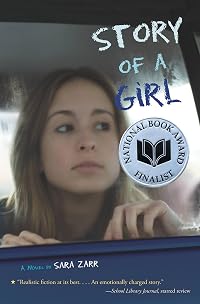
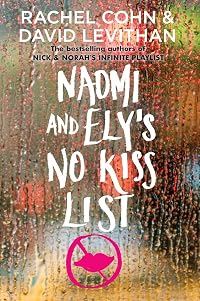
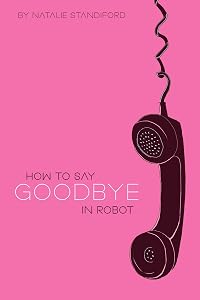
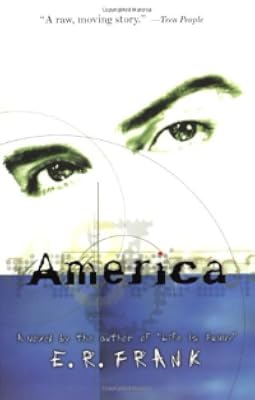

Member Recommendations
Member Reviews
While dealing with emotional trauma from growing up in a broken home, John falls in love for the first time with Marisol, a lesbian.
For some reason I expected this book to be gritty, but I actually found it rather sweet, or maybe bittersweet. I can relate to John's romantic angst, as I imagine most people could -- I've certainly been there, more than once, loving somebody who couldn't or wouldn't love me back. This is a Printz honor book, and though I don't always love the Printz committee's selections, I agree with them in this case. Recommended.
For some reason I expected this book to be gritty, but I actually found it rather sweet, or maybe bittersweet. I can relate to John's romantic angst, as I imagine most people could -- I've certainly been there, more than once, loving somebody who couldn't or wouldn't love me back. This is a Printz honor book, and though I don't always love the Printz committee's selections, I agree with them in this case. Recommended.
Wittlinger brings her two struggling zine-writing teens to life. John is a normal teenage guy. His emotions never come to the surface and when they seem to in his writing, he claims it wasn't his intention to seem emotional. Dealing with his parents' divorce and his father's desertion of him (on an emotional level) and his mother's desertion of him (on a physical level) have left him emotionally stunted and so indifferent about love that he can't rightly identify himself as straight or gay. The complete other side of the coin is Marisol, who identifies herself as a lesbian and seems completely comfortable in her own skin even before she graduates from high school. She's a straight shooter who abhors lying, even to one's own self. John, show more in an effort to escape his every day reality, can't seem to stop lying.
When Wittlinger brings these two characters together, fireworks go off. Soon John is sure that he is capable of love but has found an unfortunate target for all of the love and emotion he has kept inside since his parents' divorce. On the other hand, Marisol, while never doubting her sexuality, allows her wall of somewhat phony self-confidence to be penetrated by the bumbling John. The two become each other's best friend and worst enemy capable of hurting each other in a way they never thought possible. Wittlinger's development of these two characters is flawless.
Readers get a believable view into the psyche of an "average" teenage boy and all the hurt that lies therein. A few of the final scenes of the book moved me nearly to tears. As a teen book, Hard Love accomplishes what few that I've read recently do. It captures real issues without condescension and without slamming readers over the head with so much shocking bad language and behavior that it seems totally unsuitable to younger readers. I'm not faint of heart, and I was always allowed to read whatever I wanted once I hit my teenage years, but even I have to admit that I have been a tad blown away by what passes for "young adult" fiction now. This book breaks the mold. Highly recommended! show less
When Wittlinger brings these two characters together, fireworks go off. Soon John is sure that he is capable of love but has found an unfortunate target for all of the love and emotion he has kept inside since his parents' divorce. On the other hand, Marisol, while never doubting her sexuality, allows her wall of somewhat phony self-confidence to be penetrated by the bumbling John. The two become each other's best friend and worst enemy capable of hurting each other in a way they never thought possible. Wittlinger's development of these two characters is flawless.
Readers get a believable view into the psyche of an "average" teenage boy and all the hurt that lies therein. A few of the final scenes of the book moved me nearly to tears. As a teen book, Hard Love accomplishes what few that I've read recently do. It captures real issues without condescension and without slamming readers over the head with so much shocking bad language and behavior that it seems totally unsuitable to younger readers. I'm not faint of heart, and I was always allowed to read whatever I wanted once I hit my teenage years, but even I have to admit that I have been a tad blown away by what passes for "young adult" fiction now. This book breaks the mold. Highly recommended! show less
Excellent YA lit. The characters break out of the mold of boring, conformist high school character and succeed in being fascinating, original, believable characters who fully exist outside their high schools' social structures. I really enjoyed the author's mix of John's friendship with Marisol with his relationships with his parents. A mother who ceased to touch him at all after her divorce and a father who considers Friday-night dinners fulfillment of his paternal duties added to the complexity of John's character. Without being either dull or overwrought with drama, "Hard Love" manages to elicit honest emotion in a world of convincing, interesting characters. And it's even funny too.
I didn't think Hard Love would be such an upsetting read. I know there are other elements going on today, nightmares and Law and Order: SVU marathons, but I think by itself it would still upset me. Gay girl, straight boy, teenagers, write zines, unrequieted love. I didn't think it would be heart-wrenching in the least. But it was, because it reminded me of what it was like, what I was like as a teenager. How I felt about things like my town and high school and relationships. I guess that sounds sort of stupid. I've never been nostalgic over those years, but it reminded me of the painful parts, the parts where I was, in hindsight, stupid or immature. The parts that I couldn't help because I was a teenager and that was how I felt and now show more those feelings seem foolish, and even then they were cliche, and everything around me was awful and I didn't know what I was doing. And I guess I still don't. Reading it made me uncomfortable. It made me cry in that near-silent, open-mouth, eyes closed way that soaks my shirt. I've been listening to the song that inspired the title on repeat. Like I did with Leonard Cohen's "Suzanne." I really like it. I guess I liked the book, it's sort of hard for me to tell right now. show less
Rare among Young Adult fiction—or just about any fiction, for that matter—*Hard Love* tells the story of a friendship between a presumptively heterosexual teenage boy, John, and a lesbian teenager, Marisol. Despite the somewhat predictable trajectory of the narrative (to no one’s surprise but his own, John falls in love with Marisol), the novel navigates the murky waters of unrequited love beneath the broken bridge of incompatible sexual orientations in a way that both reaffirms young adult sexual identity and convincingly reflects the bittersweet experience of teenage romance.
John, who is somewhat of a social misfit, is trying his best to cope with his parents’ divorce and the overall disillusionment that most adolescents show more endure. He turns to zines for creativity and comfort. (The novel is set in the 1990s, so the focus on zines—which now seem quaint—is historically accurate. The noticeable absence of cell phones in the story also feels odd, considering their central role in contemporary teen culture.) John becomes enamored of a zine called Escape Velocity and vows to meet its author, Marisol. He greets her with his own zine, Bananafish, and the two become fast but unlikely friends.
Literacy—and the developmental power of writing and reading—help shape John’s identity throughout the course of the novel. He even adopts a nom de plume (Gio) as he tries to envision himself as a writer, friend, neglected son (like many teenagers, John has some major beefs with both of his parents), would-be romantic partner, and—most traumatic of all—prom attendee. Although Wittlinger might lay it on a bit thick with these teens’ devotion to zines, the emotions she portrays are always genuine and credible. She successfully depicts her characters as thoughtful, reflective, autonomous teens who are well aware of the challenges they face. show less
John, who is somewhat of a social misfit, is trying his best to cope with his parents’ divorce and the overall disillusionment that most adolescents show more endure. He turns to zines for creativity and comfort. (The novel is set in the 1990s, so the focus on zines—which now seem quaint—is historically accurate. The noticeable absence of cell phones in the story also feels odd, considering their central role in contemporary teen culture.) John becomes enamored of a zine called Escape Velocity and vows to meet its author, Marisol. He greets her with his own zine, Bananafish, and the two become fast but unlikely friends.
Literacy—and the developmental power of writing and reading—help shape John’s identity throughout the course of the novel. He even adopts a nom de plume (Gio) as he tries to envision himself as a writer, friend, neglected son (like many teenagers, John has some major beefs with both of his parents), would-be romantic partner, and—most traumatic of all—prom attendee. Although Wittlinger might lay it on a bit thick with these teens’ devotion to zines, the emotions she portrays are always genuine and credible. She successfully depicts her characters as thoughtful, reflective, autonomous teens who are well aware of the challenges they face. show less
Painfully (and not always in the good way) earnest and at times laughably dated, I still admired Hard Love for its ambitions. From every pore, this book screamed 'Express yourself!' and strove to portray a warts-and-all look at teenage 'escape'.
John, a full-time high-school cynic, is incapable of expressing himself, be it to his divorced parents or his love-obsessed best friend. Until he discovers 'zines (basically paper and ink blogs for the creative set for all of us who can't remember the '90s) and one 'zine writer in particular, Marisol, who's an outspoken, identity-seeking, lesbian teen.
It's to Wittlinger's credit that the conflicts that arise from John and Marisol's tumultuous friendship are entrenched within their character show more traits and not resolved easily with plot cliches. The thing is, I'm not sure the characters aren't really very relatable to those of us who have grown past our rebellious navel-gazing phases.
Part of growing up is realizing not only the power of your own feelings, but also, ultimately, becoming less self-obsessed and moving on. I felt like the book while exploring the first part of that journey, failed to hold the characters to the responsibility of being accountable to their actions in the name of being true to the self.
And in the imbalanced narrative arc, I felt a little cheated by the unearned coming-of-age ending that failed to really explore the deeper questions of identity: Does packaging a 'you' cheapen its reality? We've all still have so much further to go (and so many more growing pangs to suffer). show less
John, a full-time high-school cynic, is incapable of expressing himself, be it to his divorced parents or his love-obsessed best friend. Until he discovers 'zines (basically paper and ink blogs for the creative set for all of us who can't remember the '90s) and one 'zine writer in particular, Marisol, who's an outspoken, identity-seeking, lesbian teen.
It's to Wittlinger's credit that the conflicts that arise from John and Marisol's tumultuous friendship are entrenched within their character show more traits and not resolved easily with plot cliches. The thing is, I'm not sure the characters aren't really very relatable to those of us who have grown past our rebellious navel-gazing phases.
Part of growing up is realizing not only the power of your own feelings, but also, ultimately, becoming less self-obsessed and moving on. I felt like the book while exploring the first part of that journey, failed to hold the characters to the responsibility of being accountable to their actions in the name of being true to the self.
And in the imbalanced narrative arc, I felt a little cheated by the unearned coming-of-age ending that failed to really explore the deeper questions of identity: Does packaging a 'you' cheapen its reality? We've all still have so much further to go (and so many more growing pangs to suffer). show less
This was an antidote to the romances I've been reading lately. John and Marisol meet and become friends: sharing a love of writing, and a certain loneliness. Their friendship has a great capacity for bringing joy and comfort, but an equal capacity for causing damage. When John falls in love with Marisol, a lesbian, their relationship can never go back to the way it was.
I was uncomfortable with John and Marisol's relationship, not because it was unrealistic, but because it was very realistic, and I could see disaster looming. I know it is the difficult relationships that be the most wonderful, but I was two busy anticipating the pain to be able to enjoy the way they helped each other open up to wider truths about themselves and about the show more world.
I'd give this to people looking for realistic fiction about friendship and relationships - especially for stories about children surviving divorce. show less
I was uncomfortable with John and Marisol's relationship, not because it was unrealistic, but because it was very realistic, and I could see disaster looming. I know it is the difficult relationships that be the most wonderful, but I was two busy anticipating the pain to be able to enjoy the way they helped each other open up to wider truths about themselves and about the show more world.
I'd give this to people looking for realistic fiction about friendship and relationships - especially for stories about children surviving divorce. show less
Members
- Recently Added By
Lists

Relationships: LGTBQ
40 works; 2 members
Author Information

21+ Works 3,410 Members
Awards and Honors
Awards
Distinctions
Notable Lists
Series

Common Knowledge
- Original publication date
- 1999-06-01
- People/Characters
- John Galardi; Marisol Guzman
- Important places
- Boston, Massachusetts, USA; Provincetown, Massachusetts, USA
- First words
- I am immune to emotion. I have been ever since I can remember. Which is helpful when people appeal to my sympathy. I don't seem to have any.
- Quotations
- It seemed like she was playing a game with idiotic rules. First you laugh, then you tell a pretty lie, then you stick your tongue in each others mouths, then you say something really mean and hurtful to each other, then you g... (show all)o off to find somebody else who wants to play the game. This is an activity for intelligent people? I think not.
- Last words
- (Click to show. Warning: May contain spoilers.)I'm ready, I think, to join them. Very anxious, more than a little scared, susceptible now to anything that might happen.
Classifications
- Genres
- Teen, LGBTQ+, Fiction and Literature, Young Adult
- DDC/MDS
- 813.54 — Literature & rhetoric American literature in English American fiction in English 1900-1999 1945-1999
- LCC
- PZ7 .W78436 .H — Language and Literature Fiction and juvenile belles lettres Fiction and juvenile belles lettres Juvenile belles lettres
- BISAC
Statistics
- Members
- 964
- Popularity
- 27,425
- Reviews
- 23
- Rating
- (3.76)
- Languages
- Danish, English, German
- Media
- Paper, Audiobook, Ebook
- ISBNs
- 16
- ASINs
- 3