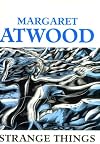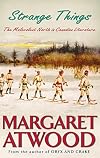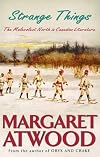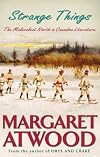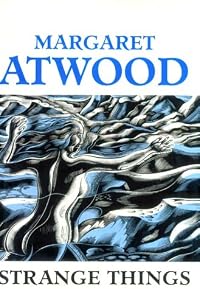
Strange Things: The Malevolent North in Canadian Literature
by Margaret Atwood
On This Page
Description
"Strange Things explores a part of the imaginative landscape of one of the most esteemed and popular of contemporary writers, Margaret Atwood." "Atwood's witty and informative book focuses on the imaginative mystique of the wilderness of the Canadian North. She discusses the 'Grey Owl Syndrome' of white writers going native; the folklore arising from the mysterious - and disastrousFranklin expedition of the nineteenth century; the myth of the dreaded snow monster, the Wendigo; the relations show more between nature writing and new forms of Gothic; and how a fresh generation of women writers in Canada have adapted the imagery of the Canadian North for the exploration of contemporary themes of gender, the family, and sexuality. Writers discussed include Robert Service, Robertson Davies, Alice Munro, E.J. Pratt, Marian Engel, Margaret Laurence, and Gwendolyn MacEwan."--Jacket. show lessTags
Recommendations


















Member Reviews
This book collects the four lectures Margaret Atwood gave at Oxford University in 1991 on the subject of Canadian literature. Atwood took as her overarching theme the North and how it has been represented. She talks about the Franklin expedition and its continued hold on the Canadian imagination; Grey Owl and others who seek salvation in the wilderness; the legends of the Wendigo; and how women writers have tackled the subject of the North, given that when men write about it, they often portray it as a femme fatale luring men to their demise.
I found these lectures bracing and energizing in the best possible way. Atwood’s command of language and construction of her lectures is excellent, and I liked her use of quotes from poems and show more prose to enhance the subject matter. I also liked her introduction to the book, where she talked about how the lectures were received (the reactions to the Franklin lecture were amusing) and how she even took care to wear thematically appropriate earrings for each lecture. The lectures have added a bunch of books to my “bump these up the TBR pile” list, and I look forward to checking them out. And the themes are still relevant today, particularly in relation to discussions about representation of Indigenous culture in non-Indigenous literature.
This collection is recommended for anyone interested in Canadian literature, as well as for people who like Margaret Atwood. show less
I found these lectures bracing and energizing in the best possible way. Atwood’s command of language and construction of her lectures is excellent, and I liked her use of quotes from poems and show more prose to enhance the subject matter. I also liked her introduction to the book, where she talked about how the lectures were received (the reactions to the Franklin lecture were amusing) and how she even took care to wear thematically appropriate earrings for each lecture. The lectures have added a bunch of books to my “bump these up the TBR pile” list, and I look forward to checking them out. And the themes are still relevant today, particularly in relation to discussions about representation of Indigenous culture in non-Indigenous literature.
This collection is recommended for anyone interested in Canadian literature, as well as for people who like Margaret Atwood. show less
This a series of lectures on Canadian Literature that Margaret Atwood gave in Oxford in the 1990's. One about the Franklin Expedition, a disastrous attempt to find the North-West Passage, and the personification of the Canadian Wastes. One about Grey Owl, a white man who pretended to be an Indian and wrote books about nature and ecology, so also talking more generally about going native and ecology. One about the Wendigo, a kind of monster, and the various incarnations that it takes. Also one about female Canadian writers and, possibly, why there are more famous female writers from Canada when generally major writers in other countries are men.
Even though this book is nearly twenty years old there is still a lot of interest to anyone show more with a liking of Canada and the stories that come from there. I found these lectures both witty and informative. show less
Even though this book is nearly twenty years old there is still a lot of interest to anyone show more with a liking of Canada and the stories that come from there. I found these lectures both witty and informative. show less
I enjoyed this very much. It is a collection of four lectures that Atwood gave which focus on "the imaginative mystique of the wilderness of the Canadian North" in literature. These lectures were informative and interesting and delivered with a touch of that Atwood deadpan humour. I also picked up a few great reading suggestions.
Such a lovely survey of Canadian literature in lectures long enough to show Atwood's sense of humor and thorough knowledge, short enough to be digested.
Includes interesting essay on the literary impact in Canada of Franklin's disastrous North-west passage expedition in the mid-nineteenth-century.
As funny, smart and compelling as her fiction.
Ratings
Members
- Recently Added By
Lists

Works Cited in Kevin Wetmore's Eaters of the Dead
61 works; 1 member
Author Information

283+ Works 198,435 Members
Margaret Atwood was born on November 18, 1939 in Ottawa, Canada. She received a B.A. from Victoria College, University of Toronto in 1961 and an M.A. from Radcliff College in 1962. Her first book of verse, Double Persephone, was published in 1961 and was awarded the E. J. Pratt Medal. She has published numerous books of poetry, novels, story show more collections, critical work, juvenile work, and radio and teleplays. Her works include The Journals of Susanna Moodie, Power Politics, Cat's Eye, The Robber Bride, Morning in the Buried House, the MaddAdam trilogy, and The Heart Goes Last. She has won numerous awards including the Prince of Asturias Award for Literature, the Booker Prize in 2000 for The Blind Assassin, the Giller Prize and the Premio Mondello for Alias Grace, and the Governor General's Award in 1966 for The Circle Game and in 1986 for The Handmaid's Tale, which also won the very first Arthur C. Clarke Award in 1987. She won the PEN Pinter prize in 2016 for her political activism. She was awarded the 2016 PEN Pinter Prize for the outstanding literary merit of her body of work. (Bowker Author Biography) show less
Series
Belongs to Publisher Series
Common Knowledge
- Canonical title
- Strange Things: The Malevolent North in Canadian Literature
- Original publication date
- 1995
- Important places
- Canada's North; Canada
- First words
- Strange Things consists of four lectures which I delivered in the spring of 1991, at Oxford University, as part of the Clarendon Lecture Series in English Literature. (Introduction)
- Last words
- (Click to show. Warning: May contain spoilers.)The things that are killing the North will kill, if left unchecked, everything else.
- Publisher's editor
- Lockett, Andrew
Classifications
Statistics
- Members
- 218
- Popularity
- 149,161
- Reviews
- 6
- Rating
- (3.85)
- Languages
- English
- Media
- Paper, Ebook
- ISBNs
- 4
- ASINs
- 2