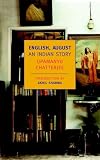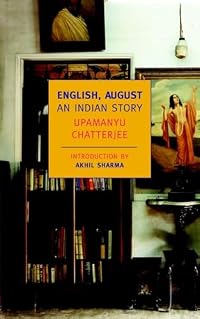
English, August: An Indian Story
by Upamanyu Chatterjee
On This Page
Description
Agastya Sen, the hero of English, August, is a child of the Indian elite. His father is the governor of Bengal. His friends go to Yale and Harvard. He himself has secured a position in the most prestigious and exclusive of Indian government agencies, the IAS. Agastya's first assignment is to the town of Madna, buried deep in the provinces. There he meets a range of eccentrics worthy of a novel by Evelyn Waugh. Agastya himself smokes a lot of pot and drinks a lot of beer, finds ingenious show more excuses to shirk work, loses himself in sexual fantasies about his boss's wife, and makes caustic asides to coworkers and friends. And yet he is as impatient with his own restlessness as he is with anything else. Agastya's effort to figure out a place in the world is faltering and fraught with comic missteps. Chatterjee's novel, an Indian Catcher in the Rye with a wild humor and lyricism that are all its own, is at once spiritual quest and a comic revue. It offers a glimpse an Indian reality that proves no less compelling than the magic realism of Salman Rushdie and Arundhati Roy. show lessTags
Recommendations


























Member Recommendations

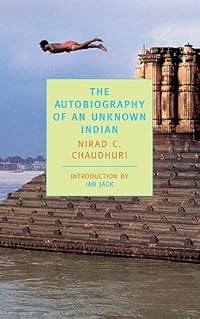
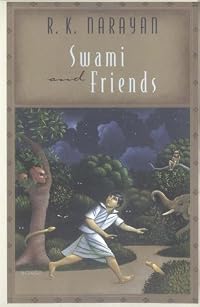
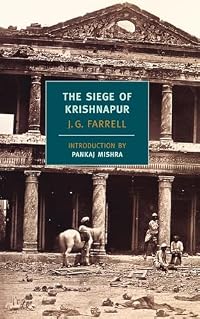
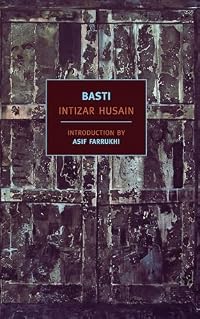
wandering_star Both satires of bureaucracy, one focused on corruption (in China), the other on inertia (in India).
Member Reviews
English, August is fundamentally a comedy, but I would rather call it a serio-comic reflection on a young Indian man of intelligence who exhibits, among other things, an ennui that permeates his actions and choices throughout the novel. It is the story of Agastya Sen, known to his friends by the English name, August, who is a member of the Indian elite, educated at Yale, and recently ensconced in a prize government job. It is a job which takes him to Madna, "the hottest town in India," deep in the rural countryside. Surrounded by an amalgam of neer-do-wells, bureaucrats and characters of various kinds that share only the common characteristic of being both annoying and of no interest to August he wonders what to do? While settling into show more a self-indulgent life that includes both pot and pleasing himself he incongruously he begins reading a combination of Marcus Aurelius and the Bhagavad Gita.
"In those months he grew to like immensely this wise sad Roman. Marcus immediately made him feel better, because Marcus seemed to have more problems than anyone else--not the soul-squashing problems of being poor, but the exhilarating abstract problems of one immersed wholly in his self."(p 80)
On the recommendation of one of his new acquaintances, who runs his father's hotel, he also begins to read the Gita.
"Thus, through happenstance, Agastaya could place the Bhagavad-Gita beside Marcus Aurelius on his shelf. . . Most passages were abstruse, but Agastaya was surprised by some:"(p 96)
Omnipresent throughout the novel was the ennui of this young man who had no direction in his life and no interest the profession that had been chosen for him by his father, prestige notwithstanding. August, on the contrary, after almost two hundred pages he thinks:
"No emotion was sacredly his own, and he half-hope that his restlessness would thus succumb to attrition. Perhaps his mind would finally realize that its disquietude was merely an index of its immaturity, as inevitable a sign of growing-up as the first emission of semen, as universal as excrement, and about as noteworthy."(p 195)
"At night he would lie awake and hear the clack of his uncle's typewriter and watch the dark shape of the bougainvillaea outside the window, and see in its twists and turns a million things, but never his future."(p 197)
Yet this is a comic novel. One that is filled with humorous characters, recognizable to anyone familiar with bureaucracies. The omnispresent heat and fecundity of life demonstrated, to the consternation of August, in mosquitoes and animal feces, presents an unquestionable level of discomfort that is put to use for comic purposes. But the central irony is Agastya himself and that is no better illustrated than by the derivation of his name. His doctor's father shares this near the end of the story:
"Agam is mountain. Agastya could be agam plus asyat, one who pushes a mountain. Or agam plus styayati, one who stops a mountain. We often have this ambiguity, and uncertainty about our names, their origins."
There may also be a suggestion of Sisyphus in all this mountain-pushing business, but perhaps not. What is present is great irony when considering the life of this young dreamer of uncertain origins who is adrift in the heart of India near the start of a life that may merely drift off into the future. show less
"In those months he grew to like immensely this wise sad Roman. Marcus immediately made him feel better, because Marcus seemed to have more problems than anyone else--not the soul-squashing problems of being poor, but the exhilarating abstract problems of one immersed wholly in his self."(p 80)
On the recommendation of one of his new acquaintances, who runs his father's hotel, he also begins to read the Gita.
"Thus, through happenstance, Agastaya could place the Bhagavad-Gita beside Marcus Aurelius on his shelf. . . Most passages were abstruse, but Agastaya was surprised by some:"(p 96)
Omnipresent throughout the novel was the ennui of this young man who had no direction in his life and no interest the profession that had been chosen for him by his father, prestige notwithstanding. August, on the contrary, after almost two hundred pages he thinks:
"No emotion was sacredly his own, and he half-hope that his restlessness would thus succumb to attrition. Perhaps his mind would finally realize that its disquietude was merely an index of its immaturity, as inevitable a sign of growing-up as the first emission of semen, as universal as excrement, and about as noteworthy."(p 195)
"At night he would lie awake and hear the clack of his uncle's typewriter and watch the dark shape of the bougainvillaea outside the window, and see in its twists and turns a million things, but never his future."(p 197)
Yet this is a comic novel. One that is filled with humorous characters, recognizable to anyone familiar with bureaucracies. The omnispresent heat and fecundity of life demonstrated, to the consternation of August, in mosquitoes and animal feces, presents an unquestionable level of discomfort that is put to use for comic purposes. But the central irony is Agastya himself and that is no better illustrated than by the derivation of his name. His doctor's father shares this near the end of the story:
"Agam is mountain. Agastya could be agam plus asyat, one who pushes a mountain. Or agam plus styayati, one who stops a mountain. We often have this ambiguity, and uncertainty about our names, their origins."
There may also be a suggestion of Sisyphus in all this mountain-pushing business, but perhaps not. What is present is great irony when considering the life of this young dreamer of uncertain origins who is adrift in the heart of India near the start of a life that may merely drift off into the future. show less
I am surprised that 'English, August' is not better known. It is well-written and is refreshingly funny. While the most outstanding aspect of this novel is its humor, what I like the best about it is that the story is told in such a genuine voice. For once this is not an NRI author trying to bring forth the truth about "real" India. Chatterjee draws heavily from his own experiences in the Indian administrative service to paint a picture of life in rural India, working of Government offices and bureaucracy in India of 1983. The story centers around a westernized city-boy Augustya who is stranded in a small village with a job he isn't interested in at all. The western influence on young generation and vast difference between urban and show more rural lives form a part of the theme as well.
There were many instances where I could easily picture the scenes in the book because it was all so familiar, it is a very Indian story.
Plot-wise not a lot seems to happen. But I guess this is a reflection of the situation at hand - just the way things don't seem to progress in government offices responsible for development and nothing seems to change from day-to-day in small villages and towns.
"Most novels progress, but this one simply chronicles an ongoing anomie and spiritual restlessness."-Washington Post.
Chatterjee doesn't let the narrative get dull at all. He presents a satirical and humorous view of the way things function. He introduces us to an array of characters who are not too far from the kind of people one could encounter in real life. And each of them is entertaining in his or her own way. Even if the situation is dull, he effortlessly evokes humor with his wit and play of words. The language perfectly complements the mood of the novel. It can be read multiple times and it still won't grow stale.
Without any doubt, Chatterjee's writing is way ahead of the likes of Adiga, Swarup or Bhagat. I am glad I came across this novel. Way to go Mr. Chatterjee!
I wanted to post some of the funny excerpts from the novel. But there are so many of them, I don't know how to pick. Just read the book... show less
There were many instances where I could easily picture the scenes in the book because it was all so familiar, it is a very Indian story.
Plot-wise not a lot seems to happen. But I guess this is a reflection of the situation at hand - just the way things don't seem to progress in government offices responsible for development and nothing seems to change from day-to-day in small villages and towns.
"Most novels progress, but this one simply chronicles an ongoing anomie and spiritual restlessness."-Washington Post.
Chatterjee doesn't let the narrative get dull at all. He presents a satirical and humorous view of the way things function. He introduces us to an array of characters who are not too far from the kind of people one could encounter in real life. And each of them is entertaining in his or her own way. Even if the situation is dull, he effortlessly evokes humor with his wit and play of words. The language perfectly complements the mood of the novel. It can be read multiple times and it still won't grow stale.
Without any doubt, Chatterjee's writing is way ahead of the likes of Adiga, Swarup or Bhagat. I am glad I came across this novel. Way to go Mr. Chatterjee!
I wanted to post some of the funny excerpts from the novel. But there are so many of them, I don't know how to pick. Just read the book... show less
It's a novel about a 20-something who is bored and restless, and as a reader I also felt bored and restless.
Someone once told me novels act as mirrors or windows, depending on the reader. Well, I think that if you are a person for whom this would be a mirror then I think it will be a good read; I can see how it would feel validating, and perhaps nostalgic, to see your struggles and frustrations reflected back at you. If this book would be a window then it's more likely to be a dud because nothing really happens, and that is hard to connect to without a personal angle.
Someone once told me novels act as mirrors or windows, depending on the reader. Well, I think that if you are a person for whom this would be a mirror then I think it will be a good read; I can see how it would feel validating, and perhaps nostalgic, to see your struggles and frustrations reflected back at you. If this book would be a window then it's more likely to be a dud because nothing really happens, and that is hard to connect to without a personal angle.
"It's about doing paperwork (or avoiding doing paperwork), going to teas with your boss's wife, and overseeing village well-digging projects, as well as smoking pot, masturbating, and reading Marcus Aurelius."
That's Akhil Sharma in the introduction to English, August: An Indian Story by Upamanyu Chatterjee, incisively summing up the novel , and if that doesn't whet a reader's appetite, particularly a reader looking for something new out of India, something without the sickeningly sweet fetor of "magical realism," then I don't know what will. His account of the life of a slacker, forced to give up his citified ways (if not the vices mentioned above), when, as a member of the Indian civil service, he is sent to a backwater town, is often show more laugh-out-loud funny, and never less than amusing. It is also refreshing that the slacker-narrator never does find certainty about the path his life should take but instead, at the end, accepts that life is an uncertain business. show less
That's Akhil Sharma in the introduction to English, August: An Indian Story by Upamanyu Chatterjee, incisively summing up the novel , and if that doesn't whet a reader's appetite, particularly a reader looking for something new out of India, something without the sickeningly sweet fetor of "magical realism," then I don't know what will. His account of the life of a slacker, forced to give up his citified ways (if not the vices mentioned above), when, as a member of the Indian civil service, he is sent to a backwater town, is often show more laugh-out-loud funny, and never less than amusing. It is also refreshing that the slacker-narrator never does find certainty about the path his life should take but instead, at the end, accepts that life is an uncertain business. show less
At times laugh-out-loud funny, but more often a bit depressing, the author takes us inside the mind of a young, unambitious Indian man trying to figure out his life while training for his position as a civil servant in small town India. The book is full of rich characters which I had difficulty keeping straight, and outrageous moments of work avoidance I'm sure more could relate to than are willing to admit. Gives the impression of a society that learned from occupying forces how to appear to be a manager without really managing. I appreciated the window into Indian culture, but was happy to finish the book.
I remember this book as a comic masterpiece. I had read it about 18 years ago - yet remember Madna and the protagonist's hilarious flirt with his own life and the surrounding.
What writing! Not a moment when the narrative gets dull. A journey of self discovery that's at once humorous, satirical, and makes you feel uncomfortable because of the number of ways it is relatable. Can read this one again and again.
Members
- Recently Added By
Lists

Reading list
170 works; 1 member
Author Information

14+ Works 934 Members
Awards and Honors
Series
Belongs to Publisher Series
Common Knowledge
- Canonical title
- English, August: An Indian Story
- Original publication date
- 1988
Classifications
Statistics
- Members
- 698
- Popularity
- 40,692
- Reviews
- 13
- Rating
- (3.72)
- Languages
- English, French, Italian, Spanish
- Media
- Paper, Ebook
- ISBNs
- 12
- ASINs
- 4