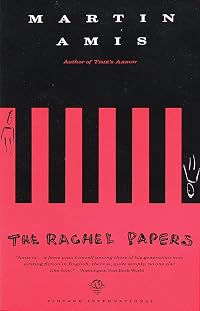
The Rachel Papers
by Martin Amis
On This Page
Description
In his uproarious first novel Martin Amis, author of the bestselling London Fields, gave us one of the most noxiously believable -- and curiously touching -- adolescents ever to sniffle and lust his way through the pages of contemporary fiction. On the brink of twenty, Charles High-way preps desultorily for Oxford, cheerfully loathes his father, and meticulously plots the seduction of a girl named Rachel -- a girl who sorely tests the mettle of his cynicism when he finds himself falling in show more love with her. show lessTags
Recommendations













Member Reviews
If Philip Roth is correct and life is misunderstanding people, then I remain awed by the riddle which is Martin Amis. His first novel The Rachel Papers injects self-awareness into satire, leaking a fecund foam which changes everything about how we regard the way we live now. The insecurity of adolescence is illustrated by our protagonist, one Charles Highway, who diagrams said angst and provides cross-references from the literary canon. One can imagine the reader or protagonsit saying bugger Holden Caulfield, then recognizing that Highway has likely compiled a list of ten reasons as to his superiority over Mr. Caulfield.
During a lazy gap year Charles writes, drinks and woos the titular Rachel. Life doesn't meet his precis. Plans have show more to change. Matters become a little Meta and we are left a little uncertain about what is actual and what is fictive. This is one of the most hilarious novels I've read. Numerous passages left me almost convulsing with laughter. show less
During a lazy gap year Charles writes, drinks and woos the titular Rachel. Life doesn't meet his precis. Plans have show more to change. Matters become a little Meta and we are left a little uncertain about what is actual and what is fictive. This is one of the most hilarious novels I've read. Numerous passages left me almost convulsing with laughter. show less
Is this great literature? No. But I did really like it. It should sit next to Rabbit, Run and Portnoy's Complaint, but with the benefit of being much, much better written than the first, and more interesting than the second. Also, compared to 'Dead Babies,' which was my first M. Amis read, this is much less datedly 'shocking.' Reading DB was a bit like listening to a teenager with green-dyed hair talking about how much she's subverting Them. Kind of cute, but also more than a bit tragic. I didn't get that feeling here, thank the lord.
Aside from being hilarious, the book's strength is the distance between the character, the reader, the 'implied author' (sorry for the jargon, but it's a useful one) and Amis himself. That distance show more separates the book from Roth. Roth always makes me think that, not only does the protagonist = the implied author = Roth, but also that the reader is being morally bullied into identifying with Roth; there is nobody I less want to identify with. Here, Amis is distant from Charles Highway; he starts off letting the reader be distant, then eventually forces you to be - the conclusion is the only truly shocking part of the book, but it's perfectly right. But Charles Highway is himself distant from Charles Highway, thanks to the narrative structure. Nice.
All that said, this is clearly a love it or loathe it kind of deal. I wonder how funny it would be to someone who was never a teenage boy? Or perhaps more importantly, to men or women who like to think that being a teenager is all wide-eyed joy and openness to the world and lack of responsibility and stress. Probably not funny at all. And you'll hate it if you can only like books when you like the protagonist. But if you're one of those people, I mean, come on, really? You're missing a lot of great books. show less
Aside from being hilarious, the book's strength is the distance between the character, the reader, the 'implied author' (sorry for the jargon, but it's a useful one) and Amis himself. That distance show more separates the book from Roth. Roth always makes me think that, not only does the protagonist = the implied author = Roth, but also that the reader is being morally bullied into identifying with Roth; there is nobody I less want to identify with. Here, Amis is distant from Charles Highway; he starts off letting the reader be distant, then eventually forces you to be - the conclusion is the only truly shocking part of the book, but it's perfectly right. But Charles Highway is himself distant from Charles Highway, thanks to the narrative structure. Nice.
All that said, this is clearly a love it or loathe it kind of deal. I wonder how funny it would be to someone who was never a teenage boy? Or perhaps more importantly, to men or women who like to think that being a teenager is all wide-eyed joy and openness to the world and lack of responsibility and stress. Probably not funny at all. And you'll hate it if you can only like books when you like the protagonist. But if you're one of those people, I mean, come on, really? You're missing a lot of great books. show less
Charles Highway is approaching his twentieth birthday. All too soon his teenage years will come to a close. But there are yet things to be done: he must study for and write the entrance exams for Oxford, compose a bitingly cruel letter of rebuke to his philandering father, dissipate in London (though admittedly in the basement of his sister’s house), bring his sardonic wrath down upon the history of literature, and oh, sleep with an older woman. Rachel, two months his senior, is his choice. And just as his does with his exam prep, his letter to his father, his personal chronicle of his dissipation, Charles has a dossier on Rachel, a battle plan, if you will, that will ensure his conquest. Well, maybe.
Charles may be nineteen but his show more angst-ridden sexual single-mindedness makes him seem more like an emotionally stunted younger teen. As though the various medical conditions that delayed his education also retarded his psychological growth. But his scatter-gun disdain is telling, especially when he ends up being its target, which is often the case. He knows that he is ridiculous, but then so is the world around him and everyone in it. The irony is that when he isn’t self-consciously an ass, he is an attentive lover capable of real emotional connection. But only up to the point of realization. Then he seems determined to crush out any honest emotion like the dregs of a cigarette.
The writing here is deceptive. Charles is not sympathetic. And even when he lets his mask slip, it’s difficult to have any emotional investment in his plight. Amis’ writing absolutely delights in Charles’ self-loathing. As Charles writes in one of his exam papers, there is a “meretricious exaltation of verbal play over real feeling.” Amis knows precisely what he is doing and is completely willing to skewer himself in the process. It is a first novel that announces that more and greater things are bound to come from this writer (and they do). After a slow start, it entirely won me over at least to an appreciation of Amis’ much-touted skill.
Recommended. show less
Charles may be nineteen but his show more angst-ridden sexual single-mindedness makes him seem more like an emotionally stunted younger teen. As though the various medical conditions that delayed his education also retarded his psychological growth. But his scatter-gun disdain is telling, especially when he ends up being its target, which is often the case. He knows that he is ridiculous, but then so is the world around him and everyone in it. The irony is that when he isn’t self-consciously an ass, he is an attentive lover capable of real emotional connection. But only up to the point of realization. Then he seems determined to crush out any honest emotion like the dregs of a cigarette.
The writing here is deceptive. Charles is not sympathetic. And even when he lets his mask slip, it’s difficult to have any emotional investment in his plight. Amis’ writing absolutely delights in Charles’ self-loathing. As Charles writes in one of his exam papers, there is a “meretricious exaltation of verbal play over real feeling.” Amis knows precisely what he is doing and is completely willing to skewer himself in the process. It is a first novel that announces that more and greater things are bound to come from this writer (and they do). After a slow start, it entirely won me over at least to an appreciation of Amis’ much-touted skill.
Recommended. show less
I strode into this novel with a bit of bad press concerning its content. One of my professors from my just completed Masters program had apparently attempted to read Amis' novel (this on his first) and found she couldn't continue past 100 pages. With all due respect to my professor (and for her specifically I have quite a bit) I couldn't find what she didn't like about this novel. For me it was fantastic. A refreshingly unchaste, unlettered, yet very erudite and of course almost excessively British (some of these seem to be calling cards of the 'younger' Amis so go know) story of one compulsively horny and compulsively narcissistic boy nigh man coming into his own as both his father's son and his own man...both of them fairly deplorable show more by the ostensible standards of middle class morality.
Amis is funny, distinct, and relentlessly his own voice which, while abrasive, is authentic and unapologetic in its intelligence, bitterness, and wit. I recommend this book to anyone (my former professor excluded) who loves watching intelligent people make objectively bad decisions for subjectively good reasons show less
Amis is funny, distinct, and relentlessly his own voice which, while abrasive, is authentic and unapologetic in its intelligence, bitterness, and wit. I recommend this book to anyone (my former professor excluded) who loves watching intelligent people make objectively bad decisions for subjectively good reasons show less
I've been aware of Martin Amis for fifty years, but had never read any of his work until now. In fact, THE RACHEL PAPERS (1973) was his first novel. Its a "sort of" coming-of-age story and probably highly autobiographical. His narrator-protagonist, Charles Highway, is on the cusp of turning twenty, and looking back at his lengthy pursuit of and obsession with a lovely girl named Rachel. He is about to take his exams to get into Oxford, but he is also reviewing his encyclopedic notes and journals he has kept on this girl, as he flashes back on his childhood and teenage years and other friends and girls he has known. Oh, and he also "thinks" he hates his newly wealthy father, who is seldom home and has a mistress, and is composing, show more variously, a letter, or speech, to him.
This is not a very "deep" novel (although it is filled with literary allusions - Charles is very well read), and I felt a bit guilty about how very much I enjoyed it, often chuckling or lol-ing at what Charles had to say, or was thinking - about sex, girls, women, wanking, all manner of bodily functions and effluvia - often a combination of disgusting, fanciful and flat out hilarious. And it's a very seventies novel, reflecting the new sexual freedom that characterized those years.
I remembered reading Kingsley Amis's best-selling novel, LUCKY JIM, back in college (extracurricular), and not liking it all that much. Maybe the British humor went right over my head. Not so with his son's book. I laughed. A lot. There are hints of early Philip Roth here.
I enjoyed this book tremendously. Very highly recommended.
- Tim Bazzett, author of the memoir, BOOKLOVER show less
This is not a very "deep" novel (although it is filled with literary allusions - Charles is very well read), and I felt a bit guilty about how very much I enjoyed it, often chuckling or lol-ing at what Charles had to say, or was thinking - about sex, girls, women, wanking, all manner of bodily functions and effluvia - often a combination of disgusting, fanciful and flat out hilarious. And it's a very seventies novel, reflecting the new sexual freedom that characterized those years.
I remembered reading Kingsley Amis's best-selling novel, LUCKY JIM, back in college (extracurricular), and not liking it all that much. Maybe the British humor went right over my head. Not so with his son's book. I laughed. A lot. There are hints of early Philip Roth here.
I enjoyed this book tremendously. Very highly recommended.
- Tim Bazzett, author of the memoir, BOOKLOVER show less
I've given up trying to defend Martin Amis books. I tend to agree with every criticism that people offer, but to me they've missed the point. He's so wonderful to read because he has more technical mastery than any writer of the last fifty years that I've read. He can make his prose, and consequently his characters, do absolutely anything he likes.
As this is his first novel the pyrotechnics are somewhat muted, making it probably one of his more accessible novels. He has focused a bit more on characterisation, creating Charles Highway, who can stand as the equal of any of the unpleasant young men of literature in my opinion. He's at once detestable and forgivable, and he's instantly recognisable to anyone who's ever anticipated the show more sexual act with equal measures of dread and excitement, or felt an odd pleasure at coughing up a livid green lump of mucus.
If you've never read Martin Amis, or ever wondered what goes on in the head of self-involved young men, this is a good place to start. show less
As this is his first novel the pyrotechnics are somewhat muted, making it probably one of his more accessible novels. He has focused a bit more on characterisation, creating Charles Highway, who can stand as the equal of any of the unpleasant young men of literature in my opinion. He's at once detestable and forgivable, and he's instantly recognisable to anyone who's ever anticipated the show more sexual act with equal measures of dread and excitement, or felt an odd pleasure at coughing up a livid green lump of mucus.
If you've never read Martin Amis, or ever wondered what goes on in the head of self-involved young men, this is a good place to start. show less
this is fine; the writing is good enough and there are some insightful and humorous parts. i just can't say that i'm interested in a book whose sole purpose seems to be recounting the sexual exploits of a 19 year old boy just before he turns 20. throughout the book he's trying to sleep with rachel (and sleeping with other girls along the way) and what happens to their relationship once he gets her in bed. i know this was written in 1973 but it's just not a perspective that i care about at all.
Members
- Recently Added By
Lists

living room bookshelf
150 works; 1 member
Author Information

58+ Works 29,861 Members
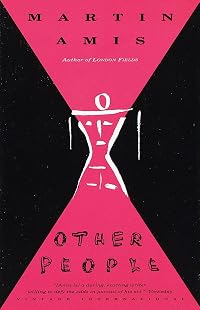
Martin Amis, son of the novelist Kingsley Amis, was born August 25, 1949. His childhood was spent traveling with his famous father. From 1969 to 1971 he attended Exeter College at Oxford University. After graduating, he worked for the Times Literary Supplement and later as special writer for the Observer. Amis published his first novel, The Rachel show more Papers, in 1973, which received the prestigious Somerset Maugham Award in 1974. Other titles include Dead Babies (1976), Other People: A Mystery Story (1981); London Fields (1989), The Information (1995), and Night Train (1997). Martin Amis has been called the voice of his generation. His novels are controversial, often satiric and dark, concentrating on urban low life. His style has been compared to that of Graham Greene, Philip Larkin and Saul Bellow, among others. He is currently Professor of Creative Writing at the Centre for New Writing at the University of Manchester. In 2008, The Times named him one of the 50 greatest British writers since 1945. (Bowker Author Biography) show less
Some Editions
Awards and Honors
Awards
Series
Belongs to Publisher Series
Fischer Taschenbuch (15504)
Work Relationships
Is contained in
Has the adaptation
Common Knowledge
- Original title
- The Rachel Papers
- Original publication date
- 1973
- People/Characters
- Charles Highway
- Related movies
- The Rachel Papers (1989 | IMDb)
- First words
- My name is Charles Highway, though you wouldn't think it to look at me.
- Quotations
- Don’t I ever do anything else but take soulful walks down the Bayswater Road, I thought, as I walked soulfully down the Bayswater Road.
- Last words
- (Click to show. Warning: May contain spoilers.)I refill my pen.
- Original language
- English
Classifications
Statistics
- Members
- 1,827
- Popularity
- 11,956
- Reviews
- 32
- Rating
- (3.38)
- Languages
- 9 — Czech, Dutch, English, French, German, Italian, Portuguese, Russian, Spanish
- Media
- Paper, Ebook
- ISBNs
- 34
- ASINs
- 12