On This Page
Description
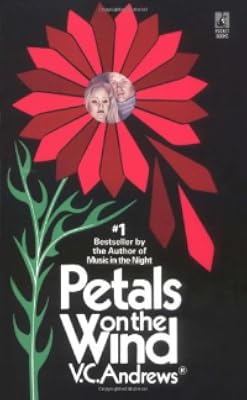
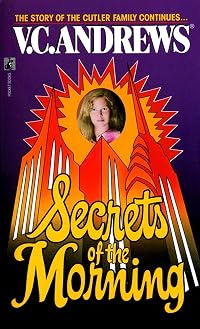
Cathy discovers that she has the power to revenge those childhood years locked in an attic with her brother and sister.Tags
Recommendations



Member Reviews
Is this book controversial? Hell yeah. And I can see why. And I can also see why some people didn't like it, but fuck me if this isn't entertaining drama/trash.
After reading Flowers in the Attic, I was happy to continue the story. If I were Cathy, I'd be supremely pissed off at my own mother, and want to plot revenge although there's a couple of things I would have done differently.
The trio that managed to escape the Foxworth mansion after the death of their brother are forever scarred by their traumatic experience, especially Carrie, who constantly struggles with the physical and mental scars that are left on her. Despite being adopted by a man who treats them well, the children can't quite get over what happened, though Chris is more show more quick to move on and start a productive life in medicine. Cathy desires revenge - perfectly justified - but makes some stupid decisions along the way. However, her thirst for revenge comes to fruition as she lashes against the evil grandmother and her mother.
All in all, this is a worthy continuation of Flowers in the Attic, with things coming full circle, so to speak, at least in some aspects. Overall an enjoyable book if you liked Flowers in the Attic as well. show less
After reading Flowers in the Attic, I was happy to continue the story. If I were Cathy, I'd be supremely pissed off at my own mother, and want to plot revenge although there's a couple of things I would have done differently.
The trio that managed to escape the Foxworth mansion after the death of their brother are forever scarred by their traumatic experience, especially Carrie, who constantly struggles with the physical and mental scars that are left on her. Despite being adopted by a man who treats them well, the children can't quite get over what happened, though Chris is more show more quick to move on and start a productive life in medicine. Cathy desires revenge - perfectly justified - but makes some stupid decisions along the way. However, her thirst for revenge comes to fruition as she lashes against the evil grandmother and her mother.
All in all, this is a worthy continuation of Flowers in the Attic, with things coming full circle, so to speak, at least in some aspects. Overall an enjoyable book if you liked Flowers in the Attic as well. show less
Holy guacamole.
I gave four stars to Flowers in the Attic, because apparently I'm shallow and weird. So it was kind of a relief to find myself thinking "This is OFFENSIVELY bad" on a regular basis as I read the sequel. (It only earns two stars because of the ending -- see below.)
How offensive?
Let's see. The kids from Flowers have managed to run away from the attic they were trapped in for so many years. They're on a bus (destination: Anywhere But Here) when their little sister Carrie becomes violently ill. Fortunately, the children are noticed by a large, motherly, helpful black woman. (Well, what other kind of black woman is there? These are white kids in need, after all.) She persuades them to let her take them to her "doctor-son, who show more is very best doctor."
This is written in a note -- the woman can hear, but can't speak. And the doctor in question isn't her son. He's her employer, a white man.
Ew.
Doctor-Son White Guy is thrilled to see the kids. He once had a wife and son, but he lost them in a tragedy that's only hinted at. (It's spelled out later, and of course it's nothing normal like a car crash or something. This is a V.C. Andrews novel, after all.) He sees these beautiful, mysterious, haunted-looking children as a godsend -- a ready-made family he can love and care for. Plus, he already has the hots for Cathy, the narrator. Which makes sense. She's absolutely beautiful. And 15 years old. And he's in his 40s. It couldn't be perfecter!
I did mention offensive and ew, right?
Really, Cathy's continuing attraction to her brother Chris, and his to her, is the least icky relationship in the whole book.
Cathy has a lot of relationships in this book. We're not talking love triangles. We're talking every guy over the age of 10 falls for her. I'm not trying to sound slut-shamey, because it's not about how many guys she, ahem, engages with in this book. It's that they're all absolutely horrible, and she's fine with that. She forgives sexism, rape, abuse of every kind, and a guy who swears she's the love of his life but cheats on her nonstop. And not just garden-variety cheating. (This is a V.C. Andrews novel.)
I'd never before thrown in his face that I knew about his debaucheries with very young girls. It had hurt at first when I found out, but now I knew he used those girls like he used paper napkins, to casually toss away when soiled, and back he'd come to me, to say he loved me, needed me, and I was the only one.
o_O
Later, when he's "apologizing," he says, "Why do you try to bring out the worst in me? I only use those girls to spare you."
Her reply is, of course, to kick in him the junkyard as hard as she can, then call the cops and ask exactly how much evidence she needs to turn in a serial statutory rapist.
Oh, wait. This is a V.C. Andrews novel. Her reply is, "If they don't mind, then I don't mind."
Just...I can't even...
It gets worse. Okay, maybe not worse, but it stays at that level of icky-creep throughout.
For instance: This same guy is physically abusive. But it's okay, because he feels really bad about it afterward. And then she feels bad for provoking him. After he inflicts injuries that are so bad they threaten her future career as a dancer, she takes all the blame:
"He kept begging me to say I loved him, and I never would. I kept a deceptive parasol over my head, to keep dark doubts in my mind, and I refused to see anything that was noble and fine about him but his dancing. I didn't realize that to love me, even when I denied him, was noble and fine in itself."
But...with the...
(sigh)
And it isn't as if this is written in a cautionary-tale, "don't let this happen to YOU" tone. It's more like, "Hey! This is how guys are. What are you going to do? Be nice to your man, ladies. Maybe he'll be nice back. Probably not, but it's your fault if he isn't. Oh, and have a nice day!"
The ending is, I must admit, awesome in a General-Hospital-meets-Rebecca kind of way. But I truly don't believe it was worth plowing my way through 400 pages of horrifyingly regressive storytelling. Did you know that "people of another race and color" have "the same sensitivities, hopes and fears we all have"? Oh, you didn't? Well, maybe you should read this book after all.
And then you can also learn that "an aggressive, domineering woman is one of God's most fearsome creatures." Cathy is told this after she explains that she wants to learn some skills to see her through life so she'll always be able to take care of her children even if she's left on her own. (Spoiler alert: yeah, THAT works out really well.)
I am not even remotely tempted to read any more Flowers sequels. So that's something, anyway.
And now if you'll excuse me, I have to go and get my brain back. show less
I gave four stars to Flowers in the Attic, because apparently I'm shallow and weird. So it was kind of a relief to find myself thinking "This is OFFENSIVELY bad" on a regular basis as I read the sequel. (It only earns two stars because of the ending -- see below.)
How offensive?
Let's see. The kids from Flowers have managed to run away from the attic they were trapped in for so many years. They're on a bus (destination: Anywhere But Here) when their little sister Carrie becomes violently ill. Fortunately, the children are noticed by a large, motherly, helpful black woman. (Well, what other kind of black woman is there? These are white kids in need, after all.) She persuades them to let her take them to her "doctor-son, who show more is very best doctor."
This is written in a note -- the woman can hear, but can't speak. And the doctor in question isn't her son. He's her employer, a white man.
Ew.
Doctor-Son White Guy is thrilled to see the kids. He once had a wife and son, but he lost them in a tragedy that's only hinted at. (It's spelled out later, and of course it's nothing normal like a car crash or something. This is a V.C. Andrews novel, after all.) He sees these beautiful, mysterious, haunted-looking children as a godsend -- a ready-made family he can love and care for. Plus, he already has the hots for Cathy, the narrator. Which makes sense. She's absolutely beautiful. And 15 years old. And he's in his 40s. It couldn't be perfecter!
I did mention offensive and ew, right?
Really, Cathy's continuing attraction to her brother Chris, and his to her, is the least icky relationship in the whole book.
Cathy has a lot of relationships in this book. We're not talking love triangles. We're talking every guy over the age of 10 falls for her. I'm not trying to sound slut-shamey, because it's not about how many guys she, ahem, engages with in this book. It's that they're all absolutely horrible, and she's fine with that. She forgives sexism, rape, abuse of every kind, and a guy who swears she's the love of his life but cheats on her nonstop. And not just garden-variety cheating. (This is a V.C. Andrews novel.)
I'd never before thrown in his face that I knew about his debaucheries with very young girls. It had hurt at first when I found out, but now I knew he used those girls like he used paper napkins, to casually toss away when soiled, and back he'd come to me, to say he loved me, needed me, and I was the only one.
o_O
Later, when he's "apologizing," he says, "Why do you try to bring out the worst in me? I only use those girls to spare you."
Her reply is, of course, to kick in him the junkyard as hard as she can, then call the cops and ask exactly how much evidence she needs to turn in a serial statutory rapist.
Oh, wait. This is a V.C. Andrews novel. Her reply is, "If they don't mind, then I don't mind."
Just...I can't even...
It gets worse. Okay, maybe not worse, but it stays at that level of icky-creep throughout.
For instance: This same guy is physically abusive. But it's okay, because he feels really bad about it afterward. And then she feels bad for provoking him. After he inflicts injuries that are so bad they threaten her future career as a dancer, she takes all the blame:
"He kept begging me to say I loved him, and I never would. I kept a deceptive parasol over my head, to keep dark doubts in my mind, and I refused to see anything that was noble and fine about him but his dancing. I didn't realize that to love me, even when I denied him, was noble and fine in itself."
But...with the...
(sigh)
And it isn't as if this is written in a cautionary-tale, "don't let this happen to YOU" tone. It's more like, "Hey! This is how guys are. What are you going to do? Be nice to your man, ladies. Maybe he'll be nice back. Probably not, but it's your fault if he isn't. Oh, and have a nice day!"
The ending is, I must admit, awesome in a General-Hospital-meets-Rebecca kind of way. But I truly don't believe it was worth plowing my way through 400 pages of horrifyingly regressive storytelling. Did you know that "people of another race and color" have "the same sensitivities, hopes and fears we all have"? Oh, you didn't? Well, maybe you should read this book after all.
And then you can also learn that "an aggressive, domineering woman is one of God's most fearsome creatures." Cathy is told this after she explains that she wants to learn some skills to see her through life so she'll always be able to take care of her children even if she's left on her own. (Spoiler alert: yeah, THAT works out really well.)
I am not even remotely tempted to read any more Flowers sequels. So that's something, anyway.
And now if you'll excuse me, I have to go and get my brain back. show less
“Little girls get hurt when they play grown-up games.”
V.C. Andrews original books (pre-ghostwriter) could do tragic like no one else. Even after taking the children out of the attic, she still retained that distinctive and haunting tone that worked in the original. While Flowers in the Attic is the better novel, Petals on the Wind is definitely a worthy follow-up.
Cathy is again the lead, bent on revenge and not letting the past go. The author doesn't shy away from the intensity of her weird romance angles either, not including just a strange incestuous bonding with a brother, but also now including much older father-figure mentor who took her and siblings in when they had nowhere else to go. As weird as this sounds, I was rooting show more for Paul later; he was a fascinating character.
Petals perhaps focuses too much on relationship angst and woes, not just in one man or two, but four. Things soured for me with her Julian phase - the guy was such a controlling and abusive tool. She never sees it, either. I'm thinking VC Andrews lets that lie in there and occur without character growth because she is showing Cathy as the damaged being she is, led into vulnerable relationships that aren't always positive. How she didn't see abuse is questionable, yet combining the unstable relationship in the mystical world of ballet was a surreal treat.
I'll hold back the identity of the final guy, someone she actually loved with an intensity that defied years, since it's a small surprise twist that occurs later and ties all in the books in together. The ending with that one irritated me, though, would have been nice if it worked out differently. Sometimes it seems VC Andrews throws some things in there just for tragedy effect, but I can see the plotting twist purpose - showing another side of the villain and the lengths she'll go to reveal evils and keep her prettier face on, but also to have Cathy go to her ultimate better half for good.
Chris is still awesome, but still strange too. There comes another blow for the Dollanganger dolls, done to the point where it's almost melodramatic and too much, a little silly in its tragedy, just didn't work for me with what happens to one of them. In a way it's a poetic tragic ending, but it's also far-fetched.
We get to see the returning villains from Flowers, like the grandmother and the mother, but I won't spoil their condition or what happens. Let's just say there's a clever enough showdown, although it wasn't fully satisfying on all levels. It's interesting to read Garden of Shadows for the grandmother's viewpoint and to understand more where she's coming from, as much as in Flowers in the Attic as it is for this sequel.
By the time these relationships ended, it was downright tiring. Too much in one book. Still, they were intriguing on their own, the book has this unusual, haunting feel surrounding it, and it's unique enough that it grabs attention. Pacing may be slower due to too many relationship shifts, but so much happens in this book that I didn't feel cheated when the last page was read.
Even with flaws, it's hard to put down. These are fun drama wrecks I can't look away from. show less
V.C. Andrews original books (pre-ghostwriter) could do tragic like no one else. Even after taking the children out of the attic, she still retained that distinctive and haunting tone that worked in the original. While Flowers in the Attic is the better novel, Petals on the Wind is definitely a worthy follow-up.
Cathy is again the lead, bent on revenge and not letting the past go. The author doesn't shy away from the intensity of her weird romance angles either, not including just a strange incestuous bonding with a brother, but also now including much older father-figure mentor who took her and siblings in when they had nowhere else to go. As weird as this sounds, I was rooting show more for Paul later; he was a fascinating character.
Petals perhaps focuses too much on relationship angst and woes, not just in one man or two, but four. Things soured for me with her Julian phase - the guy was such a controlling and abusive tool. She never sees it, either. I'm thinking VC Andrews lets that lie in there and occur without character growth because she is showing Cathy as the damaged being she is, led into vulnerable relationships that aren't always positive. How she didn't see abuse is questionable, yet combining the unstable relationship in the mystical world of ballet was a surreal treat.
I'll hold back the identity of the final guy, someone she actually loved with an intensity that defied years, since it's a small surprise twist that occurs later and ties all in the books in together. The ending with that one irritated me, though, would have been nice if it worked out differently. Sometimes it seems VC Andrews throws some things in there just for tragedy effect, but I can see the plotting twist purpose - showing another side of the villain and the lengths she'll go to reveal evils and keep her prettier face on, but also to have Cathy go to her ultimate better half for good.
Chris is still awesome, but still strange too. There comes another blow for the Dollanganger dolls, done to the point where it's almost melodramatic and too much, a little silly in its tragedy, just didn't work for me with what happens to one of them. In a way it's a poetic tragic ending, but it's also far-fetched.
We get to see the returning villains from Flowers, like the grandmother and the mother, but I won't spoil their condition or what happens. Let's just say there's a clever enough showdown, although it wasn't fully satisfying on all levels. It's interesting to read Garden of Shadows for the grandmother's viewpoint and to understand more where she's coming from, as much as in Flowers in the Attic as it is for this sequel.
By the time these relationships ended, it was downright tiring. Too much in one book. Still, they were intriguing on their own, the book has this unusual, haunting feel surrounding it, and it's unique enough that it grabs attention. Pacing may be slower due to too many relationship shifts, but so much happens in this book that I didn't feel cheated when the last page was read.
Even with flaws, it's hard to put down. These are fun drama wrecks I can't look away from. show less
This is the What Happened Next book for Flowers in the Attic. It is Cathy's revenge story, working out for herself who she is and what her childhood imprisonment has done to her. I can forgive it some very unlikely things (they get on a bus, and immediately are taken to a doctors who wants to adopt them all). It's surprisingly light touch in places, or at least, things happen between the lines, and then later are retold more heavily. And surprisingly ambiguous. Paul is Good TM, and tells Cathy that her haemorrhage wasn't a miscarriage - but he cares about her and protecting her, the reader never really knows. Watching her rebound into the arms of a hugely vicious ballet star is heartbreaking (as is the tone of the book, which is very show more much of its time - he is vicious and a wife beater and cheats on her, and denies her going to her brother's graduation, and there is a constant framing of 'well, you never really loved him as he needed to be loved') Anyway, she decides she is going to seduce her mother's husband for revenge, manages it, and then loses him forever as her rushes into the fire to save her grandmother at her mother's request. It doesn't make any effort to make Cathy a Nice Person, or paint what she is doing in a good light - it's just what she felt she had to do trying to work through her childhood trauma. show less
Wow!
There is so much in this little novel ... you have battered wife syndrome, you have incest (argh!), you have depression and suicide. Craziness! A lot upset me too -- like Cathy feeling that being beat was what love was all about (that is so sad!) and that if she had loved more, better, she would not have been beat/raped. And Chris, well Chris was just nasty disgusting.
But then the end ... Holy shit! What happens in the next one!? I don't remember!
Adrianne
There is so much in this little novel ... you have battered wife syndrome, you have incest (argh!), you have depression and suicide. Craziness! A lot upset me too -- like Cathy feeling that being beat was what love was all about (that is so sad!) and that if she had loved more, better, she would not have been beat/raped. And Chris, well Chris was just nasty disgusting.
But then the end ... Holy shit! What happens in the next one!? I don't remember!
Adrianne
Not nearly as good as the first book, Petals on the Wind was usually a good time, and the peak of its genre as page-turner soap opera, but man... This was pulpy and fun but so fucking poor in comparison to the first novel 😭
This second book in the series picks up with Chris and Cathy (who have finally escaped the attic) seeking medical help for their younger sister, Carrie, who has suffered physically from her years locked in the attic and emotionally from losing her twin brother, Cory. They wind up being taken in by Dr. Paul. Although Chris is still devoted to his sister, Cathy is determined to be a good girl and refuses to give in to her brother's affections. Chris follows his dream of becoming a doctor while Cathy studies to be a ballerina. And then the drama shit-show begins. Carrie decides she can't deal with her stunted growth and commits suicide. After several abusive relationships (one that ruins her dancing career) Cathy is left bitter and becomes show more obsessed with punishing her mother and grandmother who she holds responsible for ruining her life and her siblings deaths. The "Oh my Gods!" never stop in this gothic horror. Somehow, in the end, Cathy and Chris, who are brother and sister, decide to stay together - damn the consequences. I'm sure there will be some in the next book. show less
Members
- Recently Added By
Lists

Gen X Library
245 works; 4 members
Author Information

337+ Works 68,951 Members
Born on June 6, 1924 in Portsmouth, Va., Virginia Cleo ("V. C.") Andrews was one of three children of William Henry and Lillian Lilnora. Andrews worked as a commercial fashion and portrait artist for a time. However, after her father's death in the late 1960s and the family's subsequent move to Manchester, Mo, she began what she described as show more "closet" writing. It was her publisher's decision to use the initials V. C. rather than her full name. This was done for the purpose of neutralizing her gender so as to sell to adult male audiences; the common belief was that men did not like to read books by women writers. Andrews eventually became a full-time writer. Her first novel was a science fiction fantasy entitled The Gods of the Green Mountains, published in 1972. In 1980, she published the bestseller Flowers in the Attic, followed by Petals on the Wind, If There Be Thorns, Seeds of Yesterday, and Garden of Shadows; all of which comprise the Dollanganger Series. Andrews died of breast cancer on December 19, 1986, in Virginia Beach, Virginia. After her death, her family hired a ghost writer, Andrew Neiderman, to finish the manuscripts she had started. He would complete the next two novels, Garden of Shadows and Fallen Hearts, and they were published soon after. These two novels are considered the last to bear the "V. C. Andrews" name and to be almost completely written by Andrews herself. She left a legacy of books that have been sold worldwide and translated into 13 foreign languages. (Bowker Author Biography) V.C. Andrews' novels have sold more than eighty-five million copies and have been translated into sixteen foreign languages. All 38 of V.C. Andrews' novels have hit the New York Times bestseller list. (Publisher Provided) show less
Some Editions
Series

Work Relationships
Common Knowledge
- Canonical title
- Petals on the Wind
- Original title
- Petals in the wind
- Original publication date
- 1980-06-01
- People/Characters
- Catherine Dollanganger; Christopher Dollanganger; Carrie Dollanganger; Julian Marquet; Paul Sheffield; Bartholomew Winslow (show all 14); Henrietta "Henny" Beech; Julian Janus "Jory" Marquet; Corrine Foxworth Dollanganger Winslow; Yolanda Lange; Amanda Sheffield Biddens; Julia Sheffield; Scotty Sheffield; Olivia Foxworth
- Important places
- New York, New York, USA; Foxworth Hall (estate)
- Related movies
- Petals on the Wind (2014 | IMDb)
- Epigraph
- O'er the earth there comes a bloom;
Sunny light for sullen gloom; Warm perfume for vapor cold— I smell the rose above the mold!
—Thomas Hood - First words
- How young we were the day we escaped.
- Last words
- (Click to show. Warning: May contain spoilers.)The best will win out in the end. I know it will. It has to sometimes...doesn't it?
- Publisher's editor*
- DeBolsillo
- Original language
- English
*Some information comes from Common Knowledge in other languages. Click "Edit" for more information.
Classifications
Statistics
- Members
- 3,450
- Popularity
- 4,836
- Reviews
- 50
- Rating
- (3.45)
- Languages
- 12 — Czech, Dutch, English, Finnish, French, German, Italian, Japanese, Portuguese, Spanish, Swedish, Turkish
- Media
- Paper, Audiobook, Ebook
- ISBNs
- 81
- UPCs
- 3
- ASINs
- 27