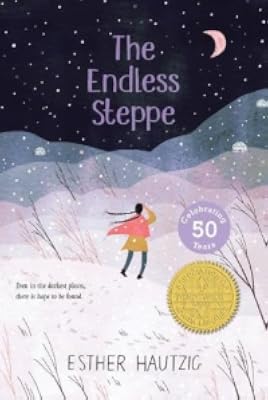
The Endless Steppe
by Esther Hautzig
On This Page
Description
During World War II, when she was eleven years old, the author and her family were arrested in Poland by the Russians as political enemies and exiled to Siberia. She recounts here the trials of the following five years spent on the harsh Asian steppe.Tags
Recommendations










Member Recommendations
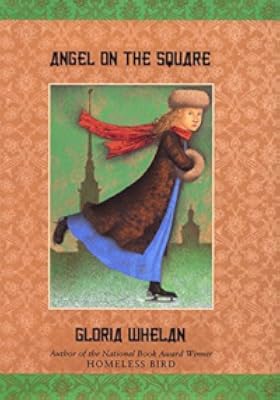
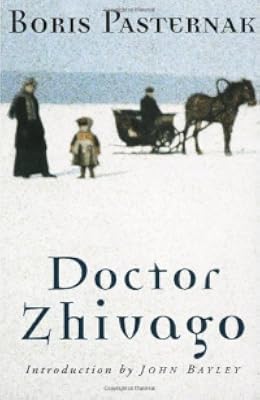
inge87 A YA novel about Lithuanian Jews deported to Siberia during WWII
Member Reviews
When my children (or I) get to whining … “ it's so hot” … “ewww, that's not what I want for dinner” … I always think of these people and what they went through at the hands of other human beings – packed into cattle cars and left standing on tracks in the summer heat, perishing of thirst, freezing in the cold Siberia north with inadequate clothing and overwork, digging through the snow trying to find anything to sustain their bodies.
Esther was a happy young girl in Poland, when her world was changed. Her father had a business in Vilna, Poland and the whole extended family lived together in a nice, rambling home surrounding a garden which her grandfather tends meticulously.
In 1940 the Russians, who were then allied with show more Germany, occupied Vilna. They confiscated the family business and our property, but did not evict us from our house, our garden. … My world was still intact and I had not the slightest premonition that it was about to end.
Until the day the soldiers broke into their home. “… you are capitalists and therefore enemies of the people … you are to be sent to another part of our great and mighty country…”
The flatness of this land was awesome. There wasn’t a hill in sight; it was an enormous, unrippled sea of parched and lifeless grass. “Tata, why is the earth so flat here?” “These must be steppes, Esther.” “Steppes? But steppes are in Siberia.” “This is Siberia,” he said quietly.
Although Esther tells her story in a matter-of-fact way, it is heart-wrenching to picture what her family went through trying to survive. I found this book to have even more impact than The Diary of Anne Frank. (4.2 stars) show less
Esther was a happy young girl in Poland, when her world was changed. Her father had a business in Vilna, Poland and the whole extended family lived together in a nice, rambling home surrounding a garden which her grandfather tends meticulously.
In 1940 the Russians, who were then allied with show more Germany, occupied Vilna. They confiscated the family business and our property, but did not evict us from our house, our garden. … My world was still intact and I had not the slightest premonition that it was about to end.
Until the day the soldiers broke into their home. “… you are capitalists and therefore enemies of the people … you are to be sent to another part of our great and mighty country…”
The flatness of this land was awesome. There wasn’t a hill in sight; it was an enormous, unrippled sea of parched and lifeless grass. “Tata, why is the earth so flat here?” “These must be steppes, Esther.” “Steppes? But steppes are in Siberia.” “This is Siberia,” he said quietly.
Although Esther tells her story in a matter-of-fact way, it is heart-wrenching to picture what her family went through trying to survive. I found this book to have even more impact than The Diary of Anne Frank. (4.2 stars) show less
I found a copy of this book on the street in my neighborhood, and when I picked it up I remembered I'd read it in my childhood. Some of the episodes came back to me vividly: the men who got drunk off cologne, the peasants who never took money without throwing the promised food through the train windows, the disappearing/stolen food at the first hut in Siberia.
I think this is a great book, especially for kids, because it's not the typical story of what happened to Jews during WWII, but a much lesser-known (at least to me) experience. I also like it because it's not unrelentingly horrible: much of the family survives, including all the main characters, and throughout the story there are people who treat them relatively well to show more counterbalance the really awful ones. There are minor joys, like trading at the market. The writing is descriptive and gripping. show less
I think this is a great book, especially for kids, because it's not the typical story of what happened to Jews during WWII, but a much lesser-known (at least to me) experience. I also like it because it's not unrelentingly horrible: much of the family survives, including all the main characters, and throughout the story there are people who treat them relatively well to show more counterbalance the really awful ones. There are minor joys, like trading at the market. The writing is descriptive and gripping. show less
This is the reminiscence of a woman who spent nearly 5 years of her adolescence, 1941 to 1946, in exile in Siberia with her family, who the Russian government had declared to be "capitalist enemies of the people". They were Polish Jews who operated a "family business", the nature of which she does not specify. Before the war, their lifestyle in the city of Vilna was comfortable, but far from extravagant. After Hitler invaded Poland the Soviets rounded up thousands of Poles, and sent them off in cattle cars to mines and work camps in the Siberian steppes. The journey itself was an unimaginable ordeal; old women and children then being forced to work in gypsum mines a brutality; the vicious weather, the lack of decent food, housing or show more clothing all combined to make it unimaginable that many would survive. And yet Esther’s immediate family –mother, father and grandmother--did have a future together after the war. Being sent to Siberia was not equivalent to being sent to a Nazi concentration camp, as extermination was not an integral part of the overall plan. But comparing two such evils is futile. Looking back on the experience from an adult perspective, Esther has clearly filtered some of the horror out of her recollections by focusing on the strength, resourcefulness and optimism of her mother in particular, and on random moments of satisfaction and acts of kindness that made life bearable under such circumstances. Written for young adults. Recommended for everyone. show less
This memoir of a Polish girl and her family in exile in Siberia during WWII is a well-told reminder of the horrors visited upon the Jews who didn't experience Nazi concentration camps. Along with the narrator, we witness the deprivation, the cold, & the humiliation of a family who struggle and survive.
In June 1941, the Rudomin family is arrested by the Russians. They are accused of being capitalists, "enemies of the people." Forced from their home and friends in Vilna, Poland, they are herded into crowded cattle cars. Their destination: the endless steppe of Siberia.
For five years, Esther and her family live in exile, weeding potato fields, working in the mines, and struggling to stay alive. But in the middle of hardship and oppression, the strength of their small family sustains them and gives them hope for the future.
This is a remarkable true story about one of the bleakest periods in history, told by a girl who refuses to give up her resilience.
For five years, Esther and her family live in exile, weeding potato fields, working in the mines, and struggling to stay alive. But in the middle of hardship and oppression, the strength of their small family sustains them and gives them hope for the future.
This is a remarkable true story about one of the bleakest periods in history, told by a girl who refuses to give up her resilience.
This story is very much a child's impression. Her parents and grandmother hid much from her (which she does recognize as an adult)--the hunger, cold, school, moving, close quarters, outgrown shoes--are all just part of this weird normal for Esther, exiled with her family in Siberia during WW2. I can only imagine what the physically demanding jobs, cold, hunger, need for better housing, and their daughter and mother suffering did to their thoughts. As well as worry about the family members left in Vilna.
When Russia sends the family back to Poland after the war, they learn that they--who endured 4 years exiled as Jewish capitalists--are some of the few Polish Jews who survived. Her aunts, uncles, cousins, maternal grandmother--all were show more killed during the war. She does not specify if they were sent to concentration camps, starved in ghettos, were killed in attacks--but she probably never knew. And this is YA/middle grade, so such details might have been glossed over intentionally. show less
When Russia sends the family back to Poland after the war, they learn that they--who endured 4 years exiled as Jewish capitalists--are some of the few Polish Jews who survived. Her aunts, uncles, cousins, maternal grandmother--all were show more killed during the war. She does not specify if they were sent to concentration camps, starved in ghettos, were killed in attacks--but she probably never knew. And this is YA/middle grade, so such details might have been glossed over intentionally. show less
The Endless Steppe is an extraordinary and haunting story which reads like fiction but is based on first-hand family accounts and memories from the author. The story is heartbreaking and inspiring and while its shelved as a young adult novel certainly is an education and eye opener for any reader who wants an insight to the suffering and hardships of families transported to Siberia during the War.
Esther Rudomin was ten years old when, in 1941, she and her family were arrested by the Russians and transported to Siberia. This is the true story of the next five years spent in exile, of how the Rudomins kept their courage high, though they went barefoot and hungry.
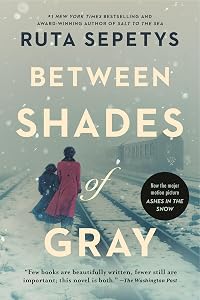
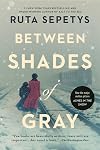
Having read and loved [b:Between Shades of Gray|7824322|Between Shades of show more Gray|Ruta Sepetys|https://images.gr-assets.com/books/1327873479s/7824322.jpg|10870318][bc:Between Shades of Gray|7824322|Between Shades of Gray|Ruta Sepetys|https://images.gr-assets.com/books/1327873479s/7824322.jpg|10870318] I wasn't sure I wanted to read another book covering a similar story and yet this book keeping coming up in my recommendations feed and I am glad I didn't ignore it. Well written, descriptive and moving this book while short in pages it certainly captures the infamous climate and harshness of the Siberian steep in vivid details as well as telling a the authors story of surviving World War 11 in the labor camps of Siberia.
As Ester tells the story of her and her family's journey and life in the camps she does it in a very candid way never shielding the reader from the horrors they endure and yet I would have no hesitation in recommending this for teenagers or young adults as it is one of those books that is important in remembering the suffering endured by so many of those transported to Siberia.
A great Non-fiction read and a book I would recommend for adults and young adults alike. show less
Esther Rudomin was ten years old when, in 1941, she and her family were arrested by the Russians and transported to Siberia. This is the true story of the next five years spent in exile, of how the Rudomins kept their courage high, though they went barefoot and hungry.
Having read and loved [b:Between Shades of Gray|7824322|Between Shades of show more Gray|Ruta Sepetys|https://images.gr-assets.com/books/1327873479s/7824322.jpg|10870318][bc:Between Shades of Gray|7824322|Between Shades of Gray|Ruta Sepetys|https://images.gr-assets.com/books/1327873479s/7824322.jpg|10870318] I wasn't sure I wanted to read another book covering a similar story and yet this book keeping coming up in my recommendations feed and I am glad I didn't ignore it. Well written, descriptive and moving this book while short in pages it certainly captures the infamous climate and harshness of the Siberian steep in vivid details as well as telling a the authors story of surviving World War 11 in the labor camps of Siberia.
As Ester tells the story of her and her family's journey and life in the camps she does it in a very candid way never shielding the reader from the horrors they endure and yet I would have no hesitation in recommending this for teenagers or young adults as it is one of those books that is important in remembering the suffering endured by so many of those transported to Siberia.
A great Non-fiction read and a book I would recommend for adults and young adults alike. show less
Members
- Recently Added By
Lists

Books about Russia and the former USSR
67 works; 12 members

Mensa for Kids Excellence in Reading Award Program (Grades 7-8)
62 works; 3 members

Books I have Recommended
207 works; 1 member

Best Sellers / Popular 1968
237 works; 5 members

Beautiful Feet Books
304 works; 7 members

Sense of place
156 works; 13 members

Elevenses
316 works; 87 members

Favorite Childhood Books
1,646 works; 515 members

Mensa for Kids Excellence in Reading Award Program (Grades 7-8)
62 works; 1 member

Llibres que he llegit el 2008
33 works; 1 member

Best Young Adult
399 works; 101 members

Best Survival Stories
97 works; 15 members
Honey For a Child's Heart
1,152 works; 25 members

Best Autobiographies and Memoirs
370 works; 66 members
Ambleside Books
459 works; 18 members

Sonlight Books
1,487 works; 25 members

A High School Trip to Russia
25 works; 3 members

A Child's Book Tour of Russia
45 works; 4 members

Children's Books about World War II (1939-1945)
143 works; 12 members

HMS: Make Your Child a Lover of Books, Ages 9 & up
111 works; 2 members
Author Information

23 Works 3,189 Members
Esther Hautzig was born on October 18, 1930. During World War II, her family was exiled from Poland to Siberia, where they worked in labor camps. In 1947, she traveled via ocean liner to New York on a student visa. While aboard the ocean liner, she met the Vienna-born pianist Walter Hautzig, who was returning from a concert tour. They married in show more 1950. She enrolled in Hunter College, but never finished because a professor there told her that her accent would disqualify her from becoming a teacher. She took a job as a secretary at the publisher G. P. Putnam's Sons and later was promoted to children's books. During her lifetime she wrote numerous books including Let's Cook without Cooking (1955), Let's Make Presents (1962), A Gift for Mama (1987), Remember Who You Are: Stories About Being Jewish (1990), Riches (1992) and A Picture of Grandmother (2002). The Endless Steppe: Growing Up in Siberia (1968) won the Jane Addams Children's Book Award and the Lewis Carroll Shelf Award. She also translated stories by the Yiddish writer I. L. Peretz. She died of congestive heart failure and complications of Alzheimer's disease on November 1, 2009 at the age of 79. (Bowker Author Biography) show less
Some Editions
Awards and Honors
Awards
Series
Belongs to Publisher Series
Work Relationships
Has as a reference guide/companion
Has as a student's study guide
Common Knowledge
- Canonical title
- The Endless Steppe
- Original title
- The Endless Steppe
- Alternate titles
- The endless Steppe: growing up in Siberia
- Original publication date
- 1968
- People/Characters
- Esther Rudomin; Raya Rudomin; Samuel Rudomin; Anna Rudomin
- Important places
- Vilna, Poland; Rubtsovsk, Russia; Siberia, Russia
- Important events
- World War II (1939 | 1945); Holocaust (1933 | 1945)
- Dedication
- This story would not have been told without the help of many, many people. It is gratefully dedicated to all of them.
- First words
- The morning it happened - the end of my lovely world - I did not water the lilac bush outside my father's study.
- Quotations
- Those of us who were lucky enough to have had a slice of that watermelon that night - like me - must count it the most delectable food ever eaten anyplace by anyone.
I bent my head closer to the vines; I didn't want to see the dunce. But as a member of the collective dunce, I too called out, "No, no." We were not humanitarians; we were just hungry children who didn't want to starve, and I... (show all) think it likely that collectively we had it in us to stone the next child who pulled a potato.
Later, I would occasionally watch my mother work with the jack hammer, but the woman whose guts seemed about to be shaken out of her, whose face was contorted to ugliness, would seem a stranger.
Hadn't I learned by now that it was not all that easy to die?
The flatness of this land was awesome. There wasn’t a hill in sight; it was an enormous, unrippled sea of parched and lifeless grass. “Tata, why is the earth so flat here?” “These must be steppes, Esther.” “Steppe... (show all)s? But steppes are in Siberia.” “This is Siberia,” he said quietly.
In our family, as in most European families of my childhood, old people were treated with special reverence. Now to see old men and old women sprawled on the bare floor without a tiny shred of comfort for their old bones seem... (show all)ed, particularly to a child, like a shocking breach of etiquette. That night the room was almost as hot as the cattle car.
I watched Mother go off to dynamite, Father to drive a cart, and Grandmother to shovel. There was not so much as a second to say good-by. Until now, we had been together day and night for six weeks … I felt dismembered.
At the close of the day’s work, the exhausted people in our room had made one gain: they had achieved a reserved fellowship, a subtle something that said, “Well, here we are in a gypsum mine in Siberia, it is a fact that ... (show all)we are in it together, and together we have survived.” - Last words
- (Click to show. Warning: May contain spoilers.)The years out there on the steppe had come to an end, our exile was over.
Classifications
Statistics
- Members
- 2,449
- Popularity
- 7,924
- Reviews
- 35
- Rating
- (4.04)
- Languages
- 8 — Catalan, Dutch, English, French, German, Norwegian, Spanish, Swedish
- Media
- Paper, Audiobook, Ebook
- ISBNs
- 44
- ASINs
- 24