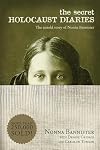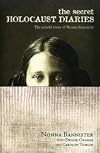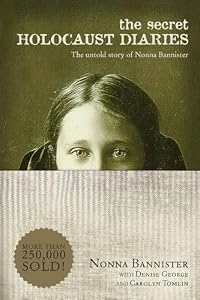
The Secret Holocaust Diaries: The Untold Story of Nonna Bannister
by Denise George
On This Page
Description
For half a century, a terrible secret lay hidden, locked in a trunk in an attic... photos, official documents, and scraps of a diary written by a young girl. "The time has come when I must share my life story... some facts from the past that could make a contribution, however small it may be, to the history of mankind." The Secret Holocaust Diaries is a haunting eyewitness account of Nonna Lisowskaja Bannister, a remarkable Russian-American woman who saw and survived unspeakable evils as a show more young girl. For half a century, she kept her story secret while living a normal American life. She locked all her photos, documents, diaries, and dark memories from World War II in a trunk. Late in life, she unlocked the trunk, first for herself, then for her husband, and now for the rest of the world. Nonna's story is one of suffering, torture, and death-but also of incredible acts of kindness that show the ultimate triumph of faith and love over despair and evil. The Secret Holocaust Diaries is in part a tragedy, yet it's also an unforgettable true story about forgiveness, courage, and hope.. show less
Tags
Recommendations

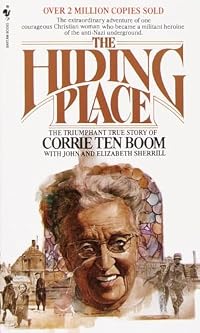


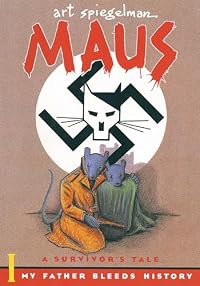
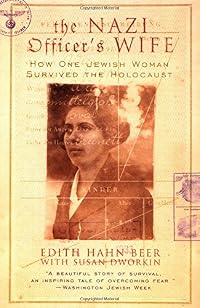

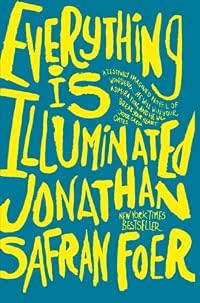


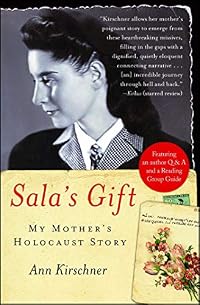
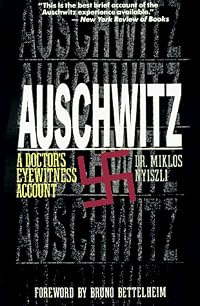
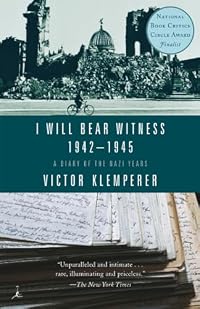
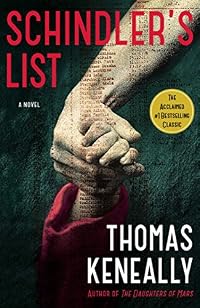

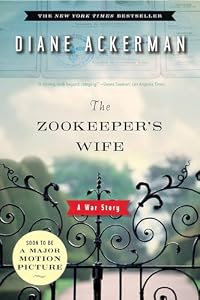





Member Recommendations
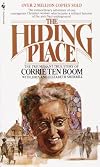
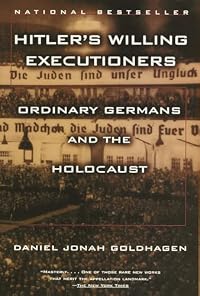
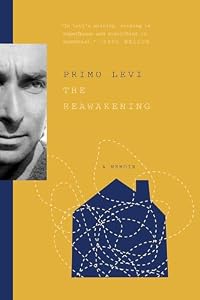
acenturyofsleep Both are true stories of women whose faith helped them survive the Holocaust

Member Reviews
This book is the extraordinary personal account of Nonna Lisowskaja Bannister, b. 1927 in Taganrog, Russia to educated parents of Ukrainian and Polish heritage. At the age of 15, she carefully journals her fondest memories of early childhood, her exposure to Stalinist Russia, the Collectivization of Agriculture and the Holdomor (Great Famine) of the Ukrainian people. She endured horrific living conditions, the invasion of the Ukraine by German troops in 1941 and their cavalier killings.
After her father's early death, Nonna and her mother are faced with fleeing to the west or risking probable expulsion to Sibera, (or worse). They accept an offer by the Germans to work in Germany. The arduous train ride alone was foreboding and they show more questioned whether they had chosen wisely. It appeared that they stepped from the frying pan and into the fire. "Survival" became the watchword.
I was amazed by Nonna's cleverness, bravery, strength, thirst for knowledge and shear endurance. She was committed to surviving and seeking a much improved existence. Her account exposed me to an historical record of Stalinist Russia/Ukraine about which previously I had known very little. It also reiterated that yes, the Jews were horribly treated yet they were not the only victims of Nazism. She carefully documented, at great risk of life, all that she saw and experienced so that such inhumanity was exposed and hopefully, could never happen again. Sadly, we have come to know otherwise.
This book was not highly polished by its editors and its effectiveness is more in its raw presentation. The sidebars, although a bit distracting, did provide some important reference points while following the story. The fact that so many photographs and her personal account remained almost fully intact through all she endured is almost a miracle in itself. show less
After her father's early death, Nonna and her mother are faced with fleeing to the west or risking probable expulsion to Sibera, (or worse). They accept an offer by the Germans to work in Germany. The arduous train ride alone was foreboding and they show more questioned whether they had chosen wisely. It appeared that they stepped from the frying pan and into the fire. "Survival" became the watchword.
I was amazed by Nonna's cleverness, bravery, strength, thirst for knowledge and shear endurance. She was committed to surviving and seeking a much improved existence. Her account exposed me to an historical record of Stalinist Russia/Ukraine about which previously I had known very little. It also reiterated that yes, the Jews were horribly treated yet they were not the only victims of Nazism. She carefully documented, at great risk of life, all that she saw and experienced so that such inhumanity was exposed and hopefully, could never happen again. Sadly, we have come to know otherwise.
This book was not highly polished by its editors and its effectiveness is more in its raw presentation. The sidebars, although a bit distracting, did provide some important reference points while following the story. The fact that so many photographs and her personal account remained almost fully intact through all she endured is almost a miracle in itself. show less
The title may make many to expect the memoir of a Jewish concentration camp survivor. This life story is actually a bit different path through the horrors of the Holocaust and their precursors. It is actually a biography of a childhood starting from warmth and security in the well-to-do family of royalist supporters after the fall of the czars and the rise of Bolshevism. Fond Christmas memories and early indoor toilets is cut short by Hitler's incursion into the Ukraine. At this point, Nonna and her parents have two enemies: the Nazis and the Stalinists that see them as implicit collaborators for not withdrawing ahead of the advance of the Wehrmacht. Nonna details a couple of times her childhood memory of Red Army planes strafing show more Ukrainian citizens. The intensity of the fear of Stalinist reprisal is seen from the fact that after leaving her brother and losing her father, boarding a train to go work in the Third Reich with the retreating Germans is actually seens as the wisest option. The work camp is hellacious and Nonna's mother has her painting and piano playing skills extracted out of her until, after having her arms and fingers broken at Ravensbrück concentration camp she was killed there. Apparently, this sharp turn into the lethal Holocaust machine was caused by her attempts to save a Jewish baby on that ill-fated train ride.
Through astute awareness and a gift for languages, Nonna survives the work camp and the war, largely thanks to crippling diseases which places her in the care of nuns who protect her first from the Nazis, then the vengeful Russians.
During the story, there is a connection to the mother of Aleksandr Solzhenitsyn, which is an interesting cameo.
This audiobook edition includes moving interviews with Nonna's son and husband as well late '90s audio of Nonna relating some of her Holocaust experiences to her family. show less
Through astute awareness and a gift for languages, Nonna survives the work camp and the war, largely thanks to crippling diseases which places her in the care of nuns who protect her first from the Nazis, then the vengeful Russians.
During the story, there is a connection to the mother of Aleksandr Solzhenitsyn, which is an interesting cameo.
This audiobook edition includes moving interviews with Nonna's son and husband as well late '90s audio of Nonna relating some of her Holocaust experiences to her family. show less
** Advanced Reader Copy**
The Secret Holocaust Diaries is an interesting book written from diaries kept during World War II by a Russian girl who chooses, between a rock and a hard place, to go off to perform slave labor. They were "secret" in that they were not revealed by the author until near her death, and only published afterwards. Unlike better known holocaust memoirs, this is from the perspective of a non-Jew living in the '20s and '30s in the Ukraine, in some comfort. It is interesting to have a very small window into the challenges of post-Revolution Russia, and the cultural and religious customs in the Ukraine during that time. While the story is grim, it is less harrowing than many recountings of concentration camps and show more violence, and could be appropriate for some younger readers. Readers - and teachers - may find the coauthors' efforts to provide brief summaries/annotations within each chapter to be intrusive. I found some to be informative but, for the most part, they distracted from the story recounted from Mrs. Bannister's diaries. The book is supplemented with a chronology, genealogical information, and letters written after Mrs. Bannister arrived in the U.S. The co-authors do a great job of interpreting when certain entries were written out of sequence, either as reminiscences or possible additions while Mrs. Bannister transcribed her original journal entries into English.
Mrs. Bannister's story is an interesting one and a good addition of a different perspective to any collection of World War II autobiographies. show less
The Secret Holocaust Diaries is an interesting book written from diaries kept during World War II by a Russian girl who chooses, between a rock and a hard place, to go off to perform slave labor. They were "secret" in that they were not revealed by the author until near her death, and only published afterwards. Unlike better known holocaust memoirs, this is from the perspective of a non-Jew living in the '20s and '30s in the Ukraine, in some comfort. It is interesting to have a very small window into the challenges of post-Revolution Russia, and the cultural and religious customs in the Ukraine during that time. While the story is grim, it is less harrowing than many recountings of concentration camps and show more violence, and could be appropriate for some younger readers. Readers - and teachers - may find the coauthors' efforts to provide brief summaries/annotations within each chapter to be intrusive. I found some to be informative but, for the most part, they distracted from the story recounted from Mrs. Bannister's diaries. The book is supplemented with a chronology, genealogical information, and letters written after Mrs. Bannister arrived in the U.S. The co-authors do a great job of interpreting when certain entries were written out of sequence, either as reminiscences or possible additions while Mrs. Bannister transcribed her original journal entries into English.
Mrs. Bannister's story is an interesting one and a good addition of a different perspective to any collection of World War II autobiographies. show less
 This review was written for LibraryThing Early Reviewers.
I tend to forget that there were groups and individuals who weren't Jewish who were persecuted by the Nazis during the Holocaust years. Nonna Bannister was one of those individuals. Nonna's father was Polish (possibly of Jewish background) and her mother was Russian. She spent her childhood in Russia, and her immediate family was living with her grandmother in Ukraine at the beginning of the war. Most of the Russians left their town before the Germans reached it. Nonna's father had long been attempting to move his family westward, so he chose to stay put, not realizing what his family would suffer under the Germans. Eventually Nonna and her mother were sent to labor camps in Germany. Nonna was the only one in her family to survive until show more the end of the war. She trained as a nurse and eventually emigrated to the United States.
Nonna married within a couple of years of her arrival in the U.S., She didn't tell her husband and children about her childhood experiences. A few years before her death, she finally showed her husband the English transcriptions she had made of the diaries she kept during those years. After her death, Nonna's family made contact with a publisher, and a writing team compiled her transcriptions into a book. Nonna's diary transcriptions form the main body of the book, with occasional comments inserted by the compilers to clarify passages that call for additional explanation. This format gives the book an unfinished feel. Usually the professional writer will polish the subject's material to enhance its readability and appeal, and the finished product will read as if it has been written by the subject rather than by multiple authors. I think footnotes might have been a better method for adding comments to what Nonna had written. Recommended for readers interested in non-Jewish Holocaust memoirs who are prepared to tolerate the unusual presentation. show less
Nonna married within a couple of years of her arrival in the U.S., She didn't tell her husband and children about her childhood experiences. A few years before her death, she finally showed her husband the English transcriptions she had made of the diaries she kept during those years. After her death, Nonna's family made contact with a publisher, and a writing team compiled her transcriptions into a book. Nonna's diary transcriptions form the main body of the book, with occasional comments inserted by the compilers to clarify passages that call for additional explanation. This format gives the book an unfinished feel. Usually the professional writer will polish the subject's material to enhance its readability and appeal, and the finished product will read as if it has been written by the subject rather than by multiple authors. I think footnotes might have been a better method for adding comments to what Nonna had written. Recommended for readers interested in non-Jewish Holocaust memoirs who are prepared to tolerate the unusual presentation. show less
This is a fascinating memoir written by a non-professional author. While there is a lack of polish in key areas -- inconsistencies in structure, authorial voice, and so on -- I didn't really view them as a drawback. I pictured an elderly Russian woman, going through her diaries, laboriously translating and transcribing, struggling to make sense of her experiences. The inconstencies speak to the depth of that struggle, really. How do you make sense of such depravity? Even decades later? The need to get out her life story trumps any authorial hesitation for her lack of writing polish experience.
This review was written for LibraryThing Early Reviewers.Please note that this review is based on an advanced reader copy and changes may have been made to the final published edition.
Nonna Lisowskaja Banninster's story is full of potential, however its carrying out was poorly done. With its disjointed structure and inconsistencies it is hard to determine what of the book from Bannister's original diaries, from her translations of these diaries made years later, or from the editors. The greatest flaw of the work is the editors' fault, as the story is broken up by their indented notes, including reiterations of what we just read and unwelcome commentary. Even when they are useful explanations of historical fact, they distractingly break up the text and take you out of the moment.
Still, show more Bannister's story is tragic and inspiring, and I hope that it can be redone in a more accessible form. At a young age, she witnessed Stalin's persecution of his people, the horrors of World War II when the Germans invaded, was shipped East to several concentration camps, and was saved thanks to the kindness of Catholic hospital workers.
Most moving, is that while Nonna witnessed humanity at its worst, she did not lose her faith in God or her love of beauty. show less
Nonna Lisowskaja Banninster's story is full of potential, however its carrying out was poorly done. With its disjointed structure and inconsistencies it is hard to determine what of the book from Bannister's original diaries, from her translations of these diaries made years later, or from the editors. The greatest flaw of the work is the editors' fault, as the story is broken up by their indented notes, including reiterations of what we just read and unwelcome commentary. Even when they are useful explanations of historical fact, they distractingly break up the text and take you out of the moment.
Still, show more Bannister's story is tragic and inspiring, and I hope that it can be redone in a more accessible form. At a young age, she witnessed Stalin's persecution of his people, the horrors of World War II when the Germans invaded, was shipped East to several concentration camps, and was saved thanks to the kindness of Catholic hospital workers.
Most moving, is that while Nonna witnessed humanity at its worst, she did not lose her faith in God or her love of beauty. show less
This review was written for LibraryThing Early Reviewers.This book held some really nice unexpected treasures.
It chronicles the experiences, and briefly summarizes the previous and later life of Nonna Bannister, a Russian Christian who survived the revolution in her country and the subsequent war and Nazi labor camps. This is a fascinating woman, who exhibits strong faith and ability throughout her life, and one that readers will enjoy getting to know.
She speaks multiple languages, which greatly helped her during the war, and may even be responsible for her survival. She exhibits great faith and forgiveness throughout, which gives the book more of an uplifting feel than a depressive one, even as horrid as most of the experiences were. It illustrates how loving and strong her family was, show more especially the women, as they faced the challenges of their times and the horror of war. But, it also gives glimpses of the wonders of her childhood, which were delightful to read and splendidly described.
I’ve read and heard much about the Jewish experience in the holocaust, but knew hardly anything about the experiences of those in labor camps, or those of a different faith, or even the Russian experience. This narrative was interesting for that reason, but also because it was from a Christian perspective. Since I am of a Christian faith, seeing the experience through Christian eyes allowed me to identify further with the experience, (although still not completely, as the level of violence and horror go beyond any imaginable experience I’ve had personally).
Some of the poetry she wrote was truly and simply elegant and beautiful. I’m not a poetry buff, but her entries of poems were some of my favorite parts of the book.
The only negatives I can say about the book, is that I wish some of the editorial comments were located in footnotes instead of within the text, especially those that seem to only repeat, or say what the narrative tells us in the next paragraph. Most of the comments were helpful, but it was disappointing to read one and have it spoil the text of what Nonna wrote next. And, I really wish that the photographs that were described would have been included. I would dearly love to see some of the scenes and people that we come to know through Nonna. There is such an emphasis on the striped ticking pillow and the fact that she saved it and the photographs that I almost felt excluded to only hear about it.
This is a must read for anyone who is a holocaust buff, but also for those studying the subject, or those who are simply curious, just for its unique viewpoint. I really enjoyed the whole thing; even the appendixes at the end were fascinating. show less
It chronicles the experiences, and briefly summarizes the previous and later life of Nonna Bannister, a Russian Christian who survived the revolution in her country and the subsequent war and Nazi labor camps. This is a fascinating woman, who exhibits strong faith and ability throughout her life, and one that readers will enjoy getting to know.
She speaks multiple languages, which greatly helped her during the war, and may even be responsible for her survival. She exhibits great faith and forgiveness throughout, which gives the book more of an uplifting feel than a depressive one, even as horrid as most of the experiences were. It illustrates how loving and strong her family was, show more especially the women, as they faced the challenges of their times and the horror of war. But, it also gives glimpses of the wonders of her childhood, which were delightful to read and splendidly described.
I’ve read and heard much about the Jewish experience in the holocaust, but knew hardly anything about the experiences of those in labor camps, or those of a different faith, or even the Russian experience. This narrative was interesting for that reason, but also because it was from a Christian perspective. Since I am of a Christian faith, seeing the experience through Christian eyes allowed me to identify further with the experience, (although still not completely, as the level of violence and horror go beyond any imaginable experience I’ve had personally).
Some of the poetry she wrote was truly and simply elegant and beautiful. I’m not a poetry buff, but her entries of poems were some of my favorite parts of the book.
The only negatives I can say about the book, is that I wish some of the editorial comments were located in footnotes instead of within the text, especially those that seem to only repeat, or say what the narrative tells us in the next paragraph. Most of the comments were helpful, but it was disappointing to read one and have it spoil the text of what Nonna wrote next. And, I really wish that the photographs that were described would have been included. I would dearly love to see some of the scenes and people that we come to know through Nonna. There is such an emphasis on the striped ticking pillow and the fact that she saved it and the photographs that I almost felt excluded to only hear about it.
This is a must read for anyone who is a holocaust buff, but also for those studying the subject, or those who are simply curious, just for its unique viewpoint. I really enjoyed the whole thing; even the appendixes at the end were fascinating. show less
This review was written for LibraryThing Early Reviewers.Members
- Recently Added By
Lists

Holocaust Narratives
159 works; 3 members
Author Information

45+ Works 1,713 Members
Denise George is an internationally popular writer, speaker and retreat leader who is best known for her creative biblical application. Denise is married to Dr. Timothy George, executive editor of Christianity Today and founding dean of Beeson Divinity School, Samford University.
All Editions
Some Editions
Awards and Honors
Awards
Common Knowledge
- Original publication date
- 2009
- Important places
- Ukraine
- Epigraph
- TO THE PAST
To the past, the way has been barred,
And what do I need the past for now?
What is there? Bloodied flagstone -
Or a bricked-up door - or an echo
That still cannot die away...
However much I beg.... (show all)
--Nonna L. Bannister - Dedication
- I would like to dedicate this book to the memory of all those who perished during the Holocaust in World War II, who are no longer here to tell their stories, and also to those who survived the horrors of it all but lost thei... (show all)r families and loved ones.
- First words
- [Preface] This is the true story of a Russian-America woman named Nonna Lisowskaja Bannister.
Introduction: I have now decided that the time has come when I must share my life story - not only with my loving family, but perhaps with all those who are interested to know what life was like for many of us on the other s... (show all)ide of the world before and during World War II.
[Prologue] Harry Bannister met Nonna Lisowskaja in 1951,
August 7, 1943 -- Konstantinowka, Ukraine It is fourteen hours and fifteen minutes (2:15 p.m.), and we were just loaded on the train! - Last words
- (Click to show. Warning: May contain spoilers.)[Preface] The fact that she not only survived such turmoil and tragedy but also moved on through faith in God to forgive those who took away so much makes her story all the more remarkable.
(Click to show. Warning: May contain spoilers.)[Introduction] Most of all, I like to write about things that I learned from my grandmother and my loving parents.
(Click to show. Warning: May contain spoilers.)[Prologue] Then Nonna climbed the attic stairs, and Henry began to read.
(Click to show. Warning: May contain spoilers.)However, if we learn how to survive even when we are faced with death, we become stronger and can live until God is ready to take us into eternity.
Classifications
- Genres
- Biography & Memoir, General Nonfiction, History, Nonfiction
- DDC/MDS
- 940.53 — History & geography History of Europe History of Europe 1918- World War II, 1939-1945
- LCC
- DK508.835 .B36 .A3 — History of Europe, Asia, Africa and Oceania Russia. Soviet Union. Former Soviet Republics – Poland History of Russia. Soviet Union. Former Soviet Republics Local history and description Ukraine Kiev
- BISAC
Statistics
- Members
- 928
- Popularity
- 28,616
- Reviews
- 58
- Rating
- (3.71)
- Languages
- English, Italian, Norwegian (Bokmål)
- Media
- Paper, Audiobook, Ebook
- ISBNs
- 9
- UPCs
- 2
- ASINs
- 6