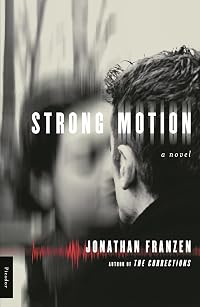
Strong Motion
by Jonathan Franzen
On This Page
Description
Louis Holland arrives in Boston in a spring of ecological upheaval (a rash of earthquakes on the North Shore) and odd luck: the first one kills his grandmother. Louis tries to maintain his independence, but falls in love with a Harvard seismologist whose discoveries about the earthquakes' cause complicate everything.Tags
Recommendations


















Member Reviews
What can be challenging about even the best of Jonathan Franzen's fiction is that his characters often seem to go so far out of their way to do the stupid or cruel thing. One of his earlier works, Strong Motion shows that Franzen's extraordinary writing skills were already in evidence, but his characters are so repulsive that they are simply unbelievable. An epic tale of seismology, love and corruption, the book is better suited to readers who have already acquired a taste for Franzen's cynical worldview.
I should also acknowledge that I kept picturing the protagonist Louis Holland as Napoleon Dynamite, and so struggled to see him as a plausible romantic hero. Even without that point of reference, he's a horrible character. The idea of show more two women competing for his affections was ridiculous. It was just one of many things about this story that left me thinking, "But, why, why, WHY?" show less
I should also acknowledge that I kept picturing the protagonist Louis Holland as Napoleon Dynamite, and so struggled to see him as a plausible romantic hero. Even without that point of reference, he's a horrible character. The idea of show more two women competing for his affections was ridiculous. It was just one of many things about this story that left me thinking, "But, why, why, WHY?" show less
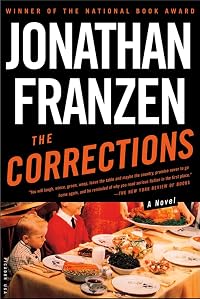
Franzen writes about what he knows and never deviates too far from that. (It goes without saying that Strong Motion was probably manufactured after he’d crossed paths with earthquake seismology, and not prior to it.) From his real life father’s struggle with Alzheimer’s and it playing a huge part in 2001’s The Corrections, to the cities he’s lived in (Chicago, Evanston, Boston, New York City), to possibly the deluge of his character’s awkwardness (just watch one of his interviews online; sorry Jonathan), his novels are ripe with experience, the highs and lows of everyday life. He trims the fat only in a structural/grammatical context; in Franzen’s very real world, be prepared to dig deep into stilted sarcasm, an abhorrent show more amount of one-liners, and the hilariously mundane. His characters typically echo the cold gray days above them with an above average intelligence. They do their best to fumble with their pitiful existences. His protagonists (not antagonists, not anti-heroes, but deuteragonists, as sidekicks to a living breathing dysfunctional world) often view things from the outside. They judge. They wait to unleash zingers Franzen’s probably got pinned on his board next to his computer.
There are those who abhor this, who think it’s gimmicky, who, although with possible justification, need the pacifier of a character who is relatable on a superficial level (while negating the authenticity of such characters), and there are those who love this (like me), who know perfectly well that characters like the prudish Renée (our seismologist at Harvard) and the capable yet maladroit Louis (the reckless youth who falls in love with her) do actually exist in the real world. We thank Franzen for his portrayal of them, which includes a plethora of insecurities and bad habits they in no way attempt to bury under pretense. This is an anti-fantasy where people hurt one another and a majority of the time, for no other reason than they are just as confused as you and I with this miraculous and horrific It that swirls around them—a little thing called life.
Franzen’s a great writer, pure and simple, anyway you wanna cut it. You are supposed to find disdain in his major characters. Louis’s mother, Melanie, who inherits a fortune after a low-grade earthquake in the Boston area sets in motion the death of her step mother, takes on the role of the ultra real during a time of crisis/affluence. A middle class to upper middle class (now upper class) white family in New England is somehow not peachy keen. Their inheritance becomes a burden, and at this cusp which we as a reader enter, we experience a peak of disorder. The important thing is that we feel something. If you feel anger, then it’s probably been orchestrated for you. Franzen is a great writer because his characters are amongst the most real in modern literature. If you’re looking for a presumed happy ending, a pleasure spot that is meant to please an ambiguous reader of every stripe, a cover up to the supposed fraud of everyday life, its hang-ups, its irregular preponderance to eccentricities over formality, then you might as well go elsewhere, and with all due respect, nowhere near realistic modern fiction.
In Franzen’s Strong Motion, lines like “You make me want to be a woman,” as communicated by Louis when he is accosted with the savagery of Renée’s sex, are readily abundant, both funny and strangely realistic, as in, it is something someone has probably said one time or another when presented with an opportunity to do so.
Take for instance this paragraph early on in the book, when Louis is dating Lauren, an easier catch, as she offers up no resistance, no immediate chase, like a wounded antelope that takes out all the fun inherent in the thumping blood of the carnivore, Louis put his arms around her and held her head against his shoulder. It fit in his hands. It was as if this were all there was to her, this crying head. He didn’t know why he loved her so much, he only knew he wanted admittance to her grief, to her whole damaged self, as he’d wanted it since the first time he saw her. He kissed her bristly hair and kissed behind the ear. For this liberty, she slapped him so hard that his glasses were bent and the plastic pad cut his nose and bruised the bone. This story masters the unrequited love, the literal slap in the face when life is seemingly going your way. Franzen leaves everything up to chance, to pure luck. Like all of his novels, Strong Motion knows better than to give its characters a strong sense of destiny, or the miraculi of the intangible. Literature doesn’t make one’s woes ironic or absurdly funny. Life does. We don’t have to do anything here except watch things unravel.
It may be that to understand is to forgive; but Louis was tired of understanding. Almost everyone he knew seemed to have good reasons for not being kind and polite to him, and he could see these reasons, and yet it didn’t seem fair that it was always him who had to understand and forgive and never them. It seem3ed like the world was set up so that the unhappy people who did rotten things—the abused child who became a child abuser, the injured Libby who injured Louis and Alec—could always be forgiven because they couldn’t help what they did, while the unhappy people who still refused to do rotten things got more and more hurt by the other people’s rottenness, until they’d been hurt so many times that they too stopped caring what they did to other people, and there was no way out. This is the vitality blood of a typical Franzen book. People get trapped in the muck of life. Louis stands at the edge of the world, a young twenty-two, yet to be processed through the machine. People know he is susceptible to being used (others are just naïve as he is). Their non-emotionality is taught from experience, from the environment around them. And as Louis proposes to intertwine with another soul, others around him swarm, from the pathetic shrillness of his sister, to Stites, the leader of a marauding group of anti-abortionists, to the conspiracy of a corporate influence (or laziness or profiteering) that is causing the recent string of unnatural earthquakes (and no less, as both Louis and Renée work together to put a stop to it—their goodness as people rupturing when together). Let me tell you the hard half of the truth about women: They don’t get any prettier when they get older; they don’t get any saner when they get older; and they get older very quickly as was once passed down to Louis via his father, which he remembers during a moment of urgency. Another line later, which encompasses the idea of unknowing transformation in less abbreviation, is said by Louis’s mother: “Ever since I became rich I became a very Christian person.”
I won’t quote the exceptionally long passage here, but there’s a great section where we inhabit the life of a raccoon (and this case, Renée’s raccoon, that occasionally would come to her window and stick its poor paw in between the wire and she would feed it food) right before it ultimately dies a slow and probably painful death. It works as a direct parallel to the wanderlust of these characters, and none more specifically than Louis and Renée, the guttural nature of them, or what it means to be human (Renée addressing the merits of sex to Stites, the church leader: “I feel good. I feel like I know something about myself [after sex]. Like I have a base line, and I know what the very bottom of me is like. Like I know that good and evil don’t have anything to do with it. Like I’m an animal, in a good way”). It is a prophetic use of foreshadowing (as the raccoon had been worked into the story at pivotal times before) and something I wish Franzen would use more of.
For reasons that become evident later, Renée is shot multiple times after coming out of an abortion clinic, and specifically, after aborting her and Louis’s child after he was once again lured away by Lauren. Louis goes to see Renée, the woman he knows prior to her injury that he did in fact love, and he sees her in that horrible state, and it works as a mechanism that immediately propels him into the now, this idea of skipping the sarcasm and the wit, to be there with the woman he loves, to administer his own test of courage by revealing to her with all honesty, how he feels. Other presumed boyfriends of her come by to see her but are ambivalent to her pain. This is where truth lies. In pain. Whereas other people use this as an opportunity for something to gain, Louis breaks down, just as any true love would. This is the ultimate canary in the mine used to great effect. Renée just needs to know that she can be loved, and in turn, so does Louis, and so does everyone, no matter how buried in façade or pretense or reserved or cold they appear on the outside. Never, maybe with the exception of his latest opus, has it felt so worthwhile to get to the end of a Franzen novel than this one.
Strong Motion ends on a soft note many probably didn’t even see coming, and many others would’ve liked it to begin with. But once again, Franzen does an exceptional job revealing the inner working of characters over a long period of time. You don’t always get what you want. And if you do eventually get what you want, it’s usually a long time coming. A book that blooms like getting to know someone who’ll later become a good friend. This doesn’t take an overwhelming amount of patience as it does understanding.
When it’s all said and done, this may not be his best book, but it will most definitely be one of his best. show less
There are those who abhor this, who think it’s gimmicky, who, although with possible justification, need the pacifier of a character who is relatable on a superficial level (while negating the authenticity of such characters), and there are those who love this (like me), who know perfectly well that characters like the prudish Renée (our seismologist at Harvard) and the capable yet maladroit Louis (the reckless youth who falls in love with her) do actually exist in the real world. We thank Franzen for his portrayal of them, which includes a plethora of insecurities and bad habits they in no way attempt to bury under pretense. This is an anti-fantasy where people hurt one another and a majority of the time, for no other reason than they are just as confused as you and I with this miraculous and horrific It that swirls around them—a little thing called life.
Franzen’s a great writer, pure and simple, anyway you wanna cut it. You are supposed to find disdain in his major characters. Louis’s mother, Melanie, who inherits a fortune after a low-grade earthquake in the Boston area sets in motion the death of her step mother, takes on the role of the ultra real during a time of crisis/affluence. A middle class to upper middle class (now upper class) white family in New England is somehow not peachy keen. Their inheritance becomes a burden, and at this cusp which we as a reader enter, we experience a peak of disorder. The important thing is that we feel something. If you feel anger, then it’s probably been orchestrated for you. Franzen is a great writer because his characters are amongst the most real in modern literature. If you’re looking for a presumed happy ending, a pleasure spot that is meant to please an ambiguous reader of every stripe, a cover up to the supposed fraud of everyday life, its hang-ups, its irregular preponderance to eccentricities over formality, then you might as well go elsewhere, and with all due respect, nowhere near realistic modern fiction.
In Franzen’s Strong Motion, lines like “You make me want to be a woman,” as communicated by Louis when he is accosted with the savagery of Renée’s sex, are readily abundant, both funny and strangely realistic, as in, it is something someone has probably said one time or another when presented with an opportunity to do so.
Take for instance this paragraph early on in the book, when Louis is dating Lauren, an easier catch, as she offers up no resistance, no immediate chase, like a wounded antelope that takes out all the fun inherent in the thumping blood of the carnivore, Louis put his arms around her and held her head against his shoulder. It fit in his hands. It was as if this were all there was to her, this crying head. He didn’t know why he loved her so much, he only knew he wanted admittance to her grief, to her whole damaged self, as he’d wanted it since the first time he saw her. He kissed her bristly hair and kissed behind the ear. For this liberty, she slapped him so hard that his glasses were bent and the plastic pad cut his nose and bruised the bone. This story masters the unrequited love, the literal slap in the face when life is seemingly going your way. Franzen leaves everything up to chance, to pure luck. Like all of his novels, Strong Motion knows better than to give its characters a strong sense of destiny, or the miraculi of the intangible. Literature doesn’t make one’s woes ironic or absurdly funny. Life does. We don’t have to do anything here except watch things unravel.
It may be that to understand is to forgive; but Louis was tired of understanding. Almost everyone he knew seemed to have good reasons for not being kind and polite to him, and he could see these reasons, and yet it didn’t seem fair that it was always him who had to understand and forgive and never them. It seem3ed like the world was set up so that the unhappy people who did rotten things—the abused child who became a child abuser, the injured Libby who injured Louis and Alec—could always be forgiven because they couldn’t help what they did, while the unhappy people who still refused to do rotten things got more and more hurt by the other people’s rottenness, until they’d been hurt so many times that they too stopped caring what they did to other people, and there was no way out. This is the vitality blood of a typical Franzen book. People get trapped in the muck of life. Louis stands at the edge of the world, a young twenty-two, yet to be processed through the machine. People know he is susceptible to being used (others are just naïve as he is). Their non-emotionality is taught from experience, from the environment around them. And as Louis proposes to intertwine with another soul, others around him swarm, from the pathetic shrillness of his sister, to Stites, the leader of a marauding group of anti-abortionists, to the conspiracy of a corporate influence (or laziness or profiteering) that is causing the recent string of unnatural earthquakes (and no less, as both Louis and Renée work together to put a stop to it—their goodness as people rupturing when together). Let me tell you the hard half of the truth about women: They don’t get any prettier when they get older; they don’t get any saner when they get older; and they get older very quickly as was once passed down to Louis via his father, which he remembers during a moment of urgency. Another line later, which encompasses the idea of unknowing transformation in less abbreviation, is said by Louis’s mother: “Ever since I became rich I became a very Christian person.”
I won’t quote the exceptionally long passage here, but there’s a great section where we inhabit the life of a raccoon (and this case, Renée’s raccoon, that occasionally would come to her window and stick its poor paw in between the wire and she would feed it food) right before it ultimately dies a slow and probably painful death. It works as a direct parallel to the wanderlust of these characters, and none more specifically than Louis and Renée, the guttural nature of them, or what it means to be human (Renée addressing the merits of sex to Stites, the church leader: “I feel good. I feel like I know something about myself [after sex]. Like I have a base line, and I know what the very bottom of me is like. Like I know that good and evil don’t have anything to do with it. Like I’m an animal, in a good way”). It is a prophetic use of foreshadowing (as the raccoon had been worked into the story at pivotal times before) and something I wish Franzen would use more of.
Strong Motion ends on a soft note many probably didn’t even see coming, and many others would’ve liked it to begin with. But once again, Franzen does an exceptional job revealing the inner working of characters over a long period of time. You don’t always get what you want. And if you do eventually get what you want, it’s usually a long time coming. A book that blooms like getting to know someone who’ll later become a good friend. This doesn’t take an overwhelming amount of patience as it does understanding.
When it’s all said and done, this may not be his best book, but it will most definitely be one of his best. show less
I finally made my way through this vast, amazing epic of a book. I know that I often say that I loved books here. But this one is different, for one thing, it convinced me that Jonathan Franzen is a prescient genius (something I was decidedly not in agreement with before I picked this up). The writing is so precise and dense, yet compelling and readable at the same time. The issues he tackles are huge (coming of age after college, love, commitment, the relationships between parents and their adult children, abortion, corporate greed, environmental hazards), but the characters that he uses to portray them are uncommonly deep.There are echoes of so many things in here, most clearly (to me in any case, I am so sure that Franzen is eighty show more million times smarter than I could even ever THINK myself to be that I won't even begin to dissect what he has actually DONE here because it's really undissectable) White Noise and Henry James, but all of those echoes are so well-placed that they make the book feel more alive than derivative (like my least favorite "reference" book The Hours which is just a stupid gimmick pulled off by a smart writer in my opinion).Caveat: there is a good bit of whining about "what will I do with my life" kind of things and one can kind of feel the author going through this dilemma as his characters do. If this BOTHERS you, then perhaps wait on this book. I think this book should be required reading for everyone graduating from college, and everyone who has ever felt lost, small, identity-less and powerless. So, anyone smart should read this book. And spend lots of time with it. I am notoriously impatient and I have spent the last month with this novel to great effect. Well worth the time it requires of you. show less
Nevertheless, it’s a good story, with some wonderful writing, but at times Franzen’s self-indulgent riffs are excessive, the oddest being a 3 page description of the daily life of an anthropomorphised racoon.
I will say right off the bat that I did not particularly enjoy Strong Motion. Had the plot been reduced to two or three story lines I think I would have liked it more. As it was, there was a lot going on in Strong Motion and I found myself getting distracted very easily. The beginning of the book starts off simple enough. Louis Holland arrives in Boston right before a series of earthquakes start plaguing eastern Massachusetts. The first quake kills his wealthy grandmother, Rita Kernaghan, in a freak accident while no one else is even injured. From the moment you meet Louis you sense there is something off-centered or even dangerous about him. He becomes fixated on his grandmother's inheritance of twenty two million dollars. A battle show more ensues between him and his parents and sister for control of the money. In the meanwhile he has to balance his attraction to a Harvard seismologist studying the tremors that rock the eastern side of Massachusetts. ----- --- knows the earthquakes are more than just a natural phenomenon (since when has the eastern seaboard been a hotbed for shifting earth?) and soon her focus is on Sweeting-Aldren, a petrochemical and weapons manufacturer, as the culprit. Is it possible they drilled holes deep enough to bury toxic waste causing Teutonic plates to collide? Throw in feminist issues, pro-life controversies, capitalist greed, and environmental degradation and you have the whole of Strong Motion. show less
STRONG MOTION begins with a plausible impression of a family dispute over an unexpected inheritance. After spending years in Houston for college, Louis Holland, at age 23, moves to Boston and works for a radio station that devotes to arts and literature and excludes politics: an operating direction that is conducive to its struggling audience rating. The grim prospect of the station puts him at life's crossroad but confirms his modest approach to life: that he has been content with his life and its conditions. A person who accustoms to what he is, Louis learns to hold in somewhat lower esteem (and expectations) all other ways of being so as not to spend life envying and grieving over them.
The death of a step-grandmother whom Louis show more neither meets nor hears of causes an eddy within his family and tears apart the tacit understanding that allows the father, mother, daughter, and son to be polite to each other in public. Rita Damiano Kernaghan had appropriated all of Louis's grandfather's assets and forged a title to the family mansion to borrow money on. She archived the distinction of being the only victim of the first of a series of unusual earthquakes that rock the Boston area. She had been found dead tumbling off a bar stool.
As Louis's mother inherits the 22 million dollars that Rita had left behind, and cajoles the family to put behind the monetary matter until the unfortunate situation has faded, not to his surprise, his spoiled sister has already tried to tap their mother's new resources. It seems like once and for all, Eileen has always, with her incorrigible avarice and punctilious calculation, beaten him to their mother's money. Through all the years he has learned to forgive and become indifferent to all the injustice to which he has been subjected. In tears and anger he outpours his pent-up bitterness to his father, who affords such high regard for his son's independent spirit and husbandry. He is utterly exasperated at being accused of materialism, which he thinks has taken a tight grip on his sister.
STRONG MOTION wittily branches out, in a perfect pacing synchronizing events developing within the family and the outside world, to accommodate more threads away from the family. As the family feud over favoritism and inheritance runs red-hot, Louis falls in love with Renee Seitchek, a conscientious and bright seismologist who probes the cause of the unusual earthquakes and feels the scruple of being unable to prevent them. Seitchek's discoveries complicate everything and ensue life-threatening danger. In a random TV appearance, she also provokes pro-lifers and anti-abortionists and members of a local church whose building the state condemns as being seismically unsafe. What originally begins as a family grudge accommodates into it unusual seismicity, chemical spill, corporate scandal, abortion issue, and a love story.
STRONG MOTION is no more intriguing a novel than truthful a social commentary of an ailing society. As Renee Seitchek traces to the horrible root of the earthquakes, whatever the cause must be, STRONG MOTION addresses the razor-thin line between human responsibility and the responsibility of mother nature. In other words, how can one believe in responsibility and how does one gauge responsibility if responsibility has limits? The novel also silently jeers at the way media rub the public's face the notion that they now live in a special time. It snaps at the sickening proliferation of identical newspaper articles running identical interviews with survivors who said it was scary and identical statements from scientists who were equivocal about the true cause of the tremor. The novel, finally, makes light of the preposterous lawsuits with which people who fail to take the responsibility for their lives and blameshift on others in order to ease their transitions to normalcy. The book demonstrates how fiction can bridge the gap between journalism and social commentary with a touch of humor and malice. show less
The death of a step-grandmother whom Louis show more neither meets nor hears of causes an eddy within his family and tears apart the tacit understanding that allows the father, mother, daughter, and son to be polite to each other in public. Rita Damiano Kernaghan had appropriated all of Louis's grandfather's assets and forged a title to the family mansion to borrow money on. She archived the distinction of being the only victim of the first of a series of unusual earthquakes that rock the Boston area. She had been found dead tumbling off a bar stool.
As Louis's mother inherits the 22 million dollars that Rita had left behind, and cajoles the family to put behind the monetary matter until the unfortunate situation has faded, not to his surprise, his spoiled sister has already tried to tap their mother's new resources. It seems like once and for all, Eileen has always, with her incorrigible avarice and punctilious calculation, beaten him to their mother's money. Through all the years he has learned to forgive and become indifferent to all the injustice to which he has been subjected. In tears and anger he outpours his pent-up bitterness to his father, who affords such high regard for his son's independent spirit and husbandry. He is utterly exasperated at being accused of materialism, which he thinks has taken a tight grip on his sister.
STRONG MOTION wittily branches out, in a perfect pacing synchronizing events developing within the family and the outside world, to accommodate more threads away from the family. As the family feud over favoritism and inheritance runs red-hot, Louis falls in love with Renee Seitchek, a conscientious and bright seismologist who probes the cause of the unusual earthquakes and feels the scruple of being unable to prevent them. Seitchek's discoveries complicate everything and ensue life-threatening danger. In a random TV appearance, she also provokes pro-lifers and anti-abortionists and members of a local church whose building the state condemns as being seismically unsafe. What originally begins as a family grudge accommodates into it unusual seismicity, chemical spill, corporate scandal, abortion issue, and a love story.
STRONG MOTION is no more intriguing a novel than truthful a social commentary of an ailing society. As Renee Seitchek traces to the horrible root of the earthquakes, whatever the cause must be, STRONG MOTION addresses the razor-thin line between human responsibility and the responsibility of mother nature. In other words, how can one believe in responsibility and how does one gauge responsibility if responsibility has limits? The novel also silently jeers at the way media rub the public's face the notion that they now live in a special time. It snaps at the sickening proliferation of identical newspaper articles running identical interviews with survivors who said it was scary and identical statements from scientists who were equivocal about the true cause of the tremor. The novel, finally, makes light of the preposterous lawsuits with which people who fail to take the responsibility for their lives and blameshift on others in order to ease their transitions to normalcy. The book demonstrates how fiction can bridge the gap between journalism and social commentary with a touch of humor and malice. show less
Franzen certainly has a way with words and there are many passages of beautiful writing in the pages of this book. This story at times felt a little forced, although it kept me interested to the end. One particularly engaging chapter that really grabbed me was at first blush totally and completely detached from the entire story. I was enthralled with this isolated short story told from the perspective of a raccoon. It was fairly obvious the raccoon and his relationships were supposed to mirror the life of the character Louis. Seemingly completely out of left field, this little story was so well written I almost cried. The other 98% of the book was worth reading, too, but if you're looking to read your first Franzen work I'd recommend show more starting with The Corrections. show less
Members
- Recently Added By
Lists

BingoDOG - Scientists in Fiction
111 works; 17 members

Books Read in 2025
4,128 works; 98 members
Author Information

34+ Works 41,266 Members
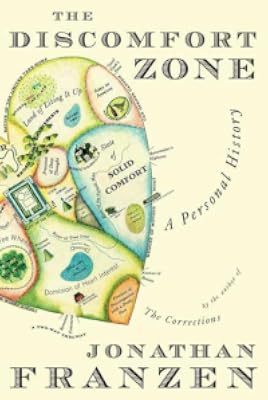
Jonathan Franzen was born in Western Springs, Illinois on August 17, 1959. He graduated from Swarthmore College in 1981, and went on to study at the Freie University in Berlin as a Fulbright scholar. He worked in a seismology lab at Harvard University's Department of Earth and Planetary Sciences after graduation. His works include The show more Twenty-Seventh City (1988), Strong Motion (1992), How to Be Alone (2002), and The Discomfort Zone (2006). The Corrections (2001) won a National Book Award and the 2002 James Tait Black Memorial Prize for fiction. Freedom (2010) is an Oprah Book Club selection. He also won a Whiting Writers' Award in 1988 and the American Academy's Berlin Prize in 2000. He is also a frequent contributor to Harper's and The New Yorker. In 2015 his title Purity made The New Yort Times and New Zealand Best Seller List. (Bowker Author Biography) show less
Some Editions
Awards and Honors
Notable Lists
Common Knowledge
- Canonical title
- Strong Motion
- Original title
- Strong Motion
- Original publication date
- 1992
- Important places
- Boston, Massachusetts, USA
- Dedication
- For Valerie
- First words
- Sometimes when people asked Eileen Holland if she had any brothers or sisters, she had to think for a moment.
- Last words
- (Click to show. Warning: May contain spoilers.)We have to keep walking.
- Original language*
- Englisch
*Some information comes from Common Knowledge in other languages. Click "Edit" for more information.
Classifications
Statistics
- Members
- 1,190
- Popularity
- 21,041
- Reviews
- 20
- Rating
- (3.45)
- Languages
- 10 — Danish, Dutch, English, Finnish, French, German, Hungarian, Italian, Portuguese, Spanish
- Media
- Paper, Ebook
- ISBNs
- 28
- ASINs
- 12