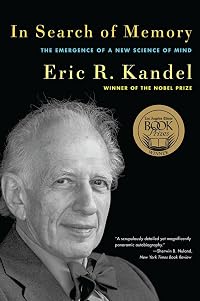
In Search of Memory: The Emergence of a New Science of Mind
by Eric R. Kandel
On This Page
Description
The author relates how his own study of memory converged with four distinct disciplines to give rise to the development of a new science of the mind that has changed our understanding of learning, memory, and mental illness.Tags
Recommendations
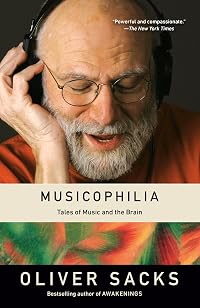
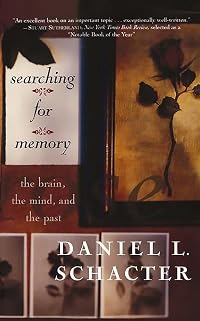
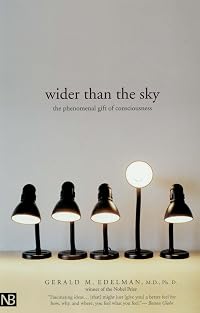
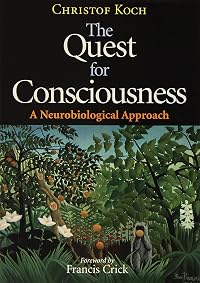
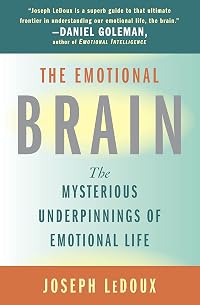
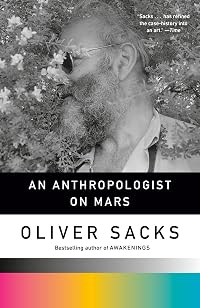
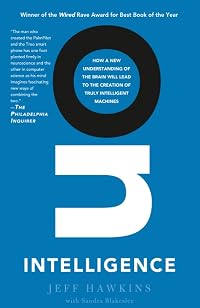
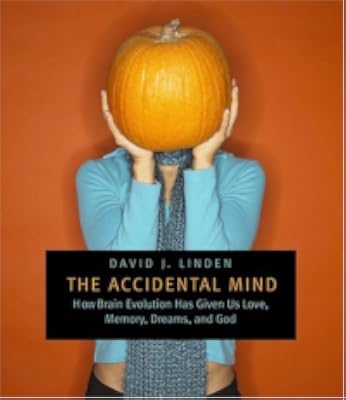
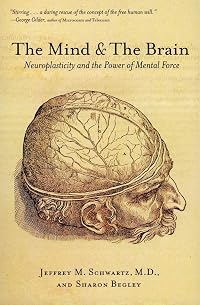
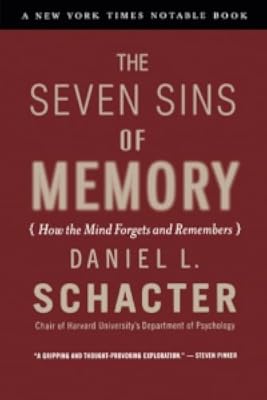

Member Recommendations

GabrielF Wilson and Kandel work in completely different areas of biology but they both write inspiring and honest biographies that explain their process, their results and its significance.
Member Reviews
A wonderful book that works both as a layman introduction to the new field of neurobiology and a Nobel prize scientist autobiography. Eric Kandel, having dabbled in psychiatry, turned to and devoted himself to the first unpromising new field of the science of the brain. He was present during the progression from physical/electrical to chemical to biochemical experimentation in discovering the mechanics of the brain. His topics are learning and memory which he examined on a genus of sea slugs called Aplysia. Lab work not patient interaction was his calling, which reveals itself in the book by a very mechanistic-deterministic approach. He is not squeamish in opening up cat brains, inflicting pain on his subjects to train them This show more disregard for the feelings of those not close to him fits into his conservative world view, which his liberal New Yorker relatives have trouble to understand.
Some of this harshness is certainly due to his lucky, unlucky personal history. Kandel's Jewish-Galician petit-bourgeois parents immigrated to Vienna where they owned a toy store in Vienna's 18th district (Today, this space is occupied by gourmet cheese store). Smart. sufficiently moneyed and with good local and US connections, the Kandels managed to escape from the worst of the Holocaust. While his parents and his brother suffered from the tragedy of the Second World War, it opened up a career for Eric Kandel, he probably would have been unable to follow in Vienna. Thanks to the support of New York's Jewish community, he received an excellent education and entry into elite universities. His understandable anger against Nazi Austria (and its tainted de-Nazification) results in a too positive retelling of Austrofascism (the regime that ruled Austria prior to the Nazi takeover). Just because the Austrofascists directed their anger against socialists (who often happened to be Jews) and not the members of the bourgeoisie (such as the Kandels) should not serve as an excuse to downplay its evilness. Apart from this small incomplete account of Austria's history, it is a tremendous read that highlights the joy of discovery and to seek large progress by examining the tiny and the simple things. show less
Some of this harshness is certainly due to his lucky, unlucky personal history. Kandel's Jewish-Galician petit-bourgeois parents immigrated to Vienna where they owned a toy store in Vienna's 18th district (Today, this space is occupied by gourmet cheese store). Smart. sufficiently moneyed and with good local and US connections, the Kandels managed to escape from the worst of the Holocaust. While his parents and his brother suffered from the tragedy of the Second World War, it opened up a career for Eric Kandel, he probably would have been unable to follow in Vienna. Thanks to the support of New York's Jewish community, he received an excellent education and entry into elite universities. His understandable anger against Nazi Austria (and its tainted de-Nazification) results in a too positive retelling of Austrofascism (the regime that ruled Austria prior to the Nazi takeover). Just because the Austrofascists directed their anger against socialists (who often happened to be Jews) and not the members of the bourgeoisie (such as the Kandels) should not serve as an excuse to downplay its evilness. Apart from this small incomplete account of Austria's history, it is a tremendous read that highlights the joy of discovery and to seek large progress by examining the tiny and the simple things. show less
One of the best scientific biographies that I’ve read.
Eric Kandel is a Nobel prize winning neuroscientist whose scientific career spans more than 50 years. In addition to being a creative and intelligent scientist he is an excellent writer, both as a story teller for the biographical sections and as a teacher in the scientific sections (a majority of the book). At times I was so captivated by his expository writing that I became impatient with his biography. At other times just the reverse occurred.
This is a large book that covers Eric’s life, from his youth in Vienna and his experience as a Jew to his acceptance of the Nobel prize. In between is a rich life that covers many of the key discoveries of modern neuroscience. The show more science is covered quite thoroughly so if you are looking for a “light” biography you will probably be disappointed.
I particularly enjoyed his insight into science as a human endeavor. After going over a particular episode in his life he would often draw conclusions about human nature and the enterprise of science that were very penetrating. Here is a mind that is not only able to do great science but is highly self-aware and able to communicate the lessons he has learned. show less
Eric Kandel is a Nobel prize winning neuroscientist whose scientific career spans more than 50 years. In addition to being a creative and intelligent scientist he is an excellent writer, both as a story teller for the biographical sections and as a teacher in the scientific sections (a majority of the book). At times I was so captivated by his expository writing that I became impatient with his biography. At other times just the reverse occurred.
This is a large book that covers Eric’s life, from his youth in Vienna and his experience as a Jew to his acceptance of the Nobel prize. In between is a rich life that covers many of the key discoveries of modern neuroscience. The show more science is covered quite thoroughly so if you are looking for a “light” biography you will probably be disappointed.
I particularly enjoyed his insight into science as a human endeavor. After going over a particular episode in his life he would often draw conclusions about human nature and the enterprise of science that were very penetrating. Here is a mind that is not only able to do great science but is highly self-aware and able to communicate the lessons he has learned. show less
Had Eric Kandel been my Science teacher in High School, there's a chance I would've picked Medicine or Biochmistry as my BA, instead of English.
When regarded as Kandel's autobiography, detailing his progress, his origins and motivation to comprehend the biology of memory, it is a fascinating text.
When regarding as a biography that narrates the birth and development of a new science that combines Biology, Chemistry, Psychology, Psychiatry and many specific sub-areas within these disciplines, it is simply a "must read". Even for someone who, like me, completely lacks scientific formation.
When regarded as Kandel's autobiography, detailing his progress, his origins and motivation to comprehend the biology of memory, it is a fascinating text.
When regarding as a biography that narrates the birth and development of a new science that combines Biology, Chemistry, Psychology, Psychiatry and many specific sub-areas within these disciplines, it is simply a "must read". Even for someone who, like me, completely lacks scientific formation.
A exploration of the work of Eric Kandel told from an autobiographical perspective. Kandel seamlessly weaves together the personal and the scientific, and brings out the great web of influences and interactions which make science the most communal enterprise in the world.
This is a delightful book and a treat! I would love to meet Eric Kandel, because, as an electrical engineer, I am also interested in science and wish that I might find a way to afford a living as a neuroscientist so that I may explore an area that would be at the boundary of disciplines that Dr. Kandel is so fond of. I, too, have made new "discoveries" in the form of patent ideas that have come to me as I have moved in and out of integrated circuit (semiconductor) design (my specialty), hardware design and software engineering.
I have also had decades-worth of interest in neuroscience and read quite a bit on the side. Hence, I am serious about my desires. But with a new family with includes 2-year-old daughters, I would not yet be able show more to command the same salary that I have built over the years as an engineer. I have not given up, nonetheless and will continue to enjoy exploring the possibilities. In this book, Dr. Kandel also expresses some concerns about how his passion for science affected his family. It appears that he struggled to balance this passion with his love for family and had some success!
This book briefly touches on this challenge, but explores in much more depth Dr. Kandel's path from psychoanalyst to cellular/molecular neurobiologist (and how he still integrates the two and so much more and advocates such integration).
On this path, he made choices that ultimately led to his (shared) discovery of how short and long term memory works in all animals, by discovering how it works in the much simpler Aplysia (marine snail). By drawing on evolution, he was able to propose and test similar mechanisms in mammals and humans with the help of and research of other scientists and colleagues to whom he gives much description and credit. The book contains numerous easy-to-understand diagrams and details of the electrochemical reactions that make up essential brain functions.
Without sugar-coating the rivalries and challenges of competing and collaborating with other scientists, Dr. Kandel appears to make the best of such relationships in the advancement of science and ultimate benefit to humanity. His descriptions include a brief history of brain research and scientists that include greats from Cajal to Crick and so many more that I am doing an injustice by not mentioning them here. Dr. Kandel does a far better job giving credit!
On the subject of humanity, Dr. Kandel traces much of his early interest in human behavior to his tragic personal experience of the Nazi's in Austria, and explains his desire to have and help Austria "come clean" regarding its involvement with the Nazi's and terrible treatment of the Jews, even, as he explains, to this day.
He extends his humanitarian views to speculate on the near future abilities of science to predict, diagnose and treat ever more complex neurological conditions and the related ethical ramifications.
He even speculates on current and upcoming research on conciousness.
I had purchased this book "blindly" via the internet and had expected more of a dry, textbook-style discussion of memory. Instead, I got a warmly engaging book that gave me a bit of "everything", including my desired introduction to how memory works.
I do not think Eric Kandel could have done a better job in combining so many things in such an enjoyable way!
Kudos and congratulations to Eric Kandel! show less
I have also had decades-worth of interest in neuroscience and read quite a bit on the side. Hence, I am serious about my desires. But with a new family with includes 2-year-old daughters, I would not yet be able show more to command the same salary that I have built over the years as an engineer. I have not given up, nonetheless and will continue to enjoy exploring the possibilities. In this book, Dr. Kandel also expresses some concerns about how his passion for science affected his family. It appears that he struggled to balance this passion with his love for family and had some success!
This book briefly touches on this challenge, but explores in much more depth Dr. Kandel's path from psychoanalyst to cellular/molecular neurobiologist (and how he still integrates the two and so much more and advocates such integration).
On this path, he made choices that ultimately led to his (shared) discovery of how short and long term memory works in all animals, by discovering how it works in the much simpler Aplysia (marine snail). By drawing on evolution, he was able to propose and test similar mechanisms in mammals and humans with the help of and research of other scientists and colleagues to whom he gives much description and credit. The book contains numerous easy-to-understand diagrams and details of the electrochemical reactions that make up essential brain functions.
Without sugar-coating the rivalries and challenges of competing and collaborating with other scientists, Dr. Kandel appears to make the best of such relationships in the advancement of science and ultimate benefit to humanity. His descriptions include a brief history of brain research and scientists that include greats from Cajal to Crick and so many more that I am doing an injustice by not mentioning them here. Dr. Kandel does a far better job giving credit!
On the subject of humanity, Dr. Kandel traces much of his early interest in human behavior to his tragic personal experience of the Nazi's in Austria, and explains his desire to have and help Austria "come clean" regarding its involvement with the Nazi's and terrible treatment of the Jews, even, as he explains, to this day.
He extends his humanitarian views to speculate on the near future abilities of science to predict, diagnose and treat ever more complex neurological conditions and the related ethical ramifications.
He even speculates on current and upcoming research on conciousness.
I had purchased this book "blindly" via the internet and had expected more of a dry, textbook-style discussion of memory. Instead, I got a warmly engaging book that gave me a bit of "everything", including my desired introduction to how memory works.
I do not think Eric Kandel could have done a better job in combining so many things in such an enjoyable way!
Kudos and congratulations to Eric Kandel! show less
This book plats a chronicled braid that entwines world events, scientific developments and Kandel’s personal life and scientific work. He tells us about himself and thus a lot about the science that fulfils a need to expose details of the mysterious. For his endeavours he was awarded a third share of a Nobel Prize in 2000. His personal experiences are a web of substantial privilege and deeply felt tragedy. Indeed it is likely that he fell into scientific research because it could provide a sense of purpose and intellectual consolation from the irrational madness of the world.
Some will be interested in the personal side (unrelated to science), but more – I suspect – will be interested his unfolding story of brain science and his show more scientific career. When he started his research, the neurosciences were very immature. Fortunately they are better founded today. Thus in this book, Kandel can discuss the neuronal, molecular and genetic aspects of making memories. He explains the ways in which neurons interact and even the way nuclear DNA plays an active role in setting permanent memories. However, another lesson is also clear to an outside observer. The immature practice of overgeneralization is a hard habit for any field to abandon.
Kandel professional career has kept to a theme. Nevertheless he describes how each time he took a new direction, others he respected advised against it. Ultimately he was proved correct. Therefore, we might ask if this good judgment or plain luck? The answer is both of course!
He explains how he made his career moves. He did not pay much attention to general attitudes as to what should or could be done. He worked on what he was fascinated by, what he though most important and what was an open field. He took a pragmatic approach and began with the easiest large-scale phenomena that could be studied. He did not try to develop skills independently. He decided what needed to be done and sought out collaborators who already had most of the needed skills he lacked. Each step of the way he tried to be first in some area to make substantive progress. Thus he could do all the easy exploration before it became too crowded. To continue making important contributions, he followed the reductionist path and gradually revealed the inner working of successive pictures from the organ of the brain right down to its molecular structure. Necessarily he did not tie himself down to any particular speciality within the neurosciences. Hence he took whatever he needed from whichever specialities were most relevant.
He presents a physical picture of how some neurons are excited or inhibited, how they strengthen connections, how these strengths are maintained, and how they can integrate different messages. He relates this to the laying down and reading of memories, and the formation of spatial awareness. Yet the nature of consciousness, the existence of free will (or won’t) and the process of setting attention are a step too far for even a guess.
Certainly much of the reported evidence has helped in the development of medicinal drugs. Yet it goes uncommented that such progress was advanced by the cavalier ‘torture’ of our DNA-cousins: snails, mice and monkeys. show less
Some will be interested in the personal side (unrelated to science), but more – I suspect – will be interested his unfolding story of brain science and his show more scientific career. When he started his research, the neurosciences were very immature. Fortunately they are better founded today. Thus in this book, Kandel can discuss the neuronal, molecular and genetic aspects of making memories. He explains the ways in which neurons interact and even the way nuclear DNA plays an active role in setting permanent memories. However, another lesson is also clear to an outside observer. The immature practice of overgeneralization is a hard habit for any field to abandon.
Kandel professional career has kept to a theme. Nevertheless he describes how each time he took a new direction, others he respected advised against it. Ultimately he was proved correct. Therefore, we might ask if this good judgment or plain luck? The answer is both of course!
He explains how he made his career moves. He did not pay much attention to general attitudes as to what should or could be done. He worked on what he was fascinated by, what he though most important and what was an open field. He took a pragmatic approach and began with the easiest large-scale phenomena that could be studied. He did not try to develop skills independently. He decided what needed to be done and sought out collaborators who already had most of the needed skills he lacked. Each step of the way he tried to be first in some area to make substantive progress. Thus he could do all the easy exploration before it became too crowded. To continue making important contributions, he followed the reductionist path and gradually revealed the inner working of successive pictures from the organ of the brain right down to its molecular structure. Necessarily he did not tie himself down to any particular speciality within the neurosciences. Hence he took whatever he needed from whichever specialities were most relevant.
He presents a physical picture of how some neurons are excited or inhibited, how they strengthen connections, how these strengths are maintained, and how they can integrate different messages. He relates this to the laying down and reading of memories, and the formation of spatial awareness. Yet the nature of consciousness, the existence of free will (or won’t) and the process of setting attention are a step too far for even a guess.
Certainly much of the reported evidence has helped in the development of medicinal drugs. Yet it goes uncommented that such progress was advanced by the cavalier ‘torture’ of our DNA-cousins: snails, mice and monkeys. show less
I read this book for 2 reasons: a treetop view of the science of molecular neurobiology, particularly as it relates to memory and consciousness, and a memoir of a very interesting man who wrote another fascinating book I have read — Reductionism in Art and Brain Science. Even though the science was sometimes too detailed for me, I learned a lot.
Members
- Recently Added By
Published Reviews
ThingScore 100
A great book if you ar new to the neuroscience. You will discover a fascinating world. After reading I became totally addicted to neuroscience and bought several other books about the same topic.
What's missing are good illustrations since the mechanisms described can be quite complex to picture.
I recommend as a companion of the book to have
either le grand Larousse du cerveau with beautiful show more color pictures or more student with alos beautiful picture Neurosciences, a la decouverte du cerveau edition pradel. show less
What's missing are good illustrations since the mechanisms described can be quite complex to picture.
I recommend as a companion of the book to have
either le grand Larousse du cerveau with beautiful show more color pictures or more student with alos beautiful picture Neurosciences, a la decouverte du cerveau edition pradel. show less
added by basile14
Lists

Psicología - Clásicos
165 works; 2 members

The Great Courses: The Learning Brain
61 works; 1 member
Author Information

31+ Works 3,017 Members
Eric R. Kandel is a University Professor and the Fred Kavli Professor at Columbia University and a Senior Investigator at the Howard Hughes Medical Institute. The recipient of the 2000 Nobel Prize in Physiology or Medicine for his studies of learning and memory, he is the author of In Search of Memory, The Age of Insight, and Reductionism in Art show more and Brain Science and the coauthor of Principles of Neural Science, the standard textbook in the field. show less
Awards and Honors
Awards
Common Knowledge
- Canonical title*
- Alla ricerca della memoria. La storia di una nuova scienza della mente
- Original title
- In Search of Memory: The Emergence of a New Science of Mind
*Some information comes from Common Knowledge in other languages. Click "Edit" for more information.
Classifications
- Genres
- Science & Nature, Nonfiction, General Nonfiction, Biography & Memoir
- DDC/MDS
- 616.80092 — Applied science & technology Medicine & health Diseases, Allergies, Skin Conditions Nervous Disorders: Autism, Anorexia, OCD
- LCC
- RC339.52 .K362 .A3 — Medicine Internal medicine Internal medicine Neurosciences. Biological psychiatry. Neuropsychiatry
- BISAC
Statistics
- Members
- 983
- Popularity
- 26,893
- Reviews
- 19
- Rating
- (4.19)
- Languages
- 7 — English, French, German, Italian, Portuguese, Spanish, Turkmen
- Media
- Paper, Audiobook, Ebook
- ISBNs
- 24
- UPCs
- 1
- ASINs
- 4