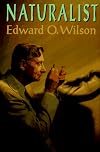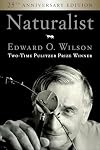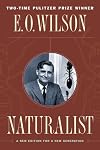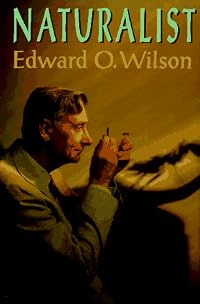
Naturalist
by Edward O. Wilson
On This Page
Description
Edward O. Wilson -- University Professor at Harvard, winner of two Pulitzer prizes, eloquent champion of biodiversity -- is arguably one of the most important thinkers of the twentieth century. His career represents both a blueprint and a challenge to those who seek to explore the frontiers of scientific understanding. Yet, until now, little has been told of his life and of the important events that have shaped his thought.In Naturalist, Wilson describes for the first time both his growth as show more a scientist and the evolution of the science he has helped define. He traces the trajectory of his life -- from a childhood spent exploring the Gulf Coast of Alabama and Florida to life as a tenured professor at Harvard -- detailing how his youthful fascination with nature blossomed into a lifelong calling. He recounts with drama and wit the adventures of his days as a student at the University of Alabama and his four decades at Harvard University, where he has achieved renown as both teacher and researcher.As the narrative of Wilson's life unfolds, the reader is treated to an inside look at the origin and development of ideas that guide today's biological research. Theories that are now widely accepted in the scientific world were once untested hypotheses emerging from one mans's broad-gauged studies. Throughout Naturalist, we see Wilson's mind and energies constantly striving to help establish many of the central principles of the field of evolutionary biology.The story of Wilson's life provides fascinating insights into the making of a scientist, and a valuable look at some of the most thought-provoking ideas of our time. show lessTags
Recommendations





Member Recommendations
GabrielF Wilson and Kandel work in completely different areas of biology but they both write inspiring and honest biographies that explain their process, their results and its significance.
Member Reviews
The early part of the book, in which young Wilson ranges through the wilderness close to home observing and collecting insects and herptiles with sometimes obsessive focus (should have thought twice before getting too confident about poisonous snakes, Ed) is delightful and at times reminiscent of Sterling North. His post-secondary education, with tales of travelling the globe from island to island discovering and collecting new species of insects and observing many, many ants, is fascinating. The feeling of awe with which he describes the wonders of the tropics and its animals -- and the excitement of collecting -- occasionally reminded me of a less comic, but still good humoured, Gerald Durrell. When Wilson acquires tenure and an show more indoor office, he becomes less exciting. The story becomes "I was privileged to meet some brilliant scientists" (he describes at least one man's physical appearance in as much loving detail as he devotes to the fellow's mind), "I had some ideas, some in collaboration with those brilliant scientists, and I wrote about them, here is a précis of my work, with publication details in a footnote", "my graduate student did most of the on-site work in the Florida Keys, but I got to help" (fascinating brief visits), "James Watson descended upon Harvard and called all us non-molecular biologists 'stamp collectors'" (it was unkind and inaccurate but one can almost see JW's point), "I wrote about some more ideas, here's another footnote". I like reading about adventures. And also, come to think of it, about islands. And about families, but he doesn't really mention his -- for instance, he says his wife and toddler accompanied him on one of his scouting trips to the Florida keys, but he basically leaves them somewhere Floridian and never mentions them in his detailed description of the trip. Or when he returns to Harvard either. (I have to suppose that when he offhandedly mentions, late in the book, that he was working 60 to 80 hours a week, that explains why he never mentions his wife and daughter. Would he even recognize the child if he saw her on the street?) Overall, a remarkable book about the history of science (which does qualify as adventure!) and ants. Highly recommended. show less
After reading Edward O. Wilson’s Naturalist, I can’t help worrying about the welfare of Lilliputian zombies. All right, I know you are rolling your eyes, but listen, this is a real concern. I’ll explain.
My worry arose while Wilson was talking about pheromones, those hormones that can fly through the air, among other entrancing properties. It turns out there is a “signal of the dead” pheromone produced by dead ants. Naturally, Wilson wanted to find out more.
Ants don’t really notice when another ant dies. That dead ant does its dead-level best to be dead by the side of the ant trail yet it’s still ignored by the busy creatures with jobs to do until two or three days go by and then whoa! What’s that smell? Dead ant, my show more friend. The nestmates pick up the corpse, take it to the refuse pile, and are done with it. Sounds simple, but here's where it gets crazy. Wilson discovers what provides the smell—it’s oleic acid or its ester—and in a great big cosmic joke he lathers up a live ant with the smell chemical and, oh boy, the live ant is carried away by his fellows to the refuse pile.
Until the live ant can somehow remove the death lather it doesn’t matter how lively he behaves or how forcefully he remonstrates with the ants who dump him in refuse. The dumpers will keep sweeping him up and carrying him away to where the dead are supposed to lay.
Imagine then, our Lilliputian zombie. I mean, he’s the epitome of the wee living dead and just busting out with oleic acid esters (assuming he’s like an ant in this respect). Those ants get ahold of him he’s going to become well acquainted with formicid funeral customs.
There’s more. Though Wilson does not discuss it, one has to wonder how the Lilliputian zombie will react after inhaling the death pheromone that he, himself, is exhaling through sheer zombiness. Wouldn’t the natural response to smelling it be for him to try to haul his own self off to the refuse pile? Picture yourself in his place. Even when ants are impeding your insatiable pursuits by throwing you in the trash, you can’t help but be impelled to hurl yourself in it too.
Hence, my concerns.
There’s much else of living interest in Wilson’s autobiography, in which he writes with authority about a guy who is a Harvard biologist and has had wonderful fun discovering things and seeing the world of nature as only a Naturalist really does. It is also about someone who doesn’t need worry about being carried off by ants. Not that there are no risks. To protest his book Sociobiology at a scientific meeting, a woman dumped a pitcher of ice water on his head, which action was accompanied by a group chanting “you’re all wet!”
It reminded me that early in his book Wilson quotes the Talmud, “we see things not as they are, but as we are.” In view of his dousing, I offer a corollary: “Their seething is not for how we are, but how they are.” That corollary can serve to describe the protesters in this instance, I think.
Naturalist is a great autobiography. Read it. It will protect you from esters of oleic acid. show less
My worry arose while Wilson was talking about pheromones, those hormones that can fly through the air, among other entrancing properties. It turns out there is a “signal of the dead” pheromone produced by dead ants. Naturally, Wilson wanted to find out more.
Ants don’t really notice when another ant dies. That dead ant does its dead-level best to be dead by the side of the ant trail yet it’s still ignored by the busy creatures with jobs to do until two or three days go by and then whoa! What’s that smell? Dead ant, my show more friend. The nestmates pick up the corpse, take it to the refuse pile, and are done with it. Sounds simple, but here's where it gets crazy. Wilson discovers what provides the smell—it’s oleic acid or its ester—and in a great big cosmic joke he lathers up a live ant with the smell chemical and, oh boy, the live ant is carried away by his fellows to the refuse pile.
Until the live ant can somehow remove the death lather it doesn’t matter how lively he behaves or how forcefully he remonstrates with the ants who dump him in refuse. The dumpers will keep sweeping him up and carrying him away to where the dead are supposed to lay.
Imagine then, our Lilliputian zombie. I mean, he’s the epitome of the wee living dead and just busting out with oleic acid esters (assuming he’s like an ant in this respect). Those ants get ahold of him he’s going to become well acquainted with formicid funeral customs.
There’s more. Though Wilson does not discuss it, one has to wonder how the Lilliputian zombie will react after inhaling the death pheromone that he, himself, is exhaling through sheer zombiness. Wouldn’t the natural response to smelling it be for him to try to haul his own self off to the refuse pile? Picture yourself in his place. Even when ants are impeding your insatiable pursuits by throwing you in the trash, you can’t help but be impelled to hurl yourself in it too.
Hence, my concerns.
There’s much else of living interest in Wilson’s autobiography, in which he writes with authority about a guy who is a Harvard biologist and has had wonderful fun discovering things and seeing the world of nature as only a Naturalist really does. It is also about someone who doesn’t need worry about being carried off by ants. Not that there are no risks. To protest his book Sociobiology at a scientific meeting, a woman dumped a pitcher of ice water on his head, which action was accompanied by a group chanting “you’re all wet!”
It reminded me that early in his book Wilson quotes the Talmud, “we see things not as they are, but as we are.” In view of his dousing, I offer a corollary: “Their seething is not for how we are, but how they are.” That corollary can serve to describe the protesters in this instance, I think.
Naturalist is a great autobiography. Read it. It will protect you from esters of oleic acid. show less
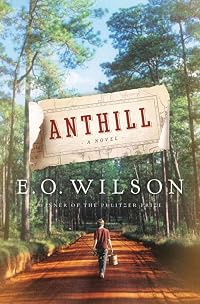
I've had this book for ages, seem to have picked it up while browsing in the discount section of B&N, but never got around to reading it. I recently read Anthill, and though I wasn't wild about the book as a whole, the embedded section about ants made it worthwhile, and I was curious how much of the story came from the Wilson's life. The answer is a fair amount -- it's set in the Alabama / Florida region of his childhood and in universities he's familiar with, he too was involved in the Boy Scouts, and then there are the ants. Naturalist however, is more detailed and less contrived -- there is no need to manufacture a dramatic story, because reality is quite interesting enough. This is a person who is infinitely curious and interactive. show more He describes how, as a kid, he learned to catch different types of animals by observing their behavior -- lizards, poisonous snakes, flies. ("My most memorable accomplishment in my freshman year (of high school) was to capture twenty houseflies during one hour of class, a personal record, and lay them in rows for the next student to find. The teacher found these trophies instead, and had the grace to compliment me on my feat next day in front of the class. I had developed a new technique for catching flies, and I now pass it on to you." A half page of instruction and explanation follows.) He describes the process of removing ant organs using needles and watchmaker tools, crushing and smearing each into a chemical trail, in order to understand how ants communicate the location of food. When Wilson decided to become a world expert on ants in the 1940s, biology was focused on organisms (botany, entomology, zoology). By 1960, it had changed, "sliced crosswise, according to levels of biological organization" (molecule, cell, organism, population, ecosystem). In the mid 1950s, James Watson arrived at Harvard, and a battle for the future ensued. ("When he was a young man, in the 1950s and 1960s, I found him the most unpleasant human being I had ever met. ... Watson, having risen to historic fame at an early age, became the Caligula of biology. He was given license to say anything that came to his mind and expect to be taken seriously. And unfortunately, he did so, with a casual and brutal offhandedness.") Watson and Wilson were on opposite ends of the spectrum, and Watson was not one to suppose that other people too might be doing necessary and important work. This episode occupies a mere chapter, so may pervade the book far less than it did the dozen years in the Harvard biology department. A controversy that gets more attention is sociobiology. I only vaguely recall the uproar at the time, the mid to late 1970s, and I'm now interested in reading Wilson's book Sociobiology, which I suspect will seem more dated than disturbing. As he describes it here, his error was to speculatively extend his observations and theories about the evolution of animal social systems into a single chapter on humans, oblivious to political implications, which evoked strenuous opposition from Stephen Jay Gould among others. There's not much about his personal life. He was an only child, his parents divorced when he was in elementary school and he was shuffled around as they reconstructed their lives, and about as much as he says about his immediate family is that he promised his wife to avoid airplanes until their daughter was grown, so on his frequent trips from MA to FL he took the train instead. I'm not doing justice to the tone of the book, which is more gracious than my excerpts suggest, and much more about nature and experiments and people he has collaborated with and admires. Highly recommended.
(read 23 May 2011) show less
(read 23 May 2011) show less
For a scientist's memoir, there was disappointingly little science. I suspect Wilson wanted to avoid repeating what he had already said in his other popular books. (My favorite Wilson books were coauthored with Bert Hölldobler, though, and maybe I just prefer Hölldobler's style.) Too little science, and too much academic politics! It was interesting to hear Wilson's description of his conflict with James Watson (who after proposing the DNA double helix structure in 1953 joined Harvard's biology department in 1956 and championed a reorientation toward molecular biology). But some of the politics is just obscure, and I don't care how or why somebody became Such-and-Such Named Chair at X University. The ending is also pretty weak; Wilson show more just gets very defensive about sociobiology applied to humans (without actually describing *any* of the science), and about his lack of an environmental record.
Still, there are a good number of worthy anecdotes, especially from his younger years before he had settled in at Harvard. His description of his childhood, already fascinated with discovering and classifying species, is very cool (though old news). I most liked his too-brief story of studying insect repopulation after fumigation of tiny Florida islets.
> I had developed a new technique for catching flies, and I now pass it on to you. Let the fly alight, preferably on a level and unobstructed surface, such as a restaurant table or book cover. Move your open hand carefully until it rests twelve to eighteen inches in front of the sitting fly's head. Bring the hand very slowly forward, in a straight line, taking care not to waggle it sideways; flies are very sensitive to lateral movement. When your hand is about nine inches away, sweep it toward the fly so that the edge of the palm passes approximately one or two inches above the spot where the fly is resting. Your target will dart upward at about the right trajectory to hit the middle of the palm, and as you close your fingers you will feel the satisfying buzz of the insect trapped inside your fist.
> We thus were equipped with the texts of radical authority. We also had field guides and our own previously acquired expertise: fishes, amphibians, and reptiles for Boschung; mollusks for Rawls; beetles for Ball and Valentine; and ants for me. And providence shone bright on all of us together: Valentine had an automobile. … Sometimes I sat on the front fender of the car as Rawls or Valentine drove slowly. Perched that way, with my left arm curled around a headlight and a collecting jar held in my right hand, I watched for frogs and snakes spotlighted by the high beams of the car. When one was sighted the driver stopped the car, and I dashed ahead to bottle the specimen.
> They are marginal not just in having smaller numbers of ant species than the inland rain forests, but also in a purely geographic sense. Located near river banks and sea coast, they are staging areas from which it is easiest to disperse by wind and by floating vegetation from one island to another. The marginal species, I also realized, are most flexible in terms of the places in which they live. Because they face only a small number of competitors, they have been ecologically "released," able to live in more habitats and in denser populations than would otherwise be possible. It seemed likely that these ants not only could move more easily but also would tend to press older native species back into the inner rain forests, reducing their dispersal power and shattering their populations into fragments prone to evolve into endemic species.
> In 1957 Darlington had expressed the same relation in the reptiles and amphibians of the West Indies not as an equation but as the following general rule: with each tenfold increase in island area, the number of species on the island doubles.
> The farther the island is from the source areas, say the way Hawaii is farther from Asia than New Guinea, the fewer new species that will be arriving each year. But the rate of extinction stays the same because, once a species of plant or animal is settled on an island, it doesn't matter whether the island is close or far. So you expect the number of species found on distant islands to be fewer.
> When our book, The Theory of Island Biogeography, was published in 1967, it met with almost unanimous approval in the scientific journals. Some of the reviewers declared it a major advance in biology. A quarter-century later, as I write, it remains one of the most frequently cited works of evolutionary biology. The Theory of Island Biogeography has also become influential in conservation biology, for the following practical reason. Around the world wild lands are being increasingly shattered by human action, the pieces steadily reduced in size and isolated from one another.
> A decisive winner quickly emerged: the Florida Keys, if combined with the nearby northern islands of Florida Bay and the southwest mainland coast, seemed ideal. I turned to more detailed navigational charts and photographs for a closer look. The islands came in all sizes, from single trees to sizable expanses up to a square kilometer or more. They varied in degrees of isolation from a few meters to hundreds of meters from the nearest neighbor. The forests on them were simple, consisting in most cases entirely of red mangrove trees. And they were available in vast numbers. … By 250 days after defaunation, the faunas of all the islands except the distant one ("E1") had regained species numbers and composition similar to those of untreated islands even though population densities were abnormally low
> Exasperated with the gluelike mud through which we had to wade to reach several of our islands, he built a pair of plywood footpads shaped like snowshoes and drilled holes in them to reduce suction when they were lifted. When he tried them out he sank to his knees and had to be pulled out by me and another companion. I called the invention "Simberloffs" afterward. Dan was not noticeably amused.
> The public can in perpetuity, I trust, witness the Florida Keys as they were in prehistory.
> That night I could not sleep. After a delay of five years my idea had paid off with only a few hours' work: I had identified the first gland that contributes to ant communication.
> The late 1950s and early 1960s were the dawn of coupled gas chromatography and mass spectrometry, which allows the identification of organic substances down to millionths of a gram. That meant we needed tens of thousands or hundreds of thousands of ants, each with its vanishing trace of pheromone, to produce the minimum amount required for analysis. … Pulling the car over to the verge of the interstate highway, we shoveled entire nests into the water of a slow-moving stream passing through one of the culverts. The soil settled to the bottom, and large portions of each colony rose to the surface. We scooped up seething masses of ants in kitchen strainers and plopped them into bottles of solvent. … In the late 1960s, ten years after I performed my first crude experiments, the field of pheromone studies was being flooded by a small army of gifted researchers prepared to make this commitment. So I pulled out, an outclassed elder at thirty-five, returning to experiments on chemical communication only when I saw the possibility of a quick result with low technology.
> Now I invested two more years, 1972 to 1974, in the equally punishing and still more massive new book, Sociobiology: The New Synthesis. Knowing where my capabilities lay, I chose the second of the two routes to success in science: breakthroughs for the extremely bright, syntheses for the driven … For a few days a protester in Harvard Square used a bullhorn to call for my dismissal. Two students from the University of Michigan invaded my class on evolutionary biology one day to shout slogans and deliver antisociobiology monologues.
> "The worst thing that can happen, will happen," I said, "is not energy depletion, economic collapse, limited nuclear war, or conquest by a totalitarian government. As terrible as these catastrophes would be for us, they can be repaired within a few generations. The one process ongoing in the 1980s that will take millions of years to correct is the loss of genetic and species diversity by the destruction of natural habitats. This is the folly our descendants are least likely to forgive us." This article marked my debut as an environmental activist. I was, I will confess now, unforgivably late in arriving.
> Science is the global civilization of which I am a citizen. The spread of its democratic ethic and its unifying powers provides my faith in humanity. The astonishing depth of wonders in the universe, continuously revealed by science, is my temple. The capacity of the informed human mind, liberated at last by the understanding that we are alone and thus the sole stewards of Earth, is my religion. The potential of humanity to turn this planet into a paradise for future generations is my afterlife. show less
Still, there are a good number of worthy anecdotes, especially from his younger years before he had settled in at Harvard. His description of his childhood, already fascinated with discovering and classifying species, is very cool (though old news). I most liked his too-brief story of studying insect repopulation after fumigation of tiny Florida islets.
> I had developed a new technique for catching flies, and I now pass it on to you. Let the fly alight, preferably on a level and unobstructed surface, such as a restaurant table or book cover. Move your open hand carefully until it rests twelve to eighteen inches in front of the sitting fly's head. Bring the hand very slowly forward, in a straight line, taking care not to waggle it sideways; flies are very sensitive to lateral movement. When your hand is about nine inches away, sweep it toward the fly so that the edge of the palm passes approximately one or two inches above the spot where the fly is resting. Your target will dart upward at about the right trajectory to hit the middle of the palm, and as you close your fingers you will feel the satisfying buzz of the insect trapped inside your fist.
> We thus were equipped with the texts of radical authority. We also had field guides and our own previously acquired expertise: fishes, amphibians, and reptiles for Boschung; mollusks for Rawls; beetles for Ball and Valentine; and ants for me. And providence shone bright on all of us together: Valentine had an automobile. … Sometimes I sat on the front fender of the car as Rawls or Valentine drove slowly. Perched that way, with my left arm curled around a headlight and a collecting jar held in my right hand, I watched for frogs and snakes spotlighted by the high beams of the car. When one was sighted the driver stopped the car, and I dashed ahead to bottle the specimen.
> They are marginal not just in having smaller numbers of ant species than the inland rain forests, but also in a purely geographic sense. Located near river banks and sea coast, they are staging areas from which it is easiest to disperse by wind and by floating vegetation from one island to another. The marginal species, I also realized, are most flexible in terms of the places in which they live. Because they face only a small number of competitors, they have been ecologically "released," able to live in more habitats and in denser populations than would otherwise be possible. It seemed likely that these ants not only could move more easily but also would tend to press older native species back into the inner rain forests, reducing their dispersal power and shattering their populations into fragments prone to evolve into endemic species.
> In 1957 Darlington had expressed the same relation in the reptiles and amphibians of the West Indies not as an equation but as the following general rule: with each tenfold increase in island area, the number of species on the island doubles.
> The farther the island is from the source areas, say the way Hawaii is farther from Asia than New Guinea, the fewer new species that will be arriving each year. But the rate of extinction stays the same because, once a species of plant or animal is settled on an island, it doesn't matter whether the island is close or far. So you expect the number of species found on distant islands to be fewer.
> When our book, The Theory of Island Biogeography, was published in 1967, it met with almost unanimous approval in the scientific journals. Some of the reviewers declared it a major advance in biology. A quarter-century later, as I write, it remains one of the most frequently cited works of evolutionary biology. The Theory of Island Biogeography has also become influential in conservation biology, for the following practical reason. Around the world wild lands are being increasingly shattered by human action, the pieces steadily reduced in size and isolated from one another.
> A decisive winner quickly emerged: the Florida Keys, if combined with the nearby northern islands of Florida Bay and the southwest mainland coast, seemed ideal. I turned to more detailed navigational charts and photographs for a closer look. The islands came in all sizes, from single trees to sizable expanses up to a square kilometer or more. They varied in degrees of isolation from a few meters to hundreds of meters from the nearest neighbor. The forests on them were simple, consisting in most cases entirely of red mangrove trees. And they were available in vast numbers. … By 250 days after defaunation, the faunas of all the islands except the distant one ("E1") had regained species numbers and composition similar to those of untreated islands even though population densities were abnormally low
> Exasperated with the gluelike mud through which we had to wade to reach several of our islands, he built a pair of plywood footpads shaped like snowshoes and drilled holes in them to reduce suction when they were lifted. When he tried them out he sank to his knees and had to be pulled out by me and another companion. I called the invention "Simberloffs" afterward. Dan was not noticeably amused.
> The public can in perpetuity, I trust, witness the Florida Keys as they were in prehistory.
> That night I could not sleep. After a delay of five years my idea had paid off with only a few hours' work: I had identified the first gland that contributes to ant communication.
> The late 1950s and early 1960s were the dawn of coupled gas chromatography and mass spectrometry, which allows the identification of organic substances down to millionths of a gram. That meant we needed tens of thousands or hundreds of thousands of ants, each with its vanishing trace of pheromone, to produce the minimum amount required for analysis. … Pulling the car over to the verge of the interstate highway, we shoveled entire nests into the water of a slow-moving stream passing through one of the culverts. The soil settled to the bottom, and large portions of each colony rose to the surface. We scooped up seething masses of ants in kitchen strainers and plopped them into bottles of solvent. … In the late 1960s, ten years after I performed my first crude experiments, the field of pheromone studies was being flooded by a small army of gifted researchers prepared to make this commitment. So I pulled out, an outclassed elder at thirty-five, returning to experiments on chemical communication only when I saw the possibility of a quick result with low technology.
> Now I invested two more years, 1972 to 1974, in the equally punishing and still more massive new book, Sociobiology: The New Synthesis. Knowing where my capabilities lay, I chose the second of the two routes to success in science: breakthroughs for the extremely bright, syntheses for the driven … For a few days a protester in Harvard Square used a bullhorn to call for my dismissal. Two students from the University of Michigan invaded my class on evolutionary biology one day to shout slogans and deliver antisociobiology monologues.
> "The worst thing that can happen, will happen," I said, "is not energy depletion, economic collapse, limited nuclear war, or conquest by a totalitarian government. As terrible as these catastrophes would be for us, they can be repaired within a few generations. The one process ongoing in the 1980s that will take millions of years to correct is the loss of genetic and species diversity by the destruction of natural habitats. This is the folly our descendants are least likely to forgive us." This article marked my debut as an environmental activist. I was, I will confess now, unforgivably late in arriving.
> Science is the global civilization of which I am a citizen. The spread of its democratic ethic and its unifying powers provides my faith in humanity. The astonishing depth of wonders in the universe, continuously revealed by science, is my temple. The capacity of the informed human mind, liberated at last by the understanding that we are alone and thus the sole stewards of Earth, is my religion. The potential of humanity to turn this planet into a paradise for future generations is my afterlife. show less
Great memoir by a brilliant man, who seems genuinely modest. And it passed my stiffest test--I immediately started researching more about the issues he discussed (bioethnicity) and his other books. If anything, he's more relevant now than ever. (I'd like someone to say that about me at this age). And I'm very curious about ants.
I have long admired Dr. Wilson and this book just increases my respect and , dare I say it, affection for him. An autobiography that teaches not only about his life but life on earth and life lived well
One of the most interesting autobiographies ever: To me, it looks as if Wilson turned to be a great scientist against all odds. He did not come from the academic royalty, but from a broken family in Alabama. With strong intuition, lot of hard work and endless enthusiasm, he became one of the great scientists of the 20th century. A well written book, that would probably change the course of my life have I read it at the right age...
Members
- Recently Added By
Lists

Best Autobiographies and Memoirs
370 works; 67 members

One Book, Many Authors
441 works; 39 members

Five star books
1,755 works; 108 members

Mustich's 1000 Books to Read Before You Die: A Life Changing List
1,001 works; 18 members

Books Read in 2024
4,623 works; 126 members

Biographies of Little Known People
39 works; 2 members
Author Information

72+ Works 17,975 Members
He was born in Birmingham, Alabama, in 1929. He is currently Pellegrino University Research Professor & Honorary Curator in Entomology of the Museum of Comparative Zoology at Harvard. He is on the Board of Directors of the Nature Conservancy, Conservation International & the American Museum of Natural History. He lives in Lexington, Massachusetts. show more (Bowker Author Biography) show less
Awards and Honors
Awards
Distinctions
Notable Lists
Work Relationships
Is contained in
Has the adaptation
Common Knowledge
- Original publication date
- 1994-08-01
- People/Characters
- E. O. Wilson; Inez Freeman Wilson (mother of Edward O. Wilson); Edward Wilson (father of Edward O. Wilson); E. J. Raub; Belle Raub; Pearl Wilson (stepmother of Edward O. Wilson) (show all 10); Ellis MacLeod; Wallace Rogers (reverend); J. Henry Walker (professor); Bert Williams (professor)
- First words
- What happened, what we think happened in distant memory, is built around a small collection of dominating images. In one of my own from the age of seven, I stand in the shallows off Paradise Beach, staring down at a huge jell... (show all)yfish in water so still and clear that its every detail is revealed as though it were trapped in glass.
Classifications
Statistics
- Members
- 938
- Popularity
- 28,241
- Reviews
- 12
- Rating
- (4.05)
- Languages
- 6 — Dutch, English, French, German, Portuguese, Spanish
- Media
- Paper, Audiobook, Ebook
- ISBNs
- 24
- ASINs
- 7