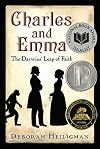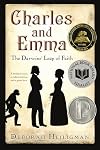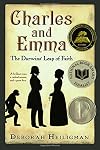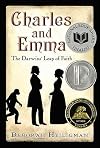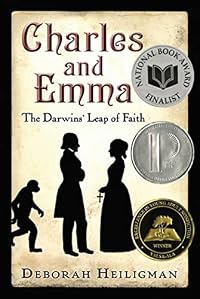
Charles and Emma: The Darwins' Leap of Faith
by Deborah Heiligman
On This Page
Description
Charles Darwin and his wife, Emma, were deeply in love and very supportive of each other, but their opinions often clashed. Emma was extremely religious, and Charles questioned God's very existence.Tags
Recommendations



Member Recommendations
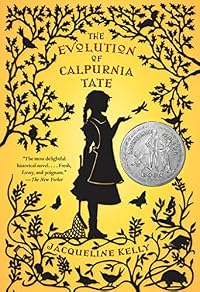
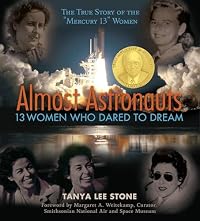
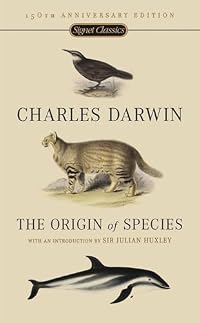
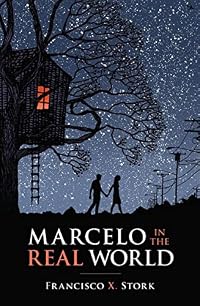
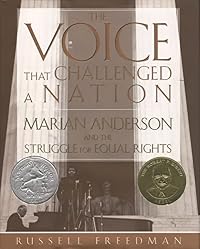
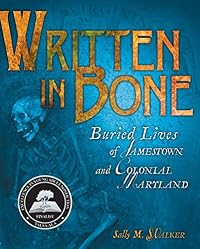
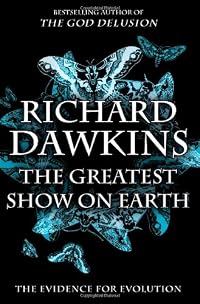
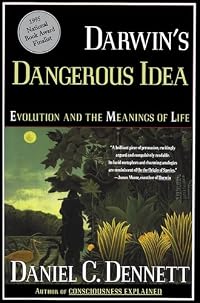
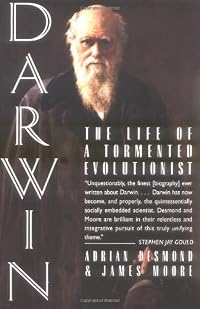
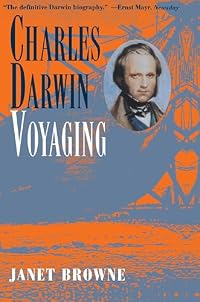
themulhern The two books are both kind of for young adults, and both take a lot of account of the historical context.
Member Reviews
A really interesting biography and one I read relatively quickly. I have been reading a few books on Darwin lately (and started his autobiography a while ago), so one devoted to his relationship with his religious and brilliant, open-minded wife was fascinating and moving. The conflict between evolution and creation has never been a personal one for me, as I believe that each reside on two different epistemological universes. But it is evident that since the publication of On the Origin of Species, the world would forever be shaped by its profound questioning of intelligent design and Biblical doxa.Emma Darwin was extremely well-read, lively, and supportive of her husband's lifelong dedication to the study of natural history. And he, in show more turn, always gave his manuscripts to her first. She then edited his work for clarity and diction, even proofreading for his atrocious uses of commas. Reading On the Origin of Species and watching God slowly recede from Darwin's life was a source of anguish for her. But her love for him and her pride in his work was so very central to her existence. The biography includes letters and short diary entries written by the both of them. Their relationship was extraordinary. show less
With the understanding that I do not read nonfiction easily, this was very well written, blending fact and storytelling. When people think Darwin, they mostly think of evolution and monkeys, without regard to who he was as a man, and the fact that he had a family. This telling of Darwin in the context of his wife and kids is not only an insight into the process he went through to come to his ground breaking hypothesis, but also the everyday life and more mundane detail of who Darwin was as a man, the internal debates he went through when writing his famous book, and how much he loved his family. It includes supplemental photos and letters, even the "To Marry or Not to Marry" list that starts the book. Definitely fun and informative, show more good for high school students. show less
This book is a biography of Charles and Emma Darwin, giving each about equal weight. It gives the Darwin's family life about equal weight w/ Darwin's scientific work. This is a fine structure, and works well since both Charles and Emma left a lot of written matter behind them, suitable for the biographer. I have read a few Darwin books by now, and this is the first to discuss the origins of Emma's devoutness, attributing it in part to the death of her closest sister as an adult. It also follows the Darwins through many infant and child deaths, not just those of their own children but also of the children of their close friends, like the Huxleys and the Hookers. These deaths were a fact of Victorian life, and it is reasonable to remember show more it.
Darwin, being a big softy, was distressed by his wife's suffering during childbirth. He couldn't ignore it. The fourth time, he actually used the new wonder drug, chloroform, to knock Emma out, and was delighted to have spared her so much pain. But it _never_ occurred to him to reduce her pain and make it more likely that she wouldn't die on him, by actually choosing to avoid pregnancy. It's facts like these, that 200 years ago an intelligent, empathetic person couldn't even think of saving the life of someone he cared deeply for and relied on by avoiding a pregnancy, that makes us so grateful for the courageous contraception advocates like Margaret Sanger. Theirs was an uphill battle, alright, and it's still going on today, witness the death threats against Melinda Gates. show less
Darwin, being a big softy, was distressed by his wife's suffering during childbirth. He couldn't ignore it. The fourth time, he actually used the new wonder drug, chloroform, to knock Emma out, and was delighted to have spared her so much pain. But it _never_ occurred to him to reduce her pain and make it more likely that she wouldn't die on him, by actually choosing to avoid pregnancy. It's facts like these, that 200 years ago an intelligent, empathetic person couldn't even think of saving the life of someone he cared deeply for and relied on by avoiding a pregnancy, that makes us so grateful for the courageous contraception advocates like Margaret Sanger. Theirs was an uphill battle, alright, and it's still going on today, witness the death threats against Melinda Gates. show less
Charles and Emma: The Darwins’ Leap of Faith - Heiligman
Audio performance by Rosalyn Landor
4 stars
This biography is intended for a young adult audience. It is not overly complex, but it is surprisingly detailed. Many biographies for young people paint a rosy picture of their subjects, skimming over controversial details. This book is built around the controversial issue; Charles Darwin, his Theory of Evolution, and its effect on 19th century Christian theology. It is also the story of a marriage.
The book is not focussed on Darwin as a scientist or on his theory, although these things are clearly, if briefly, presented. It is solidly researched. I never thought the author was guilty of putting words into the mouths of her subjects. show more She quotes from diaries, letters, Darwin’s notebooks, and other publications. She gives explanatory historical context about the 19th century concerning transportation, medical practices, and social behavior that would definitely be helpful to a young reader.
This book is about Darwin’s personal and family life. It begins with his agonised decision about whether or not to marry. His approach was typically scientific and obsessive. He made a list of pros and cons. The number of objections exceeded the number of benefits. But, apparently, the evolutionary sexual drive to increase the species won out. He married his cousin. They had ten children. They lost three of them in childhood.
The book’s subtitle reflects the author’s attention to an ever present factor of the Darwin marriage. Emma Darwin was a religious woman. Even before the marriage, at the time of his proposal, Charles has significant religious doubts. He did not attempt to disguise his opinions, but he was also sensitive, and very anxious, over the distress his beliefs would cause his future wife. (Later, he agonized over the explosive effect the publication of his theory would have among the scientific and religious communities.) Using letters and diary entries, Heiligman demonstrates that the couple continued an open and respectful theological debate throughout their marriage. To all appearances they had a long and happy marriage. show less
Audio performance by Rosalyn Landor
4 stars
This biography is intended for a young adult audience. It is not overly complex, but it is surprisingly detailed. Many biographies for young people paint a rosy picture of their subjects, skimming over controversial details. This book is built around the controversial issue; Charles Darwin, his Theory of Evolution, and its effect on 19th century Christian theology. It is also the story of a marriage.
The book is not focussed on Darwin as a scientist or on his theory, although these things are clearly, if briefly, presented. It is solidly researched. I never thought the author was guilty of putting words into the mouths of her subjects. show more She quotes from diaries, letters, Darwin’s notebooks, and other publications. She gives explanatory historical context about the 19th century concerning transportation, medical practices, and social behavior that would definitely be helpful to a young reader.
This book is about Darwin’s personal and family life. It begins with his agonised decision about whether or not to marry. His approach was typically scientific and obsessive. He made a list of pros and cons. The number of objections exceeded the number of benefits. But, apparently, the evolutionary sexual drive to increase the species won out. He married his cousin. They had ten children. They lost three of them in childhood.
The book’s subtitle reflects the author’s attention to an ever present factor of the Darwin marriage. Emma Darwin was a religious woman. Even before the marriage, at the time of his proposal, Charles has significant religious doubts. He did not attempt to disguise his opinions, but he was also sensitive, and very anxious, over the distress his beliefs would cause his future wife. (Later, he agonized over the explosive effect the publication of his theory would have among the scientific and religious communities.) Using letters and diary entries, Heiligman demonstrates that the couple continued an open and respectful theological debate throughout their marriage. To all appearances they had a long and happy marriage. show less
When Charles Darwin was a young man, he created a list of pros and cons - to marry or not to marry. Though he courted one woman before his trip to the Galapagos islands, and gained the interest of another family with unmarried daughters, he surprised many people by marrying his cousin, Emma Wedgewood. Charles had already started questioning the role of God in the creation of species, and was upfront with his bride-to-be about his doubts. Despite the fact that she was religious, they had a long and happy marriage.
Heiligman takes a unique approach to a biography of Charles Darwin and his coming to conclusions about natural selection and writing The Origin of Species by focusing on all through the lens of his marriage and home life. The show more beginning was painstaking in going through letters between Charles and Emma and showing the way in which he came to believe in evolution but worried about how his theory would be perceived. After their marriage and children come into the picture, the narrative picks up and I really enjoyed the unusual picture of a Victorian home where children were very much a part of their parents' lives and would run in and out of Charles' study while he was working. Having this focus really made both Charles and Emma come to life as regular human beings instead of larger-than-life historical figures. I was a little disappointed with the fact that as detailed as Charles' doubts and thoughts were, Emma's religious beliefs came down to the simple fact that she wanted to believe in life after death when her sister died. It could be that this is all there was in the historical record, but I wished that her convictions could have been given the same level of scrutiny that her husband's were. Though geared towards teens, the biography is a great introduction for adults as well, and has won many accolades, including a Printz Honor and National Book Award finalist. show less
Heiligman takes a unique approach to a biography of Charles Darwin and his coming to conclusions about natural selection and writing The Origin of Species by focusing on all through the lens of his marriage and home life. The show more beginning was painstaking in going through letters between Charles and Emma and showing the way in which he came to believe in evolution but worried about how his theory would be perceived. After their marriage and children come into the picture, the narrative picks up and I really enjoyed the unusual picture of a Victorian home where children were very much a part of their parents' lives and would run in and out of Charles' study while he was working. Having this focus really made both Charles and Emma come to life as regular human beings instead of larger-than-life historical figures. I was a little disappointed with the fact that as detailed as Charles' doubts and thoughts were, Emma's religious beliefs came down to the simple fact that she wanted to believe in life after death when her sister died. It could be that this is all there was in the historical record, but I wished that her convictions could have been given the same level of scrutiny that her husband's were. Though geared towards teens, the biography is a great introduction for adults as well, and has won many accolades, including a Printz Honor and National Book Award finalist. show less
How do you balance science and faith? What happens when you add love to the mix? Can you love people with radically different opinions than your own? Charles and Emma avoids pat answers while giving a clear-eyed view of the romance between Charles Darwin and his wife Emma. Nonfiction for young adults is difficult; it has to be accessible and interesting without being condescending; a book about evolution is even more difficult. Heiligman manages her topicwell, as she assumes little background knowledge about Darwin or the theory of evolution and clarifies points without talking down to her readers. She clearly and concisely explains the social circumstances of the time period as well as key points of the theory of evolution while show more keeping the main focus of the book squarely on the Darwins. Readers hoping for an in-depth discussion of the theory of evolution or Darwin’s discoveries may be disappointed, as Heiligman confines herself brief overviews; the real strength lies in her exploration of the relationship of doubting Charles and religious Emma and how they loved each other deeply despite being divided about Charles’ discoveries. Endnotes and an extensive bibliography provide sources and further reading. Highly recommended for late middle school through adult. Somewhat conversational style makes it seem less academic than it really is, but never fear- Heigilman did her research. show less
A fascinating look at Charles Darwin and his life, with an emphasis on how he came to marry Emma Wedgewood and how their life together was a major part of his work. This biography covers his life from childhood, to the amusing (to us) list he wrote, after his voyage on the Beagle, of the pros and cons "Marry" and "Not Marry" ("This is the Question"), when he was contemplating that question, to their family and to the very end of their long lives. It was very readable, with a great deal of quotes from Charles and Emma's writings, public and private, as well as from their friends and relatives, and you get a wonderful sense of their personalities, hopes and fears. How they both agonized over the religious implications of his theory of show more evolution; Emma wanted him to believe more strongly so that she could be comforted that when they died they'd be together again in Heaven. But he always had a conflict in his mind about God and religion. I enjoyed "meeting" the Darwins in this book, and felt I better understood him and his theories, and how important they are to the world, after reading it.
reviewed in 2009 show less
reviewed in 2009 show less
Members
- Recently Added By
Lists

KayStJ's to-read list
1,616 works; 11 members
Author Information

39+ Works 10,341 Members
Awards and Honors
Awards
Distinctions
Common Knowledge
- Canonical title
- Charles and Emma: The Darwins' Leap of Faith
- Original title
- Charles and Emma: The Darwins' Leap of Faith
- Original publication date
- 2009
- People/Characters
- Charles Darwin [Charles Robert: 1809-1882]; Emma Wedgwood Darwin
- Important places
- London, England, UK; Down House, Kent, England, UK; Maer Hall, Staffordshire, England, UK; The Mount, York, North Yorkshire, England, UK
- First words
- In the summer of 1838, in his rented rooms on Great Marlborough Street, London, Charles Darwin drew a line down the middle of a piece of scrap paper.
- Quotations
- ... she [Emma] wrote, "The sincerity of showing yourself as you really are. The real good it would do the world not to have artificial sins." (163)
Charles had written in one of his notebooks, "Definition of happiness the number of pleasant ideas passing through mind in given time." Now he found happiness not just in his mind; he found it in real life. (93)
They borrowed some novels from the library, starting a lifelong tradition of reading together—usually Emma read to Charles while he rested from his work. Charles liked novels with happy endings, and he once wrote, "I ... (show all)often bless all novelists. A surprising number have been read aloud to me... and I like all if moderately good, and passed. A novel, according to my taste, does not come into the first class unless it contains some person whom one can thoroughly love, and if it be a pretty woman all the better." (91) - Last words
- (Click to show. Warning: May contain spoilers.)It had been demonstrated; it had been proved.
Classifications
- Genres
- Nonfiction, Biography & Memoir, Tween, Kids, Teen
- DDC/MDS
- 576.82092 — Natural sciences & mathematics Biology Genetics and evolution Evolution Theories of evolution History, geographic treatment, biography Biography
- LCC
- QH31 .D2 .H42 — Science Natural history – Biology Natural history (General) General
- BISAC
Statistics
- Members
- 922
- Popularity
- 28,870
- Reviews
- 115
- Rating
- (3.91)
- Languages
- English
- Media
- Paper, Audiobook, Ebook
- ISBNs
- 12
- ASINs
- 7