On This Page
Description
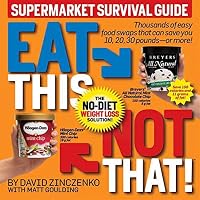
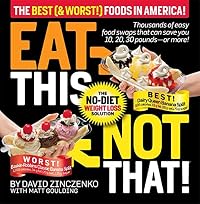
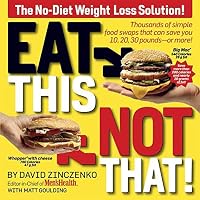
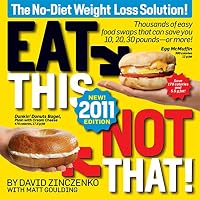
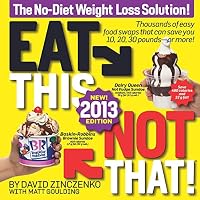
Based on the most popular column in both "Men's Health" and "Women's Health" magazines, this work is a comprehensive guide for smart food shopping in the supermarket.Tags
Recommendations

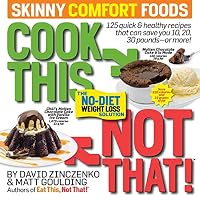


Member Reviews
First Line: It can be a place of wonder and excitement, of bright shiny colors, delectable scents, and enticingly sweet delights.
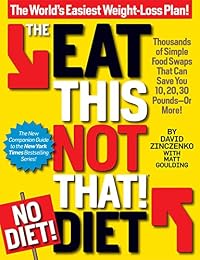
I have to admit that I'd never heard of this book. Grocery shopping is one of my least favorite chores, and there's no way that I would agree with the first line I typed in above. Perhaps it's because I hate to cook. Perhaps it's because I've been in retail too long and I know too many marketing strategies aimed at having consumers do the wrong thing. However, after a visit to his doctor, my husband came home rabidly against carbonated soft drinks, and when I saw Eat This Not That! on a shelf in Target's book department, I opened it and immediately saw that it was packed full of things that I could use, not show more only to my husband's advantage, but to mine as well.
I think one of the reasons why I hate to grocery shop is that, in order to buy the right things, I have to spend an inordinate amount of time reading the blasted labels on everything. The Food and Drug Administration does very little to curb misleading information on food packaging. Ever read portion sizes? Hah! Do you believe labels when they tell you "Zero Trans Fat!"? Hah! Do you know the difference between "whole grain" and "multi grain"? (They both sound healthy, don't they?)
Eat This Not That and its author, David Zinczenko, will take a lot of guess work out of grocery shopping for you. The first part of the book explains what's happened to our food over the years. In many ways, it's not nearly as healthy as it used to be, and explanations are given. It doesn't make for comfortable reading, but it's certainly necessary reading.
The main part of the book is divided into sections just like a supermarket. One side of the page will show common items that are healthier to eat and give the reasons why they are, while the opposite side of the page will show more common items in the same category that are not healthy eating as well as why they aren't the best items to choose to eat.
Although the entire book wasn't eye-opening, many pages were, and I took several notes while I read. I've now passed the book on to Denis, so he can read it and understand why a few things are forever disappearing from the menu.
Eat This Not That is touted as a No Diet weight loss solution, and if you only have a couple of pounds to lose, have been eating healthy to begin with and get regular exercise, making the substitutions suggested in this book will help you to lose weight. (Denis and I have already lost a few pounds.) If you have a lot of weight to lose, it's going to take more than the substitutions this book suggests. But you knew that already, didn't you?
After reading Zinczenko's book, the major thing I took from it was how the companies that give us such a wide variety of food to put on our tables are allowed to lie...and it's all perfectly legal. It made me angry--almost to the point where I wanted to be a modern-day Carrie Nation and stomp into the nearest grocery store carrying a hatchet. Since I'd probably do myself a mischief with the hatchet, I'll make my point with my wallet while I try to see what can be done about forcing companies to put the truth on their packaging instead of lies that can kill us.
No matter how much you think you know about the food in your local grocery store, you owe it to yourself and your family to read this book. You can also click on the author's name at the top of this post to visit the Eat This website to sign up for newsletters and to read more information. show less
I have to admit that I'd never heard of this book. Grocery shopping is one of my least favorite chores, and there's no way that I would agree with the first line I typed in above. Perhaps it's because I hate to cook. Perhaps it's because I've been in retail too long and I know too many marketing strategies aimed at having consumers do the wrong thing. However, after a visit to his doctor, my husband came home rabidly against carbonated soft drinks, and when I saw Eat This Not That! on a shelf in Target's book department, I opened it and immediately saw that it was packed full of things that I could use, not show more only to my husband's advantage, but to mine as well.
I think one of the reasons why I hate to grocery shop is that, in order to buy the right things, I have to spend an inordinate amount of time reading the blasted labels on everything. The Food and Drug Administration does very little to curb misleading information on food packaging. Ever read portion sizes? Hah! Do you believe labels when they tell you "Zero Trans Fat!"? Hah! Do you know the difference between "whole grain" and "multi grain"? (They both sound healthy, don't they?)
Eat This Not That and its author, David Zinczenko, will take a lot of guess work out of grocery shopping for you. The first part of the book explains what's happened to our food over the years. In many ways, it's not nearly as healthy as it used to be, and explanations are given. It doesn't make for comfortable reading, but it's certainly necessary reading.
The main part of the book is divided into sections just like a supermarket. One side of the page will show common items that are healthier to eat and give the reasons why they are, while the opposite side of the page will show more common items in the same category that are not healthy eating as well as why they aren't the best items to choose to eat.
Although the entire book wasn't eye-opening, many pages were, and I took several notes while I read. I've now passed the book on to Denis, so he can read it and understand why a few things are forever disappearing from the menu.
Eat This Not That is touted as a No Diet weight loss solution, and if you only have a couple of pounds to lose, have been eating healthy to begin with and get regular exercise, making the substitutions suggested in this book will help you to lose weight. (Denis and I have already lost a few pounds.) If you have a lot of weight to lose, it's going to take more than the substitutions this book suggests. But you knew that already, didn't you?
After reading Zinczenko's book, the major thing I took from it was how the companies that give us such a wide variety of food to put on our tables are allowed to lie...and it's all perfectly legal. It made me angry--almost to the point where I wanted to be a modern-day Carrie Nation and stomp into the nearest grocery store carrying a hatchet. Since I'd probably do myself a mischief with the hatchet, I'll make my point with my wallet while I try to see what can be done about forcing companies to put the truth on their packaging instead of lies that can kill us.
No matter how much you think you know about the food in your local grocery store, you owe it to yourself and your family to read this book. You can also click on the author's name at the top of this post to visit the Eat This website to sign up for newsletters and to read more information. show less
I can really see us saving money by using this book. And not just because it lessens the appeal of snack food and desserts. There were several cases where it recommended replacing our usual purchases with brands that are not just apparently healthier but that I know to be cheaper. So that's something. The advice seemed more consistent here than in the restaurant version. And it really drove home how in denial I've been about how fattening certain foods (cheddar cheese, for example) are. There is some definite pop science in some of the vitamin recommendations, but the emphasis on things like fiber is appreciated.
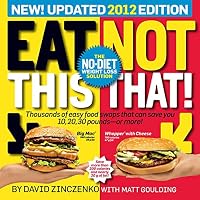
Eat This Not That-Supermarket Survival Guide and Eat This Not That The No-Diet Weight Loss Guide by David Zinczenko
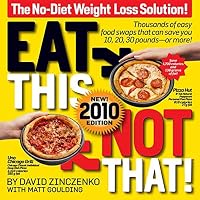
I'm going to count these two as one book. I read every word in the first, and all the text in the second, but they are most of all picture books. This explains their hefty price ($19.95 @), but to have that many color photos in a book has to be expensive to print.
In the first book, the typical format within the sections is to have photos of 7-8 foods on the right page with boxes giving certain nutritional information, and then a corresponding number of the same food types on the left page, also with boxes, that represent much lower calories and fat grams. For example, the difference between a can of Progresso White Clam show more Sauce (on the left) and Progresso Red Clam Sauce (on the right) is 70 calories, 9 grams of fat, and 530 mg of sodium. The book does this for staples in the refrigerator, the pantry, the freezer, snacks and sweets, and drinks, as well as a few short chapters on the produce aisle, meat and fish counters, and a save-money shopping guide.
The second book was the original one. It focuses on restaurant meals in the first half of the book--for example, if you are eating at KFC, the Creamy Parmesan dressing will add 25 fat grams to your meal. At Jack in the box, a Deluxe Hamburger with ketchup and mustard instead of the default Mayo-Onion sauce (90 calories, 10 g of fat) will save you 410 calories, 31 g of fat, and 825 mg of sodium over the Jumbo Jack with Cheese. Do you know that the WORST sandwich at Subway would be the tuna salad? Beats out the meatball hands down? While I could wish this would be more exhaustive, it really does help train you on what to look for when making choices, and I have started checking online the nutritional info for food chains before I go to them. It also has a chapter for foods to eat at certain places, such as the movies or the ballpark or vending machines, as well as certain types of restaurant food (chinese, italian, etc.) It has a chapter on the supermarket, but this was clearly much expanded upon and made much more useful in the next book, that reviewed above.
I went ahead and bought both of these since neither were available at my library, and I knew I would need time to look through them and really internalize the information. They are good reference books, and since I am seriously working on losing weight and therefore tracking my eating religiously through Weight Watchers Online (24 pounds since my Christmas holiday spike), I think they were worth the investment. show less
I'm going to count these two as one book. I read every word in the first, and all the text in the second, but they are most of all picture books. This explains their hefty price ($19.95 @), but to have that many color photos in a book has to be expensive to print.
In the first book, the typical format within the sections is to have photos of 7-8 foods on the right page with boxes giving certain nutritional information, and then a corresponding number of the same food types on the left page, also with boxes, that represent much lower calories and fat grams. For example, the difference between a can of Progresso White Clam show more Sauce (on the left) and Progresso Red Clam Sauce (on the right) is 70 calories, 9 grams of fat, and 530 mg of sodium. The book does this for staples in the refrigerator, the pantry, the freezer, snacks and sweets, and drinks, as well as a few short chapters on the produce aisle, meat and fish counters, and a save-money shopping guide.
The second book was the original one. It focuses on restaurant meals in the first half of the book--for example, if you are eating at KFC, the Creamy Parmesan dressing will add 25 fat grams to your meal. At Jack in the box, a Deluxe Hamburger with ketchup and mustard instead of the default Mayo-Onion sauce (90 calories, 10 g of fat) will save you 410 calories, 31 g of fat, and 825 mg of sodium over the Jumbo Jack with Cheese. Do you know that the WORST sandwich at Subway would be the tuna salad? Beats out the meatball hands down? While I could wish this would be more exhaustive, it really does help train you on what to look for when making choices, and I have started checking online the nutritional info for food chains before I go to them. It also has a chapter for foods to eat at certain places, such as the movies or the ballpark or vending machines, as well as certain types of restaurant food (chinese, italian, etc.) It has a chapter on the supermarket, but this was clearly much expanded upon and made much more useful in the next book, that reviewed above.
I went ahead and bought both of these since neither were available at my library, and I knew I would need time to look through them and really internalize the information. They are good reference books, and since I am seriously working on losing weight and therefore tracking my eating religiously through Weight Watchers Online (24 pounds since my Christmas holiday spike), I think they were worth the investment. show less
This is the second in a series of books, explaining how simply paying a bit of attention and reading a few labels at the supermarket can help you to lose weight without depriving yourself of the snack and comfort foods that you grew up loving. Zinczenko has even done most of the research himself to get you started. The first chapters of this book cover such things as basic nutrition, the "psychology" of advertising and the layout of the grocery store, 11 secrets the food industry doesn't want you to know, and the 20 worst packaged foods in America (#1 being Marie Callender's Creamy Parmesan Chicken Pot Pie with a whopping 1060 calories, 1440 mg of sodium and 64 g. of fat in that small aluminum pan). This book, like the first in the show more series, is crammed full of photographs after the introductory chapters, in the same format -- "eat this" foods on the left page and "Not That!" food on the right. Food is broken down into categories, produce, meats and fish, the refrigerator case, pantry staples, snacks and sweets, the freezer section, and the beverage aisle, with brand name stuff already sorted out for you. Again, the premise is that with a little bit of knowledge and forethought and label reading, it's possible to lose 20 - 40 pounds over the course of a year, just implementing what's in this book. I enjoyed this book, like I did it's companion (reviewed earlier) and will be dragging it off the shelf for reference for years to come. show less
Some basic help on what to buy at the supermarket. I'm only giving it 3 stars, because it was helpful, but hardly life changing. A little more general guidelines would be helpful here. Sometimes the don't buy/do buy are pretty similar, so what exactly is the cut off here? I'm not entirely sure. But I will be checking the labels more closely from now on, which is what the book is really aiming at.
It does have a food additives section as well, telling you what is okay and what to avoid, but some helpful graphics would be useful there. All in all, probably not worth what I paid, but it was helpful up to a point.
It does have a food additives section as well, telling you what is okay and what to avoid, but some helpful graphics would be useful there. All in all, probably not worth what I paid, but it was helpful up to a point.
Synopsis: Another book in the popular series that tells readers which foods are more healthy than others. This version goes through the supermarket shelves and discusses everything from produce, to meat, to processed snacks, and dairy. It gives color photos of alternatives to similar items (example: 2 brands of cheese pizza). It gives menu and recipe examples as well as a food additive glossary.
Pros & cons: I have been drawn to these books for a year - but have not bought one until today. Not only does the book show what foods you should/should not buy, but it also tells why the purchase makes sense.
I liked that it also gave facts and statistics. Did you know that the FDA allows "30 insect fragments or 1 rodent hair per 100 grams of show more peanut butter?" Things like that surprised me, while other stats like "organic oreos are not healthy" are common sense. Overall, I highly recommend at least one of these books to anyone who is health conscience. show less
Pros & cons: I have been drawn to these books for a year - but have not bought one until today. Not only does the book show what foods you should/should not buy, but it also tells why the purchase makes sense.
I liked that it also gave facts and statistics. Did you know that the FDA allows "30 insect fragments or 1 rodent hair per 100 grams of show more peanut butter?" Things like that surprised me, while other stats like "organic oreos are not healthy" are common sense. Overall, I highly recommend at least one of these books to anyone who is health conscience. show less
The second book I've read in this series. Interesting, but I won't remember all this info at the store. (Granted, I could just read the labels.) Makes you think about what you buy.
Members
- Recently Added By
Author Information

57 Works 4,856 Members
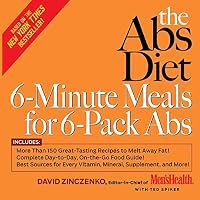
David Zinczenko is the editor-in-chief of Men's Health magazine and editorial director of Women's Health magazine. He has written numerous books with Matt Goulding including Eat This, Not That!; Eat This, Not That! For Kids; Eat This, Not That! Supermarket Survival Guide; Eat This, Not That! Restaurant Survival Guide; and Cook This, Not That! show more Kitchen Survival Guide. He is also the author of the Abs Diet series, Eat It to Beat It!, and The Super Metabolism Diet: The Two Week Plan to Ignite Your Fat-Burning Furnace and Stay Lean for Life!, written with Keenan Mayo. (Bowker Author Biography) show less
Series

Common Knowledge
- Canonical title
- Eat This, Not That - Supermarket Survival Guide
- Original publication date
- 2009
- Dedication
- For the men and women working in America's fields, farms, and supermarkets. Because of your hard work, we have the choices that can keep us lean, healthy, and happy.
- First words
- It can be a place of wonder and excitement, of bright shiny colors, delectable scents, and enticingly sweet delights.
- Last words
- (Click to show. Warning: May contain spoilers.)Flavor it with fresh herbs, citrus, or chili powder.
Classifications
- Genres
- Nonfiction, Health & Wellness, General Nonfiction, Food & Cooking
- DDC/MDS
- 613.25 — Technology Medicine & health Personal health and safety Dietetics Weight-losing diet
- LCC
- RA784 .Z562 — Medicine Public aspects of medicine Public aspects of medicine Public health. Hygiene. Preventive medicine Personal health and hygiene
- BISAC
Statistics
- Members
- 648
- Popularity
- 44,404
- Reviews
- 13
- Rating
- (3.77)
- Languages
- English
- Media
- Paper
- ISBNs
- 2
- ASINs
- 3