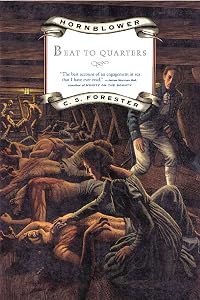
Hornblower : Beat to Quarters
by C. S. Forester
Horatio Hornblower (6), Horatio Hornblower: Chronological Order (6)
On This Page
Description
June, 1808 and off the Coast of Nicaragua Captain Horatio Hornblower has his hands full. Now in command of HMS Lydia, a thirty-six-gun frigate, Hornblower has instructions to form an alliance against the Spanish colonies with a mad and messianic revolutionary, El Supremo; to find a water route across the Central American isthmus; and 'to take, sink, burn or destroy' the fifty-gun Spanish ship of the line Natividad or face court-martial. And as if he did not have enough trouble, Hornblower show more must also contend with the beguiling charms of an unwanted passenger- Lady Barbara Wellesley. show lessTags
Recommendations


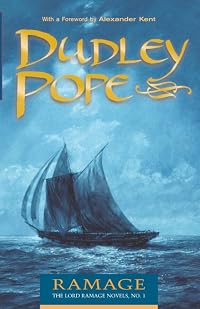
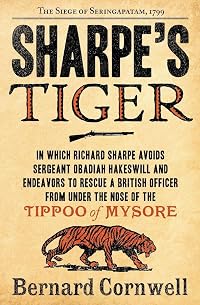
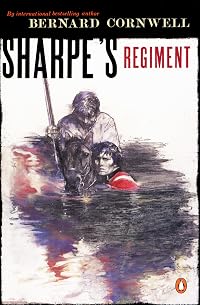
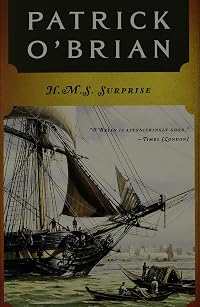
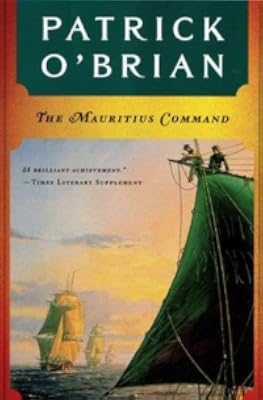
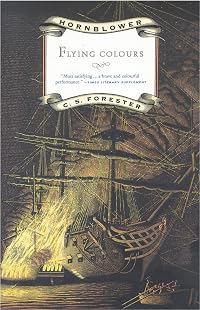

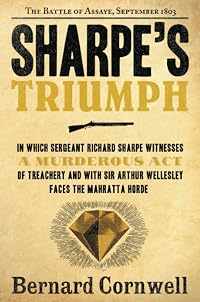
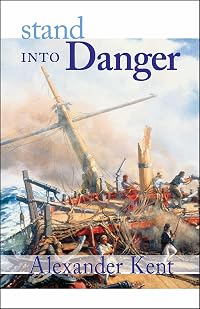








Member Recommendations
Member Reviews
The sixth Hornblower book chronologically, this was actually the first written, which results in some rather bizarre discontinuities as you might expect. Oh, bits of Hornblower's history don't match up-- he's probably never served with Bush before, and Bush certainly wasn't first mate on his first command as depicted in Hornblower and the Hotspur-- but Hornblower's character is a little off as well. This man's need for emotional detachment comes across as almost insane at times, though the death of Hornblower's children at the end of the previous installment sort of explains that. If you squint a bit. Continuity issues aside, I wasn't entirely sure what there would be to enjoy in this book, as I'd already experienced it twice in other show more media, namely the Gregory Peck movie and the 1952 radio series. I needn't've worried. There's more than enough added bits and character introspection to make this superior to either adaptation. Surprisingly, the romance with Lady Barbara was even almost palatable here, thanks to our ability to get Hornblower's inner thoughts regarding it. (I think it would be better in writing order, where we wouldn't have had the opportunity to meet Maria first.) The best part of the book, which utterly blew me away, is the final battle between Lydia and Natividad; one of the back cover quotes calls it best battle in naval fiction, and it's pretty much right.
added March 2019:
I originally read the Horatio Hornblower novels about a decade ago now, but since I didn't own the last three novels at the time, I didn't finish the series. Now I've sat down to read those last three, but I decided I ought to reread the first several. Only, last time I read them in internal chronological order, so to switch it up, this time I decided to do publication order.
Thus we start here, with what is certainly the best of the Hornblower novels, and is probably a better entry point than the first book chronologically if you're a Hornblower novice. (If you've already seen the tv show, though, go ahead and start with Mr. Midshipman Hornblower.) Beat to Quarters is an astounding achievement in naval fiction. Most of the novels are good, but this one is something else. It's taut, focused, and tense. You completely inhabit the world and the way of thinking of the Royal Navy. You don't know what a lot of the words mean, but you love it anyway, because they feel true. It's a harsh world, but it's another world, and it's hard to judge by our own standards. I suspect there are a lot of sf fans who are also Hornblower fans, because they scratch very similar itches: the depiction of an alternate world related to our own, but also a focus on intellect and cleverness. Hornblower is a problem-solver like one of those Golden Age sf heroes.
The book is very well constructed. Hornblower is sent to make overtures of alliance to El Supremo, a Spanish rebel on the Pacific coast of South America, because Spain is ally to Bonaparte. He captures with ease a Spanish ship of the line and turns it over to El Supremo-- and then when he goes to report in to the local British authorities, learns that before he had even done this, Spain had broken off its alliance with France, and is now allied with Britain. And so he has to go back to sea to capture the ship back from El Supremo. It's a beautifully done reversal; when Hornblower captures the Natividad so easily you almost think the author has rigged things in his favor, but recapturing it is a much more difficult prospect. The reversal is simultaneously sort of tragic and hilarious. The final battle with Natividad is amazing, gripping; it goes on for chapters but never gets old. You feel every gust of wind, every broadside, as the crew of the Lydia must fight to reclaim the Natividad with all they've got. A lot of the Hornblower novels are good, and they're all worth your time, but Forester perfected the character here, to be honest.
As per comments I wrote in my original review above, if you read it in publication sequence, it is indeed clear that Bush hasn't served with Hornblower before. Part of the trajectory of the novel is Bush coming to like and respect this odd captain. (And, somewhere by the end of the second book, you realize Hornblower has come to like and respect Bush in his own way.) You don't find Hornblower's character to be off-- because this is Hornblower's character. Everything else was a later imposition. Hornblower might be almost insane, but Beat to Quarters makes it clear that such detachment is required to be successful on a mission like this, the sole outpost of British authority on the far side of the world. I was right about the romance with Lady Barbara; with Maria but an intellectual abstraction, I could enjoy the Hornblower/Barbara romance, though Hornblower's infidelity is the one thing I never quite came to terms with. (I'll discuss that more in my reviews of the later books.)
One thing I noticed I hadn't the first time around is the narrator. It's a close third-person perspective, but not a limited one, as the narrator occasionally tells us things that other characters are thinking, or that Hornblower doesn't realize about his own self. The narrator is clearly from the time of publication, as he occasionally breaks in with acknowledged anachronisms (like, he says the word "globetrotter" didn't exist yet, but if it did, it would be how Hornblower would think of Lady Barbara), something that stuck out to me because as far as I noticed, Forester never used such a device in the rest of the series. show less
added March 2019:
I originally read the Horatio Hornblower novels about a decade ago now, but since I didn't own the last three novels at the time, I didn't finish the series. Now I've sat down to read those last three, but I decided I ought to reread the first several. Only, last time I read them in internal chronological order, so to switch it up, this time I decided to do publication order.
Thus we start here, with what is certainly the best of the Hornblower novels, and is probably a better entry point than the first book chronologically if you're a Hornblower novice. (If you've already seen the tv show, though, go ahead and start with Mr. Midshipman Hornblower.) Beat to Quarters is an astounding achievement in naval fiction. Most of the novels are good, but this one is something else. It's taut, focused, and tense. You completely inhabit the world and the way of thinking of the Royal Navy. You don't know what a lot of the words mean, but you love it anyway, because they feel true. It's a harsh world, but it's another world, and it's hard to judge by our own standards. I suspect there are a lot of sf fans who are also Hornblower fans, because they scratch very similar itches: the depiction of an alternate world related to our own, but also a focus on intellect and cleverness. Hornblower is a problem-solver like one of those Golden Age sf heroes.
The book is very well constructed. Hornblower is sent to make overtures of alliance to El Supremo, a Spanish rebel on the Pacific coast of South America, because Spain is ally to Bonaparte. He captures with ease a Spanish ship of the line and turns it over to El Supremo-- and then when he goes to report in to the local British authorities, learns that before he had even done this, Spain had broken off its alliance with France, and is now allied with Britain. And so he has to go back to sea to capture the ship back from El Supremo. It's a beautifully done reversal; when Hornblower captures the Natividad so easily you almost think the author has rigged things in his favor, but recapturing it is a much more difficult prospect. The reversal is simultaneously sort of tragic and hilarious. The final battle with Natividad is amazing, gripping; it goes on for chapters but never gets old. You feel every gust of wind, every broadside, as the crew of the Lydia must fight to reclaim the Natividad with all they've got. A lot of the Hornblower novels are good, and they're all worth your time, but Forester perfected the character here, to be honest.
As per comments I wrote in my original review above, if you read it in publication sequence, it is indeed clear that Bush hasn't served with Hornblower before. Part of the trajectory of the novel is Bush coming to like and respect this odd captain. (And, somewhere by the end of the second book, you realize Hornblower has come to like and respect Bush in his own way.) You don't find Hornblower's character to be off-- because this is Hornblower's character. Everything else was a later imposition. Hornblower might be almost insane, but Beat to Quarters makes it clear that such detachment is required to be successful on a mission like this, the sole outpost of British authority on the far side of the world. I was right about the romance with Lady Barbara; with Maria but an intellectual abstraction, I could enjoy the Hornblower/Barbara romance, though Hornblower's infidelity is the one thing I never quite came to terms with. (I'll discuss that more in my reviews of the later books.)
One thing I noticed I hadn't the first time around is the narrator. It's a close third-person perspective, but not a limited one, as the narrator occasionally tells us things that other characters are thinking, or that Hornblower doesn't realize about his own self. The narrator is clearly from the time of publication, as he occasionally breaks in with acknowledged anachronisms (like, he says the word "globetrotter" didn't exist yet, but if it did, it would be how Hornblower would think of Lady Barbara), something that stuck out to me because as far as I noticed, Forester never used such a device in the rest of the series. show less
Bless you, Horatio, for inspiring the creation of Mr Roddenberry's starship captain, but I think I'll stick with Nathan Peake for any future sea adventures. There's only so much introspective gnashing of teeth, while the crew look on in admiration, that I can stomach! Seriously - Hornblower spends half the novel (Forester's first naval sortie, granted) pacing up and down the deck, beating himself up for a million imagined flaws, before snapping into gear and blasting the enemy ship out of the water. His attempt at appearing 'a strong silent capable man, unmoved by emotion' makes him more priggish than proud, and his 'sullen obstinacy' might be mistaken for sulking. I had more admiration for Lady Barbara, Hornblower's improbable show more shipboard dalliance!
Forester's writing is easier to digest than Patrick O'Brian's, and I have already ordered the film version with Gregory Peck on DVD, but I found nothing endearing about Hornblower's constant fretting and pacing. I can see the parallels with Captain Kirk - stubborn determination blended with the loneliness of command, not to mention a cultured appreciation of literature (I'm talking the original Kirk here, not the reboot) - but not enough to maintain my interest, sadly. And the omniscient narrator, referring anachronistically to 'globetrotting' and Florence Nightingale, only served to distance me from Hornblower even more. show less
Forester's writing is easier to digest than Patrick O'Brian's, and I have already ordered the film version with Gregory Peck on DVD, but I found nothing endearing about Hornblower's constant fretting and pacing. I can see the parallels with Captain Kirk - stubborn determination blended with the loneliness of command, not to mention a cultured appreciation of literature (I'm talking the original Kirk here, not the reboot) - but not enough to maintain my interest, sadly. And the omniscient narrator, referring anachronistically to 'globetrotting' and Florence Nightingale, only served to distance me from Hornblower even more. show less
In the sixth book of the series, Hornblower finds himself with secret orders to foment a rebellion on the Spanish Main. As often happens in war time, however, a sudden switch of alliances leaves Hornblower to do battle with a ship nearly twice the strength of his frigate. Poor weather, casualties, and the presence of a woman on board require the utmost of Hornblower's wits and seamanship to merely survive and to save his reputation - and thereby his future livelihood.
Here again Hornblower is supremely irritating. His main concerns are that he appear imperturbable and a veritable god of a captain whom nothing takes by surprise. Hornblower's complete refusal to allow himself to be human grates on my nerves. Again, though, the tales of the show more daring and desperate naval engagements make the novel fascinating and keep me reading despite my lack of fondness for the main character.
I also very much enjoyed the portrayal of Lady Barbara as a competent woman capable of taking care of herself and doing what needs to be done and doing it well. The relationship between her and Hornblower was an interesting one. I'm very interested to see how it develops further.
A rousing sea-faring adventure despite Hornblower's vexing temperament. Well worthwhile. show less
Here again Hornblower is supremely irritating. His main concerns are that he appear imperturbable and a veritable god of a captain whom nothing takes by surprise. Hornblower's complete refusal to allow himself to be human grates on my nerves. Again, though, the tales of the show more daring and desperate naval engagements make the novel fascinating and keep me reading despite my lack of fondness for the main character.
I also very much enjoyed the portrayal of Lady Barbara as a competent woman capable of taking care of herself and doing what needs to be done and doing it well. The relationship between her and Hornblower was an interesting one. I'm very interested to see how it develops further.
A rousing sea-faring adventure despite Hornblower's vexing temperament. Well worthwhile. show less
Hornblower was the inspiration for Star Trek's Captain James Kirk, as well as Cornwell's Sharpe. Hornblower is more cerebral and socially awkward than Kirk, more educated and refined than Sharpe. In his own right, Hornblower is certainly an engaging and complex character and the series is an interesting study in leadership, and a fascinating portrait of life at sea in the age of sail.
Beat to Quarters (The Happy Return in British editions) is sixth chronologically, but was the first one published, and a strong case could be made for starting with this one. For one, the first two books really are outliers, the first more a collection of short stories than a novel and the second told from a point of view other than Hornblower's. The show more friend who recommended these to me told me to at least start with the story of Hornblower's first command, Hornblower and the Hotspur. I'm also rather fond of Lady Barbara, who is introduced in this novel--not many opportunities in a series about adventures at sea in the Age of Sail for female characters to make their mark. I think the writing and delineation of Hornblower's character got sharper in the ensuing novels though. show less
Beat to Quarters (The Happy Return in British editions) is sixth chronologically, but was the first one published, and a strong case could be made for starting with this one. For one, the first two books really are outliers, the first more a collection of short stories than a novel and the second told from a point of view other than Hornblower's. The show more friend who recommended these to me told me to at least start with the story of Hornblower's first command, Hornblower and the Hotspur. I'm also rather fond of Lady Barbara, who is introduced in this novel--not many opportunities in a series about adventures at sea in the Age of Sail for female characters to make their mark. I think the writing and delineation of Hornblower's character got sharper in the ensuing novels though. show less
I have a lot of mixed feelings about this book. If I didn't know Forester had later been a propaganda writer during WWII, if I hadn't already taken to Patrick O'Brian, and if I knew nothing about Forester's personal history, I would have enjoyed this much more. I do think an author ought to consider more in their audience than a blank slate though. And they should definitely sort out beforehand whether or not they want to a) write their feelings unashamedly on their sleeve and/or b) manipulate political feeling in their audience. This puts a huge drag on the story. Hornblower is as overburdened with authorial baggage as he is with his duty.
First, the good. The descriptions of sailing, of the details of this wooden world, are excellent. show more It doesn't reach the point where you think Forester might have actually lived during the Napoleonic Wars, but it is colorful and immersive. The battles, in particular the brutal slog with theNatividad , are thrilling. A bit melodramatic, but that's more Hornblower's gloss on them (we'll get to that). The story is also satisfying despite an abrupt ending. It has enough adventure that it could sit comfortably next to Treasure Island without batting an eye. Lastly, I felt there was a lot of enjoyable and interesting dialogue between genuinely crafted characters (whenever you start talking to them, you know the author has done a good job).
Now for what I didn't enjoy.
I'm not sure anyone could honestly be a fan of Hornblower as a person. He's not a pleasant fellow. And not in the gruff-but-actually-a-teddy-bear way. He's just downright repellent as a main antagonist. And I'm fairly certain that was Forester's intention. But the fact that I don't know for sure makes me uneasy about Forester's reasons for writing. There is much of autobiography in the first Hornblower outing. Forester originally wanted to write a fact-based Hollywood screenplay with high-seas adventure. ButCaptain Blood beat him and Hornblow/Busch & co. to the idea. Meanwhile a fading opera star was threatening a paternity suit, so he fled to Britain, meeting a lovely photographer in the voyage. Clearly Hornblower (at least in this book) is meant to be Forester as Forester wanted to be.
But is cathartic autobiography all there is to Hornblower's unpleasantness? A subtle thread throughout the story is Forester's proto-propaganda mind at work. The book seems to be saying Hornblower is an unpleasant person, but only because duty drives him there. He's racked with personal detriment, but also very obviously a talented and brave individual. There's a subtext message there about the hard life of a commanding officer, and how underlings should always obey because poor Captain Hornblower just can't feel good about himself or anyone. That message is aimed particularly at male citizens, Barbara's renaissance-lady attitude notwithstanding. She's summarily put in her "proper" place after the bloody fight with theNatividad , and falls for Hornblower (alas, Hornblower is already in an unhappy marriage--woe for duty!). Furthermore, the uneasy allies at the beginning of the story become the enemies by the end, clearly a message that those at war can only rely upon themselves to conquer and win the day. The whole book is riddled with this kind of thought, and I can't chalk it up to historical point of view either. These are very obviously Forester's thoughts, and not his attempt to varnish with historical accuracy.
I'll keep reading Hornblower, but it's so overburdened by Forester himself that it's not a terribly enjoyable experience. Perhaps as the character grows into their own more, he'll distance from Forester's personal drama. I don't foresee doom-and-gloom Hornblower drying up on the propaganda though. If anything, that will probably increase as the character's (and the author's) experience of war continues. show less
First, the good. The descriptions of sailing, of the details of this wooden world, are excellent. show more It doesn't reach the point where you think Forester might have actually lived during the Napoleonic Wars, but it is colorful and immersive. The battles, in particular the brutal slog with the
Now for what I didn't enjoy.
I'm not sure anyone could honestly be a fan of Hornblower as a person. He's not a pleasant fellow. And not in the gruff-but-actually-a-teddy-bear way. He's just downright repellent as a main antagonist. And I'm fairly certain that was Forester's intention. But the fact that I don't know for sure makes me uneasy about Forester's reasons for writing. There is much of autobiography in the first Hornblower outing. Forester originally wanted to write a fact-based Hollywood screenplay with high-seas adventure. But
But is cathartic autobiography all there is to Hornblower's unpleasantness? A subtle thread throughout the story is Forester's proto-propaganda mind at work. The book seems to be saying Hornblower is an unpleasant person, but only because duty drives him there. He's racked with personal detriment, but also very obviously a talented and brave individual. There's a subtext message there about the hard life of a commanding officer, and how underlings should always obey because poor Captain Hornblower just can't feel good about himself or anyone. That message is aimed particularly at male citizens, Barbara's renaissance-lady attitude notwithstanding. She's summarily put in her "proper" place after the bloody fight with the
I'll keep reading Hornblower, but it's so overburdened by Forester himself that it's not a terribly enjoyable experience. Perhaps as the character grows into their own more, he'll distance from Forester's personal drama. I don't foresee doom-and-gloom Hornblower drying up on the propaganda though. If anything, that will probably increase as the character's (and the author's) experience of war continues. show less
The original Hornblower is much grittier than the later prequels and delivers a more moving narrative.
The previous novels in chronological order seemed to be aimed at younger readers while this one seems more adult. There is quite a bit more violence which was a disappointment but it never becomes over the top or excessively detailed. I believe with this novel Forester attempted to show the reality and horrors of war at sea much more than he did in later books. He gives the reader a striking look into the exhaustive, tense, and brutal nature of life at sea.
Hornblower himself is more grim but it fits the tone and establishes one of literature’s great introspective heroes. His love interest Lady Barbara is also first introduced here and show more she is a great character in her own right. It’s easy to see why readers would’ve wanted more of them after reading this. Unfortunately the romance is adulterous but this is realistic for the period.
I found this book to have more touching character moments and memorable scenes than previous novels. I find this book to be both a satisfying adventure and a great glimpse into lives lived long ago. Plus without this book many other historical authors may never have put pen to paper and the Hornblower saga would not have inspired many great sci fi stories even including Star Trek. show less
The previous novels in chronological order seemed to be aimed at younger readers while this one seems more adult. There is quite a bit more violence which was a disappointment but it never becomes over the top or excessively detailed. I believe with this novel Forester attempted to show the reality and horrors of war at sea much more than he did in later books. He gives the reader a striking look into the exhaustive, tense, and brutal nature of life at sea.
Hornblower himself is more grim but it fits the tone and establishes one of literature’s great introspective heroes. His love interest Lady Barbara is also first introduced here and show more she is a great character in her own right. It’s easy to see why readers would’ve wanted more of them after reading this. Unfortunately the romance is adulterous but this is realistic for the period.
I found this book to have more touching character moments and memorable scenes than previous novels. I find this book to be both a satisfying adventure and a great glimpse into lives lived long ago. Plus without this book many other historical authors may never have put pen to paper and the Hornblower saga would not have inspired many great sci fi stories even including Star Trek. show less
That was surprisingly good and a bit different than i expected. Hornblower is i think 37 in this a little older than i imagined. The story is also more brutal and realistic than i was expecting. Both realistic in its violence and in its politics.
There's also a very strong female character which always makes a nice addition to this sort of thing. I was trying to figure out who Hornblower reminds me of and then i realized its Captain Picard from star-trek :) , it really is a very similar character which is a very good thing in my opinion.
Overall only nitpicks is its tendency to assume you know all of not the nautical terms (and also how to play whist ;) ).
High seas adventure really isn't my favorite genre but this is good, enough said.
There's also a very strong female character which always makes a nice addition to this sort of thing. I was trying to figure out who Hornblower reminds me of and then i realized its Captain Picard from star-trek :) , it really is a very similar character which is a very good thing in my opinion.
Overall only nitpicks is its tendency to assume you know all of not the nautical terms (and also how to play whist ;) ).
High seas adventure really isn't my favorite genre but this is good, enough said.
Members
- Recently Added By
Lists

Best Historical Fiction
620 works; 261 members

water on the brain: maritime fiction
74 works; 18 members

Favourite Books
1,820 works; 316 members

Form line of battle - Best historical naval fiction
15 works; 2 members

1001 Children's Books You Must Read Before You Grow Up
774 works; 101 members

Books Read in 2013
1,630 works; 51 members
Author Information

182+ Works 34,739 Members
Born Cecil Louis Troughton Smith on August 27, 1899, in Cairo, Egypt, where his father was a government official, C. S. Forester grew up mainly in England. He was educated at Dulwich College, studying medicine briefly before decidint to become a writer. Forester moved to the United States before the start of World War II, and lived in Berkeley, show more California, until his death in 1966. Although Forester was a journalist, a novelist and a Hollywood scriptwriter, he is probably best known for his historical fiction, particularly the series of novels that feature Horatio Hornblower. The eleven-book series begins with Mr. Midshipmen Hornblower, in which the seventeen-year old Hornblower joins the British navy in 1793, just as the Napoleonic Wars are about to begin. Hornblower's continuing adventures, as well as his advancement to the highest ranks of the navy, are chronicled in further books, including Beat to Quarters, Flying Colours, Commodore Hornblower, Lord Hornblower, The Happy Return, and A Ship of the Line, for which Forester recived the James Tait Black Memorial Prize in 1939. Several of Forester's novels were made into films, most notably Payment Deferred (his first novel published in 1926), Eagle Squadron, The Commandos (the movie title was The Commandos Strike at Dawn), Captain Horatio Hornblower, Sink the Bismarck!, and The African Queen, starring Katharine Hepburn and Humphrey Bogart. Forester's nonfiction includes The Age of Fighting Sail: The Story of the Naval War of 1812, as well as biographies of Lord Nelson, Napoleon, Josephine, and King Louis XIV. He also wrote an autobiography, Long Before Forty. (Bowker Author Biography) show less
Some Editions
Awards and Honors
Series


Belongs to Publisher Series
Work Relationships
Is contained in
Captain Hornblower R. N.: Hornblower and the Atropos / The Happy Return / A Ship of the Line by C. S. Forester
Captain Horatio Hornblower (Hornblower and the Atropos; The Happy Return; A Ship of the Line; Flying Colors) by C. S. Forester
Mr. Midshipman Hornblower / Lieutenant Hornblower / Hornblower and the Hotspur / Hornblower and the Atropos / Beat to Quarters by Cecil Scott Forester
Mr. Midshipman Hornblower / Lieutenant Hornblower / Hornblower and the Atropos / The Happy Return by Cecil Scott Forester
Mr. Midshipman Hornblower / Lieutenant Hornblower / Hornblower and the Hotspur / Hornblower During the Crisis / Hornblower and the Atropos / Beat to Quarters / A Ship of the Line by C. S. Forester
Is abridged in
Has as a student's study guide
Common Knowledge
- Canonical title*
- Der Kapitän
- Original title
- The Happy Return
- Alternate titles
- Beat to Quarters; Hornblower and the Happy Return
- Original publication date
- 1937
- People/Characters
- Horatio Hornblower (Captain); William Bush (Lieutenant); Barbara Wellesley; Polwheal; Julian María de Jesús de Alvarado y Moctezuma; Manuel Hernandez (show all 8); El Supremo; Cristobol de Crespo
- Important places
- Central America; Guatemala; Honduras; Nicaragua; Pacific Ocean; Panama (show all 9); El Salvador; St Helena; Gulf of Fonesca, Nicaragua
- Important events
- Napoleonic Wars (1803 | 1815)
- Related movies
- Captain Horatio Hornblower R.N. (1951 | IMDb)
- First words
- It was not long after dawn that Captain Hornblower came up on the quarterdeck of the Lydia.
- Last words
- (Click to show. Warning: May contain spoilers.)Overhead the sun was shining brightly, and before him rose the steep green slopes of St. Helena.
- Blurbers
- Hall, James Norman
- Original language
- English
- Disambiguation notice
- Original (UK) title: The Happy Return.
USA edition title: Beat to Quarters.
*Some information comes from Common Knowledge in other languages. Click "Edit" for more information.
Classifications
Statistics
- Members
- 2,265
- Popularity
- 8,876
- Reviews
- 32
- Rating
- (4.09)
- Languages
- 14 — Czech, Dutch, English, French, German, Italian, Norwegian (Bokmål), Norwegian, Polish, Russian, Spanish, Swedish, Portuguese (Portugal), Portuguese (Brazil)
- Media
- Paper, Audiobook, Ebook
- ISBNs
- 51
- UPCs
- 1
- ASINs
- 59