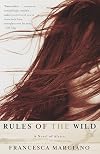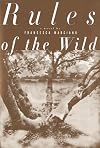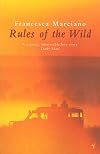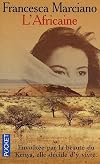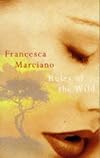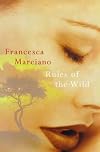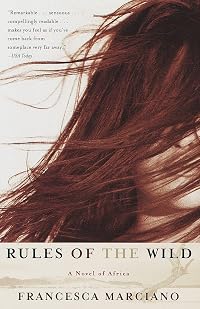
Rules of the Wild: A Novel of Africa
by Francesca Marciano
On This Page
Description
2 cassettes / 3 hours Read by Penelope Ann Miller "The voice of [the] narrator . . . seduces the reader into the world of this intelligent first novel." --Publishers Weekly A mesmerizing work that evokes the worlds if Isak Dinesen, Beryl Markham, and Ernest Hemingway. A novel of love and nostalgia set in the vast spaces of contemporary East Africa. Romantic, often resonantly ironic, moving and wise, Rules of the Wild transports us to a landscape of unsurpassed beauty even as it gives us a show more sharp-eyed portrait of a closely knit tribe of cultural outsiders: the expatriates living in Kenya today. Challenged by race, by class, and by a longing for home, here are safari boys and samaritans, reporters bent on their own fame, travelers who care deeply about elephants but not at all about the people of Africa. They all know each other. They meet at dinner parties, they sleep with each other, they argue about politics and the best way to negotiate their existence in a place where they don't really belong. At the center is Esme, a beautiful young woman of dazzling ironies and introspections, who tells us her story in a voice both passionate and self-deprecating. Against a paradoxical backdrop of limitless physical freedom and escalating civil unrest, Esme struggles to make sense of her won place in Africa and of her feelings for the two men whom she loves - Adam, a second-generation Kenyan who is the first to show her the wonders of her adopted land, and Hunter, a British journalists sickened by its horrors. Rules of the Wild explores unforgettably our infinite desire for a perfect elsewhere, for love and a place to call home. It is an astonishing literary debut. show lessTags
Recommendations









Member Reviews
I think the author was not well served by her editor, as the literary veneer (pretentious epigraphs, Joycean method of punctuating dialogue) creates expectations that the facile prose does not fulfill. Definitely not a novel for people who need to like the protagonist, or find characters "relatable." Interesting view into the lives of white Kenyans, but the author is a tad superior, and her tone a little glib; she tries too hard not to be Isak Dinesen, but ends up making Out of Africa (the novel) seem like even more of a masterpiece in comparison.
This is essentially the worst, shallowest romance book wrapped up with literary prose. I detested it. The superficiality and stereotypes that characterize bad romance are fine if presented as a fun diversion. But the same issues in a book apparently meant to be taken seriously are offensive. The book is deeply sexist. The main character, Esmé, thinks like a nineteenth-century stereotype; I was honestly startled by references to cars, and shocked by references to laptop computers. They aren't anachronisms—the novel is set in the 1990s—but they jolted me.
Esmé is profoundly troubled in ways that I don't know the author is even aware of, because her brilliant "epiphany" at the end is just more of the same. Utterly passive in every show more respect, utterly ignorant, men are inhuman sex objects, and life is a love story starring her. show less
Esmé is profoundly troubled in ways that I don't know the author is even aware of, because her brilliant "epiphany" at the end is just more of the same. Utterly passive in every show more respect, utterly ignorant, men are inhuman sex objects, and life is a love story starring her. show less
I am a white American woman who lived in other countries in my young adulthood. Most of the thirteen years I spent overseas was in developing countries. When I talk to fellow Americans about my experience a common comment is “You should write a book!” Not necessarily. Maybe a book from that country by a person who really grew up there would be a better thing to read.
My sister sent me this book among some other paperbacks, and I just finished reading it, and I could barely get through it. While it’s set in Kenya (referred to as “Africa” throughout the book, as though it’s a stand in for the rest of the countries on the continent) there are no Kenyan main characters. Kenyans crop up as mechanics, servants, and drunk drivers. show more All the characters are”expats”. The author seems to realize that this is a limited view of a country and has her main character agonize over her and her friends’ insularity. This does not redeem the book.
I am also tired of books where the main events are primarily musical beds. Affairs can definitely drive a plot of a book like, say, Anna Karenina. But why should I care about these white people in Kenya having serial affairs with each other and ascribing depth to their self indulgences where there really isn’t any?
Well, I really did not like this book. I feel a bit guilty for being so harsh, but the hell with it. I just can’t read this kind of thing anymore without an intense negative reaction. Maybe if it were written by Flaubert I could have read it straight. But it was written in 1999... when will we be done with the white personal self discovery travelogue genre? I hate it. Stop doing this. No, just because you lived in another country ( and learned nothing about its actual people and culture but spent your time partying and sleeping with other white people), you don’t need to write a book about this. You have absolutely nothing interesting to say and you are bad and you should feel bad. show less
My sister sent me this book among some other paperbacks, and I just finished reading it, and I could barely get through it. While it’s set in Kenya (referred to as “Africa” throughout the book, as though it’s a stand in for the rest of the countries on the continent) there are no Kenyan main characters. Kenyans crop up as mechanics, servants, and drunk drivers. show more All the characters are”expats”. The author seems to realize that this is a limited view of a country and has her main character agonize over her and her friends’ insularity. This does not redeem the book.
I am also tired of books where the main events are primarily musical beds. Affairs can definitely drive a plot of a book like, say, Anna Karenina. But why should I care about these white people in Kenya having serial affairs with each other and ascribing depth to their self indulgences where there really isn’t any?
Well, I really did not like this book. I feel a bit guilty for being so harsh, but the hell with it. I just can’t read this kind of thing anymore without an intense negative reaction. Maybe if it were written by Flaubert I could have read it straight. But it was written in 1999... when will we be done with the white personal self discovery travelogue genre? I hate it. Stop doing this. No, just because you lived in another country ( and learned nothing about its actual people and culture but spent your time partying and sleeping with other white people), you don’t need to write a book about this. You have absolutely nothing interesting to say and you are bad and you should feel bad. show less
The back of jacket description of my copy of this book tells us, " . . . Francesca Marciano evokes the startlingly exotic world of contemporary expatriates living in Nairobi." And while this novel's locales of Nairobi and the Kenyan countryside are certainly exotic to this northern California small town boy, I have to admit that not once was I startled by this factor while reading. But maybe that's my bad.
Our heroine, Esme, is young, beautiful and Italian. Her father, a moderately famous poet, has recently died, leaving her with a apparently adequate inheritance. She goes to Kenya where she is transfixed by the ex-pat lifestyle, the culture of whites more or less floating on the surface of the real, shabby and brutal Africa, and stays. show more She becomes involved with a handsome safari guide and begins spending time with him out in the wild. Some of the book's best writing, in fact, involves Marciano's descriptions of this world, both in terms of her physical descriptions of the countryside and wallop of alienation the beauty and shear expansiveness this world delivers to a city person trying to find her bearings.
The sense of excitement and dread seems heightened by the fact that many of Esme's friends are European journalists who, from the home base in Nairobi, go into the horrors of the Somalian war and, worse, the genocide in Rwanda, then return to report on the carnage. These events are often well and chillingly described to Esme by these men, but mostly these tales seem to serve Esme as a marker for the meaninglessness of her own life. Sadly, they work that way for the reader, as well.
Mostly, Esme does a lot of hand wringing over the fact that she can't have the man she wants. And so, while there a lot of good writing and some compelling situations in this book (mostly taking place "off stage," unfortunately), the bottom line is that this is at it's core a book about a rather self-absorbed young woman gazing at her own naval. I would have warmed to the book more if the heroine weren't so young and beautiful and her love interests so handsome and dashing. And I always wonder about the motivation of an author who chooses to provide his/her protagonist with enough independent wealth to preclude the need for the character to work for a living. It strikes me as a mark of laziness, as if it's too much effort to mix the need to support him/herself into the character's daily activities.
At any rate, the book is worth reading, and I might give Marciano another chance, too. But somehow I was hoping to be startled. show less
Our heroine, Esme, is young, beautiful and Italian. Her father, a moderately famous poet, has recently died, leaving her with a apparently adequate inheritance. She goes to Kenya where she is transfixed by the ex-pat lifestyle, the culture of whites more or less floating on the surface of the real, shabby and brutal Africa, and stays. show more She becomes involved with a handsome safari guide and begins spending time with him out in the wild. Some of the book's best writing, in fact, involves Marciano's descriptions of this world, both in terms of her physical descriptions of the countryside and wallop of alienation the beauty and shear expansiveness this world delivers to a city person trying to find her bearings.
The sense of excitement and dread seems heightened by the fact that many of Esme's friends are European journalists who, from the home base in Nairobi, go into the horrors of the Somalian war and, worse, the genocide in Rwanda, then return to report on the carnage. These events are often well and chillingly described to Esme by these men, but mostly these tales seem to serve Esme as a marker for the meaninglessness of her own life. Sadly, they work that way for the reader, as well.
Mostly, Esme does a lot of hand wringing over the fact that she can't have the man she wants. And so, while there a lot of good writing and some compelling situations in this book (mostly taking place "off stage," unfortunately), the bottom line is that this is at it's core a book about a rather self-absorbed young woman gazing at her own naval. I would have warmed to the book more if the heroine weren't so young and beautiful and her love interests so handsome and dashing. And I always wonder about the motivation of an author who chooses to provide his/her protagonist with enough independent wealth to preclude the need for the character to work for a living. It strikes me as a mark of laziness, as if it's too much effort to mix the need to support him/herself into the character's daily activities.
At any rate, the book is worth reading, and I might give Marciano another chance, too. But somehow I was hoping to be startled. show less
An emotionally brutal tale of love and loss set against a seemingly lawless and unkind Kenyan landscape. A story of Africa from the point of view of an outsider. Full of vivid characterizations and unwavering self-scrutiny, I found this novel to be devastating and indelible.
I bought this book when it first come out and began to read the opening chapters. I got incredibly busy with my trip to Russia in the summer of 1999 and the book went into a box with other items going to storage for later. It was not until the summer of 2022, that I picked up again and read the entire novel in just a few days. Somehow, the book puts that time period, some 20+ years ago into context with not only the events that Marciano writes about but also how I felt about being in my early 30's. She captures life at this age so well. This novel does hold up well over time because of the reference points and the struggles that come with discovering oneself and the daily challenges of just living and loving where your are going as a show more person. In some ways, reading it twenty years later holds a wonderful sense of nostalgia too. If you have ever been caught between two relationships at one time, you can relate to some of these characters. show less
Feeling adrift when her father -an Italian poet- dies, Esmé travels to Africa. She is smitten by the vast, incomprehensible beauty of Kenya and impulsively decides to ditch her travelling companion and stay. She takes up living with a safari tour guide, but falls in love with another guy who works as a war correspondent. It is a story of relationships- the ins and outs of friendships, who is with whom - a constant shuffle- for all the room in Africa, the group of European expats is so small it feels crammed with their too-close familiarity. Their widely varied reasons for being in Africa were interesting; not so much all the gossip and innuendo. The main character is kind of pathetic. She has no real reason to be there, never has a show more job, pines after men. And yet- although that major part of the novel did not interest me much- I found this book rather compelling. Because of the way life in Africa is described. Glimpses of wildlife and arguments on its management, race differences, third-world conditions and horrific stories of genocide in Rwanda are all background material to the story. I wish all that had been in the fore, instead. I liked the writing enough that I wanted to keep reading even though I idly forgot who was friends with whom and which person knew what about the other. I cared more for the picture of a vivid land with its struggles and squalor and beauty.
from the Dogear Diary show less
from the Dogear Diary show less
Members
- Recently Added By
Lists

Translingualism
191 works; 4 members
Author Information

12 Works 816 Members
Francesca Marciano lives in Rome, where she works as a filmmaker and screenwriter.
Some Editions
Series
Belongs to Publisher Series
Goldmann (44585)
Common Knowledge
- Original title
- Rules of the Wild
- Original publication date
- 1999
- Important places
- Africa; East Africa; Kenya
- First words*
- En cierto sentido, aquí todo es siempre de segunda mano.
*Some information comes from Common Knowledge in other languages. Click "Edit" for more information.
Classifications
Statistics
- Members
- 346
- Popularity
- 91,538
- Reviews
- 12
- Rating
- (3.63)
- Languages
- 10 — Dutch, English, Finnish, French, German, Hungarian, Italian, Portuguese, Spanish, Swedish
- Media
- Paper, Audiobook, Ebook
- ISBNs
- 31
- ASINs
- 1