On This Page
Description
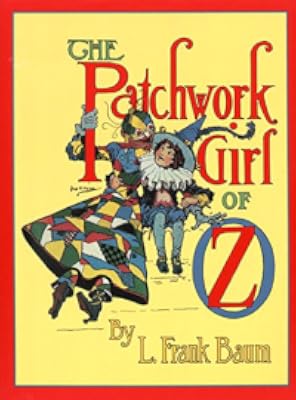
In this, the seventh book of L. Frank Baum's delightful Oz series, a living doll named Scraps and a Munchkin boy named Ojo set out to free Ojo's Uncle Nunkie from a dangerous magical spell that has turned him into a statue. This whimsical journey will delight fantasy fiction fans of all ages..
Tags
Recommendations











Member Recommendations
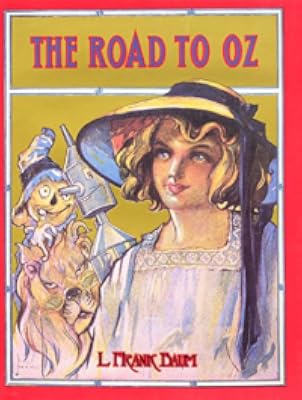
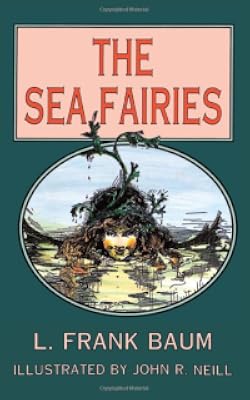
HollyMS Before reading The Patchwork Girl of Oz, you can read The Sea Fairies and Sky Island. L. Frank Baum wrote these two books between The Emerald City of Oz and The Patchwork Girl of Oz. Characters from The Sea Fairies and Sky Island, Trot and Cap'n Bill, are introduced later in the Oz series.
40

Member Reviews
I had fond memories of this book, which I remembered as being my favorite of Baum's original fourteen Oz novels, and so when the Shanower/Young Marvel Oz comics ended one shy of it, I went on to it anyway. This is probably Baum's best plotted Oz novel since Marvelous Land, and best plotted journey-focused one since Wonderful Wizard itself, or maybe ever. Baum invents a new protagonist for the first time since Marvelous Land, and it does wonders: Ojo is a person in trouble in a way we haven't seen in these books in a long time, and it does well to create empathy for him, and thus energy for the story. Ojo's journeys across Oz are all motivated by attempting to cure his uncle of being a statue, and it makes things matter in a way they show more didn't for Dorothy in Road and Emerald City.
Plus, I've always loved Scraps the Patchwork Girl, and she delighted no less on this reread than any other. While Ojo is somber with responsibility beyond his years, Scraps is one of Baum's most childish characters, and that's what makes her fun-- everything is incredibly dramatic for her, as she pouts petulantly and bounds for joy in equal measure. Plus you get Oz's first real romance with her and the Scarecrow! Too bad Skottie Young never got to draw her (or the Woozy, or the Glass Cat, or the living phonograph) as I'm sure he would have done brilliantly, but you can't really go wrong with John R. Neill in any case. My 1990 Dover edition is in black and white, but is otherwise a pretty close facsimile of the original 1913 Reilly & Britton edition of the novel.
added April 2022:
I recently read this aloud to my three-year-old son. As I said above, this was my favorite of the Oz books as a child, so I approached it with some trepidation. Would my son like it?
I think he did; we made pretty rapid progress in it. To me, it recaptures the formula that made the first book work so well: it opens with a child in a difficult status quo, the child loses their parental figure and is forced to go on a journey to get them back, the child picks up a variety of strange companions as they travel, the group works together to overcome difficult problems, the group moves from strange location to strange location. Unlike in some of the mediocre Oz books, there's a clear goal and real tension; unlike in some of the mediocre Oz books, the characters solve their problems by thinking clever.
My main complaint would be with the ending: it's not clear to me why Ozma let Ojo go on his quest at all given that the Wizard can just solve all his problems for him. But one of the benefits of reading aloud is that things like this bother you less, because you're treating the story episodically. Yes, the ending doesn't entirely satisfy... but that's only one chapter out of about thirty. One thing I noticed reading aloud is that Ojo is always re-explaining who he is and what his quest is; something that's very useful when the book is stretched out across weeks to someone with the memory of a three-year-old.
Sometimes I verbally edit the books to fix continuity problems as I read them aloud, but I did not make any changes to this one despite the fact that in Marvelous Land we're told a Doctor Nikidik made the Powder of Life, who is dead according to Road, and here it's a Doctor Pipt who is very much alive. I just didn't care! (And really, it would be the earlier books one should edit.) On the other hand, the characters encounter a magical race called the "Tottenhots"; I edited the name out of my reading, just calling them creatures. Usually I read the Books of Wonder facsimile editions, and the Patchwork Girl facsimile controversially removed some of illustrations of the Tottenhots and revised some of the textual descriptions. However, in this case, I had the Dover, which makes no such changes, so I had to do it myself. (I've been upgrading my Del Rey and Puffin editions to Books of Wonder ones as we read, but the Dovers are almost like the originals except for different covers, and reproducing the color plates in black and white.)
When I finished, my wife asked if Scraps, the "patchwork girl" of the title, actually did anything... the answer is, honestly, not much; she's always there, but the plot driver is Ojo. I don't think Scraps really solves a single problem, though she does prove to be a great friend to Ojo when he is in trouble for stealing the six-leafed clover. But she's a delightful character to read aloud, especially the songs, and I gave her the same voice I gave Pinkie Pie when I used to read the My Little Pony comics aloud to my son. On other hand, this book showed up the limitations of my range of voices, as the Scarecrow and the Shaggy Man share some scenes! (When they are together, I pitch the Scarecrow a little higher, but otherwise they're the same voice.) My wife didn't think the "southern belle" voice I adopted for Bungle, the Glass Cat, was a good choice, but I liked it. show less
Plus, I've always loved Scraps the Patchwork Girl, and she delighted no less on this reread than any other. While Ojo is somber with responsibility beyond his years, Scraps is one of Baum's most childish characters, and that's what makes her fun-- everything is incredibly dramatic for her, as she pouts petulantly and bounds for joy in equal measure. Plus you get Oz's first real romance with her and the Scarecrow! Too bad Skottie Young never got to draw her (or the Woozy, or the Glass Cat, or the living phonograph) as I'm sure he would have done brilliantly, but you can't really go wrong with John R. Neill in any case. My 1990 Dover edition is in black and white, but is otherwise a pretty close facsimile of the original 1913 Reilly & Britton edition of the novel.
added April 2022:
I recently read this aloud to my three-year-old son. As I said above, this was my favorite of the Oz books as a child, so I approached it with some trepidation. Would my son like it?
I think he did; we made pretty rapid progress in it. To me, it recaptures the formula that made the first book work so well: it opens with a child in a difficult status quo, the child loses their parental figure and is forced to go on a journey to get them back, the child picks up a variety of strange companions as they travel, the group works together to overcome difficult problems, the group moves from strange location to strange location. Unlike in some of the mediocre Oz books, there's a clear goal and real tension; unlike in some of the mediocre Oz books, the characters solve their problems by thinking clever.
My main complaint would be with the ending: it's not clear to me why Ozma let Ojo go on his quest at all given that the Wizard can just solve all his problems for him. But one of the benefits of reading aloud is that things like this bother you less, because you're treating the story episodically. Yes, the ending doesn't entirely satisfy... but that's only one chapter out of about thirty. One thing I noticed reading aloud is that Ojo is always re-explaining who he is and what his quest is; something that's very useful when the book is stretched out across weeks to someone with the memory of a three-year-old.
Sometimes I verbally edit the books to fix continuity problems as I read them aloud, but I did not make any changes to this one despite the fact that in Marvelous Land we're told a Doctor Nikidik made the Powder of Life, who is dead according to Road, and here it's a Doctor Pipt who is very much alive. I just didn't care! (And really, it would be the earlier books one should edit.) On the other hand, the characters encounter a magical race called the "Tottenhots"; I edited the name out of my reading, just calling them creatures. Usually I read the Books of Wonder facsimile editions, and the Patchwork Girl facsimile controversially removed some of illustrations of the Tottenhots and revised some of the textual descriptions. However, in this case, I had the Dover, which makes no such changes, so I had to do it myself. (I've been upgrading my Del Rey and Puffin editions to Books of Wonder ones as we read, but the Dovers are almost like the originals except for different covers, and reproducing the color plates in black and white.)
When I finished, my wife asked if Scraps, the "patchwork girl" of the title, actually did anything... the answer is, honestly, not much; she's always there, but the plot driver is Ojo. I don't think Scraps really solves a single problem, though she does prove to be a great friend to Ojo when he is in trouble for stealing the six-leafed clover. But she's a delightful character to read aloud, especially the songs, and I gave her the same voice I gave Pinkie Pie when I used to read the My Little Pony comics aloud to my son. On other hand, this book showed up the limitations of my range of voices, as the Scarecrow and the Shaggy Man share some scenes! (When they are together, I pitch the Scarecrow a little higher, but otherwise they're the same voice.) My wife didn't think the "southern belle" voice I adopted for Bungle, the Glass Cat, was a good choice, but I liked it. show less
Ojo the Unlucky, a Munchkin boy raised in isolation in the Blue Forest by his taciturn Unc Nunkie, finds himself setting out on a quest through the wider world of Oz in this seventh entry in L. Frank Baum's series about that magical country. After his beloved uncle is petrified at the home of the Crooked Magician - the creator of the Powder of Life, first introduced in The Marvelous Land of Oz - Ojo, in the company of Scraps the Patchwork Girl and Bungle the Glass Cat, embarks on a mission to track down the ingredients necessary for the antidote to this magical mishap. But where will he find a six-leaved clover, the left wing of a yellow butterfly, a gill of water from a dark well, three hairs from a Woozy's tail, and a drop of oil from show more a man's body? And how will the other residents of Oz that he encounters - the Shaggy Man, the Scarecrow, Princess Dorothy, Princess Ozma, and the Tin Woodman - react to his quest...?
Although by no means a favorite, when it comes to Baum's Oz books - that honor goes to the first, The Wonderful Wizard of Oz, and to the third, Ozma of Oz - I have always enjoyed The Patchwork Girl of Oz, finding both Ojo and Scraps engaging characters, in their separate ways. I suppose that as a girl I identified with Ojo's rebellious resentment, in the matter of the six-leaved clover - not understanding the purpose of the law against picking it, he thought it grossly unfair - while I enjoyed Scraps' thoroughly amoral joie de vie. I imagine that readers of the time, horrified at the prospect of no more Oz books - in the previous installment, The Emerald City of Oz, Baum declared that Ozma had made her kingdom invisible to the outside world, and that there would be no more stories from Oz - were overjoyed at this return to the beloved world of fairy and magic. As for me, rereading this as an adult, I'm struck by the negative depiction of cats - Bungle here, and Eureka in Dorothy and the Wizard in Oz- so far in the series. I wonder if perhaps Baum disliked them...? show less
Although by no means a favorite, when it comes to Baum's Oz books - that honor goes to the first, The Wonderful Wizard of Oz, and to the third, Ozma of Oz - I have always enjoyed The Patchwork Girl of Oz, finding both Ojo and Scraps engaging characters, in their separate ways. I suppose that as a girl I identified with Ojo's rebellious resentment, in the matter of the six-leaved clover - not understanding the purpose of the law against picking it, he thought it grossly unfair - while I enjoyed Scraps' thoroughly amoral joie de vie. I imagine that readers of the time, horrified at the prospect of no more Oz books - in the previous installment, The Emerald City of Oz, Baum declared that Ozma had made her kingdom invisible to the outside world, and that there would be no more stories from Oz - were overjoyed at this return to the beloved world of fairy and magic. As for me, rereading this as an adult, I'm struck by the negative depiction of cats - Bungle here, and Eureka in Dorothy and the Wizard in Oz- so far in the series. I wonder if perhaps Baum disliked them...? show less
A 1913 children's novel, book 7 in the Oz series.
A boy searches Oz for ingredients to a magic spell to save his uncle.
C+ (Okay).
Once again, an Oz book that starts out really promising, with a bad second half. The Patchwork girl is delightful, but doesn't end up having anything to do in the book. And the ending is extremely lazy, with no surprises; Baum might just as well have declared that he was done writing now so go to bed, kids.
(May 2023)
A boy searches Oz for ingredients to a magic spell to save his uncle.
C+ (Okay).
Once again, an Oz book that starts out really promising, with a bad second half. The Patchwork girl is delightful, but doesn't end up having anything to do in the book. And the ending is extremely lazy, with no surprises; Baum might just as well have declared that he was done writing now so go to bed, kids.
(May 2023)
Yes, another bumpy ride with Mr. Baum as he revives Oz even after apparently silencing it for good with the previous volume. This is the usual fare, some cringe-worthy moments, some brilliiant flights of fancy, and some interesting musings by characters that could be applied to current world events/situations (in this case, the surveillance state, caste system, forced labor, prison reform, and the border wall). The actual plot probably will not hold the reader's attention, but I really don't read these for tight story lines. Rather: the characters. Scraps started out with a bang, (if fizzling a bit later):
"I hate dignity," cried Scraps, kicking a pebble high in the air and then trying to catch it as it fell. "Half the fools and all the show more wise folks are dignified, and I'm neither one nor the other." show less
"I hate dignity," cried Scraps, kicking a pebble high in the air and then trying to catch it as it fell. "Half the fools and all the show more wise folks are dignified, and I'm neither one nor the other." show less
Although Book 6 was the final story in the Oz series, a few years later Baum needed money so he returned. Only now that Oz has been cut off from the rest of the world to protect it from threats that means that the stories are likely to be even less interesting. In Book 7, our heroes are Ojo, a Munchkin boy who has spent his entire life in the middle of a forest with a monosyllabic uncle, and Scraps, a girl made from a patchwork quilt brought to life by some magic powder (last seen bringing the likes of Jack Pumpkinhead to life). This explains why our heroes know nothing of Oz despite being FROM Oz and they set out on a quest to collect a bunch of objects. Yes it does sound like a computer game. They spend the first half of the book with show more Shaggy Man, and the second half with Dorothy and the Scarecrow. There is a brief interlude in the middle where Ojo is put on trial by Ozma, but otherwise it is the usual series of random events with new characters and none of it ever comes back or amounts to anything. In fact I am sure that Baum must have been working to a deadline and suddenly had to end this story before he was ready because it really just crashes into the finale after having really spent its time meandering about earlier and he even forgets to wrap up some of the plot. Or rather, he hated phonographs so brings a phonograph to life in this just to have everyone tell it they hate it. Wow, what a great story. Good news though, turns out Dorothy didn't abandon her kitten in Kansas after all. show less
Forced to venture out of the dark forest, Unc Nunkie and Ojo the Unlucky call on the Crooked Magician, who introduces them to his latest creation: a living girl made out of patchwork quilts and cotton stuffing. But when an accident leaves beloved Unc Nunkie a motionless statue, it is up to Ojo to save him. In his search for the magic ingredients that will restore his uncle to life, Ojo is joined by the Patchwork Girl and by the conceited Glass Cat, who boasts of her hard ruby heart, the resourceful Shaggy Man, and the lovable block-headed Woozy, whose tail hairs are just one of the things Ojo needs to rescue Une Nunkie.
As they travel to the Emerald City, home of the wise and powerful Ozma, they meet Dorothy, the kind and sensible girl show more from Kansas; the gallant Scarecrow; and, of course, Toto. But no one proves more loyal than the spirited Patchwork Girl, who, although she was brought to life as a servant, is determined to see the wide world for herself. show less
As they travel to the Emerald City, home of the wise and powerful Ozma, they meet Dorothy, the kind and sensible girl show more from Kansas; the gallant Scarecrow; and, of course, Toto. But no one proves more loyal than the spirited Patchwork Girl, who, although she was brought to life as a servant, is determined to see the wide world for herself. show less
It was apparent in the previous Oz book of the series that Baum had gotten to a place where he no longer wanted to tell stories about the land of Oz, so he tried to end the series, but he kept getting letters requesting further stories. The result of these numerous requests is that two years after "The Emerald City of Oz" Baum created this new book. This book feels far superior to the previous work only because it appears Baum has gotten to a peaceful place with telling these fantastical stories. He is able to create characters again that are out of this world, but have a heart, which he was only somewhat able to do in the most recent volumes before this to some success.
The only gripe about this book is that it is apparent that Baum show more does not have a love for music. In the previous volume there was a character that played music and he was ridiculed heavily and in this one a phonograph comes to life that is greatly hated by all that hear it. It feels again that Baum said that certain things do not deserve to be alive because they are so vastly different, which does not sit well with me in the slightest.
Baum still even when being rude towards different people is able to create a wonderful adventure story where you are anticipating how you will get to the conclusion. The Patchwork Girl of Oz does not disappoint in this respect. You will wonder how they are ever going to get to the end of the book and how everything will be wrapped up in a nice ribbon for this is a children book and it must be wrapped in that ribbon.
I was really taken in with his characterization of Scraps the Patchwork Girl of Oz in this particular story. At times she is described as crazy as she suddenly bursts into a rhyme, but this is one of his stronger characters. She is well-developed and thought-out. I am hoping that she appears in a few of the books that are in the rest of the series because she is one of Baum's better designs. show less
The only gripe about this book is that it is apparent that Baum show more does not have a love for music. In the previous volume there was a character that played music and he was ridiculed heavily and in this one a phonograph comes to life that is greatly hated by all that hear it. It feels again that Baum said that certain things do not deserve to be alive because they are so vastly different, which does not sit well with me in the slightest.
Baum still even when being rude towards different people is able to create a wonderful adventure story where you are anticipating how you will get to the conclusion. The Patchwork Girl of Oz does not disappoint in this respect. You will wonder how they are ever going to get to the end of the book and how everything will be wrapped up in a nice ribbon for this is a children book and it must be wrapped in that ribbon.
I was really taken in with his characterization of Scraps the Patchwork Girl of Oz in this particular story. At times she is described as crazy as she suddenly bursts into a rhyme, but this is one of his stronger characters. She is well-developed and thought-out. I am hoping that she appears in a few of the books that are in the rest of the series because she is one of Baum's better designs. show less
Members
- Recently Added By
Lists

NPRs Ultimate Backseat Bookshelf: 100 Must-Reads for kids 9-14
222 works; 30 members

Carole's List
445 works; 13 members

Geek Dad Read to Your Kids Additions List
66 works; 4 members

All Things Oz
32 works; 2 members

Blue Pyramid 1,276 Best Books of All Time
1,248 works; 32 members

Books Read in 2020
4,379 works; 124 members

1910s
90 works; 16 members

Books Read in 2014
2,344 works; 89 members

um actually
76 works; 3 members

Books Read in 2025
4,128 works; 98 members

Books We Loved As Children
610 works; 254 members
Author Information

606+ Works 72,904 Members
Best known as the author of the Wizard of Oz series, Lyman Frank Baum was born on May 15, 1856, in New York. When Baum was a young man, his father, who had made a fortune in oil, gave him several theaters in New York and Pennsylvania to manage. Eventually, Baum had his first taste of success as a writer when he staged The Maid of Arran, a show more melodrama he had written and scored. Married in 1882 to Maud Gage, whose mother was an influential suffragette, the two had four sons. Baum often entertained his children with nursery rhymes and in 1897 published a compilation titled Mother Goose in Prose, which was illustrated by Maxfield Parrish. The project was followed by three other picture books of rhymes, illustrated by William Wallace Denslow. The success of the nursery rhymes persuaded Baum to craft a novel out of one of the stories, which he titled The Wonderful Wizard of Oz. Some critics have suggested that Baum modeled the character of the Wizard on himself. Other books for children followed the original Oz book, and Baum continued to produce the popular Oz books until his death in 1919. The series was so popular that after Baum's death and by special arrangement, Oz books continued to be written for the series by other authors. Glinda of Oz, the last Oz book that Baum wrote, was published in 1920. (Bowker Author Biography) show less
Some Editions
Awards and Honors
Awards
Series


Belongs to Publisher Series
Work Relationships
Is contained in
Has the adaptation
Is abridged in
Common Knowledge
- Canonical title
- The Patchwork Girl of Oz
- Original title
- The Patchwork Girl of Oz
- Original publication date
- 1913
- People/Characters
- Ojo; Patchwork Girl; Woozy; Jinjur
- Important places
- Oz
- Dedication
- Affectionately dedicated to my young friend Sumner Hamilton Britton of Chicago
- First words
- "Where's the butter, Unc Nunkie?" asked Ojo.
- Last words
- (Click to show. Warning: May contain spoilers.)"Yes; and it is true!" replied Ojo, gratefully.
- Original language
- English
Classifications
Statistics
- Members
- 1,857
- Popularity
- 11,720
- Reviews
- 22
- Rating
- (3.81)
- Languages
- 7 — Afrikaans, English, French, German, Norwegian, Swedish, Ukrainian
- Media
- Paper, Audiobook, Ebook
- ISBNs
- 142
- UPCs
- 1
- ASINs
- 41