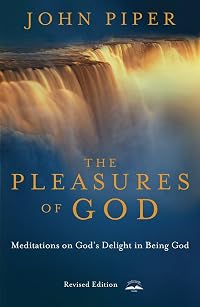
The Pleasures of God
by John Piper
On This Page
Description
The weight of glory is a happy burden. Thus God is the happiest Being in the Universe. To know Him in His pleasures is to see Him as He is, and to have a fresh encounter with His transforming presence. For those who are hungry for this deep delight, consider the gladness of His great heart. The things that make God glad are the measures of His greatness. Christ and the cross. Choosing His people and bruising His Son. Creating the world and revealing His worth. The gladness of His people in show more the greatness of His glory. show lessTags
Recommendations

































Member Reviews
Is the Christian God happy?
This is the question John Piper poses in The Pleasures of God, and I found it a fascinating one with rich theological implications. We are used to the idea of God as the angry Judge, the distant Creator, or the weeping, suffering Christ. And while there are facets of biblical truth in all these, they are not the sum total of God's character. Where is the joyful God?
Surprisingly (at least to me), there is quite a lot of biblical support for the notion of a happy God. God does what He pleases; He takes pleasure in His will and actions. And He is completely self-sufficient in the beautiful relationship among the Godhead. He doesn't need us to complete Him and He is not desperate to get our attention or love. One show more of Piper's main ideas is a quote from Henry Scougal, who wrote, "The worth and excellency of a soul is to be measured by object of its love." Apply this to God and wow — God has to be self-centered because He is the highest being in the universe. If He were to put us, His creation, before Himself, He would be guilty of idolatry. Whoa! And so it is only right for God's highest priority to be His glory.
And we as His children are to share in the Father's joy in His glory. Again and again Piper drives home his point: God is most glorified in us when we are most satisfied in Him. It is a simple but life-changing truth.
Alongside the happier descriptions, Scripture does portray God as the judge and ruler of the earth, a holy God who is deeply affronted by our sin against Him. Jesus weeps over Jerusalem, just as God bemoans the unfaithfulness of His people Israel in the Old Testament. And how can God take pleasure in everything He does? Did He enjoy crushing His Son for the sin of ungrateful people? Does He enjoy punishing sinners? Piper doesn't shy away from these questions and his answers are firmly biblical. Most of the time the apparent contradiction is because we are focusing on the wrong thing. God does not delight in punishing sinners, but He does delight in exalting His holiness. God did not enjoy watching His Son suffer, but He does rejoice the Son's perfect obedience and powerful, God-glorifying work of salvation. There are many things we don't understand about God, but we can be assured that any contradictions are on our side, not His.
I'm still processing the theological ramifications of a joyful God. This means that God is not acting under constraint when I ask Him for forgiveness — no, He delights in forgiving me and covering my sin! God does not get tired of my repetitious, needy prayers — no, He truly enjoys listening to me and fulfilling my needs. God does not weary of His work or regret His decisions; He is not like us.
I enjoyed the lengthy notes at the end of each chapter; Piper's not afraid to go intellectual on his reader. The discussion of hard questions, especially the Father's seemingly paradoxical traits, is excellent. Piper has a gift for vivid metaphors, like the false idea of God as a trough we have to keep filling up with praise and prayer so that He will be able to fulfill our needs. But God is not a trough; He doesn't need a bucket brigade. He is a river inviting thirsty souls to drink, and there is nothing we can do to sustain or complete Him. We are the needy ones, not Him.
This was my first book by Piper and I will certainly be returning to his work. Excellent. show less
This is the question John Piper poses in The Pleasures of God, and I found it a fascinating one with rich theological implications. We are used to the idea of God as the angry Judge, the distant Creator, or the weeping, suffering Christ. And while there are facets of biblical truth in all these, they are not the sum total of God's character. Where is the joyful God?
Surprisingly (at least to me), there is quite a lot of biblical support for the notion of a happy God. God does what He pleases; He takes pleasure in His will and actions. And He is completely self-sufficient in the beautiful relationship among the Godhead. He doesn't need us to complete Him and He is not desperate to get our attention or love. One show more of Piper's main ideas is a quote from Henry Scougal, who wrote, "The worth and excellency of a soul is to be measured by object of its love." Apply this to God and wow — God has to be self-centered because He is the highest being in the universe. If He were to put us, His creation, before Himself, He would be guilty of idolatry. Whoa! And so it is only right for God's highest priority to be His glory.
And we as His children are to share in the Father's joy in His glory. Again and again Piper drives home his point: God is most glorified in us when we are most satisfied in Him. It is a simple but life-changing truth.
Alongside the happier descriptions, Scripture does portray God as the judge and ruler of the earth, a holy God who is deeply affronted by our sin against Him. Jesus weeps over Jerusalem, just as God bemoans the unfaithfulness of His people Israel in the Old Testament. And how can God take pleasure in everything He does? Did He enjoy crushing His Son for the sin of ungrateful people? Does He enjoy punishing sinners? Piper doesn't shy away from these questions and his answers are firmly biblical. Most of the time the apparent contradiction is because we are focusing on the wrong thing. God does not delight in punishing sinners, but He does delight in exalting His holiness. God did not enjoy watching His Son suffer, but He does rejoice the Son's perfect obedience and powerful, God-glorifying work of salvation. There are many things we don't understand about God, but we can be assured that any contradictions are on our side, not His.
I'm still processing the theological ramifications of a joyful God. This means that God is not acting under constraint when I ask Him for forgiveness — no, He delights in forgiving me and covering my sin! God does not get tired of my repetitious, needy prayers — no, He truly enjoys listening to me and fulfilling my needs. God does not weary of His work or regret His decisions; He is not like us.
I enjoyed the lengthy notes at the end of each chapter; Piper's not afraid to go intellectual on his reader. The discussion of hard questions, especially the Father's seemingly paradoxical traits, is excellent. Piper has a gift for vivid metaphors, like the false idea of God as a trough we have to keep filling up with praise and prayer so that He will be able to fulfill our needs. But God is not a trough; He doesn't need a bucket brigade. He is a river inviting thirsty souls to drink, and there is nothing we can do to sustain or complete Him. We are the needy ones, not Him.
This was my first book by Piper and I will certainly be returning to his work. Excellent. show less
I enjoyed "Desiring God" and "When I don't Desire God", but in terms of practical theology and life-changing insight, "The Pleasures of God" is on a whole different level.
Subtitled "Meditations on God's Delight in Being God", the book deals with how God takes pleasure in various aspects of his being, his creation, and his divine plan. As mentioned in an earlier post, the chapter entitled "The Pleasure of God in the Prayers of the Upright" has already had a big impact in my own personal life and ministry.
Prayer is not the only subject that receives Piper's careful and challenging analysis, however. Such topics as election, the relationship between God the Father and God the Son, and why bad things happen to good people are considered show more with care, thoroughness, and accuracy.
Far from being a dry theological tome, "The Pleasures of God" challenges God's people to action. I will end this review with a quote from the chapter on prayer:
"The crying need of the hour--every hour--is to put the churches on a wartime footing. Mission leaders are crying out, 'Where is the church's concept of militancy, of a mighty army willing to suffer, moving ahead with exultant determination to take the world by storm? Where is the risk-taking, the launching out on God alone?' The answer is that it has been swallowed up by a peace-time mentality. Thousands of Christians do not hear the diabolic bombs dropping and the bullets zinging overhead. They don't smell the hellish Agent Orange in teh whitened harvest of teh world. They don't cringe or weep at the thousands who perish every week. They don't reckon with spiritual hosts of wickedness in heavenly places and teh world rulers of this present darkness. In fact, it is not dark, they say. It is bright and comfortable and cheery--just look at my home and car and office and cabin and boat. And listen to my new disc-player and look at my new video equipment."
If that is not a convicting indictment of today's Western Christianity, I don't know what is. show less
Subtitled "Meditations on God's Delight in Being God", the book deals with how God takes pleasure in various aspects of his being, his creation, and his divine plan. As mentioned in an earlier post, the chapter entitled "The Pleasure of God in the Prayers of the Upright" has already had a big impact in my own personal life and ministry.
Prayer is not the only subject that receives Piper's careful and challenging analysis, however. Such topics as election, the relationship between God the Father and God the Son, and why bad things happen to good people are considered show more with care, thoroughness, and accuracy.
Far from being a dry theological tome, "The Pleasures of God" challenges God's people to action. I will end this review with a quote from the chapter on prayer:
"The crying need of the hour--every hour--is to put the churches on a wartime footing. Mission leaders are crying out, 'Where is the church's concept of militancy, of a mighty army willing to suffer, moving ahead with exultant determination to take the world by storm? Where is the risk-taking, the launching out on God alone?' The answer is that it has been swallowed up by a peace-time mentality. Thousands of Christians do not hear the diabolic bombs dropping and the bullets zinging overhead. They don't smell the hellish Agent Orange in teh whitened harvest of teh world. They don't cringe or weep at the thousands who perish every week. They don't reckon with spiritual hosts of wickedness in heavenly places and teh world rulers of this present darkness. In fact, it is not dark, they say. It is bright and comfortable and cheery--just look at my home and car and office and cabin and boat. And listen to my new disc-player and look at my new video equipment."
If that is not a convicting indictment of today's Western Christianity, I don't know what is. show less
“The worth and excellency of a soul is to be measured by the object of it’s love.” This quote by a young Puritan named Henry Scougal stuck to the forefront of my mind for weeks. It’s the opening quote to the first chapter of Pipers book. It’s a good summation of the substance of this wonderfully powerful book.
Piper writes the way I feel on my best days. I once thought the guy was a veritable Superman of the faith till I heard an interview of him talking to Mark Dever of 9 Marks Ministries. Piper commented that his most popular work, Desiring God, was so entitled because it was so often how he felt, he desired God because he didn’t feel he had enough of Him. His writings are his deepest longings. They are ours as well, show more weather we know it or not.
Piper oozes passion, but it’s a focused passion. He’s got only one thing in mind that has overtaken all his writing and preaching, it’s the essence of his life and its summed up in his paraphrase of something Jonathan Edwards once said, that being ‘God is most glorified in us when we are most satisfied in Him’. The glory of God for God is his passion; his deepest desire is for us to have the same.
This book, possibly his best yet, deals with those things that God has most pleasure in. Be forewarned, this book is not for lightweights. I felt myself humbled and broken reading Piper’s insights on the heart of God. The book didn’t rock my concept of God, but each time I picked it up I couldn’t put it down, I was captivated. Piper has a way of clearing some of the clouds of mystery that often surround our understanding of God, and in this book he does it in grand style.
The first six chapters have little to do with us, and much to do with Him and Him alone. Piper deals with weighty issues, such as election and God’s sovereignty, in grand style. If you aren’t a Calvinist beware, this book could totally shake your foundations (i.e. make you biblical (tongue in cheek). In these chapters Gods glory is on display as the great “I AM”, everything there is.
The last four chapters deal with Gods pleasure in us. After reading the first chapters, these last ones break your heart and build you up knowing your utter depravity and the greatness of God overcoming it.
Get this book, read it and then read it again. It includes a great question section at the back for small group study or personal reflection.
Favorite quotes: “The original, the primal, the deepest, the foundational joy of God is the joy he has in his own perfections as he sees them reflected in the glory of his Son.”
“Gods first love is rooted in the value of his holy name, not the value of sinful people. And because it is, there is hope for the sinful people–since they are not the ground of their salvation, God’s name is.”
“God does not take pleasure merely in being known and loved in an abstract way disconnected from his work in creation and redemptive history, God created the world and has worked in history not so that creation and history would be ignored. Christ did not become man so that the story of his life and work recorded in a book
would be disregarded in favor of a mystical bypass to God. This would not honor the Christ of history.” show less
Piper writes the way I feel on my best days. I once thought the guy was a veritable Superman of the faith till I heard an interview of him talking to Mark Dever of 9 Marks Ministries. Piper commented that his most popular work, Desiring God, was so entitled because it was so often how he felt, he desired God because he didn’t feel he had enough of Him. His writings are his deepest longings. They are ours as well, show more weather we know it or not.
Piper oozes passion, but it’s a focused passion. He’s got only one thing in mind that has overtaken all his writing and preaching, it’s the essence of his life and its summed up in his paraphrase of something Jonathan Edwards once said, that being ‘God is most glorified in us when we are most satisfied in Him’. The glory of God for God is his passion; his deepest desire is for us to have the same.
This book, possibly his best yet, deals with those things that God has most pleasure in. Be forewarned, this book is not for lightweights. I felt myself humbled and broken reading Piper’s insights on the heart of God. The book didn’t rock my concept of God, but each time I picked it up I couldn’t put it down, I was captivated. Piper has a way of clearing some of the clouds of mystery that often surround our understanding of God, and in this book he does it in grand style.
The first six chapters have little to do with us, and much to do with Him and Him alone. Piper deals with weighty issues, such as election and God’s sovereignty, in grand style. If you aren’t a Calvinist beware, this book could totally shake your foundations (i.e. make you biblical (tongue in cheek). In these chapters Gods glory is on display as the great “I AM”, everything there is.
The last four chapters deal with Gods pleasure in us. After reading the first chapters, these last ones break your heart and build you up knowing your utter depravity and the greatness of God overcoming it.
Get this book, read it and then read it again. It includes a great question section at the back for small group study or personal reflection.
Favorite quotes: “The original, the primal, the deepest, the foundational joy of God is the joy he has in his own perfections as he sees them reflected in the glory of his Son.”
“Gods first love is rooted in the value of his holy name, not the value of sinful people. And because it is, there is hope for the sinful people–since they are not the ground of their salvation, God’s name is.”
“God does not take pleasure merely in being known and loved in an abstract way disconnected from his work in creation and redemptive history, God created the world and has worked in history not so that creation and history would be ignored. Christ did not become man so that the story of his life and work recorded in a book
would be disregarded in favor of a mystical bypass to God. This would not honor the Christ of history.” show less
Considered to be one of Piper's three landmark books, "The Pleasures of God" contains little new information in it if one has had any previous exposure to Piper's work. The premise is taken from a sentence Piper read in Henry Scougal's " [b:The Life of God in the Soul of Man|11725416|The Life of God in the Soul of Man|Henry Scougal|http://photo.goodreads.com/books/1327865215s/11725416.jpg|16673885]" (which by the way is superb and has a 're-readable' status in my library.) Piper asks 'If one can measure the worth of a soul by what he delights in can the same be true of God?'The first 6 chapters are 'textbook Piper' and have been quite influential in my thinking. Chapter 8, "The Pleasures of God in the Prayers of the Upright" was to me a show more review of all Piper's thoughts on prayer. However it was Chapters 7 and 9, "The Pleasures of God in Doing Good to All Who Hope in Him & The Pleasures of God in Personal Obedience and Public Justice" that were most valuable to me. Chapter 7 was a slightly different take on some of the Future Grace material and remarkably encouraging. One of Piper's premises is that if the Gospel demands a response from sinner then the demand itself must be good new or else the Gospel would fail to be good news. He goes on to explain how it is that one can both fear God and hope in God. This is the key to sanctification and much of Christian living.In Chapter 9, "The Pleasures of God in Personal Obedience..." I read the best explanation of what "Obedience of Faith" means and wept as Piper spelled out how grace is not just pardon for sins, it is also the power that frees us from sin. It was also in this chapter that we get the great line, "God's commands are only as hard to obey as His promises are hard to believe." I wish I had heard that phrase before I began his Future Grace. Finally, this chapter contains a great explanation of Piper's definition of 'faith as satisfaction.' Another concept which has been remarkably helpful to me.All in all, If you've read a lot of Piper and haven't gotten to this book yet, I'd recommend you do so but feel free to read quickly. I've once heard Piper say something to the effect... "Once you've read a Piper book, you've read them all... I say the same thing in all of them." Though it has a little ring of truth to it, this is a massive overstatement. show less
“
The Pleasures of God
This book is breathtaking in both its scope and its focus and constitutes a joyful yet prophetic call to adore and worship God—whose infinite worth and excellence is revealed in what he loves and delights in. It is at once beautiful and moving, serious, stretching, and profound.
The Pleasures of God
This book is breathtaking in both its scope and its focus and constitutes a joyful yet prophetic call to adore and worship God—whose infinite worth and excellence is revealed in what he loves and delights in. It is at once beautiful and moving, serious, stretching, and profound.
This is considered Piper's greatest work. I disagree - half of its content is unrelated (directly) to the thesis of the book, making it confusing and uninteresting at times. However, even in its off-topic discussions, this text is filled with the God of the Bible - a God who seeks His own Glory with great pleasure, making Him the only God that could make the Gospel Good News. Much is to be gained from this book, especially the last two chapters and the appendix.
This book is not about you. It's about the One you were made for - God Himself. What the church and world needs today, more than anything else, is to know and love , behold and embrace, the great, glorious sovereign happy God of the Bible.
Members
- Recently Added By
Author Information

396+ Works 98,047 Members
Work Relationships
Common Knowledge
- Canonical title
- The Pleasures of God
- Alternate titles
- The Pleasures of God: God's Delight in being God
Classifications
Statistics
- Members
- 2,930
- Popularity
- 6,105
- Reviews
- 15
- Rating
- (4.50)
- Languages
- Dutch, English, French, Spanish
- Media
- Paper, Audiobook, Ebook
- ISBNs
- 18
- UPCs
- 2
- ASINs
- 5