
Nathaniel's Nutmeg
by Giles Milton
On This Page
Description
A true tale of high adventure in the South Seas. The tiny island of Run is an insignificant speck in the Indonesian archipelago. Just two miles long and half a mile wide, it is remote, tranquil, and, these days, largely ignored. Yet 370 years ago, Run's harvest of nutmeg (a pound of which yielded a 3,200 percent profit by the time it arrived in England) turned it into the most lucrative of the Spice Islands, precipitating a battle between the all-powerful Dutch East India Company and the show more British Crown. The outcome of the fighting was one of the most spectacular deals in history: Britain ceded Run to Holland but in return was given Manhattan. This led not only to the birth of New York but also to the beginning of the British Empire. Such a deal was due to the persistence of one man. Nathaniel Courthope and his small band of adventurers were sent to Run in October 1616, and for four years held off the massive Dutch navy. Nathaniel's Nutmeg centers on the remarkable showdown between Courthope and the Dutch Governor General Jan Coen, and the brutal fate of the mariners racing to Run--and the other corners of the globe--to reap the huge profits of the spice trade. Written with the flair of a historical sea novel but based on rigorous research, Giles Milton's Nathaniel's Nutmeg is a brilliant adventure story by Giles Milton, a writer who has been hailed as the "new Bruce Chatwin" (Mail on Sunday). show lessTags
Recommendations












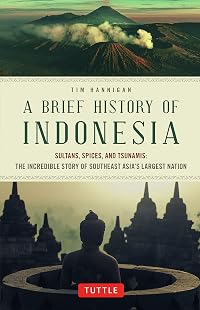
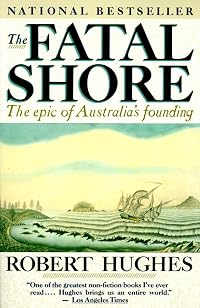
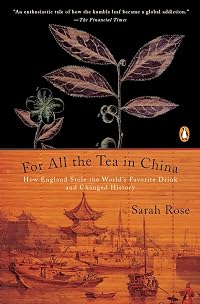


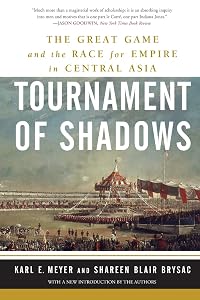
Member Recommendations
The Island at the Center of the World: The Epic Story of Dutch Manhattan and the Forgotten Colony That Shaped America by Russell Shorto
davesmind A wonderful book describing a bit of history often ignored. But great insight into why New York became English rather than Dutch.
Member Reviews
Popular history about the first 60 years of the honourable East India Company, focusing on the Dutch-English conflict over supremacy in the spice trade originating from the Banda islands.
The title is a misnomer. The said Nathaniel (Courthope) only played a minor (and ineffectual, albeit heroic) role in the struggle over Run island (one of the smallest of the six Banda spice islands). In the end the writer makes a plea for celebrating Nathaniel for his heroic, but futile, resistance to Dutch supremacy over Run island and its inhabitants, because ultimately an exchange was agreed between New Amsterdam (present-day New York) and Run island. This exchange supposedly gave the British the better end of the deal (if we ignore the subsequent show more American war of Independence and loss of British suzerainty over their American colonies). This is a typical case of imposing logics that only make sense with hindsight, but hardly influenced the exchange at the time.
Moreover, Milton presents Nathaniel’s struggle as one of British loftiness over crude Dutch extractionism – civilization over suppression. While such a view is refreshing, when contrasted with the dominant narrative on the Dutch East India Company (VOC), it is equally misleading – the British Empire was hardly less dominating or extractionist than its Dutch version. And ultimately New York and its inhabitants rose against British Imperialism in the name of freedom and civilization. So in the long run Milton’s argument backfires.
Yet, the fact that Courthope struck a reasonable deal with the inhabitants of Run stands. What we do not know, but can reasonably suppose, is that the more inclusive and autonomous aspects of that deal would have fallen victim to the God of colonial Greed in the long run.
What I ultimately take from this book, is a better understanding of the initial failure of the East India Company, which almost ceased to exist in 1657 (one hundred years before the unexpected British victory at Plassey, Bengal, which secured the ascent of the British Raj). Ultimately it was the backing of King Charles II and an extension of the mandate of the East India Company, to include local rule, military empowerment and the use of force, that explain its success after 1657 (one could argue that the British finally managed to copy the lethal mix of powers that made the Dutch East India Company so successful). In light of these changes, one may wonder whether the inhabitants of Run would have been better off under British rule. Milton avoids such painful, reflective questions. Rather than probing the viciousness of both the Dutch and British colonial projects, Milton prefers a gung-ho, white-supremacist adventure narrative. Go and read Amitav Ghosh for a very different narrative on the Nutmeg’s curse! show less
The title is a misnomer. The said Nathaniel (Courthope) only played a minor (and ineffectual, albeit heroic) role in the struggle over Run island (one of the smallest of the six Banda spice islands). In the end the writer makes a plea for celebrating Nathaniel for his heroic, but futile, resistance to Dutch supremacy over Run island and its inhabitants, because ultimately an exchange was agreed between New Amsterdam (present-day New York) and Run island. This exchange supposedly gave the British the better end of the deal (if we ignore the subsequent show more American war of Independence and loss of British suzerainty over their American colonies). This is a typical case of imposing logics that only make sense with hindsight, but hardly influenced the exchange at the time.
Moreover, Milton presents Nathaniel’s struggle as one of British loftiness over crude Dutch extractionism – civilization over suppression. While such a view is refreshing, when contrasted with the dominant narrative on the Dutch East India Company (VOC), it is equally misleading – the British Empire was hardly less dominating or extractionist than its Dutch version. And ultimately New York and its inhabitants rose against British Imperialism in the name of freedom and civilization. So in the long run Milton’s argument backfires.
Yet, the fact that Courthope struck a reasonable deal with the inhabitants of Run stands. What we do not know, but can reasonably suppose, is that the more inclusive and autonomous aspects of that deal would have fallen victim to the God of colonial Greed in the long run.
What I ultimately take from this book, is a better understanding of the initial failure of the East India Company, which almost ceased to exist in 1657 (one hundred years before the unexpected British victory at Plassey, Bengal, which secured the ascent of the British Raj). Ultimately it was the backing of King Charles II and an extension of the mandate of the East India Company, to include local rule, military empowerment and the use of force, that explain its success after 1657 (one could argue that the British finally managed to copy the lethal mix of powers that made the Dutch East India Company so successful). In light of these changes, one may wonder whether the inhabitants of Run would have been better off under British rule. Milton avoids such painful, reflective questions. Rather than probing the viciousness of both the Dutch and British colonial projects, Milton prefers a gung-ho, white-supremacist adventure narrative. Go and read Amitav Ghosh for a very different narrative on the Nutmeg’s curse! show less
This really is excellent. It's a proper history of the East India Company that's been packaged as the story of Nathaniel's Nutmeg. That whole connection with changing the course of history is pretty tenuous. The great 'what if?' moment for me was the negotiations between the English and Dutch companies to form a vast international corporation.
The torture scenes are also very well done.
The torture scenes are also very well done.
The tiny island of Run is an insignificant speck in the middle of the Indonesian archipelago--remote, tranquil, and now largely ignored. At the beginning of the seventeenth century, however, Run's harvest of nutmeg turned it into the most lucrative of the Spice Islands, precipitating a fierce and bloody battle between the all-powerful Dutch East India Company and a small band of ragtag British adventurers led by the intrepid Nathaniel Courthope. The outcome of the fighting was one of the most spectacular deals in history: Britain ceded Run to Holland, but in return was given another small island, Manhattan.A brilliant adventure story of unthinkable hardship and savagery, the navigation of uncharted waters, and the exploitation of new show more worlds, Nathaniel's Nutmeg is a remarkable chapter in the history of the colonial powers. show less
The title of this is somewhat misleading; it's not simply Nathaniel Courthope's story, but that of various men over a century who fought and died over islands that don't even garner a mention on most contemporary maps.
The tiny island of Run is in the Indonesian archipelago. Five hundred years ago, that small cluster of volcanic islands was the only place in the world where one could find clover and nutmeg. And everyone wanted it - the Spanish, the Portuguese, the Dutch and the English, though the last two were the greatest foes. In this fascinating story, Milton describes the incredible effort it took to make it to Run and its neighboring islands. Thousands of lives were lost just in the journey. Shipwrecks, dysentery, piracy. Starving show more sailors would land on islands and gorge on scared cows, only to be slaughtered by mobs of horrified villagers who believed the cows held the spirits of deceased ancestors. When the Dutch finally gained control and brutally subjugated the native population of the islands, the English still persisted in their claim for spices. War ensued. Brutality was undeniable on both sides, but Nathaniel Courthope's valiant stand on the island of Run made the English claim seem justified. The end result of this conflict: a simple trade of the wealthy island of Run for a scarcely-settled island in America named Manhattan.
This book was enlightening. I have nutmeg in my kitchen cupboard and took it for granted. It costs what, $3? I've read about the Spice Wars, but knew nothing about the specifics or the sacrifices involved. It made me feel sad at times. People really should know about these things. As much as I enjoyed Nathaniel's Nutmeg, it was a very slow read and took almost a week for me to get through. I am glad I read it, though. Many thanks to the person who reviewed it on 50bookchallenge in 2008 and brought it to my attention. show less
The tiny island of Run is in the Indonesian archipelago. Five hundred years ago, that small cluster of volcanic islands was the only place in the world where one could find clover and nutmeg. And everyone wanted it - the Spanish, the Portuguese, the Dutch and the English, though the last two were the greatest foes. In this fascinating story, Milton describes the incredible effort it took to make it to Run and its neighboring islands. Thousands of lives were lost just in the journey. Shipwrecks, dysentery, piracy. Starving show more sailors would land on islands and gorge on scared cows, only to be slaughtered by mobs of horrified villagers who believed the cows held the spirits of deceased ancestors. When the Dutch finally gained control and brutally subjugated the native population of the islands, the English still persisted in their claim for spices. War ensued. Brutality was undeniable on both sides, but Nathaniel Courthope's valiant stand on the island of Run made the English claim seem justified. The end result of this conflict: a simple trade of the wealthy island of Run for a scarcely-settled island in America named Manhattan.
This book was enlightening. I have nutmeg in my kitchen cupboard and took it for granted. It costs what, $3? I've read about the Spice Wars, but knew nothing about the specifics or the sacrifices involved. It made me feel sad at times. People really should know about these things. As much as I enjoyed Nathaniel's Nutmeg, it was a very slow read and took almost a week for me to get through. I am glad I read it, though. Many thanks to the person who reviewed it on 50bookchallenge in 2008 and brought it to my attention. show less
I'm marginally ill today - mild fever, slight achiness, low energy - and because of that, I'm disappointed that I've already finished Giles Milton's Nathaniel's Nutmeg: or, the True and Incredible Adventures of the Spice Trader Who Changed the Course of History. Because this, my friends, is my version of the perfect home-sick-from-work book. A true story (more or less), it nonetheless reads like an old-fashioned swashbuckler, complete with bravery, treachery, derring-do, clandestine dealings, betrayals, base incompetence, and much adventure on the high seas. A highly-colored chronicle of the European race for control of the spice islands (the small south-east Asian archipelago that produced the entire world supply of nutmeg and cloves show more during the sixteenth and seventeenth centuries), Nathaniel's Nutmeg introduces the reader to a rollicking cast of brigands, merchants and adventurers, all of whom are out for a piece of the spice pie. Milton paints a portrait of a Europe obsessed with nutmeg and other spices - not merely as luxurious additions to a meal, but as (they thought) a cure for everything from the common cold to the Bubonic plague. Some London apothecaries even claimed that enough saffron, taken with sweet wine, could raise the dead. (I'm not sure how you were supposed to "take" the wine/saffron combo once you were no longer living, but presumably few people were wealthy enough to find out.) Spice prices in London and other European centers was sky-high, and fortunes could be made by those with enough knowledge and capital to fit out an expedition, and enough bravery or foolhardiness to risk their lives sailing around the world in order to buy nutmeg and other spices at their source.
I was fascinated by the "early modern" character of the world portrayed; the Age of Exploration brought a glut of new information about the world outside Europe, but people - even highly-educated people - had no way of separating the true stories from what, in retrospect, we know to be absurd. The wealth of nations was allocated to missions that now seem outlandish: seventeenth-century geographers, for example, were convinced that the North-East Passage (a supposed navigable sea route from Europe over the North Pole and into the Pacific) must exist, because surely God made the world symmetrical up-and-down:
In retrospect, it's amazing that an unproved assumption about geological symmetry would have trumped, even for the most intelligent people of the time, the proven fact that if you get water cold enough it will freeze, thereby trapping your ships in the frozen Arctic wastes. In another amazing development, more "evidence" for the existence of a North-East Passage came with the return of a failed Arctic expedition:
So future expeditions, hugely expensive and incredibly risky, were launched on the basis of global symmetry and the knowledge that unicorns are bred in China, along with some ancient texts by Pliny the Elder, claiming that there were open waters at the North Pole. Which is a pretty astounding testament to the power of magical thinking, and makes you wonder which modern assumptions will seem similarly absurd to future generations.
Milton's narrative gets even more exciting once the expeditions actually set off. In addition to stand-offs among the Portuguese, English and Dutch, and the inherent dangers of the voyage (most expeditions lost at least a third of their men to scurvy, dystentry and tropical diseases), there were legion clashes among the grandiose and idiosyncratic personalities involved in these explorations. Henry Hudson, for example, was commissioned to find the North-East Passage: he was given explicit instructions and signed an agreement saying that he would sail up the coast of Norway and then attempt to turn east. Unbeknownst to his backers, however, he never intended to follow this route at all, but immediately headed west to explore the possibility of a North-WEST Passage. There was such a thin membrane of allegiance in many of these stories: Sir Frances Drake, who defeated the Spanish Armada for England and then led an early, successful expedition to the Spice Islands, turned down the next job offer he got from the British East India Company: he had decided to pursue a career of straight-up piracy instead. Even in later years, each voyage sent by the East India Company was out for its own profit, and a second British ship would often commandeer the goods won by a first British ship, rather than working together for the overall profit of the Company. Milton did a good job depicting the chaotic, winner-take-all quality of the times, and made it all seem as fun to read as a nineteenth-century adventure story.
Which is actually a little bit disturbing.
Because, if you think about it, the reason an old-fashioned swashbuckler is fun to read is that the narrative makes certain pirates into the "good guys," and other pirates into the "bad guys." Obviously, in real life NO pirates are good guys, but Milton, despite writing non-fiction, does exactly this same thing. Consistently, throughout his narrative, he paints the British as the good guys and the Dutch as their treacherous adversaries, even when the two sides are acting more or less equally reprehensibly. Every instance of an unprovoked attack or secret conspiracy on the part of the Dutch is treated with an attitude of condemnation, yet not of surprise. Miton seems to be asking the reader "Well, what else would you expect? Gruesome, isn't it?" Whereas stories of the exact same kind of plotting and scheming on the part of the British are met either with excuses on Milton's part, or with outright approval. Milton calls Nathaniel Courthope's practice of running spies under cover of darkness "ingenious," but classifies the actions of a Dutch spy who betrays Courthope as underhanded treachery. In one instance, the British captain William Keeling (a funny duck by all accounts - he organized early productions of Shakespeare plays among his sailors while crossing the Atlantic) has been trying to overcome his Dutch rivals on the islands of Ai and Neira, and has been sending spies among the natives. Many might assume that Keeling was therefore in on the native uprising that ended up slaughtering 48 Dutchmen, but Milton goes to great lengths to suggest that he wasn't:
It could just be me, but if I were conspiring with the natives to overthrow my Dutch adversaries, that's the kind of information I might elect to exclude from my journals. You know, so as to avoid HANDING THEM EVIDENCE in the event of my capture. Of course I don't know anything about the circumstances here; it could be that Keeling really didn't know anything about the uprising. Yet Milton seems willing to impugn Dutch captains and bureaucrats on flimsier, more circumstantial evidence than we can read between the lines here against Keeling. And when he is forced to relate distasteful behavior on the part of the British (such as the men in Henry Hudson's expedition who made a sport of shooting American Indians with muskets from the deck of their ship) he seems extremely grieved by it, whereas similar behavior by the Dutch can pass without comment.
So, Nathaniel's Nutmeg was not the most balanced, bias-free history I've ever read. There was a definite jingoistic/nationalistic bent that bothered me more as the book went on, and inspired some eye-rolling toward the end. I would still recommend it, though, to those in the mood for the true(ish) version of the old-fashioned sea yarn. show less
I was fascinated by the "early modern" character of the world portrayed; the Age of Exploration brought a glut of new information about the world outside Europe, but people - even highly-educated people - had no way of separating the true stories from what, in retrospect, we know to be absurd. The wealth of nations was allocated to missions that now seem outlandish: seventeenth-century geographers, for example, were convinced that the North-East Passage (a supposed navigable sea route from Europe over the North Pole and into the Pacific) must exist, because surely God made the world symmetrical up-and-down:
In an age when men still looked for perfect symmetry on their maps, the northern cape of Norway showed an exact topographical correspondence to the southern cape of Africa. Geographers agreed that this was indeed good news; the chilly northern land mass must surely be a second Cape of Good Hope.
In retrospect, it's amazing that an unproved assumption about geological symmetry would have trumped, even for the most intelligent people of the time, the proven fact that if you get water cold enough it will freeze, thereby trapping your ships in the frozen Arctic wastes. In another amazing development, more "evidence" for the existence of a North-East Passage came with the return of a failed Arctic expedition:
[T]he crew returned to England with a strange horn, some six feet long and decorated with a spiral twirl. Ignorant of the existence of the narwhal - that strange member of the whale family that has a single tusk protruding from its head - the rough English mariners confidently declared that this odd piece of flotsam had once belonged to a unicorn, a highly significant find, for 'knowing that unicorns are bred in the lands of Cathay, China and other Oriental Regions, [the sailors] fell into consideration that the same head was brought thither by the course of the sea, and that there must of necessity be a passage out of the said Oriental Ocean into our Septentrionall seas.'
So future expeditions, hugely expensive and incredibly risky, were launched on the basis of global symmetry and the knowledge that unicorns are bred in China, along with some ancient texts by Pliny the Elder, claiming that there were open waters at the North Pole. Which is a pretty astounding testament to the power of magical thinking, and makes you wonder which modern assumptions will seem similarly absurd to future generations.
Milton's narrative gets even more exciting once the expeditions actually set off. In addition to stand-offs among the Portuguese, English and Dutch, and the inherent dangers of the voyage (most expeditions lost at least a third of their men to scurvy, dystentry and tropical diseases), there were legion clashes among the grandiose and idiosyncratic personalities involved in these explorations. Henry Hudson, for example, was commissioned to find the North-East Passage: he was given explicit instructions and signed an agreement saying that he would sail up the coast of Norway and then attempt to turn east. Unbeknownst to his backers, however, he never intended to follow this route at all, but immediately headed west to explore the possibility of a North-WEST Passage. There was such a thin membrane of allegiance in many of these stories: Sir Frances Drake, who defeated the Spanish Armada for England and then led an early, successful expedition to the Spice Islands, turned down the next job offer he got from the British East India Company: he had decided to pursue a career of straight-up piracy instead. Even in later years, each voyage sent by the East India Company was out for its own profit, and a second British ship would often commandeer the goods won by a first British ship, rather than working together for the overall profit of the Company. Milton did a good job depicting the chaotic, winner-take-all quality of the times, and made it all seem as fun to read as a nineteenth-century adventure story.
Which is actually a little bit disturbing.
Because, if you think about it, the reason an old-fashioned swashbuckler is fun to read is that the narrative makes certain pirates into the "good guys," and other pirates into the "bad guys." Obviously, in real life NO pirates are good guys, but Milton, despite writing non-fiction, does exactly this same thing. Consistently, throughout his narrative, he paints the British as the good guys and the Dutch as their treacherous adversaries, even when the two sides are acting more or less equally reprehensibly. Every instance of an unprovoked attack or secret conspiracy on the part of the Dutch is treated with an attitude of condemnation, yet not of surprise. Miton seems to be asking the reader "Well, what else would you expect? Gruesome, isn't it?" Whereas stories of the exact same kind of plotting and scheming on the part of the British are met either with excuses on Milton's part, or with outright approval. Milton calls Nathaniel Courthope's practice of running spies under cover of darkness "ingenious," but classifies the actions of a Dutch spy who betrays Courthope as underhanded treachery. In one instance, the British captain William Keeling (a funny duck by all accounts - he organized early productions of Shakespeare plays among his sailors while crossing the Atlantic) has been trying to overcome his Dutch rivals on the islands of Ai and Neira, and has been sending spies among the natives. Many might assume that Keeling was therefore in on the native uprising that ended up slaughtering 48 Dutchmen, but Milton goes to great lengths to suggest that he wasn't:
After the passing of almost four centuries it is hard to piece together exactly what happened next. The Dutch records suggest that William Keeling helped instigate the ensuing massacre, but this accusation contradicts his own diaries. Although he had certainly struck a number of secret deals with the natives, there is nothing to suggest he was actively inciting them to violence. Indeed, he was busy buying nutmeg at Ai Island, a day's sailing journey from Neira, when rumors of a plot began to circulate.
It could just be me, but if I were conspiring with the natives to overthrow my Dutch adversaries, that's the kind of information I might elect to exclude from my journals. You know, so as to avoid HANDING THEM EVIDENCE in the event of my capture. Of course I don't know anything about the circumstances here; it could be that Keeling really didn't know anything about the uprising. Yet Milton seems willing to impugn Dutch captains and bureaucrats on flimsier, more circumstantial evidence than we can read between the lines here against Keeling. And when he is forced to relate distasteful behavior on the part of the British (such as the men in Henry Hudson's expedition who made a sport of shooting American Indians with muskets from the deck of their ship) he seems extremely grieved by it, whereas similar behavior by the Dutch can pass without comment.
So, Nathaniel's Nutmeg was not the most balanced, bias-free history I've ever read. There was a definite jingoistic/nationalistic bent that bothered me more as the book went on, and inspired some eye-rolling toward the end. I would still recommend it, though, to those in the mood for the true(ish) version of the old-fashioned sea yarn. show less
Clearly the author made a deep investment as to his research, and came out brilliantly, though a bit obviously biased. This is a real adventure, fast-paced, full of commerce, torture, high-seas piracy and warfare, street fights and horrors on numerous kind...all with a backdrop of sensuous spice and allegiance to one's crown, daring and hope. This story has a bearing not only on the obvious but also our American history as it pertains to New York, which Milton spins out very well. Certainly not easy to read the barbarous acts, the injustices, the dashed hopes, but an exciting, important read for sure.
Fascinating and detailed research into the 16-17th century spice trade, in which Britain vied with the Dutch, Portuguese and Spanish to control the lucrative trade. The disputes between Britain and the Netherlands were particularly bitter and brutal, resulting in several Anglo-Dutch wars. Spoiler alert, Britain had the last laugh over the Dutch, exchanging the tiny Spice Islands Run for New Amsterdam, otherwise known as Manhattan!
Members
- Recently Added By
Published Reviews
ThingScore 100
The British acquisition of Manhattan was due as much to other factors, not least of which was the propensity of the island's already self-absorbed residents to steal chunks of timber and stone from its main fort for use in building their own homes. As for Manhattan's rise and rise, that would seem to have a little to do with the inhabitants who remained when the British sailed out through the show more Verrazano Narrows in 1783, leaving the place in rubble.
But this overreaching detracts only slightly from what is a rousing historical romp. Milton leaves one both yearning for a time when the world seemed full of infinite adventure and appalled by what greed did to such a paradise. It is particularly sobering to read of the tendency of the Europeans to slaughter anyone they came across. A Dutch sailor's reaction to another orgy of bloodletting visited upon the Bantam Javanese for asking too high a price for their nutmeg sums it up splendidly: ''There was nothing missing and everything was perfect except what was wrong with ourselves.'' show less
But this overreaching detracts only slightly from what is a rousing historical romp. Milton leaves one both yearning for a time when the world seemed full of infinite adventure and appalled by what greed did to such a paradise. It is particularly sobering to read of the tendency of the Europeans to slaughter anyone they came across. A Dutch sailor's reaction to another orgy of bloodletting visited upon the Bantam Javanese for asking too high a price for their nutmeg sums it up splendidly: ''There was nothing missing and everything was perfect except what was wrong with ourselves.'' show less
added by bewogenlucht
Lists

Books Read in 2023
5,638 works; 147 members
Author Information

31 Works 7,148 Members
Giles Milton is the author, most recently, of the critically acclaimed Nathaniel's Nutmeg (FSG, 1999). He lives in London. (Bowker Author Biography)
Some Editions
Awards and Honors
Distinctions
Series
Belongs to Publisher Series
Work Relationships
Is contained in
Common Knowledge
- Canonical title
- Nathaniel's Nutmeg
- Original title
- Nathaniel's Nutmeg
- Original publication date
- 1999
- People/Characters
- Nathaniel Courthope; Jan Pieterszoon Coen; John Jourdain; James Lancaster; David Middleton; Henry Middleton (show all 7); Gabriel Towerson
- Important places
- Indonesia; Maluku Islands, Indonesia; Banda, Maluku, Indonesia; Run Island, Indonesia
- First words
- Prologue
The island can be smelled before it can be seen. - Last words
- (Click to show. Warning: May contain spoilers.)For there on the cliffs, high above the translucent sea, the willowy nutmeg tree is once again setting its roots, bursting into flower each spring and filling the air with a heady, languorous scent.
Classifications
- Genres
- History, Nonfiction, General Nonfiction, Travel, Biography & Memoir
- DDC/MDS
- 338.17383 — Society, government, & culture Economics Production Agricultural products Trade in Agricultural Products Crops Grown in Fields
- LCC
- HD9211 .N883 .I55 — Social sciences Industries. Land use. Labor Industries. Land use. Labor Special industries and trades Agricultural industries
- BISAC
Statistics
- Members
- 1,924
- Popularity
- 11,128
- Reviews
- 36
- Rating
- (3.59)
- Languages
- 10 — Czech, Dutch, English, Estonian, Finnish, French, German, Italian, Spanish, Swedish
- Media
- Paper, Audiobook, Ebook
- ISBNs
- 30
- ASINs
- 21