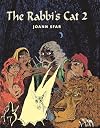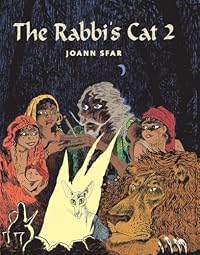
The Rabbi's Cat: Heaven on Earth / Africa's Jerusalem
by Joann Sfar
The Rabbi's Cat (Collections and Selections — 4-5)
On This Page
Description
"Joann Sfar's beloved, humorous, and wise talking cat is back for more beautifully illustrated adventures in Algiers and across Africa in the 1930s. While the rabbi is away, his cat tags along with Malka of the Lions (the rabbi's enigmatic cousin), who roams the desert with his ferocious-on-demand lion. Some believe Malka to be a pious Jew, others think he's a shrewd womanizer, but the cat will be the one to discover the surprising truth." "Back in Algiers, the rabbi's daughter, Zlabya, show more and her new husband fill the house with their fighting, while the city around them fills with a rising tide of anti-Semitism. On a whim, the rabbi's cat, the rabbi, a sheik (also a cousin of the rabbi), and a very misplaced Russian painter set out on a fantastic journey (even encountering a young reporter named Tintin in the Congo) in search of an African Jerusalem. It turns out to be very fortuitous that the rabbi's cat is not just a talking cat, but a multilingual talking cat"--BOOK JACKET. show lessTags
Recommendations











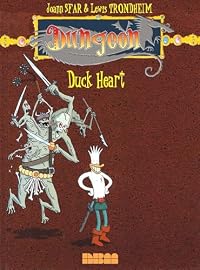

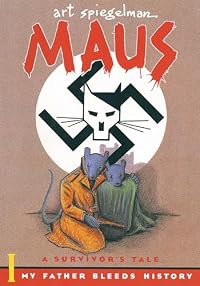

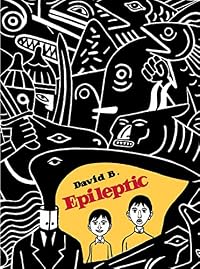


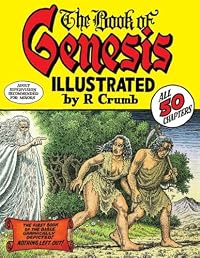




Member Recommendations
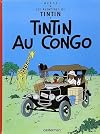
tootstorm The final story in the Rabbi's Cat has Tintin making a cameo while on his 'Tintin in the Congo' adventure. He's the fellow acting the white colonialist, barreling his way through the forest murdering everything in good cheer. The bizarre origins for his actions lie here.
Member Reviews
http://nwhyte.livejournal.com/2243568.html
A compilation of two albums telling two quite different stories. The first, "Heaven on Earth", is a bit of a meditation on stories and telling them through the mysterious figure of Malka, the Rabbi's cousin whose companion is an aging lion, set against the real background of the rise of an anti-Semitic regime in Algiers in the mid-1930s. In the second, "Africa's Jerusalem", the Rabbi, his cat and friends set off to explore their continent, taking an improbably indirect route from Algiers to Ethiopia which brings them into contact with another icon of bande dessinée who happened to be in the neighbourhood, ie Tintin.
I read this in English translation, which was just as well as the second volume show more also features a lost Russian character (who is able to talk to the cat) and I might not have got the linguistic nuances in the original French.
Sfar says in his introduction to the second album that he was trying to write about racism. I'm not sure that he quite managed to address colonialism or race - there are various scenes of the urbanised rabbi and friends (and cat) dealing with tribes which seemed a bit cliched - but he did at least widen his canvas. show less
A compilation of two albums telling two quite different stories. The first, "Heaven on Earth", is a bit of a meditation on stories and telling them through the mysterious figure of Malka, the Rabbi's cousin whose companion is an aging lion, set against the real background of the rise of an anti-Semitic regime in Algiers in the mid-1930s. In the second, "Africa's Jerusalem", the Rabbi, his cat and friends set off to explore their continent, taking an improbably indirect route from Algiers to Ethiopia which brings them into contact with another icon of bande dessinée who happened to be in the neighbourhood, ie Tintin.
I read this in English translation, which was just as well as the second volume show more also features a lost Russian character (who is able to talk to the cat) and I might not have got the linguistic nuances in the original French.
Sfar says in his introduction to the second album that he was trying to write about racism. I'm not sure that he quite managed to address colonialism or race - there are various scenes of the urbanised rabbi and friends (and cat) dealing with tribes which seemed a bit cliched - but he did at least widen his canvas. show less
At the end of The Rabbi's Cat, the unnamed cat had lost the ability to be understood by humans. The affliction still remains in The Rabbi's Cat 2. One might say Sfar's message in The Rabbi's Cat 2 is how to ask a question. How best do you respond to a growing hate? What is the best course of action to avoid or defuse it?
My favorite character, besides strong-willed Zlabya, was Malka of the Lions. He and his lion are traveling scammers. They travel from town to town saving villagers from the "ferocious" lion until one day the people are no longer afraid of the aging feline. Despite being elderly, Malka can still exude power. [When he delivers an open-handed slap to the mayor I was reminded me of Will Smith's attack on Chris Rock at the show more Oscars.] The adventure doesn't end there. There is this one snake who wants to bite someone. Anyone. Then the story takes an ominous turn when a seemingly dead Russian is found in a crate of books shipped to Zlabya's husband.
Sfar attacks deeper subjects in The Rabbi's Cat 2. The argument that art is forbidden; representation is prohibited: "Hey wait! You can kill each other after dinner. And in the meantime, we'd do well to talk quietly and see if it's necessary" (p 102). Please do not miss Sfar's subtle humor. The cat's farts is hilarious.
The dedication right before "Part II Africa's Jerusalem" made me think this section was intended to be a separate book.
And can we talk about the ending? It feels a little abrupt. I felt like it could have kept going. show less
My favorite character, besides strong-willed Zlabya, was Malka of the Lions. He and his lion are traveling scammers. They travel from town to town saving villagers from the "ferocious" lion until one day the people are no longer afraid of the aging feline. Despite being elderly, Malka can still exude power. [When he delivers an open-handed slap to the mayor I was reminded me of Will Smith's attack on Chris Rock at the show more Oscars.] The adventure doesn't end there. There is this one snake who wants to bite someone. Anyone. Then the story takes an ominous turn when a seemingly dead Russian is found in a crate of books shipped to Zlabya's husband.
Sfar attacks deeper subjects in The Rabbi's Cat 2. The argument that art is forbidden; representation is prohibited: "Hey wait! You can kill each other after dinner. And in the meantime, we'd do well to talk quietly and see if it's necessary" (p 102). Please do not miss Sfar's subtle humor. The cat's farts is hilarious.
The dedication right before "Part II Africa's Jerusalem" made me think this section was intended to be a separate book.
And can we talk about the ending? It feels a little abrupt. I felt like it could have kept going. show less
I may be in the minority here, but I actually liked this volume better than the first one. The cat isn't quite as snarky and funny as he is in the first volume (even though he manages to take a few stabs at the ignorant humans), and that's a bit of a shame. However, the topics in this one move the philosophical ponderings from the private world to the communal world and I really enjoyed that shift. Also, the mythological elements (Malka's stories and the search for the Ethiopian Jersualem) made the stories much more universal. This volume contains the two stories Le Paradis Terrestre and Jérusalem d'Afrique.
There are two tragedies in life. One is not getting what you want, and the other is getting what you want.
This book is worth reading for the story of the lions...
While this story lacked some of the deep philosophical discussions of [b:The Rabbi's Cat|82882|The Rabbi's Cat|Joann Sfar|http://d.gr-assets.com/books/1320392914s/82882.jpg|1381374] it made up for it by examining what it was that compels us to continue telling stories.
What the snake said in particular has continued to come to my mind and touch me.
While this story lacked some of the deep philosophical discussions of [b:The Rabbi's Cat|82882|The Rabbi's Cat|Joann Sfar|http://d.gr-assets.com/books/1320392914s/82882.jpg|1381374] it made up for it by examining what it was that compels us to continue telling stories.
What the snake said in particular has continued to come to my mind and touch me.
Joann Sfar is a wonderful graphic novelist and the best books I've read of his are the Rabbis Cat and this sequel, not-overly-creatively named Rabbi's Cat 2. It is set in a Jewish community in what I believe is French Algeria in what I believe is the 1920s. It describes the intersection of different cultures and religions, from Judaism to Islam, tradition to modernity, Europe to Africa, etc., with a sympathetic and insightful eye. The imagery is beautiful. And the cat featured in the title is the best character of all.
Joann Sfar is a wonderful graphic novelist and the best books I've read of his are the Rabbis Cat and this sequel, not-overly-creatively named Rabbi's Cat 2. It is set in a Jewish community in what I believe is French Algeria in what I believe is the 1920s. It describes the intersection of different cultures and religions, from Judaism to Islam, tradition to modernity, Europe to Africa, etc., with a sympathetic and insightful eye. The imagery is beautiful. And the cat featured in the title is the best character of all.
Members
- Recently Added By
Lists

Middle East and Maghreb Graphic Novels
46 works; 3 members
Author Information

307+ Works 9,032 Members
Awards and Honors
Series

Work Relationships
Common Knowledge
- Canonical title
- The Rabbi's Cat: Heaven on Earth / Africa's Jerusalem
- Disambiguation notice
- The Rabbi's Cat 2 collects the fourth and fifth books in the series, originally published in France. Please do not combine with Le Chat du Rabbin, tome 2 : Le Malka des Lions, which is the second book in the ser... (show all)ies.
Classifications
- Genre
- Graphic Novels & Comics
- DDC/MDS
- 741.5944 — Arts & recreation Drawing & decorative arts Drawing and drawings Comic books, graphic novels, fotonovelas, cartoons, caricatures, comic strips History, geographic treatment, biography European France & Monaco
- LCC
- PN6747 .S48 — Language and Literature Literature (General) Literature (General) Collections of general literature Comic books, strips, etc.
- BISAC
Statistics
- Members
- 267
- Popularity
- 120,036
- Reviews
- 11
- Rating
- (4.16)
- Languages
- 8 — Danish, English, Finnish, French, German, Italian, Norwegian, Portuguese
- Media
- Paper
- ISBNs
- 7
- ASINs
- 2