On This Page
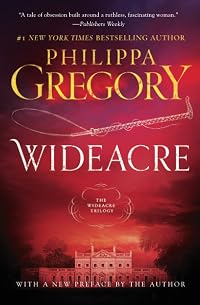
Description
From the Publisher: Beatrice Lacey, as strong-minded as she is beautiful, refuses to conform to the social customs of her time. Destined to lose her family name and beloved Wideacre estate once she is wed, Beatrice will use any means necessary to protect her ancestral heritage. Seduction, betrayal, even murder-Beatrice's passion is without apology or conscience. "She is a Lacey of Wideacre," her father warns, "and whatever she does, however she behaves, will always be fitting." Yet even as show more Beatrice's scheming seems about to yield her dream, she is haunted by the one living person who knows the extent of her plans-and her capacity for evil. Sumptuously set in Georgian England, Wideacre is intensely gripping, rich in texture, and full of color and authenticity. It is a saga as irresistible in its singular magic as its heroine. show lessTags
Recommendations



Member Reviews
Beatrice is the daughter of the Squire of Wideacre. Though she knows the land and loves farming, she is destined to be married off and sent away from the only home she has ever known. But she is determined to own the land herself, and at the age of fifteen throws all her will behind this conviction. She will dare anything and pay any price to have the land she loves.
This is easily the best novel in the series. It's pretty outlandish, and downright unlikely in parts, but the character of Beatrice is vibrant. The reader cannot help but root for her. She is surrounded by mediocrity and chained in by the social system. Even as she is going mad and plotting unforgivable cruelty, I couldn't help but admire the way she defied all the show more patriarchal laws of the time. show less
This is easily the best novel in the series. It's pretty outlandish, and downright unlikely in parts, but the character of Beatrice is vibrant. The reader cannot help but root for her. She is surrounded by mediocrity and chained in by the social system. Even as she is going mad and plotting unforgivable cruelty, I couldn't help but admire the way she defied all the show more patriarchal laws of the time. show less
I'm so glad to see that others were as disgusted with the main character as I was. Like everyone else, I picked up the book after thoroughly enjoying The Other Boleyn Girl, but I really hated the protagonist when I don't think I was supposed to (an anti-heroine she was not). It's hard to make it through a book when you wish your "heroine" would get her comeuppance or just die already. She was conniving and evil, and I hated her more with each passing chapter. I have never given up on a book, but I seriously considered it here. My only thoughts as I progressed were "at least there's only 100 pages left"..."only a few more chapters"..."when will this end?" Just yuck. I definitely will not be looking at the rest of the trilogy.
Minority camp: population few and far between. I loved this book! The historical detail, the lush description, the formal but effective dialogue - not to mention the scandal and the drama. 'Wideacre' is like a Victorian gothic novel, but without any of the euphemism or inference, pulling no punches when it comes to sex and violence. As to the incest, which seems to be the element that disgusts most readers, this is a work of fiction, not a reference manual - Philippa Gregory neither condones or promotes the actions of her anti-heroine/villainess, and the reward for enduring Beatrice's base actions comes at the end, when she meets her fate.
Beatrice Lacey is a rare character in modern fiction: a truly strong and ambitious woman. Just show more because the goal she strives for, and the increasingly desperate and immoral means she employs to achieve it, are far from attractive or feminine, does not make her less independent or intelligent. She is not, God forbid, a 'feisty' heroine from fluffy romance novels, with bland, modern views wrapped up in period costume, who defies convention only until finding the right man; rather a spoiled, twisted, power-mad creation of eighteenth century double standards (and I think the inbreeding must have started a generation early). Beatrice Lacey reminds me of the characters played by Margaret Lockwood in old Gainsborough films, with the conventional yet weaker-willed Celia as her Patricia Roc. There is even a roguish lover, Ralph, and a lovesick suitor, John McAndrew, to match to the foul and fair beauties!
This is a gripping, unabashedly melodramatic novel with a thoroughly cold and cruel leading lady. If Becky Sharp of 'Vanity Fair' and Milady in 'The Three Musketeers' are wicked, then Beatrice Lacey is utterly inhuman. The first person narrative does not - cannot - make her sympathetic or redeem her in any way, but the reader understands, more than the other characters, how deeply unstable and unscrupulous Beatrice is. She is almost unbearable, but when Celia and John and the villagers start to recognise the monster she is, the pace of the final half of the book quickens rapidly. I was hooked, waiting for 'the Culler' to come to Wideacre, and for Beatrice's professed love of the land to bring destruction to her life and property.
On a nitpicking level, there are one or two anachronisms - reference to the guillotine, for instance - but overall Philippa Gregory hits the time and place spot on. After pausing for breath, I shall definitely read the next two books in the series. show less
Beatrice Lacey is a rare character in modern fiction: a truly strong and ambitious woman. Just show more because the goal she strives for, and the increasingly desperate and immoral means she employs to achieve it, are far from attractive or feminine, does not make her less independent or intelligent. She is not, God forbid, a 'feisty' heroine from fluffy romance novels, with bland, modern views wrapped up in period costume, who defies convention only until finding the right man; rather a spoiled, twisted, power-mad creation of eighteenth century double standards (and I think the inbreeding must have started a generation early). Beatrice Lacey reminds me of the characters played by Margaret Lockwood in old Gainsborough films, with the conventional yet weaker-willed Celia as her Patricia Roc. There is even a roguish lover, Ralph, and a lovesick suitor, John McAndrew, to match to the foul and fair beauties!
This is a gripping, unabashedly melodramatic novel with a thoroughly cold and cruel leading lady. If Becky Sharp of 'Vanity Fair' and Milady in 'The Three Musketeers' are wicked, then Beatrice Lacey is utterly inhuman. The first person narrative does not - cannot - make her sympathetic or redeem her in any way, but the reader understands, more than the other characters, how deeply unstable and unscrupulous Beatrice is. She is almost unbearable, but when Celia and John and the villagers start to recognise the monster she is, the pace of the final half of the book quickens rapidly. I was hooked, waiting for 'the Culler' to come to Wideacre, and for Beatrice's professed love of the land to bring destruction to her life and property.
On a nitpicking level, there are one or two anachronisms - reference to the guillotine, for instance - but overall Philippa Gregory hits the time and place spot on. After pausing for breath, I shall definitely read the next two books in the series. show less
This is definitely not the book for everyone: you have to have a high tolerance for evil, despicable, immoral actions. Having said that, this is a great, gothic, historically fascinating novel with feminist leanings. The story is superbly paced and leaves one squirming to know what outrageous thing Beatrice is going to do next. I first read this book about 30 years ago, and felt it was time to revisit it: it's a good book to read on hot summer days in the country when you can almost hear the corn grow and put on tassels.
I have mixed feelings about this book. On the one hand, I can understand Beatrice's frustration at the unfairness towards her gender when it comes to inheritance. She would have to give up her name, and leave Wideacre if she married. Even if something happened to her brother and she was her father's only child, she still would not inherit because of her gender. She's also stifled by the expectations of women at this time (1760's-1770's) since she would rather be outside, riding her horse or exploring Wideacre instead of being stuck inside the house all day with her mother doing sewing and other 'approved' hobbies for women of the gentry. In the beginning of the book, I completely sympathize with her.
Some of the bad decisions she show more makes... could be justified as being done under duress and without malicious intentions. Others, especially later in the book, however, show what a arrogant and prideful creature she has become. Yes, being a woman in this time and place was unfair, but some of her actions really had no justification. Yet I could not help but continue reading on, wanting to know more and more about Wideacre and the things Beatrice was wiling to do to protect her place.
This book has garnered a variety of reactions. Some love it. Some hate it. Personally, I both liked and didn't like it. As far as the writing style goes, it was good, and the story was compelling. Sure, it was getting harder and harder to like Beatrice, but I still wanted to read on to find out what would become of her. So in the end, I would recommend it as a fun and compelling piece of historical fiction, but must warn you that you may end up hating the character by the end. show less
Some of the bad decisions she show more makes... could be justified as being done under duress and without malicious intentions. Others, especially later in the book, however, show what a arrogant and prideful creature she has become. Yes, being a woman in this time and place was unfair, but some of her actions really had no justification. Yet I could not help but continue reading on, wanting to know more and more about Wideacre and the things Beatrice was wiling to do to protect her place.
This book has garnered a variety of reactions. Some love it. Some hate it. Personally, I both liked and didn't like it. As far as the writing style goes, it was good, and the story was compelling. Sure, it was getting harder and harder to like Beatrice, but I still wanted to read on to find out what would become of her. So in the end, I would recommend it as a fun and compelling piece of historical fiction, but must warn you that you may end up hating the character by the end. show less
Disturbing good read. Emotional journey of sympathy for the heroine to utter disgust, but with some twisted level of understanding her predicament and hope for her children.
This is just plain silly. I had no preconceptions about Philippa Gregory when I started it, and I initially thought it was a serious historical novel, until it turned into (literally) bodice-ripping trash. The whole thing was so completely implausible. I don't have a problem with such a loathsome main character -- it's quite a challenge writing a book whose "heroine" is so unpleasant -- but did all the other characters have to be quite so stupid and blind? It also seemed to me that in reality, Beatrice would never had had so much freedom and responsibility in that milieu at that time, and simply wouldn't have been able to get away with most of her evil deeds. Suggestions that it is somehow "feminist" because Beatrice is battling agains show more society's unfairness to women are seriously misguided; she exploits everyone, male and female.
The story just got increasingly ridiculous, and the prose more purple. But I've given it 2 stars, because despite all that I've said, I finished it :-) And then I abandoned it on a train! show less
The story just got increasingly ridiculous, and the prose more purple. But I've given it 2 stars, because despite all that I've said, I finished it :-) And then I abandoned it on a train! show less
Members
- Recently Added By
Lists

Historical Fiction
889 works; 90 members

Authors from England
147 works; 4 members

Cheesy pleasures and odd lots!
119 works; 7 members
Author Information

127+ Works 86,632 Members
Philippa Gregory was born in Nairobi, Kenya on January 9, 1954. She received a B.A. in history at Sussex University in 1982 and a Ph.D. in 18th-century literature from the University of Edinburgh in 1984. She has taught at numerous universities and was made a fellow of Kingston University in 1994. Her historical novels include: Wideacre, The show more Queen's Fool, The Virgin's Lover, The Constant Princess, The Boleyn Inheritance, The Other Queen, The White Queen, The Red Queen, The Lady of the Rivers and The White Princess. She has also written several contemporary fiction works including Perfectly Correct, The Little House and Zelda's Cut. She adapted her novel A Respectable Trade, about the slave trade in England, into a four-part series for BBC television. Her script won an award from the Committee for Racial Equality. She won the Feminist Book Fortnight Award in 1990 and the Romantic Novelist of the Year Award in 2002. Her book, The Other Boleyn Girl, won the Parker Romantic Novel of the Year award and was adapted into a major feature film in 2008 starring Natalie Portman and Scarlett Johansson. The White Queen was adapted into an original cable series on the Starz nertwork in 2013 starring Max Irons and Rebecca Ferguson. Her title The Kings Curse made the New York Times bestseller list in 2014. Her title, The Taming of the Queen, made the New York Times bestseller list in 2015. Her latest bestseller is Three Sisters, Three Queens. Gregory also writes children's books, is a regular contributor to newspapers and magazines, a frequent broadcaster for radio and television, and runs a small charity that builds wells in schoolyards in Gambia. (Bowker Author Biography) show less
Series

Work Relationships
Is contained in
Wideacre / The Favored Child / Meridon / The Constant Princess / The Boleyn Inheritance / The Queen's Fool / The Other Boleyn Girl by Philippa Gregory
The Boleyn Inheritance/The Other Boleyn Girl/The Virgin's Lover/Queen's Fool/Wideacre/Constant Princess/Meridon/Earthly Joys/Virgin Earth by Philippa Gregory
Five Book Set By Philippa Gregory: Wideacre, Virgin Earth, Queen's Fool, Virgin's Lover, Meridon by Philippa Gregory
Common Knowledge
- Canonical title
- Wideacre
- Original title
- Wideacre
- Alternate titles*
- Die Glut der Leidenschaft
- Original publication date
- 1987
- People/Characters
- Beatrice Lacey; Ralph Megson; Harry Lacey; John MacAndrew; Celia Havering; Richard MacAndrew
- Important places
- Chichester, West Sussex, England, UK; Wideacre; France
- First words
- Wideacre Hall faces due south and the sun shines all day on the yellow sun until it is warm and powdery to the touch.
- Last words
- (Click to show. Warning: May contain spoilers.)And she smiles as if it were very lovely to her.
- Original language
- English
*Some information comes from Common Knowledge in other languages. Click "Edit" for more information.
Classifications
Statistics
- Members
- 2,478
- Popularity
- 7,825
- Reviews
- 58
- Rating
- (3.27)
- Languages
- 7 — English, Finnish, German, Italian, Norwegian (Bokmål), Portuguese, Swedish
- Media
- Paper, Audiobook, Ebook
- ISBNs
- 37
- ASINs
- 22