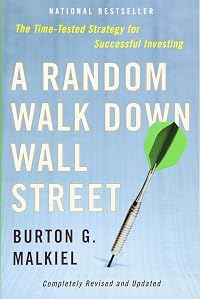
A Random Walk Down Wall Street: The Time Tested Strategy for Successful Investing
by Burton G. Malkiel
On This Page
Description
"In a time of rampant misinformation about ways of growing your money, Burton G. Malkiel's gimmick-free investment guide is more necessary than ever. Whether you're considering your first 401k contribution or contemplating retirement, the fully updated, fiftieth anniversary edition of A Random Walk Down Wall Street remains the best investment guide money can buy. Drawing on his experience as an economist, financial adviser, and successful investor, Malkiel shows why an individual who saves show more consistently over time and buys a diversified set of index funds can achieve above-average investment results. He addresses current investment fads and critically analyzes cryptocurrencies, NFTs, and meme stocks. Malkiel reveals how to be a tax smart investor and how to make sense of recently popular investment management techniques, including factor investing, risk parity, and ESG portfolios. Investors of every age, experience level, and risk tolerance will find the step-by-step guidance they need to protect and grow their dollars"-- show lessTags
Recommendations
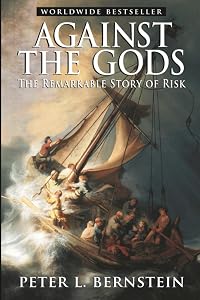
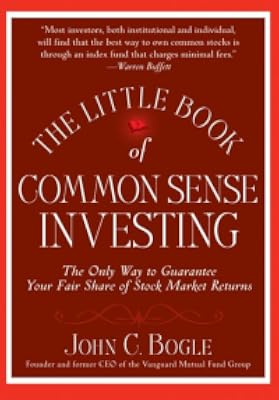
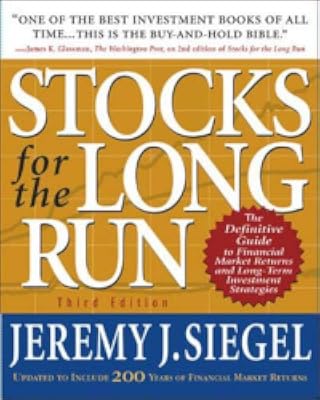
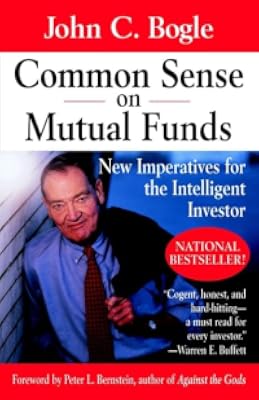

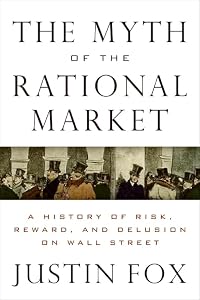
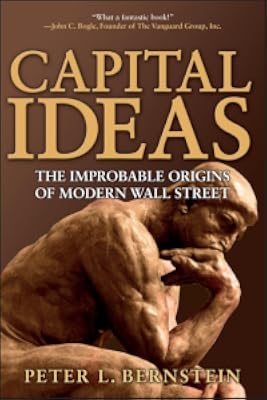
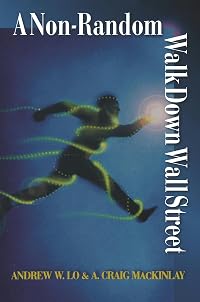
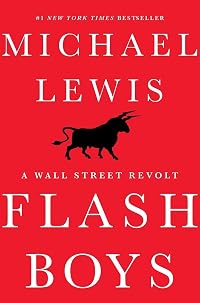


Member Reviews
Professors teaching security analysis in business schools face an interesting dilemma: We train people how to identify situations where a stock’s price and intrinsic value may differ, despite the fact that a substantial portion of our academic preparation strongly suggests that security markets are efficient to the point that such activity is unlikely to lead to abnormal profits over time. While it is certainly possible to reconcile these polemical positions—for instance, when there is a cost to acquiring and processing financial information—the more interesting question probably involves establishing which view of the world defines an individual’s core belief.
My own opinion is that investors are far better off in the long run show more with a null hypothesis that markets are efficient; this creates the burden of having to convince themselves why price and value might differ in a particular situation. That is certainly Malkiel's view as well and, within that context, A Random Walk Down Wall Street is the most compelling and user-friendly statement of the nature and portfolio implications of the efficient market hypothesis that an investor could hope to find. I have used it as a supplementary text in my classes for years and it remains an insightful and highly entertaining reference. show less
My own opinion is that investors are far better off in the long run show more with a null hypothesis that markets are efficient; this creates the burden of having to convince themselves why price and value might differ in a particular situation. That is certainly Malkiel's view as well and, within that context, A Random Walk Down Wall Street is the most compelling and user-friendly statement of the nature and portfolio implications of the efficient market hypothesis that an investor could hope to find. I have used it as a supplementary text in my classes for years and it remains an insightful and highly entertaining reference. show less
This was my first book into the world of investing strategies and ways to double my money in 21 days (it's a joke). Malkiel has covered a lot of ground in this book covering technical and financial analysis of the markets, and slowly building up to the idea of markets being efficient.
I like the examples and explanations provided by the author for critical ideas in the book. The writing is also humorous and non-dry which I always appreciate for a non-fiction.
I like the examples and explanations provided by the author for critical ideas in the book. The writing is also humorous and non-dry which I always appreciate for a non-fiction.
Readable and includes some good jokes, Though taking 400+ pages to say buy and hold
takes some justifying. the latter part of the book gets a bit over detailed, firstly because he deviates from his advocacy of index funds to say diversify; also because the context is the US market where the details are very different, especially tax.
takes some justifying. the latter part of the book gets a bit over detailed, firstly because he deviates from his advocacy of index funds to say diversify; also because the context is the US market where the details are very different, especially tax.
Sometimes the author’s advice sounds too opinionated and circumstantial, but hindsight reminds us that index fund portfolios and “guaranteed mediocrity” are best by test.
This book courageously opposes all the categories of voodoo that tempt the born-a-minute fools swarming the worldwide securities markets. Yes, you may make ninety percent timing the market today, but you will lose just as much the next day and the next. And then you have to pay your broker. And the tax man.
Better to buy index funds and hold them until you retire. If that's too boring for you, take five percent of your money and speculate with that. But don't fool yourself into thinking that you can beat the market. Avalanches of data show that market timing is not a matter of skill, but luck. And any gains will be shaved to uselessness by the Uncle Sam and your broker.
Even the seemingly scientific techniques of technical analysis are show more destroyed in the blast of Malkiel's empirical artillery. Markets are random. Trends reverse without warning. Your head and shoulders pattern is not going to make you money. Sorry.
Yes, Malkiel's thesis is "buy and hold." But he's not trying to depress you with his thesis; he's trying to help you make as much money as possible with your investments. If you need to gamble, Malkiel gives advice for gambling in the sanest possible way.
This book is a frank, level-headed approach to squeezing the best returns from your invested dollars. And, after more than 30 years in print, there is no point in trying to argue against Random Walk. If you really feel the need to get disgustingly rich on Wall Street, open a brokerage already. show less
Better to buy index funds and hold them until you retire. If that's too boring for you, take five percent of your money and speculate with that. But don't fool yourself into thinking that you can beat the market. Avalanches of data show that market timing is not a matter of skill, but luck. And any gains will be shaved to uselessness by the Uncle Sam and your broker.
Even the seemingly scientific techniques of technical analysis are show more destroyed in the blast of Malkiel's empirical artillery. Markets are random. Trends reverse without warning. Your head and shoulders pattern is not going to make you money. Sorry.
Yes, Malkiel's thesis is "buy and hold." But he's not trying to depress you with his thesis; he's trying to help you make as much money as possible with your investments. If you need to gamble, Malkiel gives advice for gambling in the sanest possible way.
This book is a frank, level-headed approach to squeezing the best returns from your invested dollars. And, after more than 30 years in print, there is no point in trying to argue against Random Walk. If you really feel the need to get disgustingly rich on Wall Street, open a brokerage already. show less
Let's talk about the Random Walk. The stockmarket is a game of chance - you might as well flip a coin to determine which way prices are going. In fact tossing is preferable because researching shares or paying professionals takes time and costs money.
The Random Walk attacks the tenets of professional fund management: that investors can pick shares trading at a lower price than their true value or traders can spot trends in price movements and exploit them.
Malkiel marshals an army of statisticians, back-testing the more common investment strategies and finding them wanting. Sure you may win in the short-term, but that is lady luck. In the long-run, once you take costs into account, all bets are off.
I do not buy it. Back-testing is fine show more and dandy but does it actually prove anything? Real investors - and I am talking about private investors here - change their strategies, exercise judgement and break the rules. They are not slaves to the slide-rule.
While it is common knowledge that professional money managers are doomed to fail, I suspect private investors have a better chance of beating the market. The problem is private investors are by nature shy animals.
Just because I disagree with his thesis does not mean I do not think you should bother with the book. Malkiel is articulate and his tour through fundamental analysis, technical analysis, modern portfolio theory and the capital asset pricing model is as good as any introduction I have read.
I just cannot bring myself to believe anomalies do not exist when I see them all around me. You know - internet bubbles, overreactions, Warren Buffet. Even Malkiel sees anomalies. But in his world they are rare, difficult to profit from and vanish once common knowledge.
He even has an investment trust habit. C'mon Mr Malkiel admit it - inside every index-hugger is a stock picker desperate to get out. It is more fun!
___
A word of warning for British readers. The first three chapters are theory, it is a universal language. The fourth is a practical guide, less practical for us because it is written in American: all IRA's and Keogh plans. Still you can translate some of it and derive general principles from the rest. show less
The Random Walk attacks the tenets of professional fund management: that investors can pick shares trading at a lower price than their true value or traders can spot trends in price movements and exploit them.
Malkiel marshals an army of statisticians, back-testing the more common investment strategies and finding them wanting. Sure you may win in the short-term, but that is lady luck. In the long-run, once you take costs into account, all bets are off.
I do not buy it. Back-testing is fine show more and dandy but does it actually prove anything? Real investors - and I am talking about private investors here - change their strategies, exercise judgement and break the rules. They are not slaves to the slide-rule.
While it is common knowledge that professional money managers are doomed to fail, I suspect private investors have a better chance of beating the market. The problem is private investors are by nature shy animals.
Just because I disagree with his thesis does not mean I do not think you should bother with the book. Malkiel is articulate and his tour through fundamental analysis, technical analysis, modern portfolio theory and the capital asset pricing model is as good as any introduction I have read.
I just cannot bring myself to believe anomalies do not exist when I see them all around me. You know - internet bubbles, overreactions, Warren Buffet. Even Malkiel sees anomalies. But in his world they are rare, difficult to profit from and vanish once common knowledge.
He even has an investment trust habit. C'mon Mr Malkiel admit it - inside every index-hugger is a stock picker desperate to get out. It is more fun!
___
A word of warning for British readers. The first three chapters are theory, it is a universal language. The fourth is a practical guide, less practical for us because it is written in American: all IRA's and Keogh plans. Still you can translate some of it and derive general principles from the rest. show less
I happened to read this at the perfect timing when there are so much volatility and fireworks in the stock market.
It blends history, market theories/approaches, and biases when investing and offers actionable advice.
If I would have to choose one quote to summarize the book, it definitely would be this one:
Thus the random walk:
With this in mind, the author makes fun of fundamental/technical analysis. He advises to build a portfolio based on a person's age and risk tolerance and constantly rebalance it. The longer the time period over which you can hold on to your investments, the greater should be the share of common stocks in your portfolio. Invest in low-cost, tax-efficient, broad-based index funds if you do not want to get beaten by a blindfolded monkey. show less
It blends history, market theories/approaches, and biases when investing and offers actionable advice.
If I would have to choose one quote to summarize the book, it definitely would be this one:
A blindfolded monkey throwing darts at a newspaper’s financial pages could select a portfolio that would do just as well as one carefully selected by experts.
Thus the random walk:
Random walk theory assumes the past movement or trend of a stock price or market cannot be used to predict its future movement. In short, random walk theory proclaims that stocks take a random and unpredictable path that makes all methods of predictingshow more
stock prices futile in the long run.
With this in mind, the author makes fun of fundamental/technical analysis. He advises to build a portfolio based on a person's age and risk tolerance and constantly rebalance it. The longer the time period over which you can hold on to your investments, the greater should be the share of common stocks in your portfolio. Invest in low-cost, tax-efficient, broad-based index funds if you do not want to get beaten by a blindfolded monkey. show less
Members
- Recently Added By
Published Reviews
ThingScore 100
This is an investment classic: it offers an elementary exposition of financial theory, a potted history of stock market investment fads, and (at the risk of annoying my fund manager friends and fellow strategists) a profitable investment strategy to boot. It is also a good read.
added by mikeg2
Author Information

13+ Works 3,597 Members
Burton Gordon Malkiel is an economics professor at Princeton University. He has written A Random Walk Down Wall Street: Including a Life-Cycle Guide to Personal Investing and assisted in the development of the book, Earn More (Sleep Better): The Index Fund Solution, written by Richard E. Evans. (Bowker Author Biography)
Some Editions
Awards and Honors
Notable Lists
Work Relationships
Inspired
Common Knowledge
- Canonical title
- A Random Walk Down Wall Street: The Time Tested Strategy for Successful Investing
- Original title
- A Random Walk Down Wall Street
- Original publication date
- 1973
- People/Characters
- Daniel Kahneman
- Dedication
- To Nancy and Skipper
Classifications
Statistics
- Members
- 3,127
- Popularity
- 5,614
- Reviews
- 29
- Rating
- (4.06)
- Languages
- 12 — Chinese, Czech, English, Estonian, Finnish, French, German, Hungarian, Italian, Russian, Spanish, Portuguese (Portugal)
- Media
- Paper, Audiobook, Ebook
- ISBNs
- 66
- UPCs
- 1
- ASINs
- 23