Final Girl
by Daphne Gottlieb
On This Page
Description
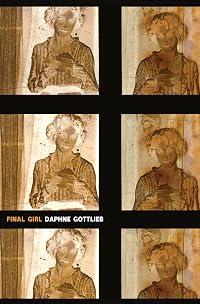
Final Girl -- the last girl left alive in the syntax of the "slasher"-- traces the history of the femme fatale in a sequence of poems and stories that display the verve and wit readers have come to expect from Gottlieb. In Final Girl Gottlieb is the survivor, the one who remains to tell the story: what was done to others, what was done to her, what might yet be done to her.Sexy and tart, dark and comic, low-down and high-hearted poems such as Suture, Slash, Vamp, Bride of Reanimator andThe show more Babysitter Gottlieb identifies and articulates the desires, fears, traumas, both personal and social, out of which pop culture is made...and then she feeds pop culture back to itself.Though the slasher flick is central, Gottlieb finds resonances in sources as disparate as the early American captivity narrative, queer and feminist film theory, and her own mother's death from breast cancer. Through such iconic American figures as Mary Rowlandson, Marilyn Monroe and Patty Hearst, Gottlieb delineates the ways in which we're betrayed by our cultural fantasies about abduction, gender, literature, pleasure, and transgression--and, in so doing, synthesizes the death and life of the American female. show lessTags
Recommendations






Member Reviews
Sexy and smart assed, at times both dizzying and disturbing, humorous and harrowing, San Francisco-based performance poet Daphne Gottleib is all the proof one needs that ‘page’ and ‘stage’ in poetry can thrive together and enrich each other. This is daring, heady and energetic stuff, perfect for Halloween – or Women’s History Month.
The final girl is the last man standing in a slasher flick: “Even during that final struggle she is now weak and now strong, now flees the killer and now charges him, now stabs and is stabbed, now cries out in fear and now shouts in anger,” according to Carol J. Clover in her essay “Her Body, Himself: Gender in the Slasher Film.”* Inspired by this paradoxical character, Daphne Gottlieb uses the final girl to inform her poetry in this sharp, witty and moving collection. In these poems, Gottlieb challenges sexism, hate crimes and gender bias. She defies social mores that define masculinity and femininity. And, most startling of all, she conveys the fear haunts the reality of someone who lives and acts outside the realm of gender show more normalcy.
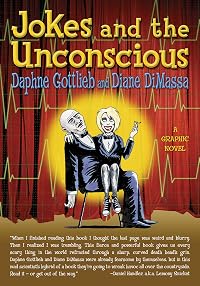
Also a performance poet and, recently, graphic novelist, Gottlieb writes verse that both screams and whispers, shatters clichés with sizzling wordplay, and grounds her theories with solid, vivid details. She employs experimental techniques that emphasize both the immediacy and wide range of gender bias by rearranging phrases from everyday and historical sources, sampling Sojourner Truth’s speeches, the captivity narrative of Mary Rowlandson, a newspaper article about a hate crime. Plenty more material draws from the language and imagery of horror films, including the “Final Girl” cycle, a sequence of ten poems that form the thematic core, where she even reminds us of our implicit participation: “We control the horizontal. / We control the vertical. / We control the abduction.”
Gottlieb gives voice to the characters whose side we don’t hear: transvestite, victim’s mother, exile. In “The Other Woman,” she states her case with staggering emotional force in punched-out lines: “Have you ever seen flood damage? / Your husband came over / and burst over in my lap … There is nothing / going on. I took nothing / you wanted. You can’t / have it back.”
* Also available from the library in the collection The dread of difference : gender and the horror film / edited by Barry Keith Grant) show less
Also a performance poet and, recently, graphic novelist, Gottlieb writes verse that both screams and whispers, shatters clichés with sizzling wordplay, and grounds her theories with solid, vivid details. She employs experimental techniques that emphasize both the immediacy and wide range of gender bias by rearranging phrases from everyday and historical sources, sampling Sojourner Truth’s speeches, the captivity narrative of Mary Rowlandson, a newspaper article about a hate crime. Plenty more material draws from the language and imagery of horror films, including the “Final Girl” cycle, a sequence of ten poems that form the thematic core, where she even reminds us of our implicit participation: “We control the horizontal. / We control the vertical. / We control the abduction.”
Gottlieb gives voice to the characters whose side we don’t hear: transvestite, victim’s mother, exile. In “The Other Woman,” she states her case with staggering emotional force in punched-out lines: “Have you ever seen flood damage? / Your husband came over / and burst over in my lap … There is nothing / going on. I took nothing / you wanted. You can’t / have it back.”
* Also available from the library in the collection The dread of difference : gender and the horror film / edited by Barry Keith Grant) show less
The final girl is the last man standing in a slasher flick: "Even during that final struggle she is now weak and now strong, now flees the killer and now charges him, now stabs and is stabbed, now cries out in fear and now shouts in anger," according to Carol J. Clover in her essay "Her Body, Himself: Gender in the Slasher Film." (Available in the collection The Dread of Difference: Gender and the Horror Film.) Inspired by this dynamic character, Daphne Gottlieb uses the final girl to inform her poetry in this sharp, witty and moving collection. In these poems, Gottlieb challenges sexism, hate crimes and gender bias. She defies social mores that define masculinity and femininity. And, most startling of all, she conveys the fear that show more haunts the reality of someone who lives and acts outside the realm of gender normalcy. Also a performance poet and, recently, graphic novelist, Gottlieb writes verse that both screams and whispers, shatters clichés with sizzling wordplay, and grounds her theories with solid, vivid details. She employs experimental techniques that emphasize both the immediacy and wide range of gender bias by rearranging phrases from everyday and historical sources, sampling Sojourner Truth's speeches, the captivity narrative of Mary Rowlandson, a newspaper article about a hate crime. Plenty more material draws from the language and imagery of horror films, including the "Final Girl" cycle, a sequence of ten poems that form the thematic core, where she even reminds us of our implicit participation: "We control the horizontal. / We control the vertical. / We control the abduction." Gottlieb gives voice to the characters whose side we don't hear: transvestite, victim's mother, exile. In "The Other Woman," she states her case with staggering emotional force in punched-out lines: "Have you ever seen flood damage? / Your husband came over / and burst over in my lap … There is nothing / going on. I took nothing / you wanted. You can't / have it back."
Recommended by Renée, June 2007
Carnegie Library of Pittsburgh Staff Picks show less
Recommended by Renée, June 2007
Carnegie Library of Pittsburgh Staff Picks show less
I didn't read the synopsis before reading the book. I grabbed it, turned to the first page and, feeling so bonded with the content, I found myself at the last page within moments.
While reading these raw, unique prose and intricately woven together words, I felt a comfort that this person had experienced similar situations as myself.
The reason I mentioned not having initially read the synopsis is because by reading that it was presented as a pop culture reference in films with its supposed theme of horror, trauma and fears; not only did it lose its authenticity, but it also took away that personal connection that I appreciate most in a book.
In conclusion, it's still a great read. My subjective response has nothing to do with its show more immaculate content. show less
While reading these raw, unique prose and intricately woven together words, I felt a comfort that this person had experienced similar situations as myself.
The reason I mentioned not having initially read the synopsis is because by reading that it was presented as a pop culture reference in films with its supposed theme of horror, trauma and fears; not only did it lose its authenticity, but it also took away that personal connection that I appreciate most in a book.
In conclusion, it's still a great read. My subjective response has nothing to do with its show more immaculate content. show less
Cut ups about cut ups. The poetry of Scream. A great idea that's a little pedantic in the execution.
Ratings
Members
- Recently Added By
Author Information
11+ Works 333 Members
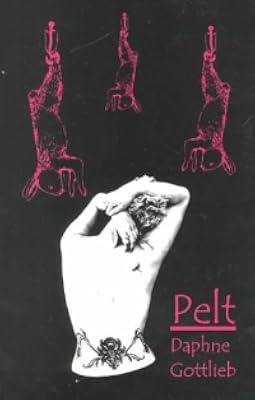
Daphne Gottlieb is a fixture in the San Francisco slam poetry scene and has also toured nationally. She writes for Metroleum, a popular webzine, and is also the author of Pelt, a collection of poetry
Awards and Honors
Common Knowledge
- Canonical title
- Final Girl
Classifications
Statistics
- Members
- 69
- Popularity
- 453,465
- Reviews
- 4
- Rating
- (3.86)
- Languages
- English
- Media
- Paper
- ISBNs
- 1