Eating Stone: Imagination and the Loss of the Wild
by Ellen Meloy
On This Page
Description
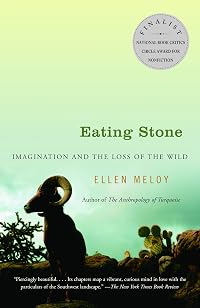
Long believed to be disappearing and possibly even extinct, the Southwestern bighorn sheep of Utah's canyonlands have made a surprising comeback. Naturalist Ellen Meloy tracks a band of these majestic creatures through backcountry hikes, downriver floats, and travels across the Southwest. Alone in the wilderness, Meloy chronicles her communion with the bighorns and laments the growing severance of man from nature, a severance that she feels has left us spiritually hungry. Wry, quirky and show more perceptive, Eating Stone is a brillant and wholly original tribute to the natural world. show lessTags
Recommendations
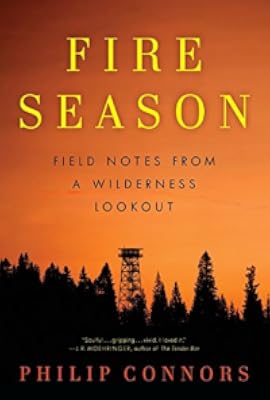

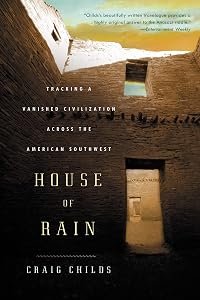
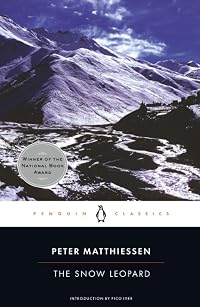
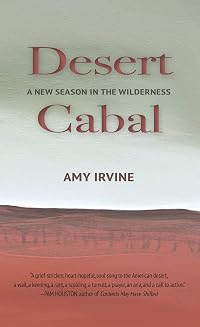

Member Recommendations
Member Reviews
It took me awhile to read Meloy's eloquent narrative ode to desert bighorn sheep. Really, there was no way to read this quickly. Meloy's writing demands a slower pace of digestion. I found myself lingering for moments over certain phrases just to make sure I'd soaked it all in. What comes through clearly is that this was not a woman who lived an ordinary life. Not many people would spend a year wandering all over the southwest U.S. and Mexico seeking elusive wild sheep in their not easily accessible habitat. However, Meloy places the rewards of this endeavor within easy grasp of the reader. The message is one that has been consistently repeated in certain circles and by certain individuals for decades: humans have rapidly and alarmingly show more lost touch with nature, and this is a loss that ripples down to the core of our society. What Meloy tells us, in her sometimes less than gently chiding manner, is that humans need wildness, and the more removed we get from it, the more isolated and unhappy we will be. Meloy doesn't preach; she doesn't need to. But when you put down this book you'll still feel the effects of a powerful sermon. show less
If I were talented, and didn't have to work for a living, this is the kind of book I would write. It is my kind of book. Some of these paragraphs are absolute magic. Ellen Meloy has been living in the desert Southwest for a long time, and for much of that time she has been watching big-horn sheep. This is a long extended essay of what she learned about them, what they mean to her, and why we should care.
Each year I spend a day or two hiking above timberline in the mountains of central Colorado where I live to help a Division of Wildlife friend observe and count sheep. The day we got a short glimpse of 18 rams flowing up a hill and out of sight is still one of the biggest thrills I have even gotten in the out-of-doors. And we can watch show more the ewes and young lambs frolicking in the snow fields for most of the day. (Or until the thunder and lightening arrives.)
This year I'm going to know a whole lot more about big-horn sheep, and I might even take a copy of this book with me. There could be no better place to read these sweet, sweet words than on a hillside, watching wild sheep. This is a book I would highly recommend. show less
Each year I spend a day or two hiking above timberline in the mountains of central Colorado where I live to help a Division of Wildlife friend observe and count sheep. The day we got a short glimpse of 18 rams flowing up a hill and out of sight is still one of the biggest thrills I have even gotten in the out-of-doors. And we can watch show more the ewes and young lambs frolicking in the snow fields for most of the day. (Or until the thunder and lightening arrives.)
This year I'm going to know a whole lot more about big-horn sheep, and I might even take a copy of this book with me. There could be no better place to read these sweet, sweet words than on a hillside, watching wild sheep. This is a book I would highly recommend. show less
I love Melohy's writing and perspective on the natural world and it saddens me to know her voice is no longer with us. Her reflections on the relationship of humans with the natural world and with other creatures is beautifully protrayed, although the relationship is not always beautiful.
I wanted to like this. The subject, bighorn sheep in the Southwest, is interesting to me, and I want to learn more about them. I love good nature writing.
But while a lot of the writing is good, a fair amount isn't. Some of the imagery is jarring (e.g., mesas scudding under the clouds instead of vice versa), it can be repetitive (all the sheep look the same), it is often vague (she loves visiting a small museum in a small town---why not give us the names?). The worst part is that the book severely needs editing. Especially in the first half, so much of the story has nothing to do with bighorn sheep... or anything. This gets much better in the second half, when she joins a few scientists who study the sheep and relocate a band to try to show more expand their habitat.
I learned some about bighorn sheep, but much less than I wanted. show less
But while a lot of the writing is good, a fair amount isn't. Some of the imagery is jarring (e.g., mesas scudding under the clouds instead of vice versa), it can be repetitive (all the sheep look the same), it is often vague (she loves visiting a small museum in a small town---why not give us the names?). The worst part is that the book severely needs editing. Especially in the first half, so much of the story has nothing to do with bighorn sheep... or anything. This gets much better in the second half, when she joins a few scientists who study the sheep and relocate a band to try to show more expand their habitat.
I learned some about bighorn sheep, but much less than I wanted. show less
The writing is beautiful, but so much of it is about the author's passion for and identification with desert landscapes in the south US that it left me (ironically) a bit cold. It's a very different landscape than the one I love, in about every respect, and while I admire the author's passion for that environment, I couldn't identify with it and it didn't resonate for me.
Well worth the extra weight in your desert backpack. A beautiful tribute to one of the desert's most ancient and magnificent beasts.
Ellen Meloy monitored a band of desert bighorn sheep that she called the 'Blue Door Band' for a year. Her acclaimed book, the last she wrote before her unexpected death of a heart attack http://www.ellenmeloy.com/tributes_highdesertjournal.htm is more than a tale of the endangered species. Rather it is a revealing story of the connections between animals, humans, and their sometimes fragile environments. Learn more at the Ellen Meloy Fund website http://www.ellenmeloy.com/ (lj)
Members
- Recently Added By
Author Information

8+ Works 832 Members
Awards and Honors
Common Knowledge
- Canonical title
- Eating Stone: Imagination and the Loss of the Wild
- Original publication date
- 2005
- Epigraph
- I have always longed to be a part of the outward life, to be out there at the edge of things, to let the human taint wash away in emptiness and silence as the fox sloughs his smell into the cold unworldliness of water; to ret... (show all)urn to the town as a stranger. Wandering flushes a glory that fades with arrival.
--John Baker, The Peregrine - Dedication
- For Mark
Chidí naa'na'íísh
t'áá naach' idgi
nił bééhózin? - First words
- On one of my last winter days with the desert bighorns, they no longer kept me out of their world.
- Last words
- (Click to show. Warning: May contain spoilers.)Across the stone, in gaits and patterns older than time, the fine-limbed, amber-eyed animals will move.
Classifications
Statistics
- Members
- 188
- Popularity
- 174,613
- Reviews
- 8
- Rating
- (4.09)
- Languages
- English
- Media
- Paper, Ebook
- ISBNs
- 3
- ASINs
- 1