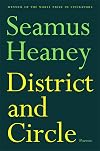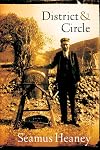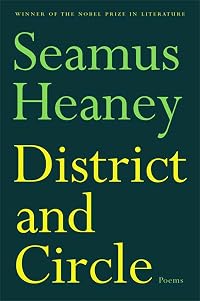
District and Circle
by Seamus Heaney
On This Page
Description
Seamus Heaney's new collection starts 'in an age of bare hands and cast iron' and ends 'as the automatic lock / clunks shut' in the eerie new conditions of a menaced twenty-first century. In their haunted, almost visionary clarity, the poems assay the weight and worth of what has been held in the hand and in the memory. Images out of a childhood spent safe from the horrors of World War II - railway sleepers, a sledgehammer, the 'heavyweight silence' of cattle out in rain - are coloured by a show more strongly contemporary sense that 'anything can happen', and other images from the dangerous present - a journey on the underground, a melting glacier - are fraught with this same anxiety. But District and Circle, which includes a number of prose poems and translations, offers resistance as the poet gathers his staying powers and stands his ground in the hiding places of love and excited language. In a sequence like 'The Tollund Man in Springtime' and in several poems which 'do the rounds of the district' - its known roads and rivers and trees, its familiar and unfamiliar ghosts - the gravity of memorial is transformed into the grace of recollection. With more relish and conviction than ever, Seamus Heaney maintains his trust in the obduracy of workaday realities and the mystery of everyday renewals: Again the growl / Of shutting doors, the jolt and one-off treble / Of iron on iron, then a long centrifugal / Haulage of speed through every dragging socket. (from 'District and Circle') show lessTags
Recommendations














Member Reviews
[a: Seamus Heaney|29574|Seamus Heaney|https://images.gr-assets.com/authors/1200407647p2/29574.jpg] is a poet of the present moment and observation. Reading his work is like falling into his memory, experiencing the world at once through a gaze both attentive and mythic. The world, for him, was tinged in something magical while at the same moment so very much there. Here are the calloused hands, the bite of cold as you breathe in, the sweat of the brow and the dirt as your toes sink into it.
He is a rare breed, and somewhere between the organic word and the translations you find yourself occupying the liminal space he knew all too well. He is missed, but we're all the more blessed for his having trod the earth with us a while.
He is a rare breed, and somewhere between the organic word and the translations you find yourself occupying the liminal space he knew all too well. He is missed, but we're all the more blessed for his having trod the earth with us a while.
When I first read Seamus Heaney's poetry I was blown away. His artful use of dialogue, rhythm, annd description are the perfect tools for crafitng poetry. Yet, I felt that this collection fell short of my expectations. His telltale skills are still present, but I felt that the scope of the subject of this collection was far too broad. He focuses on "normal" life in Ireland, but he stretches it all the way from the legendary Tollund Man (a historical subject) to modern city infrastructures. The dichotomy of the two subjects could easily have complimented eachother artistically, but I don't think Heaney quite managed to bridge that gap. The closest he got to bridging the past and the present were the poems to and about other Irish poets show more like Auden and Hughes, and that's really just name dropping, even if he is connected to them in the Irish poetic traditions. show less
This is a slim volume of poetry, although my favorite was the few pages in the middle of what the author called Found Prose; beautiful short descriptions. Most of the poetry was about the author's rural Irish childhood, but other poems wanders into the American Midwest or to the London Underground. Lushly descriptive, they evoke time and place more completely than anything I've read, or even a sepia-toned photograph. In Saw Music Heaney describes a busker in a store doorway:
Flop-wobble grace note or high banshee whine.
Rain spat upon his threadbare gabardine,
Into his cap where the occasional tossed coin
Basked on damp lining, the raindrops glittering
Flop-wobble grace note or high banshee whine.
Rain spat upon his threadbare gabardine,
Into his cap where the occasional tossed coin
Basked on damp lining, the raindrops glittering
I am writing a review of this book, because the title poem, "District and Circle" is a great poem. This is one of the best evocations I have read of what it feels to be in the undergound, this alternate world of mostly moving humanity. But Heaney starts off with one of the non-moving denizens, a player of a tin-whistle. Then he drives forth into the almost cacaphonous platforms and trains. At last, he comes to a more silent area where he thinks of father in a vaguely similar 'flicker-lit' world.
Turns out what I enjoy in poetry is Sensuality in its literal and erotic sense. I revel in the vibrato of a quiver, the cold glow, the slow seep. Like the title sequence of Dexter.
My favourite is Tate's Avenue.
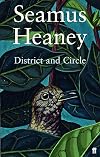
Cover note: I really like the cover with the bird enclosed by a thick foliage, but then I find that it's only a section of a portrait of Heaney which I'm less a fan of.
My favourite is Tate's Avenue.
Cover note: I really like the cover with the bird enclosed by a thick foliage, but then I find that it's only a section of a portrait of Heaney which I'm less a fan of.
I found the last third of this collection to be the best. The first third I didn't much care for but I may have just not been in the right mood for them.
Ratings
Members
- Recently Added By
Lists

Tonikat reading completed on Librarything journals
329 works; 2 members
Author Information

209+ Works 15,807 Members
Seamus Heaney was born in Mossbawn, Ireland on April 13, 1939. He received a degree in English from Queen's College in Belfast in 1961. After earning his teacher's certificate in English from St. Joseph's College in Belfast the following year, he took a position at the school as an English teacher. During his time as a teacher at St. Joseph's, he show more wrote and published work in the university magazine under the pen name Incertus. In 1966, he became an English literature lecturer at Queen's College in Belfast. His first volume of poems, Death of a Naturalist, went on to receive the E.C. Gregory Award, the Cholmondeley Award, the Somerset Maugham Award, and the Geoffrey Faber Memorial Prize. After the death of his parents, Heaney published the poetry volumes The Haw Lantern, which includes a sonnet sequence memorializing his mother, and Seeing Things, a collection containing numerous poems for his father. His other works included Field Work, Opened Ground: Poems 1966-1996, and Human Chain. Heaney was a professor at Harvard from 1981 to 1997 and its Poet in Residence from 1988 to 2006. From 1989 to 1994 he was also the Professor of Poetry at Oxford and in 1996 was made a Commandeur de l'Ordre des Arts et Lettres. Other awards that he received include the Geoffrey Faber Memorial Prize (1968), the E. M. Forster Award (1975), the PEN Translation Prize (1985), the Golden Wreath of Poetry (2001), T. S. Eliot Prize (2006) and two Whitbread Prizes (1996 and 1999). In 2012, he was awarded the Lifetime Recognition Award from the Griffin Trust For Excellence In Poetry. His literary papers are held by the National Library of Ireland. He died following a short illness on August 30, 2013 at the age of 74. Heaney's last words were in a text to his wife Marie, "Noli timere", which means "Do not be afraid." (Bowker Author Biography) Seamus Heaney lives in Dublin and teaches at Harvard University. He was awarded the Nobel Prize in literature in 1995. (Publisher Provided) Seamus Heaney was born in 1939 in Northern Ireland. He was awarded the Nobel Prize in Literature in 1995. A resident of Dublin, he has taught poetry at Oxford University and Harvard University. (Publisher Provided) show less
Some Editions
Awards and Honors
Awards
Common Knowledge
- Canonical title
- District and Circle
- Original title
- District and Circl
- Alternate titles*
- District en circle : gedichten
- Original publication date
- 2006
- Important places
- Ireland
- Dedication
- for Ann Saddlemyer
Call her Augusta
Because we arrived in August, and from now on
This month's baled hay and blackberries and combines
Will spell Augusta's bounty. - Quotations
- Tunes from a tin whistle underground
Curled up a corridor I'd be walking down
--from the title poem
*Some information comes from Common Knowledge in other languages. Click "Edit" for more information.
Classifications
Statistics
- Members
- 700
- Popularity
- 40,700
- Reviews
- 6
- Rating
- (3.91)
- Languages
- 7 — Danish, Dutch, English, French, Italian, Japanese, Multiple languages
- Media
- Paper, Ebook
- ISBNs
- 14
- ASINs
- 4