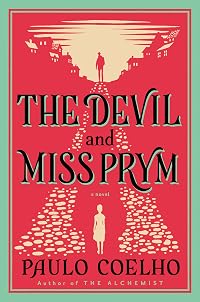
On This Page
Description
A new novel of temptation by the author of the international bestsellers The Alchemist and The Zahir. A community devoured by greed, cowardice, and fear. A man persecuted by his painful past. A woman searching for happiness. In one eventful week, each of them will face questions of life, death, and power, and each will choose their own path. Will they choose good or evil? In the remote village of Viscos, a stranger arrives, carrying with him a backpack containing a notebook and eleven gold show more bars. He comes searching for the answer to the question: Are human beings good or evil? In welcoming the mysterious foreigner, the whole village becomes an accomplice to his sophisticated plot, which will forever mark their lives. Paulo Coelho's stunning novel explores the timeless struggle between good and evil and brings to our everyday dilemmas fresh incentive: to master the fear that prevents us from following our dreams, from being different, and from truly living. show lessTags
Recommendations
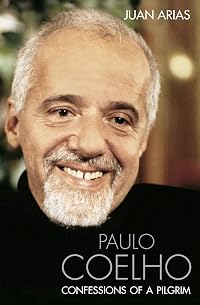








Member Recommendations
Member Reviews
“If you want to control someone, all you have to do is to make them feel afraid.”
The Devil and Miss Prym is a short novel that explores the themes of good and evil, temptation, and human nature. Set in a small village, the story follows Miss Prym, a young woman who is confronted by a stranger who challenges the villagers to commit an act of evil within a week. As the deadline approaches, she grapples with her own morality and the choices of those around her, leading to a thought-provoking exploration of the nature of sin and redemption.
This one was a mixed bag for me. After being swept away by "The Alchemist," I was eager to explore more of Paulo Coelho’s work. However, after this third one, I am finding that his books don’t show more quite hit the mark for me unless I connect deeply with the message.
One of my main gripes with this one was the heavy Christian overtone. Clearly, I should have known this was going to be the case based on the title! As someone who isn't a Christian or even religious, I found the emphasis on temptation and sin from a Christian perspective pretty unrelatable. It felt like the fable was somewhat one-dimensional and didn't leave much room for other interpretations or perspectives.
Another stumbling block for me was the characters, which I found to be rather flat and hard to connect with. There wasn't much depth or complexity to them, so I never felt invested in any of them. Plus, by design, they weren’t very likable.
All this being said, I did appreciate how the story unfolded within the context of the small town setting. Each character seemed to have their designated role within the community, and the way their actions played out felt realistic given their backgrounds and relationships. It added a layer of authenticity to the story that I could appreciate, even if other aspects fell short for me. show less
The Devil and Miss Prym is a short novel that explores the themes of good and evil, temptation, and human nature. Set in a small village, the story follows Miss Prym, a young woman who is confronted by a stranger who challenges the villagers to commit an act of evil within a week. As the deadline approaches, she grapples with her own morality and the choices of those around her, leading to a thought-provoking exploration of the nature of sin and redemption.
This one was a mixed bag for me. After being swept away by "The Alchemist," I was eager to explore more of Paulo Coelho’s work. However, after this third one, I am finding that his books don’t show more quite hit the mark for me unless I connect deeply with the message.
One of my main gripes with this one was the heavy Christian overtone. Clearly, I should have known this was going to be the case based on the title! As someone who isn't a Christian or even religious, I found the emphasis on temptation and sin from a Christian perspective pretty unrelatable. It felt like the fable was somewhat one-dimensional and didn't leave much room for other interpretations or perspectives.
Another stumbling block for me was the characters, which I found to be rather flat and hard to connect with. There wasn't much depth or complexity to them, so I never felt invested in any of them. Plus, by design, they weren’t very likable.
All this being said, I did appreciate how the story unfolded within the context of the small town setting. Each character seemed to have their designated role within the community, and the way their actions played out felt realistic given their backgrounds and relationships. It added a layer of authenticity to the story that I could appreciate, even if other aspects fell short for me. show less
Coelho si conferma per me un pessimo autore.
La scrittura è piatta, non ci sono spunti di riflessione perché tutto è spiegato a bella posta, confezionato già digerito.
L'idea di base è carina, sebbbene non originale una brutta copia (dichiarata) de "La visita della vecchia signora" e, in parte di "Melmoth l'errante".
Sapevo già, da precedenti letture, che l'autore non fa al caso mio, tuttavia la trama mi incuriosiva e l'intervento soprannaturale del diavolo è un elemento mi spinge a leggere le storie (mio punto debole: forse sono stata segnata da Bulgakov).
Ad ogni modo, i pensieri spiattellati dall'autore non superano il livello del tema del liceale che scrive ciò che sa essere ben accetto dall'insegnante, senza spingersi troppo show more oltre, non esploriamo nessun terreno nuovo, non scopriamo nulla a cui non avessimo già pensato o sentito miliardi di volte.
Si presenta come un favola con elementi tradizionali (il paesino, la vecchia considerata suonata che è in grado di "vedere"oltre, la ragazza bella et intrepida, l'arrivo dello straniero che sconvolge l'equilibrio del luogo) e questo non è necessariamente un male, speravo di ritrovare quel tipo di atmosfera, ma il tutto è estremamente insulso, moraleggiante (anche se l'autore finge di non esserlo) e banale; svolte della storia prevedibili, personaggi non molto più profondi di una pozzanghera e "spiegoni" di ciò che essi provano o che sta accadendo nel villaggio.
Infine il simbolismo del villaggio come microcosmo dei tipi umani non funziona se si ripete contnuamente "Viscos era come tutti gli altri posti..." e simili e se si seguono veramente solo due personaggi (ma nemmeno).
Obiezione:"chi ti ha detto che Viscos dovesse rappresentare questo?"
Risposta: Bè, se me lo prendi come compione esempio per dimostrare o meno che l'essere umano è fondamentalmente cattivo...etc...etc...
Pieno di frasi fatte e massime semplicistiche del genere "Ci sono due tipi di persone al mondo..."
Genere di storia che comunque, per quanto mal scritta un po' mi attrae e mi fa passare un pomeriggio ed è sempre meglio dell'insopportabile "L'alchimista".
Sempre peggio verso la fine per la banalità e le massime religiose più o meno trite e ritrite. Imbarazzante la questione degli angeli e diavolo custodi, a mio modesto parere.
Il finale è patetico e disgustoso sotto tanti punti di vista che non mi va nemmeno di soffermarmici. show less
La scrittura è piatta, non ci sono spunti di riflessione perché tutto è spiegato a bella posta, confezionato già digerito.
L'idea di base è carina, sebbbene non originale una brutta copia (dichiarata) de "La visita della vecchia signora" e, in parte di "Melmoth l'errante".
Sapevo già, da precedenti letture, che l'autore non fa al caso mio, tuttavia la trama mi incuriosiva e l'intervento soprannaturale del diavolo è un elemento mi spinge a leggere le storie (mio punto debole: forse sono stata segnata da Bulgakov).
Ad ogni modo, i pensieri spiattellati dall'autore non superano il livello del tema del liceale che scrive ciò che sa essere ben accetto dall'insegnante, senza spingersi troppo show more oltre, non esploriamo nessun terreno nuovo, non scopriamo nulla a cui non avessimo già pensato o sentito miliardi di volte.
Si presenta come un favola con elementi tradizionali (il paesino, la vecchia considerata suonata che è in grado di "vedere"oltre, la ragazza bella et intrepida, l'arrivo dello straniero che sconvolge l'equilibrio del luogo) e questo non è necessariamente un male, speravo di ritrovare quel tipo di atmosfera, ma il tutto è estremamente insulso, moraleggiante (anche se l'autore finge di non esserlo) e banale; svolte della storia prevedibili, personaggi non molto più profondi di una pozzanghera e "spiegoni" di ciò che essi provano o che sta accadendo nel villaggio.
Infine il simbolismo del villaggio come microcosmo dei tipi umani non funziona se si ripete contnuamente "Viscos era come tutti gli altri posti..." e simili e se si seguono veramente solo due personaggi (ma nemmeno).
Obiezione:"chi ti ha detto che Viscos dovesse rappresentare questo?"
Risposta: Bè, se me lo prendi come compione esempio per dimostrare o meno che l'essere umano è fondamentalmente cattivo...etc...etc...
Pieno di frasi fatte e massime semplicistiche del genere "Ci sono due tipi di persone al mondo..."
Genere di storia che comunque, per quanto mal scritta un po' mi attrae e mi fa passare un pomeriggio ed è sempre meglio dell'insopportabile "L'alchimista".
Sempre peggio verso la fine per la banalità e le massime religiose più o meno trite e ritrite. Imbarazzante la questione degli angeli e diavolo custodi, a mio modesto parere.
Il finale è patetico e disgustoso sotto tanti punti di vista che non mi va nemmeno di soffermarmici. show less
Once again, Coelho deftly uses his gifts as a storyteller to delve into the meat of the human condition. This “novel of temptation” is in the same vein as Coelho’s The Alchemist, wherein he uses a simple narrative technique to approach some very difficult questions.
Although one might think it would be impossible to explore good vs. evil without a certain amount of rhetoric, Coelho’s approach is fresh and does not resort to the usual cliches. The heroine does not shine and the villain is a victim of circumstance. In the two characters we see both sides of ourselves.
The book reads like a morality play in that the town of Viscos is Everytown and the Stranger is Everyman. Coelho has brought on the renaissance of the parable as an show more art form and should be commended on his ability to explore truth without grandstanding. This is a book that should humble even the most saintly of readers. show less
Although one might think it would be impossible to explore good vs. evil without a certain amount of rhetoric, Coelho’s approach is fresh and does not resort to the usual cliches. The heroine does not shine and the villain is a victim of circumstance. In the two characters we see both sides of ourselves.
The book reads like a morality play in that the town of Viscos is Everytown and the Stranger is Everyman. Coelho has brought on the renaissance of the parable as an show more art form and should be commended on his ability to explore truth without grandstanding. This is a book that should humble even the most saintly of readers. show less
Paulo Coelho's novel The Devil and Miss Prym has one of the more fascinating high-concept premises in recent memory, and while the book manages to explore its issues with the clarity and profundity you'd expect from Coelho, I for one couldn't help being left with the feeling that this was a good book that could have, and should have, been great.
The novel concerns the temptation of Chantal Prym, a young, attractive barmaid living in a remote mountain village. She is confronted by an enigmatic stranger who makes her a strange offer: he shows her 11 bars of gold and promises that if anyone in her village kills one person, she will receive one bar and the rest of the village will split the remaining 10. Though the deal is slightly show more complicated as the novel progresses, the offer is primarily a means of gaining access to the mind of Miss Prym, who is essentially being tasked to answer whether human nature is inherently good or evil.
Characterization is the novel's strongest suit. Though Chantal is a relatively simple character, she has feelings and desires that are often in conflict--her boredom with the sleepy village, for instance, drives her to bed most every man that comes through. Her layered personality makes her, appropriately, the ideal choice for the stranger's wager. The eeriness of his pick adds to the stranger's mysterious character: we learn very little about him until later in the novel, and we believe for much of the text, because of the rantings of the old woman Berta, that he is a physical incarnation of the Devil himself.
Unfortunately, Coelho teases these supernatural underpinnings but doesn't see them out to their natural conclusions. Berta's announcement that the Devil has come to town opens the story, and there are moments when the narrator addresses the angel and demon of individual characters fighting it out for supremacy, but the ghostly tone is never fully realized by the end. Granted, the story is ultimately about humanity, but that makes it sadly predictable. Despite all this, the novel is at its strongest when it's closely examining the relationship between the stranger and Chantal, and this suspense does, to a certain degree, make up for what is otherwise lacking.
The Devil and Miss Prym poses a grand answer, and though it's unreasonable to expect that a 200-page novel will provide an unequivocal solution, it nevertheless produces much food for thought. There are few surprises on this journey, but it's a brisk, easy read that is nonetheless worth the investment. show less
The novel concerns the temptation of Chantal Prym, a young, attractive barmaid living in a remote mountain village. She is confronted by an enigmatic stranger who makes her a strange offer: he shows her 11 bars of gold and promises that if anyone in her village kills one person, she will receive one bar and the rest of the village will split the remaining 10. Though the deal is slightly show more complicated as the novel progresses, the offer is primarily a means of gaining access to the mind of Miss Prym, who is essentially being tasked to answer whether human nature is inherently good or evil.
Characterization is the novel's strongest suit. Though Chantal is a relatively simple character, she has feelings and desires that are often in conflict--her boredom with the sleepy village, for instance, drives her to bed most every man that comes through. Her layered personality makes her, appropriately, the ideal choice for the stranger's wager. The eeriness of his pick adds to the stranger's mysterious character: we learn very little about him until later in the novel, and we believe for much of the text, because of the rantings of the old woman Berta, that he is a physical incarnation of the Devil himself.
Unfortunately, Coelho teases these supernatural underpinnings but doesn't see them out to their natural conclusions. Berta's announcement that the Devil has come to town opens the story, and there are moments when the narrator addresses the angel and demon of individual characters fighting it out for supremacy, but the ghostly tone is never fully realized by the end. Granted, the story is ultimately about humanity, but that makes it sadly predictable. Despite all this, the novel is at its strongest when it's closely examining the relationship between the stranger and Chantal, and this suspense does, to a certain degree, make up for what is otherwise lacking.
The Devil and Miss Prym poses a grand answer, and though it's unreasonable to expect that a 200-page novel will provide an unequivocal solution, it nevertheless produces much food for thought. There are few surprises on this journey, but it's a brisk, easy read that is nonetheless worth the investment. show less
One day a stranger arrives in the very tiny, very remote, very poor village of Viscos. His purpose in coming there is to find the answer to a question that’s been haunting him for years: Are people essentially good or essentially evil? He uses temptation, a young woman named Chantal, and the whole village to find an answer to his question, and both he and Chantal learn a great deal about themselves, God, their own personal angels and devils, and humanity in the process.
The answer, of course, is that humans are both good and evil. After reading the first thirty pages of the book, I was hooked. I loved the concept and all the subtleties that Coelho left under the surface of the words and was already adding this to my list of favorites. show more By the time I finished it, I still loved it, but I’m just a tiny bit disappointed that he didn’t take it in the direction I would have taken it in. Reflecting back on it, Coelho’s story is better than mine would have been. This is a book that can and needs to be read multiple times in order to really get everything because there was just so much packed into it. show less
The answer, of course, is that humans are both good and evil. After reading the first thirty pages of the book, I was hooked. I loved the concept and all the subtleties that Coelho left under the surface of the words and was already adding this to my list of favorites. show more By the time I finished it, I still loved it, but I’m just a tiny bit disappointed that he didn’t take it in the direction I would have taken it in. Reflecting back on it, Coelho’s story is better than mine would have been. This is a book that can and needs to be read multiple times in order to really get everything because there was just so much packed into it. show less
I liked this book. One measure of how much I like a book is how long I read at each sitting. I read about a third of the book on my first sitting. This is a thought provoking book; would you, would your friends; just how far will you go for personal gain? I also didn't fully agree with the ending, but that just gives more to think about. This is the first Coehlo I've read, I think I'll read him again.
A tale of good v evil?
A stranger visits a dying village carrying 11 bars of gold and on meeting Miss Prym makes a strange proposition. If the inhabitants of the village kills a member of their community he will give them the gold thus saving the village for doing so.
In many respects this book reads as an elongated parable rather than a novel which asks a couple of simple questions. Just what are you willing to do for wealth and is it better to sacrifice one person to better the lives of the many?
It transpires that the stranger has recently lost his family in tragic circumstances and is therefore fighting his own demons and it is interesting that it is mainly the more affluent and influential of the villagers on being told of the show more proposition are the ones that seem more willing to kill one of their number so perhaps the real question should be, is it the silence of the 'good' majority that allows evil to flourish?
I recently read Coelho's The Alchemist which I thoroughly enjoyed so when I spotted this book I jumped at the opportunity to read it. Now this is not as good a book as the former IMHO but all the same is very readable. The characters are all well drawn and the book is never moralising and as such I would heartily recommend it. show less
A stranger visits a dying village carrying 11 bars of gold and on meeting Miss Prym makes a strange proposition. If the inhabitants of the village kills a member of their community he will give them the gold thus saving the village for doing so.
In many respects this book reads as an elongated parable rather than a novel which asks a couple of simple questions. Just what are you willing to do for wealth and is it better to sacrifice one person to better the lives of the many?
It transpires that the stranger has recently lost his family in tragic circumstances and is therefore fighting his own demons and it is interesting that it is mainly the more affluent and influential of the villagers on being told of the show more proposition are the ones that seem more willing to kill one of their number so perhaps the real question should be, is it the silence of the 'good' majority that allows evil to flourish?
I recently read Coelho's The Alchemist which I thoroughly enjoyed so when I spotted this book I jumped at the opportunity to read it. Now this is not as good a book as the former IMHO but all the same is very readable. The characters are all well drawn and the book is never moralising and as such I would heartily recommend it. show less
Members
- Recently Added By
Lists

1001 Books You Must Read Before You Die
1,448 works; 1,135 members

Best Contemporary Literary Fiction (Around the Last 30 Years)
388 works; 124 members

1,001 BYMRBYD Concensus
723 works; 27 members

Books Read in 2020
4,379 works; 123 members

Books Read in 2013
1,630 works; 51 members

KayStJ's to-read list
1,616 works; 11 members

My TBR
371 works; 3 members
Author Information

231+ Works 100,992 Members
Paulo Coelho was born in Rio de Janeiro, Brazil on August 24, 1947. As a teenager, he wanted to become a writer, but his parents wanted him to pursue a more substantial and secure career. At the age of 17, his introversion and opposition to his parents led them to commit him to a mental institution. He escaped three times before being released at show more the age of 20. Once released, he abandoned his ideas of becoming a writer and enrolled in law school to please his parents. He stayed in law school for one year. In 1986, Coelho walked the 500-plus mile Road of Santiago de Compostela in northwestern Spain, a turning point in his life. On the path, he had a spiritual awakening, which he described in his book The Pilgrimage. Before becoming a full-time author, he worked as theatre director and actor, lyricist, and journalist. He wrote song lyrics for many famous performers in Brazilian music including Elis Regina, Rita Lee, and Raul Seixas. His first book, Hell Archives, was published in 1982. He has written over 25 books since then including The Alchemist, Brida, The Fifth Mountain, The Devil and Miss Prym, Eleven Minutes, The Zahir, The Witch of Portobello, Like a Flowing River, and Adultery. He received numerous awards including Las Pergolas Prize, The Budapest Prize, Nielsen Gold Book Award, and the Grand Prix Litteraire Elle. In 1996, he founded the Paulo Coelho Institute, which provides aid to children and elderly people with financial problems. In 2007, Coelho was named a Messenger of Peace to the United Nations. (Bowker Author Biography) show less
Some Editions
Awards and Honors
Distinctions
Series

Belongs to Publisher Series
detebe (23388)
Common Knowledge
- Canonical title
- The Devil and Miss Prym
- Original title
- O Demônio e a Srta. Prym
- Original publication date
- 2000
- People/Characters
- Berta; Chantal Prym; The Stranger
- Important places
- Viscos, Occitanie, France (village)
- Epigraph
- And a certain ruler asked him, saying, 'Good Master, what shall I do to inherit eternal life?' And Jesus said unto him, 'Why callest thou me good? None is good, save one, that is God.'
Luke 18: 18-19 - Dedication
- Hail Mary, conceived without sin, pray for us who turn to Thee for help. Amen.
- First words
- For almost fifteen years, old Berta had spent every day sitting outside her front door.
- Last words
- (Click to show. Warning: May contain spoilers.)"The old woman was right: there was no time to lose, though she hoped that her life would be very long indeed."
- Original language
- Portuguese
Classifications
- Genres
- General Fiction, Fiction and Literature
- DDC/MDS
- 813 — Literature & rhetoric American literature in English American fiction in English
- LCC
- PQ9698.13 .O3546 .D4613 — Language and Literature French, Italian, Spanish and Portuguese literatures Portuguese literature Provincial, local, colonial, etc. Brazil
- BISAC
Statistics
- Members
- 4,111
- Popularity
- 3,771
- Reviews
- 79
- Rating
- (3.39)
- Languages
- 30 — Albanian, Arabic, Armenian, Catalan, Czech, Danish, Dutch, English, Estonian, Finnish, French, German, Greek, Hungarian, Indonesian, Italian, Latvian, Lithuanian, Malayalam, Norwegian (Bokmål), Farsi/Persian, Polish, Romanian, Russian, Serbian, Slovak, Spanish, Swedish, Turkish, Portuguese (Portugal)
- Media
- Paper, Audiobook, Ebook
- ISBNs
- 144
- ASINs
- 25