
On This Page
Description
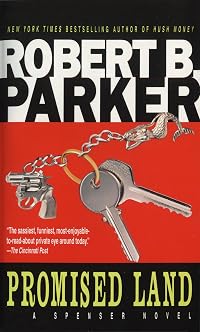
The Boston PI gets tangled in Cape Cod's criminal underworld in this Edgar Award–winning mystery from the New York Times–bestselling author.Cape Cod businessman Harvey Shepard is in over his head. He lost a quarter million on a shady real estate deal, the loan shark is circling, and now he needs a private investigator to find out where his wife, Pam, disappeared to. Spencer takes the case, but finding Pam isn't the hard part—the hard part is finding out she's suspected of a bank show more robbery that led to murder.
Robert B. Parker's Spencer novels featuring the former boxer turned Boston PI are "one of the great series in the history of the American detective story." Promised Land, the Edgar Award–winning fourth Spencer novel, was also adapted into the pilot episode of the classic tv series Spencer: For Hire (The New York Times). show less
Tags
Recommendations







Member Reviews
The One Where Spenser is Schooled on the Dangers of the Souless Suburban Life by Susan. Also The One Where We Meet Hawk, Who Is a Total Legit Badass.
It helps to keep these series books separate, you know?
Many of the early themes of the Spenser mysteries appear here: the emotional dangers of the suburbs, ethical nobility, women's general sexiness, and the foolishness of various anti-establishment movements. Spenser is hired by Harv Shepard, a wheel-and-deal land-developer-contractor to find his wife who has disappeared without a note, and leaving their two children behind. Spenser is all alone in the suburbs of the Cape, and he is hoping that Susan will come up and join him for a relatively simple case. Only it turns out not so simple show more when they run into Hawk leaving Harv's home. Spenser gets some legit information from the local cops and is able to track down Pam and her vigilante buddies. Pam's feeling super-suffocated in the 'burbs and Susan gets angry at Spencer's seemingly casual dismissal of her midlife-identity crisis.
In comparison to prior books, the writing feels tighter. For instance, while we do have a fair amount of scenic description of the road to Hyannis, it's kept down to three sentences, one briefly sarcastic. ("The soothing excitements of scrub pine and wide sea gave way to McDonald's and Holiday Inn and prefab fence companies, shopping malls and Sheraton Motor Inns, and a host of less likely places where you could sleep and eat and drink in surroundings indistinguishable from the ones you'd left at home. Except there'd be a fishnet on the wall. If Bartholomew Gosnold had approached the Cape from this direction, he'd have kept on going.")
Strangely, it's a story that is more resonant in series context than in any particular value as a mystery. It is very much a relationship book, where Spenser and Susan explore their own growing relationship and struggle with the comparisons to the unfortunate Harv and Pam and their love-based but dysfunctional relationship. Pam's perspective on her self-actualization and Harv's perspective on their history contain poignant but frustrated feelings. It's also the start of a Spenser and Hawk friendship. Hawk is introduced here as a free-lance enforcer who has a shared boxing history with Spencer, but an exchange of solid favors lay the foundation of their future working relationship.
Of course, numerous time-period oink moments remain, with Spencer deliberately 'not-ogling' various female characters. But is seems pretty benevolently oinkish, as opposed to creepy. Recommended for series fans, but definitely not for the 'mystery.' There's also an extended bit about women and 'frigidness.' No thank you very much, Dr. Not-Freud.
No, I did not read all the words. Because visualizing their dumb outfits hurt my eye-brain and I can't read about 1970s conception of sexuality without hurting my thinking-brain. Our first look at Hawk illustrates the clothes:
"With him was a tall black man with a bald head and high cheekbones. He had on a powder blue leisure suit and a pink silk shirt with a big collar. The shirt was unbuttoned to the waist and the chest and stomach that showed were as hard and unadorned as ebony. He took a pair of wraparound sunglasses from the breast pocket of the jacket and as he put them on, he stared at me over their rims until very slowly the lenses covered his eyes and he stared at me through them."
Ok, maybe I read all the words there. Two and a half silk stars, rounding down for oinkiness. show less
It helps to keep these series books separate, you know?
Many of the early themes of the Spenser mysteries appear here: the emotional dangers of the suburbs, ethical nobility, women's general sexiness, and the foolishness of various anti-establishment movements. Spenser is hired by Harv Shepard, a wheel-and-deal land-developer-contractor to find his wife who has disappeared without a note, and leaving their two children behind. Spenser is all alone in the suburbs of the Cape, and he is hoping that Susan will come up and join him for a relatively simple case. Only it turns out not so simple show more when they run into Hawk leaving Harv's home. Spenser gets some legit information from the local cops and is able to track down Pam and her vigilante buddies. Pam's feeling super-suffocated in the 'burbs and Susan gets angry at Spencer's seemingly casual dismissal of her midlife-identity crisis.
In comparison to prior books, the writing feels tighter. For instance, while we do have a fair amount of scenic description of the road to Hyannis, it's kept down to three sentences, one briefly sarcastic. ("The soothing excitements of scrub pine and wide sea gave way to McDonald's and Holiday Inn and prefab fence companies, shopping malls and Sheraton Motor Inns, and a host of less likely places where you could sleep and eat and drink in surroundings indistinguishable from the ones you'd left at home. Except there'd be a fishnet on the wall. If Bartholomew Gosnold had approached the Cape from this direction, he'd have kept on going.")
Strangely, it's a story that is more resonant in series context than in any particular value as a mystery. It is very much a relationship book, where Spenser and Susan explore their own growing relationship and struggle with the comparisons to the unfortunate Harv and Pam and their love-based but dysfunctional relationship. Pam's perspective on her self-actualization and Harv's perspective on their history contain poignant but frustrated feelings. It's also the start of a Spenser and Hawk friendship. Hawk is introduced here as a free-lance enforcer who has a shared boxing history with Spencer, but an exchange of solid favors lay the foundation of their future working relationship.
Of course, numerous time-period oink moments remain, with Spencer deliberately 'not-ogling' various female characters. But is seems pretty benevolently oinkish, as opposed to creepy. Recommended for series fans, but definitely not for the 'mystery.' There's also an extended bit about women and 'frigidness.' No thank you very much, Dr. Not-Freud.
No, I did not read all the words. Because visualizing their dumb outfits hurt my eye-brain and I can't read about 1970s conception of sexuality without hurting my thinking-brain. Our first look at Hawk illustrates the clothes:
"With him was a tall black man with a bald head and high cheekbones. He had on a powder blue leisure suit and a pink silk shirt with a big collar. The shirt was unbuttoned to the waist and the chest and stomach that showed were as hard and unadorned as ebony. He took a pair of wraparound sunglasses from the breast pocket of the jacket and as he put them on, he stared at me over their rims until very slowly the lenses covered his eyes and he stared at me through them."
Ok, maybe I read all the words there. Two and a half silk stars, rounding down for oinkiness. show less
From Amazon:
Spenser is good at finding things. But this time he has a client out on Cape Cod who is in over his head. Harvey Shepard has lost his pretty wife -- and a very pretty quarter million bucks in real estate. Now a loan shark is putting on the bite. Spenser finds himself doing a slow burn in the Cape Cod sun. The wife has turned up as a hot suspect in a case of murder one...the in-hock hubby has 24 hours before the mob makes him dead...and suddenly Spenser is in so deep that the only way out is so risky it makes dying look like a sure thing.
Why I wanted to read it: Fourth in the Spenser series and I really wanted to meet Hawk.
If you look at this as a lesson in mid-1970s feminism, you will see a pretty powerful book. Pam Shepard show more runs away from a cloying, suffocating marriage and into a group of militant feminists who, according to Spenser, are theoreticians and have nothing much to do with life. I met the type in the mid-1970s in LA. Suze (I won’t call her you-know-who because that tends to inflame certain of our members) and Spenser are trying to work out a meaningful relationship with the twin pressures of expectations (internal and external) and intellectual honesty. To a lesser degree and but a pale shadow, this reminds me of the intellectual battles between Harriet Vane and Peter Wimsey.
It’s a bumpy road, filled with violence and housewives, machismo and the question of why we do the things we do. Oh no, you say! Nature vs. nurture. Yup. There’s a constant lecture going on here about roles and expectations and love, all the while we’re up to our eyeballs in bank robberies, murder, gun running, and betrayal.
Heady stuff. Spenser ruminates over lusting after a client while deliberately deciding to not to ‘cheat’ on Suze because even if she never found out about, he would be untrustworthy.
Fun stuff, too, as on one hand Spenser cooks a wonderful meal, is called a gourmet cook, and remarks that if a woman had made the meal she would be called a housewife.
Hawk makes his first appearance in the series, full of sartorial elegance and slipping back and forth between Proper English and jive-talkin’. He is on the wrong side of the law but he and Spenser have a history and respect for one another.
On the down side, there were too many descriptions of the horrific fashions of the 1970s, and while using it to put down users of it, still, seeing the “n” word shocked my nervous system. On the up side, I liked this book a lot and could overlook quite a bit in pursuit of a nice romp. show less
Spenser is good at finding things. But this time he has a client out on Cape Cod who is in over his head. Harvey Shepard has lost his pretty wife -- and a very pretty quarter million bucks in real estate. Now a loan shark is putting on the bite. Spenser finds himself doing a slow burn in the Cape Cod sun. The wife has turned up as a hot suspect in a case of murder one...the in-hock hubby has 24 hours before the mob makes him dead...and suddenly Spenser is in so deep that the only way out is so risky it makes dying look like a sure thing.
Why I wanted to read it: Fourth in the Spenser series and I really wanted to meet Hawk.
If you look at this as a lesson in mid-1970s feminism, you will see a pretty powerful book. Pam Shepard show more runs away from a cloying, suffocating marriage and into a group of militant feminists who, according to Spenser, are theoreticians and have nothing much to do with life. I met the type in the mid-1970s in LA. Suze (I won’t call her you-know-who because that tends to inflame certain of our members) and Spenser are trying to work out a meaningful relationship with the twin pressures of expectations (internal and external) and intellectual honesty. To a lesser degree and but a pale shadow, this reminds me of the intellectual battles between Harriet Vane and Peter Wimsey.
It’s a bumpy road, filled with violence and housewives, machismo and the question of why we do the things we do. Oh no, you say! Nature vs. nurture. Yup. There’s a constant lecture going on here about roles and expectations and love, all the while we’re up to our eyeballs in bank robberies, murder, gun running, and betrayal.
Heady stuff. Spenser ruminates over lusting after a client while deliberately deciding to not to ‘cheat’ on Suze because even if she never found out about, he would be untrustworthy.
Fun stuff, too, as on one hand Spenser cooks a wonderful meal, is called a gourmet cook, and remarks that if a woman had made the meal she would be called a housewife.
Hawk makes his first appearance in the series, full of sartorial elegance and slipping back and forth between Proper English and jive-talkin’. He is on the wrong side of the law but he and Spenser have a history and respect for one another.
On the down side, there were too many descriptions of the horrific fashions of the 1970s, and while using it to put down users of it, still, seeing the “n” word shocked my nervous system. On the up side, I liked this book a lot and could overlook quite a bit in pursuit of a nice romp. show less
It is fun to go back in time with detective novels written decades ago. I loved reading about Phillip Marlowe in Raymond Chandler’s The Big Sleep, published in 1939. I recently came across Robert B. Parker’s Promised Land, the fourth of his Spenser novels. (Parker wrote 40 Spenser novels, and 4 more were written posthumously by Ace Adkins.)
Promised Land, an Edgar Award winner, was published in 1976, and it veritably reeks of the 70’s. Parker clads any character he doesn’t like in a leisure suit, with special attention to detail. He outfits the character he likes the least with a “Maroon-checked doubleknit leisure suit, white belt, white shoes, white silk shirt with the collar out over the lapels.” He has Spenser pick up the show more bar tab for 4 drinks at a fairly pricey watering hole by leaving a “ten spot,” which apparently includes a reasonably generous tip! Oh inflation. And he has the main characters drink gallon jugs of Gallo burgundy.
Parker reproduces the patois of the 70’s as well. At one point Spenser says:
“…You will get ripped off if you’re lucky and ripped off and busted if you’re not.”
Ah, Spenser, master of the revolutionary argot. Word maven of the counterculture.
Promised Land is significant for Parker fans because it introduces one of Parker’s most memorable characters, the inimitable “Hawk,” who is destined to appear in numerous later Spenser novels. In this one, Hawk is a minatory character who at one time beats up Spenser’s client, but thankfully chooses to refrain from killing Spenser and the client in the end.
This novel also includes a good deal of philosophizing by Spenser on the importance of personal honor and what it is to be a good man. In addition, Spenser proposes marriage to Susan Silverman, who has not yet gone to Harvard and is still just a guidance counselor.
Oh, and did I mention, the detective story [where Spenser is hired to find a wife who has disappeared, who turns up with some radical feminists who rob a bank and kill a guard] is pretty good in its own right.
(JAB) show less
Promised Land, an Edgar Award winner, was published in 1976, and it veritably reeks of the 70’s. Parker clads any character he doesn’t like in a leisure suit, with special attention to detail. He outfits the character he likes the least with a “Maroon-checked doubleknit leisure suit, white belt, white shoes, white silk shirt with the collar out over the lapels.” He has Spenser pick up the show more bar tab for 4 drinks at a fairly pricey watering hole by leaving a “ten spot,” which apparently includes a reasonably generous tip! Oh inflation. And he has the main characters drink gallon jugs of Gallo burgundy.
Parker reproduces the patois of the 70’s as well. At one point Spenser says:
“…You will get ripped off if you’re lucky and ripped off and busted if you’re not.”
Ah, Spenser, master of the revolutionary argot. Word maven of the counterculture.
Promised Land is significant for Parker fans because it introduces one of Parker’s most memorable characters, the inimitable “Hawk,” who is destined to appear in numerous later Spenser novels. In this one, Hawk is a minatory character who at one time beats up Spenser’s client, but thankfully chooses to refrain from killing Spenser and the client in the end.
This novel also includes a good deal of philosophizing by Spenser on the importance of personal honor and what it is to be a good man. In addition, Spenser proposes marriage to Susan Silverman, who has not yet gone to Harvard and is still just a guidance counselor.
Oh, and did I mention, the detective story [where Spenser is hired to find a wife who has disappeared, who turns up with some radical feminists who rob a bank and kill a guard] is pretty good in its own right.
(JAB) show less
Hard boiled detective plays at marriage counceling while setting up a sting operation between militant feminists and land grifters. What a joy it is to be in his world. I like his new friends, too. (Or old friend, tbph)
I think these are pretty candy, of a very modernish noir taste. I'm sliding into the style nicely, and enjoying the nuance more. I can't tell if it is me or the writing, but the fact that I've been submerged in his world for a few days means that I'm likely to have some of it rub off on me.
On to the next novel!
I think these are pretty candy, of a very modernish noir taste. I'm sliding into the style nicely, and enjoying the nuance more. I can't tell if it is me or the writing, but the fact that I've been submerged in his world for a few days means that I'm likely to have some of it rub off on me.
On to the next novel!
Spenser was more judicious in his smart talk than most later attempted clones and I wasn't expecting him to come forth with well articulated feminist statements. I didn't enjoy the case or his solution to the mess associated with it, but it was readable and interesting.
Neat story, macho characters and some witty dialogue paper over some of the more clunky philosophising.
Maybe happy, well-adjusted married people don't seek out private investigators or get involved with crazy women's liberation types. Spenser, with the help of Hawk and Susan Silverman, once again does the best he can to make things work out for his clients: Justice may be done, but legal crimes are not always punished.
Members
- Recently Added By
Lists

Crime and Mysteries to Read
746 works; 31 members

Edgar Award
418 works; 15 members
Author Information

126+ Works 72,849 Members
Robert Brown Parker is an American fiction writer of mysteries. He was born in Springfield, Massachusetts and earned his BA degree from Colby College in Waterville, Maine. He went on to earn his master's degree in English literature from Boston University. He started his career working in advertising. After some years, he went back to school to show more earn his PhD in English from Boston University in 1971. He then began his writng career while teaching at Northeastern University. He decided to become a full-time writer in 1979. His most popular works were the 40 novels written about the private detective Spenser. The ABC Television Network developed the television series "Spenser: For Hire", based on the character in the mid-1980s. Parker also wrote nine novels based on the character Jesse Stone and six novels based on the character Sunny Randall. On January 18, 2010, Robert Parker died suddenly of a heart attack at his home in Cambridge Massachusetts. (Bowker Author Biography) show less
Awards and Honors
Awards
Notable Lists
Series

Belongs to Publisher Series
Prisma detectives (393)
Work Relationships
Common Knowledge
- Canonical title
- Promised Land
- Original publication date
- 1976
- People/Characters
- Spenser; Hawk; Susan Silverman
- Important places
- Boston, Massachusetts, USA; Cape Cod, Massachusetts, USA; Massachusetts, USA
- Related movies
- Spenser: For Hire (1985 | IMDb)
- Dedication
- For Joan, David, and Daniel
- First words
- I had been urban-renewed right out of my office and had to move uptown.
- Quotations
- Guys like Powers you can get with money, or the hope of it. Or fear if you're in a position to scare them. But people like Rose, they were hard. Zealots were always hard. Zeal distorts them. Makes the normal impulses convolut... (show all)e. Makes people fearless and greedless and loveless and finally monstrous. I was against zeal.
- Last words
- (Click to show. Warning: May contain spoilers.)"Hawk was right, King," I said. "Nobody likes a garbage mouth."
- Canonical DDC/MDS
- 813.54
- Canonical LCC
- PS3566.A686
Classifications
Statistics
- Members
- 1,208
- Popularity
- 20,479
- Reviews
- 26
- Rating
- (3.68)
- Languages
- 5 — Dutch, English, German, Russian, Spanish
- Media
- Paper, Audiobook, Ebook
- ISBNs
- 20
- ASINs
- 11