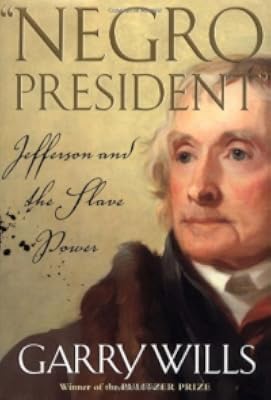
Negro President: Jefferson and the Slave Power
by Garry Wills
On This Page
Description
Offers a new look at Thomas Jefferson and his presidency, his election due to the "slave power" vote, the relationship between the power of the slave states and his administration's policies, and the opposition he faced.Tags
Recommendations




Member Reviews
Several years ago I borrowed Wills' previous book, "Lincoln at Gettysburg" from the library and discovered that Mr. Wills was way smarter than I was - to the point that I couldn't even follow him. Either "Negro President" is simpler or I've gotten smarter, because I found this book to be lucid and comprehensible - and even enjoyable.
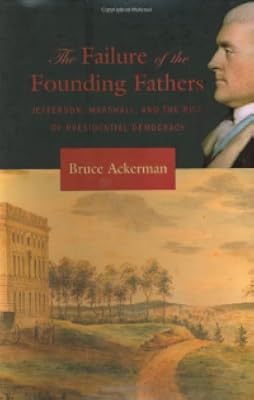
Point of order, however - despite the picture of Jefferson on the dust jacket and the book's subtitle, "Negro President" is not about Jefferson at all. In fact, discussions of the election of 1800 (which provides the classic illustration of the book's argument) and Jefferson himself make up only a minor portion of the book. Instead, the focus is on the infamous "three fifths" clause of the Constitution, and show more how it influenced American history and political life prior to the Civil War. Wills' thesis is that much of what we "know" about the early Republic is wrong, because historians have minimized and downplayed the role of the "slave power," that is, the slave holding political elites. Thus, the election of 1800 is not, as it is generally portrayed, a victory of democratic principles over monarchistic tendencies, but the triumph of slaveholders (who had an advantage in the Electoral College due to the three fifths clause) over free voters. Thus, the location of the new capitol next to the Potomac was not to place it in a neutral locale (or even to increase the value of George Washington's personal land holdings), but rather to accommodate slave holding legislators by placing the district within the borders of slave states.
Wills argues cogently and effectively for his point of view, and it is not detracting anything from the book to state it clearly has a position it is advancing - one could argue (and many have argued) from a contrary point of view. But Wills is most effective at reminding us that what we believe is "obvious" about our history, e.g., that the Constitution needed to be amended after the near-disaster of 1800 to provide for the President and Vice President tickets we now take for granted, was not necessarily so clear cut to the people who participated in these events. Wills presents his argument so clearly that I guess I'll have to go back to "Lincoln in Gettysburg" now, to see if it's him or me that's changed. show less
Point of order, however - despite the picture of Jefferson on the dust jacket and the book's subtitle, "Negro President" is not about Jefferson at all. In fact, discussions of the election of 1800 (which provides the classic illustration of the book's argument) and Jefferson himself make up only a minor portion of the book. Instead, the focus is on the infamous "three fifths" clause of the Constitution, and show more how it influenced American history and political life prior to the Civil War. Wills' thesis is that much of what we "know" about the early Republic is wrong, because historians have minimized and downplayed the role of the "slave power," that is, the slave holding political elites. Thus, the election of 1800 is not, as it is generally portrayed, a victory of democratic principles over monarchistic tendencies, but the triumph of slaveholders (who had an advantage in the Electoral College due to the three fifths clause) over free voters. Thus, the location of the new capitol next to the Potomac was not to place it in a neutral locale (or even to increase the value of George Washington's personal land holdings), but rather to accommodate slave holding legislators by placing the district within the borders of slave states.
Wills argues cogently and effectively for his point of view, and it is not detracting anything from the book to state it clearly has a position it is advancing - one could argue (and many have argued) from a contrary point of view. But Wills is most effective at reminding us that what we believe is "obvious" about our history, e.g., that the Constitution needed to be amended after the near-disaster of 1800 to provide for the President and Vice President tickets we now take for granted, was not necessarily so clear cut to the people who participated in these events. Wills presents his argument so clearly that I guess I'll have to go back to "Lincoln in Gettysburg" now, to see if it's him or me that's changed. show less
Garry Wills is one of the few people I'd really like to meet and have over for dinner, although his intelligence would make me shrivel. His writing is so thoughtful and erudite. He never ceases to astonish me with his insights.
The Negro President exams the election of 1800 through the biographies of Thomas Pickering, the anti-slavery arch Federalist and opponent of Jefferson, John Quincy Adams, and Thomas Jefferson and the impact the 3/5ths rule in the Constitution had on the outcome of the election. The 3/5ths rule, that counted slaves as 3/5ths of a person for purposes of representation, virtually guaranteed that the president would come from a slave-holding state especially, as in 1800, when a tie in the Electoral College forced the show more election into the House of Representatives. It meant that slave-holders got essentially more than one vote, i.e. 1 and 3/5th votes.
I had no idea that people like Pickering and Adams had proposed secession long before the Civil War but for reasons opposed to those that finally resulted in secession.
The implications were substantial. The extra representation gave Jefferson the election in 1800 [see my review of Bernard Weisberger's excellent book, http://www.goodreads.com/book/show/373591.America_Afire] when the tied Electoral college was thrown into the House of Representatives for decision. The difference was eight votes, precisely the advantage gained the south from the three-fifths clause. That's why Jefferson was called the “Negro” president. In his book by the same title, Garry Wills discusses the enormous impact slavery had on the mindset of our early presidents, twelve of whom owned slaves at one time or another.
In fact, a major reason for locating the new capitol in Washington, D.C., was because slave owners (all the early presidents owned slaves) would have been forced to manumit them had they remained in Philadelphia, the original capitol and a hotbed of Quaker abolitionism, for more than six months. show less
The Negro President exams the election of 1800 through the biographies of Thomas Pickering, the anti-slavery arch Federalist and opponent of Jefferson, John Quincy Adams, and Thomas Jefferson and the impact the 3/5ths rule in the Constitution had on the outcome of the election. The 3/5ths rule, that counted slaves as 3/5ths of a person for purposes of representation, virtually guaranteed that the president would come from a slave-holding state especially, as in 1800, when a tie in the Electoral College forced the show more election into the House of Representatives. It meant that slave-holders got essentially more than one vote, i.e. 1 and 3/5th votes.
I had no idea that people like Pickering and Adams had proposed secession long before the Civil War but for reasons opposed to those that finally resulted in secession.
The implications were substantial. The extra representation gave Jefferson the election in 1800 [see my review of Bernard Weisberger's excellent book, http://www.goodreads.com/book/show/373591.America_Afire] when the tied Electoral college was thrown into the House of Representatives for decision. The difference was eight votes, precisely the advantage gained the south from the three-fifths clause. That's why Jefferson was called the “Negro” president. In his book by the same title, Garry Wills discusses the enormous impact slavery had on the mindset of our early presidents, twelve of whom owned slaves at one time or another.
In fact, a major reason for locating the new capitol in Washington, D.C., was because slave owners (all the early presidents owned slaves) would have been forced to manumit them had they remained in Philadelphia, the original capitol and a hotbed of Quaker abolitionism, for more than six months. show less
Surprisingly good. Wills is much more careful than, say, Joseph Ellis in His Excellency about sticking to facts and avoiding unwarranted speculation as to motives (particularly when it comes to chronology, and not retroactively ascribing later motives to earlier actions), though he does lapse a little in this regard toward the end. He clearly demonstrates that not only does private slave ownership tend to corrupt a man's moral character (as Jefferson himself noted), but political support of slavery corrupts a man's political character; and that the 3/5 compromise (unavoidable as it may have been) ultimately made the Civil War inevitable.
In modern American politics, it has become a common parlor game to speculate -- or even investigate -- the special interests supporting various politicians. The assumption is that various people, including leaders of Congress and the President, are so beholden to certain groups for their power -- or at least the money to finance the campaigns that leads to their power -- that they make self-interested deals that vary from their personal beliefs.
Noted, and prolific, author Garry Wills shows that such interests are deeply rooted in the American system. He takes on the biggest of them all, the slave power of the antebellum South, in "'Negro President': Jefferson and the Slave Power." In this, Wills shows not only how the 3/5 compromise in show more the Constitution (which counted slaves as 3/5 person for purposes of electoral power) led to Jefferson's 1800 victory over the incumbent President John Adams, but how this power demanded Jefferson's deference as he governed.
Wills' initial argument, that Jefferson would not have defeated Adams in 1800 without the additional electoral votes given to slave states based on the 3/5 compromise, will likely surprise many readers, long accustomed to the notion of "one person, one vote." The strength of the book, however, is that this is merely the precursor for Wills' focus, detailing how this disproportionate electoral power not only swayed elections, but heavily influenced governing, long before the slavery-tinged debates of the 1850s.
To illustrate his argument, Wills gives Jefferson's words and policies a sparring partner, the prickly New England Federalist Timothy Pickering, who served in the Senate during most of Jefferson's presidency. Pickering, perhaps best known (if at all) as Adams' insubordinate Secretary of State. While Pickering was in the minority, his persistent and vocal opposition to Jefferson, particularly on matters touching on slavery, highlights Jefferson's political decisions on such issues. And while Pickering was far from a model statesman, his ongoing debate with Jefferson regarding these issues is rather prescient, voicing issues that will return with a vengeance in the volatile years before the Civil War.
As with all intellectual history, Wills is occasionally tedious as he describes the differing points of view, supported with frequent, and sometimes lengthy, quotations. Even with this trading of flowing prose for well-documented accuracy, the book is a pleasant read. It is also another valuable book on American history by Wills, offering a needed reevaluation of Jefferson's contorted, almost schizophrenic, views and policies regarding American slavery. show less
Noted, and prolific, author Garry Wills shows that such interests are deeply rooted in the American system. He takes on the biggest of them all, the slave power of the antebellum South, in "'Negro President': Jefferson and the Slave Power." In this, Wills shows not only how the 3/5 compromise in show more the Constitution (which counted slaves as 3/5 person for purposes of electoral power) led to Jefferson's 1800 victory over the incumbent President John Adams, but how this power demanded Jefferson's deference as he governed.
Wills' initial argument, that Jefferson would not have defeated Adams in 1800 without the additional electoral votes given to slave states based on the 3/5 compromise, will likely surprise many readers, long accustomed to the notion of "one person, one vote." The strength of the book, however, is that this is merely the precursor for Wills' focus, detailing how this disproportionate electoral power not only swayed elections, but heavily influenced governing, long before the slavery-tinged debates of the 1850s.
To illustrate his argument, Wills gives Jefferson's words and policies a sparring partner, the prickly New England Federalist Timothy Pickering, who served in the Senate during most of Jefferson's presidency. Pickering, perhaps best known (if at all) as Adams' insubordinate Secretary of State. While Pickering was in the minority, his persistent and vocal opposition to Jefferson, particularly on matters touching on slavery, highlights Jefferson's political decisions on such issues. And while Pickering was far from a model statesman, his ongoing debate with Jefferson regarding these issues is rather prescient, voicing issues that will return with a vengeance in the volatile years before the Civil War.
As with all intellectual history, Wills is occasionally tedious as he describes the differing points of view, supported with frequent, and sometimes lengthy, quotations. Even with this trading of flowing prose for well-documented accuracy, the book is a pleasant read. It is also another valuable book on American history by Wills, offering a needed reevaluation of Jefferson's contorted, almost schizophrenic, views and policies regarding American slavery. show less
I'd just like to take a moment to disagree slightly with the previous reviewers.
If you're looking for a biography of Thomas Jefferson, no, this is not where you want to start. But I believe that those reviewers who say that this book is misleading with its title or otherwise are missing the point. (I've seen similar reviews at Amazon and elsewhere.) I don't believe that Mr. Wills set out to write a biography of Jefferson, per se, but rather his intention was to explore how the Republicans (Jefferson in particular) exploited slavery through the three-fifths compromise in order to gain (and keep) power.
Perhaps a more appropriate title would have been something like "Negro Party: Republicans and the Slave Power" as the book is a bit show more broader than just covering Jefferson. Still, I don't think the title is all that misleading.
Oh, and it's a good read! show less
If you're looking for a biography of Thomas Jefferson, no, this is not where you want to start. But I believe that those reviewers who say that this book is misleading with its title or otherwise are missing the point. (I've seen similar reviews at Amazon and elsewhere.) I don't believe that Mr. Wills set out to write a biography of Jefferson, per se, but rather his intention was to explore how the Republicans (Jefferson in particular) exploited slavery through the three-fifths compromise in order to gain (and keep) power.
Perhaps a more appropriate title would have been something like "Negro Party: Republicans and the Slave Power" as the book is a bit show more broader than just covering Jefferson. Still, I don't think the title is all that misleading.
Oh, and it's a good read! show less
Interesting take on the long term affects of the 3/5 compromise. Gave the South a political power unwarranted by their free population, the effects which are still seen today...
"Negro President"? Should be Pickering's Challenge instead!
Author Wills promised me a book about the 3/5's clause and how it assured Jefferson's climb to the presidency. By the blurbs and advanced notices on this book I expected to find a detailed exposition on the conventions created to cajole the Southern representatives into signing onto the Constitution and how, in turn, it was used to clinch Jefferson's presidential ascension.
To date I am still waiting for that book.
So, what we got in "Negro President" instead was more like a few short and rather unsatisfying bios on several other Founding era personalities and surprisingly little on Jefferson himself. Wills does remind us that he has written on Jefferson in several other books, show more and that is well and good, but it seems then that he should have called this "Pickering's Challenge" or at least titled the book closer to the actual subject OF the thing!
I do hope Wills takes the time to write on the 3/5's clause like he promised to do. After all, this little known aspect of Constitutional history was so important that it caused a lock for Southern power with those ideas becoming the South's most important power-play all the way until the Civil War. The 3/5's clause caused the Civil War if anything did!
So, for a little background on the Founder's era, it is fine, but I can't help but feel this book suffers from a bit of false advertising. show less
Author Wills promised me a book about the 3/5's clause and how it assured Jefferson's climb to the presidency. By the blurbs and advanced notices on this book I expected to find a detailed exposition on the conventions created to cajole the Southern representatives into signing onto the Constitution and how, in turn, it was used to clinch Jefferson's presidential ascension.
To date I am still waiting for that book.
So, what we got in "Negro President" instead was more like a few short and rather unsatisfying bios on several other Founding era personalities and surprisingly little on Jefferson himself. Wills does remind us that he has written on Jefferson in several other books, show more and that is well and good, but it seems then that he should have called this "Pickering's Challenge" or at least titled the book closer to the actual subject OF the thing!
I do hope Wills takes the time to write on the 3/5's clause like he promised to do. After all, this little known aspect of Constitutional history was so important that it caused a lock for Southern power with those ideas becoming the South's most important power-play all the way until the Civil War. The 3/5's clause caused the Civil War if anything did!
So, for a little background on the Founder's era, it is fine, but I can't help but feel this book suffers from a bit of false advertising. show less
Members
- Recently Added By
Lists

Thomas Jefferson Books
43 works; 1 member

Best U.S. History Books (1754-1828)
363 works; 18 members
Author Information

69+ Works 13,309 Members
Garry Wills, 1934 - Garry Wills was born in Atlanta, Georgia in 1934. Wills received a B.A. from St. Louis University in 1957, an M.A. from Xavier University of Cincinnati in 1958, an M.A. (1959) and a Ph.D. (1961) in classics from Yale. Wills was a junior fellow of the Center for Hellenic Studies from 1961-62, an associate professor of classics show more and adjunct professor of humanities at Johns Hopkins University from 1962-80. Wills was the first Washington Irving Professor of Modern American History and Literature at Union College, and was also a Regents Professor at the University of California in Santa Barbara, Silliman Seminarist at Yale, Christian Gauss Lecturer at Princeton, W.W. Cook Lecturer at the University of Michigan Law School, Hubert Humphrey Seminarist at Macalester College, Welch Professor of American Studies at Notre Dame University and Henry R. Luce Professor of American Culture and Public Policy at Northwestern University (1980-88). Wills is also a member of the American Academy of Arts and Sciences and the American Academy of Arts and Letters, and his articles appear frequently in The New York Review of Books. Wills is the author of "Lincoln at Gettysburg," which won the Pulitzer Prize for General Nonfiction in 1993 and the NEH Presidential Medal, "John Wayne's America," "A Necessary Evil: A History of American Distrust of Government" and "The Kennedy Imprisonment." Other awards received by Wills include the National Book Critics Award, the Merle Curti Award of the organization of American Historians, the Wilbur Cross Medal from Yale Graduate School, the Harold Washington Book Award and the Peabody Award for excellence in broadcasting, which was for writing and narrating the 1988 "Frontline" documentary "The Candidates." (Bowker Author Biography) Garry Wills is a Pulitzer-prize winning historian and cultural critic. A former professor of Greek at Yale University, his many books include Lincoln at Gettysburg, Reagan's America, Witches and Jesuits, and a biography of Saint Augustine. He lives in Evanston, Indiana. (Publisher Provided) Garry Wills is a frequent contributor to The New York Times Magazine and The New York Review of Books. He lives in Evanston, Illinois. (Publisher Provided) show less
Common Knowledge
- Canonical title
- Negro President: Jefferson and the Slave Power
Classifications
- Genres
- History, Nonfiction, Politics and Government, Biography & Memoir, General Nonfiction
- DDC/MDS
- 326.0973 — Society, government, & culture Political science Slavery and emancipation Trans-Atlantic Slavery Biography And History North America United States
- LCC
- E332.2 .W57 — History of the United States United States Revolution to the Civil War, 1775/1783-1861 By period 1789-1809. Constitutional period Jefferson's administrations, 1801-1809
- BISAC
Statistics
- Members
- 317
- Popularity
- 100,881
- Reviews
- 8
- Rating
- (3.96)
- Languages
- English
- Media
- Paper, Audiobook, Ebook
- ISBNs
- 7
- UPCs
- 2
- ASINs
- 3