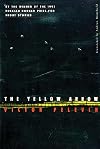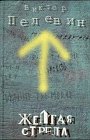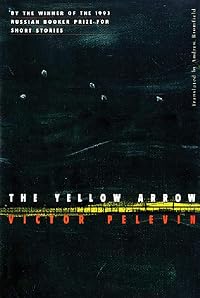
The Yellow Arrow (New Directions Paperbook)
by Viktor Pelevin
On This Page
Description
The main character, Andrei, is a passenger aboard the Yellow Arrow, who begins to despair over the trains ultimate destination and looks for a way out as the chapters count down. Indifferent to their fate, the other passengers carry on as usual -- trading in nickel melted down fro the carriage doors, attending the Upper Bunk avant-garde theatre, and leafing through Pasternak'sEarly Trains. Pelevin's art lies in the ease with which he shifts from precisely imagined science fiction to lyrical show more meditations on past and future. And, because he is a natural storyteller with a wonderfully absurd imagination.The Yellow Arrow is full of the ridiculous and the sublime. It is a reflective story, chilling and gripping. show lessTags
Recommendations

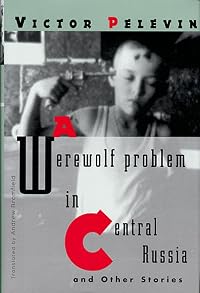

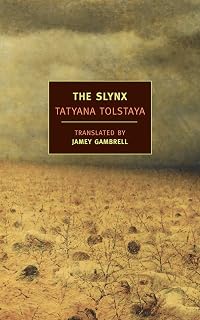


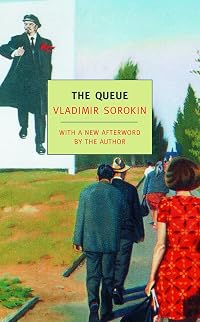
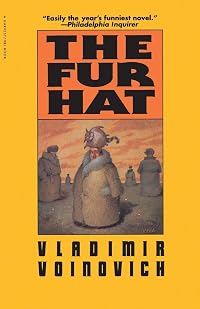







Member Recommendations

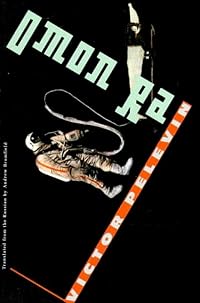
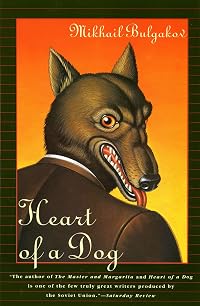
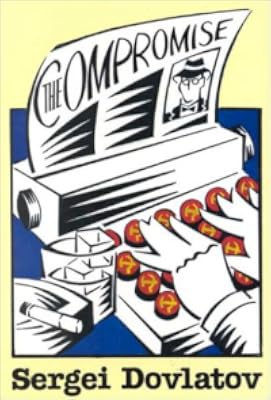
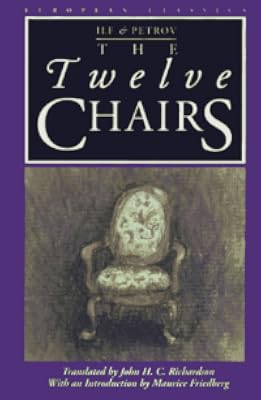
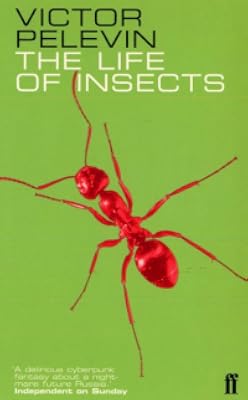
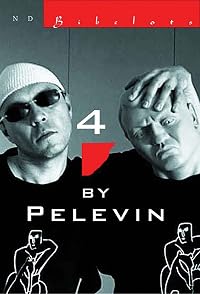
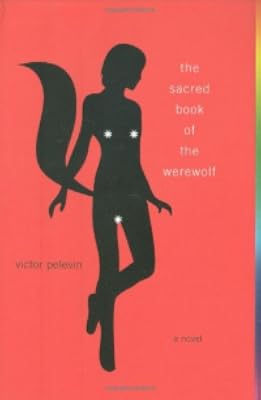
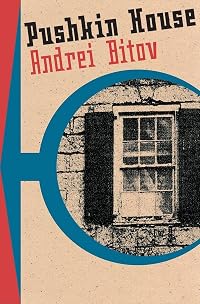
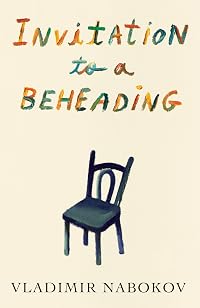
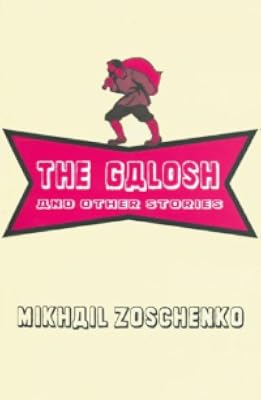
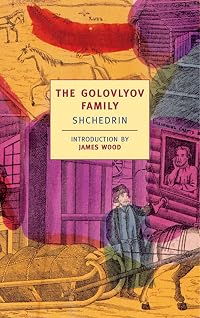
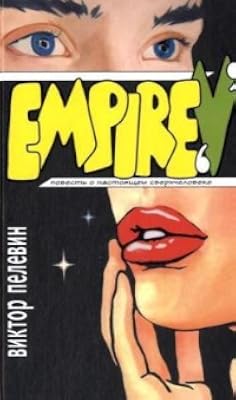
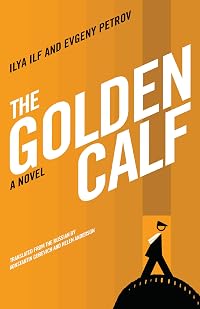
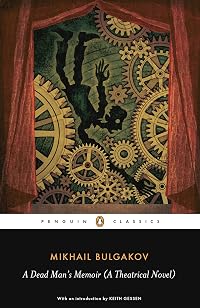
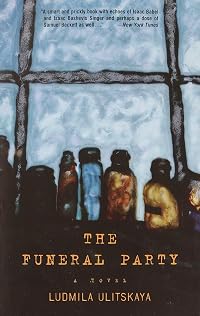
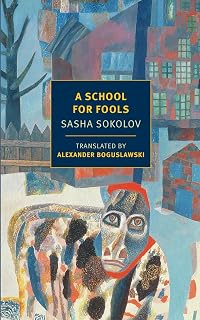
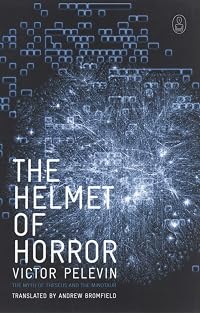
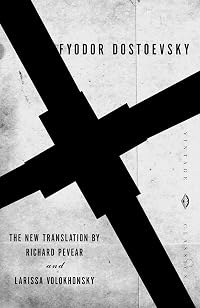
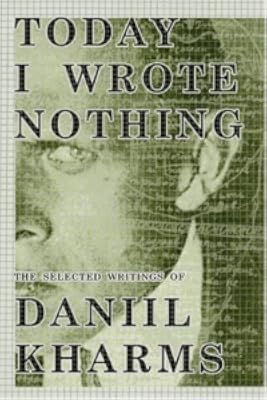
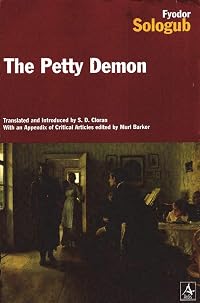
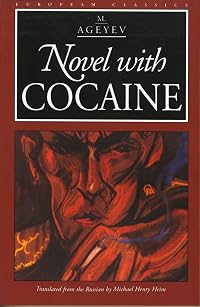
leigonj These two books, both allegories about Russia, have something otherwise undefinably similar about them.
Member Reviews
What a deceptively concise story. Who knew that it would aim to encompass the concept of life and the 'yellow arrow' that it is for so many people. The locomotive of I, to use one of the stories terms, brings to mind Plato's cave, inherent restrictions on life that are rarely observed and yet remain in plain sight. To only know a second of the present before it is shunted to the past by a succeeding second, to never observe fully the succession of moments, to be inextricably bound to life speeding you through the future without a chance of escape before the final plunge. It is all too easy to focus on the small universe at hand, rarely reminded of the world existing at large beyond the confines of the forward traveling through time. show more Definitely one of the more interesting philosophical meanderings, and one from which it is a joy to learn and draw one’s own conclusions. show less
I'm a big fan of Victor Pelevin, but I've never read the novella via which he first came to international attention. Until now, when I came across a sweet little used hardcover edition at the Powell's mothership on vacation in Portland last week. Which I then, while waiting for my sister and hostess to get off work, proceeded to take to the nearest pub and devour over a few pints of Guiness, not only because it is Pelevin, but because it is also another entry in that weird trope of fictions concerning perpetual railroads about which I have written here before.
The Yellow Arrow is the name of this train, crossing the wilds of the post-Soviet frontier but never actually reaching its possibly no-longer-existent destination. The train has show more been travelling for so long that most of its passengers no longer remember their lives before boarding it; indeed, many seem no longer to believe that they had lives before becoming passengers. A whole slightly Kafkaesque culture has developed on board, complete with histories, competing mythologies, secret societies and yes, black market economic cartels based around the strip mining of the train itself for raw materials. There is a news media, a secret governing cabal, even a set of peculiar funeral customs that, bizarrely, do not involve treating the bodies of the dead as more raw material for recycling and reuse; though the train never stops to take on supplies, some kind of basic carbon/nitrogen/water inputs are coming in from somewhere, even though we are assured there is no inhabited world outside the train anymore.
Pelevin is still kind of finding his voice here (this work was originally published in 1993), but already playing well with his themes of absurdity and willful ignorance and misplaced faith and trust and the way in which mass media manipulates reality. Its protagonist, Andrei, feels very much like an early sketch of his later hero, Babylen of Homo Zapiens fame, somewhere between a naif and a sophisticate in the ways of his world, not sure he should trust his friends, not sure if they are his friends, but willing to do what he has to in order to make it all work for him somehow. If it's not quite as wickedly funny as Pelevin's later works, it's plenty philosophical, impossible not to read as a parable of both Soviet and post-Soviet Russia (masterfully and weirdly, it manages to be both at once), and enjoyable. I wouldn't recommend it as an introduction to Pelevin -- I still think that should be Omon Ra -- but if you've found you've liked his other works and curious to have a peek at his beginnings, this is a must-see. show less
The Yellow Arrow is the name of this train, crossing the wilds of the post-Soviet frontier but never actually reaching its possibly no-longer-existent destination. The train has show more been travelling for so long that most of its passengers no longer remember their lives before boarding it; indeed, many seem no longer to believe that they had lives before becoming passengers. A whole slightly Kafkaesque culture has developed on board, complete with histories, competing mythologies, secret societies and yes, black market economic cartels based around the strip mining of the train itself for raw materials. There is a news media, a secret governing cabal, even a set of peculiar funeral customs that, bizarrely, do not involve treating the bodies of the dead as more raw material for recycling and reuse; though the train never stops to take on supplies, some kind of basic carbon/nitrogen/water inputs are coming in from somewhere, even though we are assured there is no inhabited world outside the train anymore.
Pelevin is still kind of finding his voice here (this work was originally published in 1993), but already playing well with his themes of absurdity and willful ignorance and misplaced faith and trust and the way in which mass media manipulates reality. Its protagonist, Andrei, feels very much like an early sketch of his later hero, Babylen of Homo Zapiens fame, somewhere between a naif and a sophisticate in the ways of his world, not sure he should trust his friends, not sure if they are his friends, but willing to do what he has to in order to make it all work for him somehow. If it's not quite as wickedly funny as Pelevin's later works, it's plenty philosophical, impossible not to read as a parable of both Soviet and post-Soviet Russia (masterfully and weirdly, it manages to be both at once), and enjoyable. I wouldn't recommend it as an introduction to Pelevin -- I still think that should be Omon Ra -- but if you've found you've liked his other works and curious to have a peek at his beginnings, this is a must-see. show less
The themes aren’t new, but Victor Pelevin puts them through a distinctly modern and Russian lens in his novella The Yellow Arrow. Superficially, this work involves finding the universal scenario of finding ourselves stuck on trains with, shall we say, an abrupt ending rapidly approaching. The story isn’t as much about a fiery and grandiose end as it is about ourselves throughout the process. Indeed, this story is more metaphorical and philosophical, providing doses of levity within its doubtless Russian based allusions and symbolism. Through the seemingly degrading classes and compartments of a train, it’s mainly a contemplative progression, pondering the nature of time and more particularly consciousness. Moving from beyond the show more small time swindlers in the dining compartment to the funerals held in corridors, it’s a story about acknowledging the graffiti in the bathroom that’s meant for our eyes that will ultimately help us apply the brakes. show less
The book consists of 3 novellas (the title of the first one is on the cover, and rightly so, as it's probably the most striking) and a number of short stories. All of it is full of allegory, metaphors, is often deeply philosophical; all of it is open to interpretation. I will not claim I've understood all what Pelevin means. Maybe on the second or third read, or maybe never - but somehow it just seems OK. It's like New Age philosophy meets science fiction with a helping of fantasy. (And I am not a fan of fantasy, but here somehow it didn't bother me).
The style of writing is very approachable and easy to read, even though loaded with deepest meaning (I expected a heavier style, so it took me by surprise), not to mention it show more sort of eggs you on - to see what Pelevin will come up with next. I missed only one novella: it had computer games in its premise, and I am neither interested nor good at it. There is a romantic and idealistic touch, there are some real shockers - like in the review he writes on the book about Stalin. Some things Pelevin describes seem plausible and implausible at the same time, some are utterly incongruous. There are trips into solipsism. But I never once lost interest or was bored. show less
The book consists of 3 novellas (the title of the first one is on the cover, and rightly so, as it's probably the most striking) and a number of short stories. All of it is full of allegory, metaphors, is often deeply philosophical; all of it is open to interpretation. I will not claim I've understood all what Pelevin means. Maybe on the second or third read, or maybe never - but somehow it just seems OK. It's like New Age philosophy meets science fiction with a helping of fantasy. (And I am not a fan of fantasy, but here somehow it didn't bother me).
The style of writing is very approachable and easy to read, even though loaded with deepest meaning (I expected a heavier style, so it took me by surprise), not to mention it show more sort of eggs you on - to see what Pelevin will come up with next. I missed only one novella: it had computer games in its premise, and I am neither interested nor good at it. There is a romantic and idealistic touch, there are some real shockers - like in the review he writes on the book about Stalin. Some things Pelevin describes seem plausible and implausible at the same time, some are utterly incongruous. There are trips into solipsism. But I never once lost interest or was bored. show less
It's an existential novella from 1993 Russia that seems apropos today. I think a longer piece could have done more justice to the author's topics & thoughts, but this was still a decently thoughtful little work. I did like the nice touch of the backward countdown of chapters. I would be interested in finding longer works by this author to try.
Amazing narrative. If you like Kafka, Cortazar, Cartarescu ... Dig in and enjoy.
Transcendental blah blah but interesting in a chop chop train sort of way
Members
- Recently Added By
Lists

Best Contemporary Literary Fiction (Around the Last 30 Years)
388 works; 122 members

Russian Literature
184 works; 35 members

Magic Realism
371 works; 52 members

Best public-transport fiction
72 works; 17 members
Author Information

Some Editions
Series
Belongs to Publisher Series
群像社ライブラリー (26)
Work Relationships
Is contained in
Common Knowledge
- Original title
- Желтая стрела
- Alternate titles
- Zhëltaia strela
- Original publication date
- 1994 (English translation) (English translation); 1993
- Original language
- Russian
Classifications
- Genres
- Fiction and Literature, General Fiction
- DDC/MDS
- 891.7344 — Literature & rhetoric Literatures of other languages East Indo-European and Celtic literatures Russian and East Slavic languages Russian fiction USSR 1917–1991 Late 20th century 1917–1991
- LCC
- PG3485 .E38 .Z3513 — Language and Literature Slavic languages and literatures. Baltic languages. Albanian language Slavic. Baltic. Albanian Russian literature Individual authors and works 1961-2000
- BISAC
Statistics
- Members
- 235
- Popularity
- 138,422
- Reviews
- 9
- Rating
- (3.86)
- Languages
- 6 — English, French, Hungarian, Italian, Japanese, Russian
- Media
- Paper, Ebook
- ISBNs
- 17
- ASINs
- 3