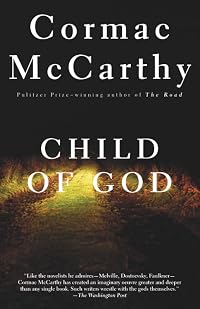
Child of God
by Cormac McCarthy
On This Page
Description
Cormac McCarthy has won nearly every major literary honor, including the Pulitzer Prize and the National Book Award. Set in Tennessee in the 1960s, this chilling novel sees Lester Ballard become increasingly isolated from society. After taking a deceased woman as a girlfriend, he "saves her" from a fire - and his life spirals into deepening depravity.Tags
Recommendations




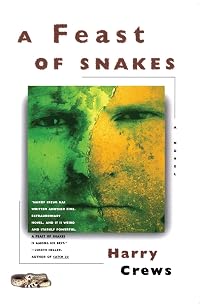
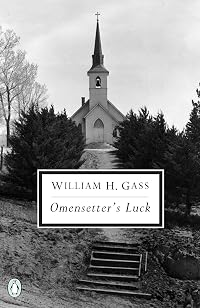
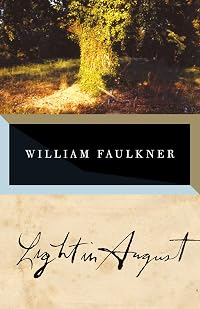
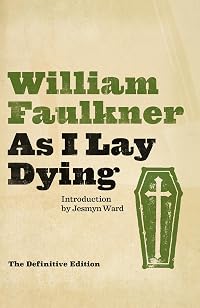











Member Recommendations
Member Reviews
Classic McCarthy masterclass that I have been accustomed to reading. Even in his old style, which is slightly different than what made him famous, McCarthy can spin the south like not even William Faulkner can. I absolutely am in love with his writing.
The idea of the southern grotesque is prevalent in studies of southern literature, and this is one that should be included in whatever classes are taught on the subject. Flannery O'Connor and William Faulkner do the grotesque, but not like McCarthy does here with Lester Ballard. The man in this story is the representation of everything that is wrong or has been seen as wrong about the south, and Appalachia especially. I am a SUCKER for Appalachian literature, and this does it like no one show more else.
I also love the smoothness of transition McCarthy achieves here. The cuts between frequent short chapters feel like scene changes in a play or screenplay, in the best way possible. The cast and setting are laid out quick, and then the audience is left to sit back, relax, and enjoy the show.
I think that Cormac McCarthy, as an American author, stands alone in skill, choice of story, and greatness. He has not let me down, once again. show less
The idea of the southern grotesque is prevalent in studies of southern literature, and this is one that should be included in whatever classes are taught on the subject. Flannery O'Connor and William Faulkner do the grotesque, but not like McCarthy does here with Lester Ballard. The man in this story is the representation of everything that is wrong or has been seen as wrong about the south, and Appalachia especially. I am a SUCKER for Appalachian literature, and this does it like no one show more else.
I also love the smoothness of transition McCarthy achieves here. The cuts between frequent short chapters feel like scene changes in a play or screenplay, in the best way possible. The cast and setting are laid out quick, and then the audience is left to sit back, relax, and enjoy the show.
I think that Cormac McCarthy, as an American author, stands alone in skill, choice of story, and greatness. He has not let me down, once again. show less
Draw a line from William Faulkner through the midnight dark of the human soul and at the end of it you will find Cormac McCarthy, picking over the bones of murderer and murdered, like some oracle seeking the truth of the ways of man and god. McCarthy’s god is, at best, indifferent. At worst, malevolent and sadistic.
This is the story of Lester Ballard's descent into hell. Ballard is a piece of work, a real child of god. McCarthy tells it in stark and simple prose with black humor. Ballard, with the cunning of all men, learns to take advantage of his situation, preying, like the "Son of Sam" murderer, on lovers parked in cars along lonely mountain roads. In his depravity, Ballard takes advantage of the dead female bodies.
No one can tell show more stories of this kind better that Cormac McCarthy. After reading it I felt depressed and blue for days, wary that a sadistic god would laugh when I was struck down by some depraved child of god. show less
This is the story of Lester Ballard's descent into hell. Ballard is a piece of work, a real child of god. McCarthy tells it in stark and simple prose with black humor. Ballard, with the cunning of all men, learns to take advantage of his situation, preying, like the "Son of Sam" murderer, on lovers parked in cars along lonely mountain roads. In his depravity, Ballard takes advantage of the dead female bodies.
No one can tell show more stories of this kind better that Cormac McCarthy. After reading it I felt depressed and blue for days, wary that a sadistic god would laugh when I was struck down by some depraved child of god. show less
One of the early short novels by Cormac McCarthy already has all the ingredients of his later masterpieces. A necessarily meagre vocabulary of dialogues contrasts with surprising highs of the darkly poetic language available only to this one writer.
Human condition contains no mystery for Cormac - he is not intent on discovery, he knows the answer all along. What he aims to do is take you, an unsuspecting reader, by the hand and lead you to a place where the depth of depravity and meanness of the human spirit is so shocking that you the reader will have no words left to defend our hapless humanity. And yet… from this horrible darkness, from this bottomless pit there is only one way - upward and into the light.
Human condition contains no mystery for Cormac - he is not intent on discovery, he knows the answer all along. What he aims to do is take you, an unsuspecting reader, by the hand and lead you to a place where the depth of depravity and meanness of the human spirit is so shocking that you the reader will have no words left to defend our hapless humanity. And yet… from this horrible darkness, from this bottomless pit there is only one way - upward and into the light.
12. Child of God by Cormac McCarthy (1973, 197 page trade paperback, Read Feb 10-13)
Holy necrophilia. Mentally off and completely unsocial, Lester Ballard loses his land and carries on alone in a filthy abandoned house. He is full of desires, partly influenced by his habit of stumbling upon lovers in their cars, but he is unable to understand them. And then things just seem to take on a logic of their own. And there is a logic to it.
I enjoyed reading this, but it bothers me now thinking about it. It's funny and I think McCarthy was having fun. I imagine him not taking himself very seriously, other than working over the writing craft itself. I think he was poking fun at society by seeing how this creature would make his way in it. And I show more suspect he was intentionally trying to disturb and provoke his readers.
I don't think this is the one McCarthy book anyone should read, but if necrophilia and a few other rancid things don't turn you off, it's a fun book of an odd sort.
2015
https://www.librarything.com/topic/185746#5095302 show less
Holy necrophilia. Mentally off and completely unsocial, Lester Ballard loses his land and carries on alone in a filthy abandoned house. He is full of desires, partly influenced by his habit of stumbling upon lovers in their cars, but he is unable to understand them. And then things just seem to take on a logic of their own. And there is a logic to it.
I enjoyed reading this, but it bothers me now thinking about it. It's funny and I think McCarthy was having fun. I imagine him not taking himself very seriously, other than working over the writing craft itself. I think he was poking fun at society by seeing how this creature would make his way in it. And I show more suspect he was intentionally trying to disturb and provoke his readers.
I don't think this is the one McCarthy book anyone should read, but if necrophilia and a few other rancid things don't turn you off, it's a fun book of an odd sort.
2015
https://www.librarything.com/topic/185746#5095302 show less
To call Child of God Cormac-lite might be a bit misleading, it's as dark and twisted as any of his other works, with incest-produced idiot offspring and violent encounters with man's dark nature. But it is an easy read, without being particularly diligent I read this in three days. The prose is very good as always, shifting narrative voices and keeping a balanced, stark and poetic language. Cormac sparkles the work with some of his sinister humour and I found myself both grinning and grimacing throughout the novel. What I love about McCarthy's characters is the authors complete unwillingness to resort to any pseudo-psychology or freudian events in the character's past to explain them away. They exist just as is, which pervades them with show more a mystical profundity without Cormac having to do much, I don't know how he pulls it off really. But to give it more than a four would be too much, it might grow, but it might also fizzle away without leaving much of a mark... Only time can tell. show less
Lester Ballard has got hisself a few issues. One, he ain't got no real home. Which ain't a good thing for a young single man in the east Tennessee mountains of Appalachia, where the winters is something fierce.
His first "home," if we can call it that, warnt nothin' more than an abandoned squatter's cabin used by hunters huntin' 'possum and squirrel. Two rooms. It was a good enough home for a guy like Lester while he had it, I suppose. A bit lonesome out there in the boonies where all the backwoods, backwards loonies live, but damn if that Lester Ballard dint burn that cabin down one night just tryin' to stay warm! Sparks from the decrepit chimbley must've slithered somehow into the attic, and Lester barely got out alive with his body show more and belongings intact. Once his house burnt down, it was a complex of caves and sinkholes that Lester called "home." Weird.
What's a young man like Lester need to be hidin' out in caves and abandoned shacks for anyway? Well, Lester has a taste for necrophilia. That means having a proclivity for sexual intercourse with cadavers. Sound distasteful? Shoot, you ain't whistlin' Dixie! But goddamn if that ain't 'ol vintage Cormac McCarthy for ya! This here book a his was published in 1973, his third, and if it cain't be described as his most poetically violent, then maybe we can call it his most poetically vile. And that ain't necessarily a criticism or complaint, but I'm on the fence myself (sort of), as I consider it in the dawning aftermath of this here strange reading experience, whether it's complimentary or not. It's compelling, that's for shore. Ain't no equivocatin' there on that regard.
So, Lester Ballard, the necrophiliac, I was a sayin'. His first girlfriend, in Lester's defense, was at least already dead when he come acrost her, shot dead through the head in the backseat of a sedan with a man, also dead, lyin' atop her. The radio of the car was still playin'. Somethin' contemporary from the mid-1960s.
Hard to believe Lester lugged that female corpse a good mile on his shoulders back to his squatter's quarters, that cabin, I mentioned, 'fore it burned down. The cabin was barely visible from the rutted dirt road, but Lester knew the path well through the weeds that shot up all around the shack as high as the eaves, somewhere deep and forgotten in the old growth black pines a Tennessee.
Shore is a shame that Lester dint have time to rescue his dead girlfriend that fateful night his cabin burnt down. He'd had her housed in the attic for the night. He had a pulley system rigged up with ropes to get her down each day outta the ceilin' so he could spend some quality time lyin' naked with her on a muddy mattress he'd salvaged out of a junkyard. But then came the fire that burned her up and left nary a bone. Sad.
After that sorrowful incident, Lester losin' his house -- and his dearly beloved like that -- well, I think it mighta finally sent him completely over the edge some. Cuz after his home and woman burnt up, he starts a increasingly sneakin' and stalkin' thru the backwoods seekin' parked cars, where the frisky young folks of Appalachia out late at night was a "aimin' to screw". But there'd be no screwin' once Lester Ballard shown up with his rifle, that's fer sure.
He killed yet another woman, later on, cuz she wouldn't let him see "her titties." Simple request. Summarily denied. Well, shoot. Guess she dint know that a slovenly serial killer necrophiliac's gotta do what a slovenly serial killer necrophiliac's gotta do! Kill her. But damnit if her house too, along with her "idiot child" and his constant drool, dint burn down to the snowy ground 'fore he could rescue her from the flames and consummate his impending relationship with her. Dint even get to see "her titties" 'fore she turned to ashes. Damn shame.
I best say no more. Whether Lester Ballard, "a child of God," accordin' to Cormac, ever gets caught or repents, I best leave for the future reader's suspense. I will say you cain't read this here book, Child of God, and not be mesmerized, like you was watchin' fireflies dance all night long in a red clay cave, by the highly stylized words put together just right, like demonic dominoes topplin' over -- clickclickclick (or sixsixsix) -- keepin' ya readin' transfixed even though ya might cringe or shit yer filthy denim coveralls ain't been washed in years. Or maybe reading it might make you upchuck the stale cornbread ya had for breakfast, even.
The much maligned artifice (or widely praised artful prose of Cormac McCarthy -- take yer pick, cuz there ain't no middle ground concerning him) -- standing in stark contrast to the unequivocal ugliness of the subject matter (and some might argue, unforgivable ugliness of the subject matter), but I argue the former no matter what the subject matter when it comes to Cormac McCarthy: A singularly devilish child of God among living authors. show less
His first "home," if we can call it that, warnt nothin' more than an abandoned squatter's cabin used by hunters huntin' 'possum and squirrel. Two rooms. It was a good enough home for a guy like Lester while he had it, I suppose. A bit lonesome out there in the boonies where all the backwoods, backwards loonies live, but damn if that Lester Ballard dint burn that cabin down one night just tryin' to stay warm! Sparks from the decrepit chimbley must've slithered somehow into the attic, and Lester barely got out alive with his body show more and belongings intact. Once his house burnt down, it was a complex of caves and sinkholes that Lester called "home." Weird.
What's a young man like Lester need to be hidin' out in caves and abandoned shacks for anyway? Well, Lester has a taste for necrophilia. That means having a proclivity for sexual intercourse with cadavers. Sound distasteful? Shoot, you ain't whistlin' Dixie! But goddamn if that ain't 'ol vintage Cormac McCarthy for ya! This here book a his was published in 1973, his third, and if it cain't be described as his most poetically violent, then maybe we can call it his most poetically vile. And that ain't necessarily a criticism or complaint, but I'm on the fence myself (sort of), as I consider it in the dawning aftermath of this here strange reading experience, whether it's complimentary or not. It's compelling, that's for shore. Ain't no equivocatin' there on that regard.
So, Lester Ballard, the necrophiliac, I was a sayin'. His first girlfriend, in Lester's defense, was at least already dead when he come acrost her, shot dead through the head in the backseat of a sedan with a man, also dead, lyin' atop her. The radio of the car was still playin'. Somethin' contemporary from the mid-1960s.
Hard to believe Lester lugged that female corpse a good mile on his shoulders back to his squatter's quarters, that cabin, I mentioned, 'fore it burned down. The cabin was barely visible from the rutted dirt road, but Lester knew the path well through the weeds that shot up all around the shack as high as the eaves, somewhere deep and forgotten in the old growth black pines a Tennessee.
Shore is a shame that Lester dint have time to rescue his dead girlfriend that fateful night his cabin burnt down. He'd had her housed in the attic for the night. He had a pulley system rigged up with ropes to get her down each day outta the ceilin' so he could spend some quality time lyin' naked with her on a muddy mattress he'd salvaged out of a junkyard. But then came the fire that burned her up and left nary a bone. Sad.
After that sorrowful incident, Lester losin' his house -- and his dearly beloved like that -- well, I think it mighta finally sent him completely over the edge some. Cuz after his home and woman burnt up, he starts a increasingly sneakin' and stalkin' thru the backwoods seekin' parked cars, where the frisky young folks of Appalachia out late at night was a "aimin' to screw". But there'd be no screwin' once Lester Ballard shown up with his rifle, that's fer sure.
He killed yet another woman, later on, cuz she wouldn't let him see "her titties." Simple request. Summarily denied. Well, shoot. Guess she dint know that a slovenly serial killer necrophiliac's gotta do what a slovenly serial killer necrophiliac's gotta do! Kill her. But damnit if her house too, along with her "idiot child" and his constant drool, dint burn down to the snowy ground 'fore he could rescue her from the flames and consummate his impending relationship with her. Dint even get to see "her titties" 'fore she turned to ashes. Damn shame.
I best say no more. Whether Lester Ballard, "a child of God," accordin' to Cormac, ever gets caught or repents, I best leave for the future reader's suspense. I will say you cain't read this here book, Child of God, and not be mesmerized, like you was watchin' fireflies dance all night long in a red clay cave, by the highly stylized words put together just right, like demonic dominoes topplin' over -- clickclickclick (or sixsixsix) -- keepin' ya readin' transfixed even though ya might cringe or shit yer filthy denim coveralls ain't been washed in years. Or maybe reading it might make you upchuck the stale cornbread ya had for breakfast, even.
The much maligned artifice (or widely praised artful prose of Cormac McCarthy -- take yer pick, cuz there ain't no middle ground concerning him) -- standing in stark contrast to the unequivocal ugliness of the subject matter (and some might argue, unforgivable ugliness of the subject matter), but I argue the former no matter what the subject matter when it comes to Cormac McCarthy: A singularly devilish child of God among living authors. show less
If it were not for the excellent writing style, I would classify this in the genre "horror". Perhaps this might be "literary horror".
Set in the "hills" of Tennessee (could have been in North Carolina or West Virginia) McCarthy describes the lives of people living close to the earth in terms of economic survival. The populace in general possess a level of education based on common sense skills related to daily survival. There is a level below the general populace that might be described as feral. That is where Lester lives.
Feral Lester can use technology; he has a comparatively expensive rifle which he values above all, especially people; further, he is a good shot. Lester does nothing more than he has to do to satisfy basic shelter, show more clothing and food needs. To satisfy basic sex impulses, Lester finds greater compliance with dead girls than with the living.
This is an engrossing story told in complex, descriptive vocabulary. Some thoughts and feelings ascribed to the characters are expressed in vocabulary far beyond the capabilities of the characters to use. This engages the reader, provokes a lot of thought beyond the printed page, and will occupy the reader for a greater length of time to read than such a short work would normally take. show less
Set in the "hills" of Tennessee (could have been in North Carolina or West Virginia) McCarthy describes the lives of people living close to the earth in terms of economic survival. The populace in general possess a level of education based on common sense skills related to daily survival. There is a level below the general populace that might be described as feral. That is where Lester lives.
Feral Lester can use technology; he has a comparatively expensive rifle which he values above all, especially people; further, he is a good shot. Lester does nothing more than he has to do to satisfy basic shelter, show more clothing and food needs. To satisfy basic sex impulses, Lester finds greater compliance with dead girls than with the living.
This is an engrossing story told in complex, descriptive vocabulary. Some thoughts and feelings ascribed to the characters are expressed in vocabulary far beyond the capabilities of the characters to use. This engages the reader, provokes a lot of thought beyond the printed page, and will occupy the reader for a greater length of time to read than such a short work would normally take. show less
Members
- Recently Added By
Published Reviews
ThingScore 25
But the carefully cold, sour diction of this book--whose hostility toward the reader surpasses even that of the world toward Lester--does not often let us see beyond its nasty "writing" into moments we can see for themselves, rendered. And such moments, authentic though they feel, do not much help a novel so lacking in human momentum or point.
added by eereed
Lists

Harold Bloom - The Western Canon: D. The Chaotic Age
833 works; 24 members

Literary Travelogue of the United States Challenge
133 works; 6 members

Cormac McCarthy books
13 works; 1 member
Author Information

36+ Works 104,620 Members
Some Editions
Awards and Honors
Series
Belongs to Publisher Series
Work Relationships
Has the adaptation
Has as a student's study guide
Common Knowledge
- Canonical title
- Child of God
- Original title
- Child of God
- Original publication date
- 1973
- People/Characters
- Lester Ballard
- Important places
- Tennessee, USA
- Related movies
- Child of God (2013 | IMDb)
- First words
- They came like a caravan of carnival folk up through the swales of broomstraw and across the hill in the morning sun, the truck rocking and pitching in the ruts and the musicians on chairs in the truckbed teetering and tuning... (show all) their instruments, the fat man with guitar grinning and gesturing to others in a car behind and and bending to give a note to the fiddler who turned a fiddlepeg and listened with a wrinkled face.
- Last words
- (Click to show. Warning: May contain spoilers.)As they went down the valley in the new fell dark basking nighthawks rose from the dust in the road before them with wild wings and eyes red as jewels in the headlights.
Classifications
Statistics
- Members
- 3,530
- Popularity
- 4,655
- Reviews
- 82
- Rating
- (3.83)
- Languages
- 13 — Czech, Dutch, English, French, German, Hungarian, Italian, Norwegian (Bokmål), Polish, Portuguese, Spanish, Swedish, Turkish
- Media
- Paper, Audiobook, Ebook
- ISBNs
- 45
- ASINs
- 15