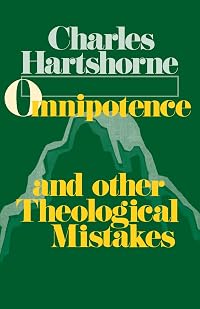
Omnipotence and Other Theological Mistakes
by Charles Hartshorne
On This Page
Description
On spine: Omnipotence & other theological mistakes. Includes indexes.Tags
Recommendations














Member Reviews
This book arose from two conversations with people who told Hartshorne of their problems with religion. He realized that what they couldn’t accept were aspects of traditional belief that he and other process theologians also rejected. He felt the need to write an accessible book to acquaint a broader audience with his answer to classic theism.
The result is in part successful. When it is not, it could have been remedied by letting the manuscript sit, then returning to it as reader/editor rather than as author. Hartshorne admits that this book, unlike every other he had produced, was written in five weeks. He seems to be proud of that.
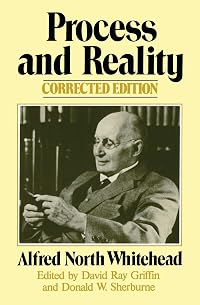
Despite Hartshorne’s intention to produce an accessible book, however, the writing is at times show more difficult to follow. Not in the same way that Whitehead, in Process and Reality, is, with his precise terminology. In Hartshorne’s case, the writing seems at times slapdash and poorly organized. He often argues by a series of negatively formulated statements, rather than setting out plainly what he is arguing for. The book is also marred by his animus toward creation scientists and pro-lifers. Fair targets, but, like the many negative formulations, these remarks get in the way of clearly setting out what he is arguing for.
The best part, to me, is the first, lengthiest chapter, outlining six common mistakes about God. About omnipotence, Hartshorne doesn’t reject it as much as redefine it: “The only liveable doctrine of divine power is that it influences all that happens but determines nothing in its concrete particularity.”
How are we to think of God if not in the traditional terms of unchanging, impassive, all-knowing, and all-powerful? Interestingly, when Hartshorne challenges the notion that to say God is perfect means he is unchanging, he does so not in terms of knowledge or ethics, but in terms of aesthetics.
God’s relationship to the world is understood as analogous to the human mind and body. Each of us, as a conscious individual, is a single reality, but each cell within us is an individual. “Similarly, God’s cosmic body is a society of individuals.” Hartshorne argues for an updated version of Plato’s concept of World Soul. In his terms, God is a “dual transcendence,” both physical and spiritual. “[T]he divine body . . . is all-surpassing and all-inclusive of the creaturely bodies, which are to God as cells to a super-cellular organism.”
Also good is the final chapter, on the enduring validity of what Jesus pointed to as the two great commandments.
Hartshorne is generous in crediting those who have influenced his thinking. Some of Hartshorne’s intellectual touchstones, such as Lequier and Fechner, were unknown to me. He also partially rehabilitates the Socinians, who redefined the concept of God’s omniscience, especially regarding the future.
The picture Hartshorne paints is of a theology compatible with current natural science. It is no problem for him to picture God creating through evolution: God makes creatures who make themselves. Whether quantum mechanics or cosmology, this is all part of how the creation unfolds. It almost fits too well; that is, as the science changes (as it will), then the concept of God must, too. show less
The result is in part successful. When it is not, it could have been remedied by letting the manuscript sit, then returning to it as reader/editor rather than as author. Hartshorne admits that this book, unlike every other he had produced, was written in five weeks. He seems to be proud of that.
Despite Hartshorne’s intention to produce an accessible book, however, the writing is at times show more difficult to follow. Not in the same way that Whitehead, in Process and Reality, is, with his precise terminology. In Hartshorne’s case, the writing seems at times slapdash and poorly organized. He often argues by a series of negatively formulated statements, rather than setting out plainly what he is arguing for. The book is also marred by his animus toward creation scientists and pro-lifers. Fair targets, but, like the many negative formulations, these remarks get in the way of clearly setting out what he is arguing for.
The best part, to me, is the first, lengthiest chapter, outlining six common mistakes about God. About omnipotence, Hartshorne doesn’t reject it as much as redefine it: “The only liveable doctrine of divine power is that it influences all that happens but determines nothing in its concrete particularity.”
How are we to think of God if not in the traditional terms of unchanging, impassive, all-knowing, and all-powerful? Interestingly, when Hartshorne challenges the notion that to say God is perfect means he is unchanging, he does so not in terms of knowledge or ethics, but in terms of aesthetics.
God’s relationship to the world is understood as analogous to the human mind and body. Each of us, as a conscious individual, is a single reality, but each cell within us is an individual. “Similarly, God’s cosmic body is a society of individuals.” Hartshorne argues for an updated version of Plato’s concept of World Soul. In his terms, God is a “dual transcendence,” both physical and spiritual. “[T]he divine body . . . is all-surpassing and all-inclusive of the creaturely bodies, which are to God as cells to a super-cellular organism.”
Also good is the final chapter, on the enduring validity of what Jesus pointed to as the two great commandments.
Hartshorne is generous in crediting those who have influenced his thinking. Some of Hartshorne’s intellectual touchstones, such as Lequier and Fechner, were unknown to me. He also partially rehabilitates the Socinians, who redefined the concept of God’s omniscience, especially regarding the future.
The picture Hartshorne paints is of a theology compatible with current natural science. It is no problem for him to picture God creating through evolution: God makes creatures who make themselves. Whether quantum mechanics or cosmology, this is all part of how the creation unfolds. It almost fits too well; that is, as the science changes (as it will), then the concept of God must, too. show less
Ratings
Members
- Recently Added By
Author Information

29+ Works 915 Members
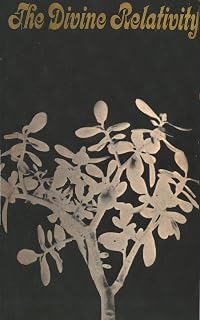
Charles Hartshorne was educated at Harvard University, where he coedited with Paul Weiss the first six volumes of The Collected Papers of Charles Sanders Peirce (1931--36) and became associated with Alfred North Whitehead. He has taught at Harvard, the University of Chicago, Emory University, and the University of Texas-Austin. Hartshorne is the show more undisputed leader in the development of process philosophy and theology since the death of Whitehead. A consummate metaphysician, Hartshorne has resurrected the ontological argument for the existence of God, reframing it in terms of contemporary modal logic. He has espoused a doctrine of panpsychism, according to which mind (with feeling) permeates all things, and has defended the compatibility of this doctrine with contemporary physics. A pantheist, Hartshorne has proposed a complex theory of God, which views divinity as a relative, processional kind of being, with an abstract eternal nature and a concrete nature subject to change and suffering. He has presented his process theology in his widely read book The Divine Relativity. In addition to his labors as teacher and philosophical author, Hartshorne is an avid birdwatcher and has written a prizewinning book, Born to Sing: An Interpretation and World Survey of Bird Song. (Bowker Author Biography) show less
Classifications
Statistics
- Members
- 169
- Popularity
- 194,610
- Reviews
- 1
- Rating
- (3.95)
- Languages
- English, German
- Media
- Paper, Ebook
- ISBNs
- 5