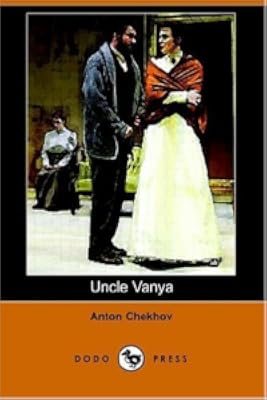
Uncle Vanya
by Anton Tschechow (Author), Cedric Messina (Producer)
On This Page
Description
Uncle Vanya is one of Anton Checkov's four major plays. It was first performed in 1900, the year after its publication, under direction by the celebrated Konstantin Stanislavski. The text reworks an earlier play by Checkov, The Wood Demon. Critics have attempted to follow Checkov's method and artistic development by tracking the changes he made to the earlier text. The cast of Uncle Vanya is significantly pared back and the ending left less happily resolved..
Tags
Recommendations






Member Reviews
"حقیقت هر چه باشد، کم تر از بلاتکلیفی و بی خبری دردناک است."
نمایشنامه دایی وانیا مجموع شخصیت هاییست که به امروز ما بی ارتباط نیستند. شخصیت هایی با پیش زمینه ها و اهداف متفاوت اما ناراضی از شرایط. اهداف پس از مدتی بیهوده به نظرشون میآیند و سبک زندگی همدیگر را نمی پسندند.
می شه از متن اینطور برداشت کرد که چخوف از طریق وانیا بعضی از "روشنفکر" های وقت که به واسطه کارهای علمی شون و نوشتن چند مقاله تبدیل به بت می شن، اما show more در عمل کمک زیادی به بشریت نداشتند، نقد می کنه. همینطور، دغدغه پزشک داستان از اوایل متن در رابطه با تخریب جنگل ها و محیط زیست و نقش انسان ها برای من جالب بودند.
من نمایشنامه زیادی نخوندم اما از خوندن این نمایشنامه که لذت بردم. شخصیت ها واقعی و ملموس بودند. دغدغه هاشون لزوما محدود به ۱۰۰ سال پیش نبود و شاید همین مساله خیلی جذاب بود.
"آدم باید وحشی بی شعوری باشد که این همه زیبایی را در بخاری یا اجاق بسوزاند، آن هم برای نابود کردن آن چه خودمان قادر به وجود آوردنش نیستیم... انسان تاکنون چه چیزی آفریده؟ فقط نابود کرده. از تعداد جنگل ها روز به روز کاسته می شود، رودها به خشکی می گرایند، شکار نایاب می شود، آب و هوا خشک و نامساعد می شود و زمین هر روز فقیرتر و زشت تر می شود." show less
نمایشنامه دایی وانیا مجموع شخصیت هاییست که به امروز ما بی ارتباط نیستند. شخصیت هایی با پیش زمینه ها و اهداف متفاوت اما ناراضی از شرایط. اهداف پس از مدتی بیهوده به نظرشون میآیند و سبک زندگی همدیگر را نمی پسندند.
می شه از متن اینطور برداشت کرد که چخوف از طریق وانیا بعضی از "روشنفکر" های وقت که به واسطه کارهای علمی شون و نوشتن چند مقاله تبدیل به بت می شن، اما show more در عمل کمک زیادی به بشریت نداشتند، نقد می کنه. همینطور، دغدغه پزشک داستان از اوایل متن در رابطه با تخریب جنگل ها و محیط زیست و نقش انسان ها برای من جالب بودند.
من نمایشنامه زیادی نخوندم اما از خوندن این نمایشنامه که لذت بردم. شخصیت ها واقعی و ملموس بودند. دغدغه هاشون لزوما محدود به ۱۰۰ سال پیش نبود و شاید همین مساله خیلی جذاب بود.
"آدم باید وحشی بی شعوری باشد که این همه زیبایی را در بخاری یا اجاق بسوزاند، آن هم برای نابود کردن آن چه خودمان قادر به وجود آوردنش نیستیم... انسان تاکنون چه چیزی آفریده؟ فقط نابود کرده. از تعداد جنگل ها روز به روز کاسته می شود، رودها به خشکی می گرایند، شکار نایاب می شود، آب و هوا خشک و نامساعد می شود و زمین هر روز فقیرتر و زشت تر می شود." show less
I read while listening to the Librivox full cast recording, which I will recommend. I found having different people reading the different parts (plus their intonations at certain times) really helped me keep track of who was who.
This play struck me as having a lot going on even through it is mostly talk rather than action. Vanya (Ivan) has been caring for his niece Sonia's estate after his sister died; now, his (former?) brother-in-law & his second wife Helena are visiting. Helena exerts a disruptive influence on all the male characters which irresistably reminded me of Helen of Troy.
I was struck by how modern some of the ideas expressed were. One example of this is the doctor's ideas about forests - his thoughts about deforestation and show more climate could have been spoken by someone today. I hadn't realized that these ideas existed in the late 1800s when Chekhov wrote this play! show less
This play struck me as having a lot going on even through it is mostly talk rather than action. Vanya (Ivan) has been caring for his niece Sonia's estate after his sister died; now, his (former?) brother-in-law & his second wife Helena are visiting. Helena exerts a disruptive influence on all the male characters which irresistably reminded me of Helen of Troy.
I was struck by how modern some of the ideas expressed were. One example of this is the doctor's ideas about forests - his thoughts about deforestation and show more climate could have been spoken by someone today. I hadn't realized that these ideas existed in the late 1800s when Chekhov wrote this play! show less
I related to this at at least nine broadly related points (the wasted life, the tragic ridiculousness of the old man who can't catch up with the fact that old he is, the feeling of universal decline emerging from one's own decline, how watching other people laugh and cry makes you laugh and cry for maybe motor neuron reasons, how very very hard it is to walk away from someone you KNOW is gonna kiss you for the second time ever, how sad it is to be smart and unaccomplished and peevish, how it's all a fuckin dumb waste man, etc., etc.), and yet it still didn't really compare to Three Sisters on any level really for me, showing the superiority of art over life I guess.
Thought I might like this after enjoying The Seagull.
Nope
It was like an unfunny episode of the Golden Girls, with men.
**spoiler alert**
The only 'action' came at the end of the third act when one character shoots at another character... and misses... twice (yawn). The fourth (final) act is superfluous and the least satisfying ending of a play I've read in a long time. What little plot there is comes to a stand-still, nothing resolves and it's so dull that the characters themselves are literally yawning.
Nope
It was like an unfunny episode of the Golden Girls, with men.
**spoiler alert**
The only 'action' came at the end of the third act when one character shoots at another character... and misses... twice (yawn). The fourth (final) act is superfluous and the least satisfying ending of a play I've read in a long time. What little plot there is comes to a stand-still, nothing resolves and it's so dull that the characters themselves are literally yawning.
First saw this at the Guthrie Theater, Minneapolis, nearly five decades ago (1969)--before I had read it in translation or (parts) in Russian. (The title, Дядя Ваня can be understood after two weeks of Russian.) The Guthrie had the tone just right--a comedy with a sad ending? Rather like so many Shakespeare tragedies with (somewhat) happy endings-- RIII,even MacBeth. Back then it was rare to see Checkov anything but dreary, quasi-tragic, similar to Ibsen. Тогда это было редко видеть Checkov ничего, кроме тоскливой, квази-трагический, похожий на Ибсена.
Dr. Astrov's resounding support for the forest resounded with me, whose family has lived in New England show more since 1661, and who grew up summers in Maine on 40 acres of field and forest, the nearest inhabited farm a mile away. Astrov might appall modern pretend conservationists paid to manage forests but who sell off the oak to create better hunting. (Even Brazilians who strip rainforest don't pretend they're land protectionists.)
Amazing how telling, how contemporary, land issues here and in the Cherry Orchard are. Of course, land was always a plague in Russia: anybody might own huge property, and not be rich. Wealth required owning the peasants to work tracts, мужики. Gogol's Chichikov discovers a tax loophole which can make him appear rich (thus marriageable), by buying dead people still on the lists. Amusing throughout. Hilarious when one sentimental landowner ironically named Bitch-son, собакевич, refuses to sell his former carriage-repairmen (?).
I suppose trees are the modern tax-roll "souls": valuable when dead, as pretend conservationists know. show less
Dr. Astrov's resounding support for the forest resounded with me, whose family has lived in New England show more since 1661, and who grew up summers in Maine on 40 acres of field and forest, the nearest inhabited farm a mile away. Astrov might appall modern pretend conservationists paid to manage forests but who sell off the oak to create better hunting. (Even Brazilians who strip rainforest don't pretend they're land protectionists.)
Amazing how telling, how contemporary, land issues here and in the Cherry Orchard are. Of course, land was always a plague in Russia: anybody might own huge property, and not be rich. Wealth required owning the peasants to work tracts, мужики. Gogol's Chichikov discovers a tax loophole which can make him appear rich (thus marriageable), by buying dead people still on the lists. Amusing throughout. Hilarious when one sentimental landowner ironically named Bitch-son, собакевич, refuses to sell his former carriage-repairmen (?).
I suppose trees are the modern tax-roll "souls": valuable when dead, as pretend conservationists know. show less
A classic work of angst and despair, set in pre-revolutionary Russia. This is a play in four acts, and one of Chekov's most famous. It is a tale of mediocrity, and the pains of mediocrity in people who know they were not born to be mediocre. An extended family is thrown together for a summer, and seething resentments gradually bubble to the surface and threaten to destroy the title character, a man brought down by his own character flaws, but unable to recognize that, and attributing it to the whims of others. This play would probably not make it through a modern theatre workshop; it is filled with long expository speeches, and you go for quite a while without knowing what the stakes are, and never quite figure out who the antagonist show more and protagonist is, because the characters seem to change roles throughout the course of the play. Still, it can speak to a modern audience, if they will allow themselves to slow down to a pace unknown in our modern world, and move with the characters through their lazy days. show less
I read while listening to the Librivox full cast recording, which I will recommend. I found having different people reading the different parts (plus their intonations at certain times) really helped me keep track of who was who.
This play struck me as having a lot going on even through it is mostly talk rather than action. Vanya (Ivan) has been caring for his niece Sonia's estate after his sister died; now, his (former?) brother-in-law & his second wife Helena are visiting. Helena exerts a disruptive influence on all the male characters which irresistably reminded me of Helen of Troy.
I was struck by how modern some of the ideas expressed were. One example of this is the doctor's ideas about forests - his thoughts about deforestation and show more climate could have been spoken by someone today. I hadn't realized that these ideas existed in the late 1800s when Chekhov wrote this play! show less
This play struck me as having a lot going on even through it is mostly talk rather than action. Vanya (Ivan) has been caring for his niece Sonia's estate after his sister died; now, his (former?) brother-in-law & his second wife Helena are visiting. Helena exerts a disruptive influence on all the male characters which irresistably reminded me of Helen of Troy.
I was struck by how modern some of the ideas expressed were. One example of this is the doctor's ideas about forests - his thoughts about deforestation and show more climate could have been spoken by someone today. I hadn't realized that these ideas existed in the late 1800s when Chekhov wrote this play! show less
Members
- Recently Added By
Lists

Bibliography for How to be a Heroine
148 works; 12 members

Recommended Reading : 600 Classics Reviewed, Editors of Salem Press, 2015
634 works; 6 members

100 knjiga
100 works; 1 member

Take Four Books
130 works; 1 member

Books Read in 2026
2,192 works; 71 members

Fav. Stage Plays / First-Time Watched / Listened To / 2025
20 works; 1 member

Plays I Saw / 2025
37 works; 1 member

Next Plays / 2025
352 works; 1 member

My Play Collection
769 works; 3 members

New Lifetime Reading Plan by Fadiman and Major
225 works; 5 members

Favourite Books
1,820 works; 316 members

Mustich's 1000 Books to Read Before You Die: A Life Changing List
1,001 works; 20 members

Greatest Books, allegedly
484 works; 9 members
1:28 p.m.'s 350 Stage Plays Challenge
94 works; 3 members

Books Read in 2018
4,360 works; 110 members

Western World's Greatest Books - Project Gutenberg
295 works; 15 members
The Top Ten: Writers Pick Their Favorite Books
240 works; 33 members

1890s
49 works; 6 members
19th Century
190 works; 16 members

Russian Literature
187 works; 36 members
Author Information

Anton Pavlovich Chekhov was born in the provincial town of Taganrog, Ukraine, in 1860. In the mid-1880s, Chekhov became a physician, and shortly thereafter he began to write short stories. Chekhov started writing plays a few years later, mainly short comic sketches he called vaudvilles. The first collection of his humorous writings, Motley show more Stories, appeared in 1886, and his first play, Ivanov, was produced in Moscow the next year. In 1896, the Alexandrinsky Theater in St. Petersburg performed his first full- length drama, The Seagull. Some of Chekhov's most successful plays include The Cherry Orchard, Uncle Vanya, and Three Sisters. Chekhov brought believable but complex personalizations to his characters, while exploring the conflict between the landed gentry and the oppressed peasant classes. Chekhov voiced a need for serious, even revolutionary, action, and the social stresses he described prefigured the Communist Revolution in Russia by twenty years. He is considered one of Russia's greatest playwrights. Chekhov contracted tuberculosis in 1884, and was certain he would die an early death. In 1901, he married Olga Knipper, an actress who had played leading roles in several of his plays. Chekhov died in 1904, spending his final years in Yalta. (Bowker Author Biography) show less

All Editions
Some Editions
Awards and Honors
Notable Lists
Series
Belongs to Publisher Series
Work Relationships
Is contained in
Has the adaptation
Has as a student's study guide
Common Knowledge
- Canonical title
- Uncle Vanya
- Original title
- Дядя Ваня; Дядя Ваня
- Alternate titles*
- Vanja-eno : kohtauksia maalaiselämästä neljässä näytöksessä; Eno Vanja : kuvaus maalaiselämästä neljässä näytöksessä
- Original publication date
- 1897; 1899 (stage) (stage)
- People/Characters
- Aleksandr Vladimirovich Serebryakov; Yelena Andreyevna Serebryakov; Sonya Alexandrovna Serebryakov; Maria Vasilyevna Voynitsky; Ivan Petrovitch Voynitsky (Uncle Vanya); Mikhail Lvovich Astrov (show all 8); Ilya Ilych Telegin (Waffles); Marina
- Related movies
- Uncle Vanya (1963 | IMDb); Dyadya Vanya (1970 | IMDb); Vanya on 42nd Street (1994 | IMDb); Country Life (1994 | IMDb); August (1996 | IMDb); Dyadya Vanya (1971 | IMDb)
- Original language
- Russian
*Some information comes from Common Knowledge in other languages. Click "Edit" for more information.
Classifications
- Genre
- Fiction and Literature
- DDC/MDS
- 891.723 — Literature & rhetoric Literatures of other languages East Indo-European and Celtic literatures Russian and East Slavic languages Russian drama 1800–1917
- LCC
- PG3456 .D5 — Language and Literature Slavic languages and literatures. Baltic languages. Albanian language Slavic. Baltic. Albanian Russian literature Individual authors and works 1870-1917 Chekhov
- BISAC
Statistics
- Members
- 1,112
- Popularity
- 22,943
- Reviews
- 29
- Rating
- (3.78)
- Languages
- 15 — Catalan, Czech, Dutch, English, Finnish, French, German, Italian, Norwegian (Bokmål), Farsi/Persian, Portuguese, Russian, Spanish, Swedish, Turkish
- Media
- Paper, Audiobook, Ebook
- ISBNs
- 153
- UPCs
- 2
- ASINs
- 32