On This Page
Description
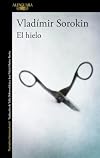
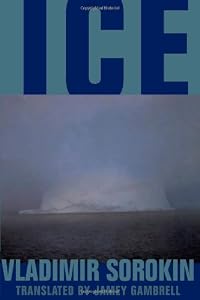
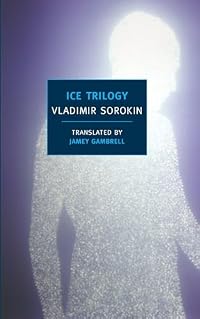
A cult of blond-haired, blue-eyed murderers are going around Moscow kidnapping people, tying them up, and then beating them on the chest with hammers made out of ice (kept in portable refrigerators) from a Siberian meteorite. The purpose of this injurious behavior is to awaken the celestial beings who are residing within them; however, only a tiny percentage of the victims survive this painful "rebirth." The survivors are given new names, a healthy bank account, and are sent out to "awaken" show more more of their kind. show lessTags
Recommendations












Member Reviews
The only reason I gave "Ice" two stars is that I finished the book... "Ice" chronicles the activity of certain blue-eyed, blond-haired people who search for others that look like themselves. When they find them, they bang on their chests with icy hammers. Some hammerees respond by speaking their “true” names through their hearts; they are rehabilitated. The rest, the “empties,” are left to die.
There are many layers to the book that I won’t detail, lest you, too, get sucked into this slippery mess and want to discover its core. Be ready: "Ice" may max out your capabilities for the willing suspension of disbelief.
Sorokin divides his book into several stylistically dissimilar sections that he links with the ice motif. The first show more part of "Ice" takes place in contemporary Russia, and the heart hammerers resemble a Russian criminal group. This part of the book is brutal, at least in the Russian original, with so much gratuitous and graphic violence, swearing, sex, and other ickiness that many readers may want to abandon the novel. (A friend did when I lent her the book.)
Why did I keep reading? For one, I wanted to finish the book to get a feel for why Sorokin has caused so much controversy. One lesson learned: Sorokin’s love for writing about bathroom-related topics made it obvious why Putin’s youth group Walking Together (Идущие вместе) used a toilet to collect Sorokin books during a protest.
Still, I have to, grudgingly, give Sorokin some credit: he has a decent sense of timing and knows how to manipulate the reader to finish a book. Just as the violence and abuse in Ice became too much, Sorokin shifted his narrative. By this point, it was too late for me to put the book down because my interest was piqued. Would the book get better? Were the hammerers an Aryan cult? What did the heart have to do with everything? Or anything? Would I send my copy of "Ice" to Moscow for flushing?
I finished and kept it. The book calmed down some but didn’t exactly improve, meaning that, unfortunately, the answers to the other questions are murky. In terms of meaning, "Ice" is as empty as the heartless victims of the hammer, and I won’t consult the other installments of Sorokin’s trilogy for further clarification. Once is enough, thanks.
There's more about "Ice" on my blog: "Vladimir Sorokin's 'Ice Capades'" show less
There are many layers to the book that I won’t detail, lest you, too, get sucked into this slippery mess and want to discover its core. Be ready: "Ice" may max out your capabilities for the willing suspension of disbelief.
Sorokin divides his book into several stylistically dissimilar sections that he links with the ice motif. The first show more part of "Ice" takes place in contemporary Russia, and the heart hammerers resemble a Russian criminal group. This part of the book is brutal, at least in the Russian original, with so much gratuitous and graphic violence, swearing, sex, and other ickiness that many readers may want to abandon the novel. (A friend did when I lent her the book.)
Why did I keep reading? For one, I wanted to finish the book to get a feel for why Sorokin has caused so much controversy. One lesson learned: Sorokin’s love for writing about bathroom-related topics made it obvious why Putin’s youth group Walking Together (Идущие вместе) used a toilet to collect Sorokin books during a protest.
Still, I have to, grudgingly, give Sorokin some credit: he has a decent sense of timing and knows how to manipulate the reader to finish a book. Just as the violence and abuse in Ice became too much, Sorokin shifted his narrative. By this point, it was too late for me to put the book down because my interest was piqued. Would the book get better? Were the hammerers an Aryan cult? What did the heart have to do with everything? Or anything? Would I send my copy of "Ice" to Moscow for flushing?
I finished and kept it. The book calmed down some but didn’t exactly improve, meaning that, unfortunately, the answers to the other questions are murky. In terms of meaning, "Ice" is as empty as the heartless victims of the hammer, and I won’t consult the other installments of Sorokin’s trilogy for further clarification. Once is enough, thanks.
There's more about "Ice" on my blog: "Vladimir Sorokin's 'Ice Capades'" show less
Finnish-Estonian production of Ice based of Vladimir Sorokin's novel performed at the Von Krahl Theatre in Helsinki
Riveting. Absolutely riveting.
And this riveting, spellbinding novel comes in two different flavors. You get to choose which one might suit your taste.
Flavor number one is to read Bro before Ice. Flavor number two is reading Ice without having read Bro. Permit me to elaborate.
Bro is Volume #1 of Vladimir Sorokin’s Ice Trilogy. Bro is the first person account of how a young Russian by the name of Alexander Snegirey has his heart awakened by Primordial Light in 1928. As part of his awakening he is given the name of Bro and told he must find his Brothers and Sisters who have also been chosen to likewise have their hearts show more awakened. The novel takes readers on Bro’s breathtaking adventure up until 1950. Ice continues the thread of the story beginning in the year 2000. Thus Bro provides not only historic context for Ice but puts the reader in the know about those who come to have their hearts awakened.
I'm glad I read Bro prior to reading Ice since I generally like to follow a story chronologically. Added to this, I would make the world's worst detective - much better for me to know the basic facts of what's going on rather than being kept in the dark.
British critic Michael Froggatt disagrees. In his review for Strange Horizons Mr. Froggatt judges Ice the strongest novel in the trilogy and goes on to say how reading Bro lessens the mystery and suspense of Ice. He concludes by suggesting a reader who is interested in tackling Vladimir Sorokin's Ice Trilogy to begin with Ice and work outwards.
Either way, Ice possesses an intensity, a surging drive right from the first pages. The narrative voice is detached, hard-edge, objective, as if a journalist recording the nitty-gritty of combat in a war zone. We encounter drug dealers, drug addicts, prostitutes, bottom of the barrel ruck and their coarse, crude, brutal, blunt way of speaking and dealing with one another – a novel not for the squeamish.
Many of the men and women are given a special call-out. Two examples: “Ilona: 17 years old, tall, thin, with a lively laughing face, leather pants, platform shoes, a white top.” - “Borenboim: 44 years old, medium height, thinning blonde hair, an intelligent face, blue eyes, thin glasses in gold frames, a dark green three-piece suit."
There’s mystery afoot, a stroke of Vladimir Sorokin infusion of radical myth mixed in with cosmic science fiction: these denizens of Moscow’s concrete canyons wonder what the hell is going on with the ice and all those primitive looking ice hammers. And the shift in their feelings. The contrast between the scummy day-to- day lives of these people and what they eventually feel in their hearts is quite striking: hard-as-nails drug kingpin Borenboim talking about his tender heart; likewise Nikolaeva the prostitute - very funny in an odd, offbeat way.
Two glimmers of refinement in this dank, cesspool world: Boremboim has a collection of Borges stories in his briefcase and Mozart is playing softly at a rehabilitation center. In Moscow 2000 overflowing with hard rock and liquor, gadgets, computer games and Hollywood posters, to know at least somebody appreciates Borges and Mozart is most refreshing.
Part Two switches to an old lady’s first person account retracing her childhood in a poor Russian village under Nazi occupation and her joining others villagers herded off to Germany to work in a factory. But then something remarkable happens. She’s singled out since she has blonde hair and blue eyes. What follows thereafter ties her to a strange brotherhood. Her worldview is forever transformed – from 1950 right up until 2000, the grueling, gritty details of her earthbound, everyday routine take a distant second to her true identity and mission.
One of the most stimulation dimensions of Ice is the way in which the story raises a number of philosophical issues. How bound are member of a particular religious cult or sect by their beliefs? Jim Jones and the mass suicides/mass murders in Jonestown, David Koresh and the Branch Davidians going up in flames in their compound in Waco, Marshall Applewhite leading Heaven’s Gate members in mass suicide - we need only think of these events to know that sects and cults can be closely linked to violence and death.
And considering the frequent instances of torture, imprisonment and murder throughout history perpetuated in the name of religion, how far are the major religions removed from sects and cults? Any time members view others through the lens of “us versus them” watch out. Brutality and viciousness of one stripe or the other usually isn’t far behind.
What are we to make of the fellowship in Ice? Those initiates speak of opening the heart but how open is their heart to those outside their fellowship? Referring to “ordinary” humans as meat machines unworthy of life has a frightening ring. And this reference to libraries; "Thousands of meat machines were always sitting there, engaged in silent madness: they attentively leafed through sheets of paper covered with letters." Sounds like a rant spouted by a semi-illiterate thug.
Witnessing the horrors of twentieth century totalitarian governments is hardly less disturbing. And how about the omnipresence of contemporary multinational corporations? Perhaps Vladimir Sorokin in his sly way is commenting on the dangers of all forms of power and coercion reducing individuals to hungry consumers or meat machines.
Even if Ice is the only novel within the trilogy one reads, it is well worth it. For fans of the author, both old and new, nothing short of all three volumes will do.
Russian author Vladimir Sorokin
"Then I saw OUR PEOPLE again. Their hearts shone. And they swarm around me. There were more and more of them. I reached out to more and more new ones, to ones that were far, far away. And finally, I saw the hearts of ALL OUR PEOPLE on this gloomy planet." - Vladimir Sorokin, Ice show less
On the dark side of today’s Moscow, among the prostitutes, the junkies and the thugs, a strange cult is operating. They capture blond and blue eyed people, take them to hidden loacations and strike them brutally in the chest with sledge hammers made of ice, all the while prompting them to speak. Most die, but in some cases the beating wakes the hearts of the victims, speaking it’s true name. When this happens, the survivor is welcomed among the “only living”, and learn of their secret origin.
In the novel’s four parts, we follow this cult’s existence during World War Two, the Stalinist times, the thawing and up to today’s brutal Russian capitalism. A lof of the connecting between the parts is left to the reader, making this show more an exciting and thought-provoking read. The last part especially, leaves me no peace, as it’s extremely open for interpretation. No more can be said of it without spoilers.
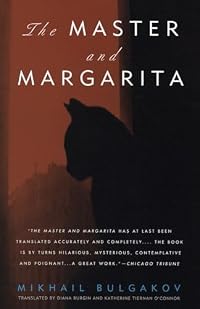
Sorokin is clearly influenced by for instance Bulkagov, and this novel actually reminds me a lot of The Master and Margarita. It has a bit of the same sense of magic and the same broad polyphonic scope. Ice is a harder, darker, novel though, and if you have a hard time with graphic descriptions of violence and sexual abuse, this is probably not for you. If you can stomach some pretty gritty realism though, and are okay with connecting the dots yourself, this is both a deeply original and readable novel that is likely to stay with you for some time. show less
In the novel’s four parts, we follow this cult’s existence during World War Two, the Stalinist times, the thawing and up to today’s brutal Russian capitalism. A lof of the connecting between the parts is left to the reader, making this show more an exciting and thought-provoking read. The last part especially, leaves me no peace, as it’s extremely open for interpretation. No more can be said of it without spoilers.
Sorokin is clearly influenced by for instance Bulkagov, and this novel actually reminds me a lot of The Master and Margarita. It has a bit of the same sense of magic and the same broad polyphonic scope. Ice is a harder, darker, novel though, and if you have a hard time with graphic descriptions of violence and sexual abuse, this is probably not for you. If you can stomach some pretty gritty realism though, and are okay with connecting the dots yourself, this is both a deeply original and readable novel that is likely to stay with you for some time. show less
Last week, when I talked with my mother, who lives in Hungary (where modern Russian literature is appreciated in a wider circle than in the US, relatively speaking) she recommended Vladimir Sorokin. Next day I looked up whether my local library has any books from him and reserved his novel titled "Ice". Two day later I picked it up and three days later I finished reading it. It was impossible to put it down, thus I stayed up till 1 AM; something I rarely do nowadays. Unfortunately my comprehension level declined after midnight and I had to reread the last tenth of the book the following day to understand what happened. I am still not sure I did. It's one of those books where the last few pages change the meaning of everything that was show more written before.
What was before is a story about a group of people who all have blond hair and blue eyes. Sounds familiar? Yes, there is a connection to Aryans, but as the second part of the book shows this group accepted people of Slavic origins to join. "Accepting" may be the wrong choice of terms as the recruiting process had one of two results: you either manage to whisper "your true name" or you die by being hit multiple times with an ice-axe. No, not like the one that was used to Kill Trotsky, this is made of special ice. I won't tell more of the story, but promise you learn eventually everything that is worth learning about the group and the ice they use.
Instead I want to tell you why I think this is stylistic masterpiece. The first half of the book is a straightforward story, running on three threads that meet at the end of this section. Each major character's outlook (body type, clothing, face…) is introduced with a 3-4 lines long description. I found this and the fact that their name was boldfaced a rather effective and clear way of organizing text. I don't recall seeing in any novel boldfacing, while in everyday business communication millions of people are using it I their emails, webpages, word processing documents. I like that Sorokin stepped over the taboo that the text of a novel has to be displayed in a linear monotone way so the text itself could speak for itself. But he changed the customs only slightly, unlike avant-garde poets and writers, who treated the letters and words as elements of a canvas, and thus relegating their work often incomprehensible in my opinion.
The second part of the book tells the story of a single person, from a first person account. This has a rather different tone; the reader truly believes that it is the voice of an uneducated farmgirl, whose life experience are both unique and typical. The unusual, fantastic events are the former, but the description of Nazi camps and being part of the Soviet system is the latter. I enjoyed reading about both. They are both horrific in their own ways, but they also felt historically accurate as much as possible.
The third section is a series of vignettes, testimonials about a product. These range from 10 lines to 3 pages. Each of these are written from a the perspective of a person on a different path of life than the others. The common element was the product theyr reviewed and the end of their experiences. Including that they all ended with the word "light" and omitted the closing period at the end of the last sentence. As if they couldn't finish it. The last, short (4 pages long) section is yet another story, this time told from a small boy's perspective. They way Sorokin managed to put himself into all these characters was genius. What he did with it, i.e. the deciphering of the meaning of the book, is a whole other matter. That I need to think more about. show less
What was before is a story about a group of people who all have blond hair and blue eyes. Sounds familiar? Yes, there is a connection to Aryans, but as the second part of the book shows this group accepted people of Slavic origins to join. "Accepting" may be the wrong choice of terms as the recruiting process had one of two results: you either manage to whisper "your true name" or you die by being hit multiple times with an ice-axe. No, not like the one that was used to Kill Trotsky, this is made of special ice. I won't tell more of the story, but promise you learn eventually everything that is worth learning about the group and the ice they use.
Instead I want to tell you why I think this is stylistic masterpiece. The first half of the book is a straightforward story, running on three threads that meet at the end of this section. Each major character's outlook (body type, clothing, face…) is introduced with a 3-4 lines long description. I found this and the fact that their name was boldfaced a rather effective and clear way of organizing text. I don't recall seeing in any novel boldfacing, while in everyday business communication millions of people are using it I their emails, webpages, word processing documents. I like that Sorokin stepped over the taboo that the text of a novel has to be displayed in a linear monotone way so the text itself could speak for itself. But he changed the customs only slightly, unlike avant-garde poets and writers, who treated the letters and words as elements of a canvas, and thus relegating their work often incomprehensible in my opinion.
The second part of the book tells the story of a single person, from a first person account. This has a rather different tone; the reader truly believes that it is the voice of an uneducated farmgirl, whose life experience are both unique and typical. The unusual, fantastic events are the former, but the description of Nazi camps and being part of the Soviet system is the latter. I enjoyed reading about both. They are both horrific in their own ways, but they also felt historically accurate as much as possible.
The third section is a series of vignettes, testimonials about a product. These range from 10 lines to 3 pages. Each of these are written from a the perspective of a person on a different path of life than the others. The common element was the product theyr reviewed and the end of their experiences. Including that they all ended with the word "light" and omitted the closing period at the end of the last sentence. As if they couldn't finish it. The last, short (4 pages long) section is yet another story, this time told from a small boy's perspective. They way Sorokin managed to put himself into all these characters was genius. What he did with it, i.e. the deciphering of the meaning of the book, is a whole other matter. That I need to think more about. show less
What can Sorokin's weird imagination can do with the Tunguska event? Here it is. Blond übermensch killing people with an ice hammer...a secret society searching its broters and sisters... Sorokin beyond doubt is one of the best contemporary russian writer.
A startling book, by any measure, as much for its construction as for its content, which roams the fringes of science fiction, while partaking of multiple genres. The book is told in 4 unequal parts. The first, and longest, is written in the style of hard-boiled Russian crime fiction known as detektivy. Rated "NC-17" for explicit sexual situations and extreme violence. The second section is the most intriguing (in all senses of that word): a memoir of a most unusual person. The third section is composed of brief, mostly satiric, snippets from multiple, unnamed narrators, although the plot continues to be advanced despite the disjunction. The fourth section is the shortest and the most enigmatic: the description of a little boy's show more afternoon. I'm going to put this book in my TBR pile again. I want some dust to settle. show less
A book of murder, sex, drugs, violence, ICE and LIGHT and a uniform being (trapped light). Sci fi or philosophy . . . a cold underlying idea . . . And God said, Let there be light: and there was light. -- and it was trapped in a fallen meteor in Old Russia. SOME FUN HISTORY (sharashkas are mentioned). Good light alians live along side us humans (meat machines, a bit condescending?); in the end they join hearts (and hands) and fade the rest of us into oblivion. Only the chose make it ... homicidal vegan blond and blue eyed none the less. A FUN idea of a primoridal Cosmic Spirit, with most of humanity consigned to the living dead . . . but an IDEA to contemplate....
Members
- Recently Added By
Lists

Russian Literature
184 works; 35 members
Author Information

66+ Works 2,997 Members
Some Editions
Awards and Honors
Awards
Distinctions
Series

Work Relationships
Is contained in
Common Knowledge
- Canonical title
- Ice
- Original title
- Лёд
- Original publication date
- 2002
Classifications
- Genres
- Fiction and Literature, General Fiction, Science Fiction
- DDC/MDS
- 891.735 — Literature & rhetoric Asian Literature East Indo-European and Celtic literatures Russian and East Slavic languages Russian fiction 1991–
- LCC
- PG3488 .O66 .L413 — Language and Literature Slavic languages and literatures. Baltic languages. Albanian language Slavic. Baltic. Albanian Russian literature Individual authors and works 1961-2000
- BISAC
Statistics
- Members
- 243
- Popularity
- 133,269
- Reviews
- 15
- Rating
- (3.42)
- Languages
- 15 — Czech, Dutch, English, Finnish, French, German, Hungarian, Italian, Lithuanian, Polish, Russian, Slovak, Slovenian, Spanish, Swedish
- Media
- Paper, Ebook
- ISBNs
- 20
- ASINs
- 3