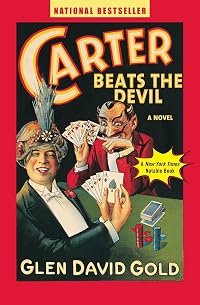
Carter Beats the Devil
by Glen David Gold
On This Page
Description
The mysterious death of President Harding in 1923 is only the curtain raiser to this extraordinary novel of magic and science. Charles Carter is Carter the Great, a name given to him by the supreme showman, Harry Houdini. Carter was born into privilege but became a magician out of need. Only at the moment of the performance, when an audience is brought together by a single experience, can Carter defeat his crippling fear of loneliness. But with every step into the twentieth Century, the show more stakes are growing higher. Science and the cinema are fast out-stripping even the master magician and instead of that single magic moment, there is only a headlong rush into an uncertain future. show lessTags
Recommendations



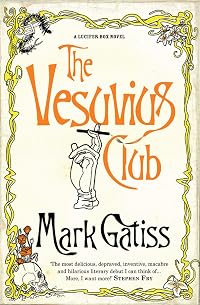
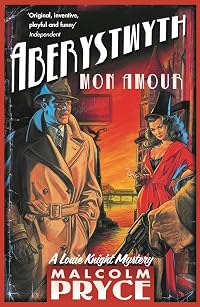
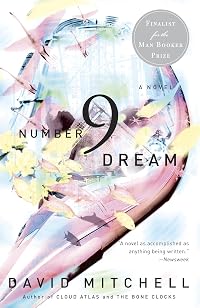

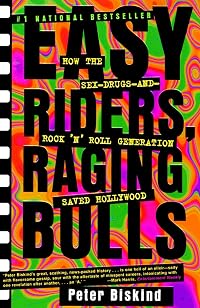
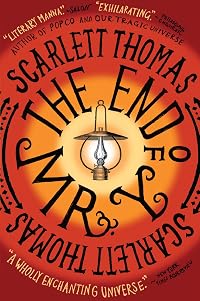
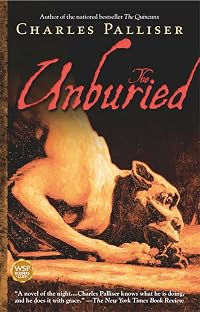

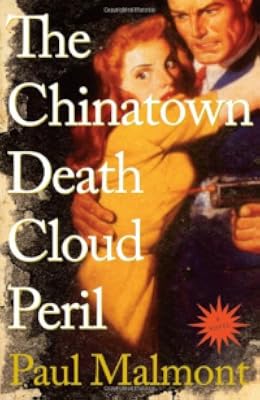
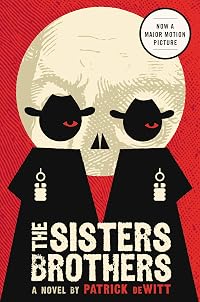



Member Recommendations

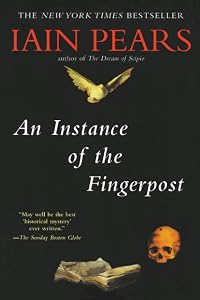
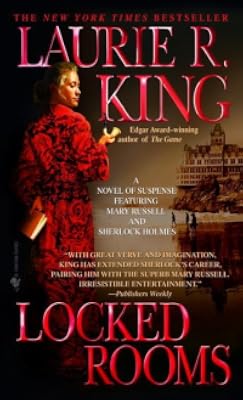
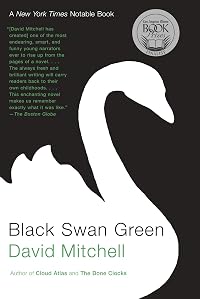
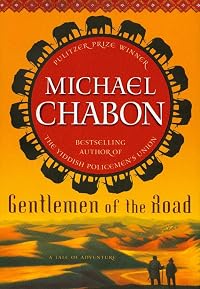
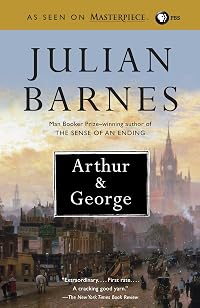
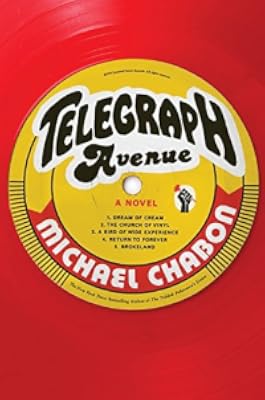
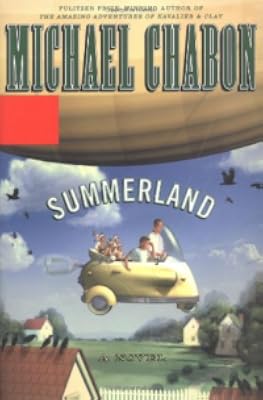
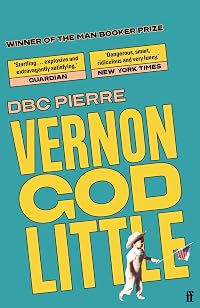
shanerichmond The lives of two magicians, and a slightly old- fashioned mode of storytelling seem to connect these books in my mind. Perhaps they are not that similar under the surface but they are both excellent.
kitzyl Commonalities include: nostalgia for the golden (criminal/magic) days gone by, details of an old and mysterious craft (horology/sleight of hand), flashbacks to character's childhood which explains their nowadays persona, mystery-thriller involving technological machines (truth-automata-bees/television).
Member Reviews
Another reread from over a decade ago. It was messy and meandering and glorious, just like a magic show. It was over-stimulating with plots that seem to go nowhere (and some of them don't) but it didn't matter, because sometimes big moonless nightskies can be as nice as (and necessary for!) spectacular fireworks.
At times the story read like a movie script, albeit one that would be difficult to adapt. I liked how the book took full advantage of the textual advantage in depicting magic ✨illusions✨. What a low-cost feast for the imagination and so much to imagine too!
Aside: (1) This came out around the same time as Kavalier and Clay, and it's a shame that this one is not as popular. It's definitely more sprawling and fun, perhaps more show more befitting of a historical fiction on magic. (2) The author was married to the Lovely Bones author! The early 2000s must have been a heady time for them. show less
At times the story read like a movie script, albeit one that would be difficult to adapt. I liked how the book took full advantage of the textual advantage in depicting magic ✨illusions✨. What a low-cost feast for the imagination and so much to imagine too!
Aside: (1) This came out around the same time as Kavalier and Clay, and it's a shame that this one is not as popular. It's definitely more sprawling and fun, perhaps more show more befitting of a historical fiction on magic. (2) The author was married to the Lovely Bones author! The early 2000s must have been a heady time for them. show less
A fictionalized biography which follows stage magician Charles Joseph Carter (AKA Carter the Great) from his humble beginnings when Harry Houdini takes him under his wings to his final performance, where he must genuinely beat the devil, albeit a worldly one, in order to save his own and his friends' lives. Carter is a great character and it is such fun to follow him around the world in all his adventures. It's been a while since I've read such a genuinely nice character that I still found interesting - most of the time I want an edge, but in Carter's case, it's his way of viewing the world that engages, not his shady dealings. The story does go on a walkabout on several occasions, following a few characters whose backstories could show more easily have been surmised from Carter's story rather than having focus of their own. However, as soon as the spotlight is back on Carter, the flow and interest is back as well. Other than the Phoebe-reveal (which is much too deus ex machina to be satisfactory), the ending has a great (and quite action-filled) resolution. show less
This is a wonderful blending of fact and fiction, focusing on Charles Carter, a magician in the early part of the 20th Century. The inspiration for Gold's story, aka the jumping off point, is the somewhat suspicious death of President Warren G. Harding. From that moment of historical significance, Gold weaves an amazing tale full of wonder, as well as perseverance, grief, and hope. It also makes clear that a magic trick is not the same as an illusion, while continually reminding the reader of the importance of misdirection.
Because Harding, in the book, attended Carter's show shortly before he died, participating in the mysterious final act of illusion, a determined Secret Service agent becomes convinced Carter is somehow involved in show more the president's death, a plot thread that gives the story most of its tension. A digression to Carter's childhood and early career, leading up to Harding's death and beyond, gives the story its soul. Carter quickly became one of my favorite characters, someone I couldn't help but root for, with his almost childlike sense of joy and confidence that things will work out.
I'd barely read the first hundred pages before turning to the "Program Notes" at the back, then Googling new characters as they appeared so I could know which characters were based on actual people. And as a Marx Brothers fan, I got a thrill when, during the time Carter worked on a vaudeville circuit, a comedy act titled "Fun in Hi Skule" and therefore, knew the Marx Brothers would show up. In fact, Julius (Groucho) does show up with a small speaking role. And that's all I'll say about the many delights found in this book.
Writing about magic and illusions can't be easy, but Gold pulled it off spectacularly, grounding the story in believable characters, the ones based on reality and the ones created to fill out the story. This book is one of the most entertaining books I've ever read. show less
Because Harding, in the book, attended Carter's show shortly before he died, participating in the mysterious final act of illusion, a determined Secret Service agent becomes convinced Carter is somehow involved in show more the president's death, a plot thread that gives the story most of its tension. A digression to Carter's childhood and early career, leading up to Harding's death and beyond, gives the story its soul. Carter quickly became one of my favorite characters, someone I couldn't help but root for, with his almost childlike sense of joy and confidence that things will work out.
I'd barely read the first hundred pages before turning to the "Program Notes" at the back, then Googling new characters as they appeared so I could know which characters were based on actual people. And as a Marx Brothers fan, I got a thrill when, during the time Carter worked on a vaudeville circuit, a comedy act titled "Fun in Hi Skule" and therefore, knew the Marx Brothers would show up. In fact, Julius (Groucho) does show up with a small speaking role. And that's all I'll say about the many delights found in this book.
Writing about magic and illusions can't be easy, but Gold pulled it off spectacularly, grounding the story in believable characters, the ones based on reality and the ones created to fill out the story. This book is one of the most entertaining books I've ever read. show less
I've got to give Glen David Gold credit for looking for -- and finding -- a good story in some unexpected places. It's one thing to write a book of historical fiction that's set during the French Revolution, or the First World War, or some other well-publicized historical epoch. It's quite another to build your story about Warren G. Harding, fill it with vaudeville-era magicians not named "Harry Houdini" and Secret Service agents, and set it in Oakland, California. You can't accuse this author of choosing a well-trodden path, that's for sure. And he certainly knows his material: you'll learn a lot about the mechanics and theories of stage magic, the star-crossed twenty-ninth president, and the history of Northern California's second- show more (or maybe third-) most famous city.
And, at a sentence level, you can't call him a bad writer, either. His prose is fluid and flexible, and he imbues his subjects with a lively -- dare I say slightly magical? -- touch that keeps you turning the pages without flirting with pulp theatrics or cheap atmosphere. Gold does a more-than-creditable job of bringing his subjects to life, and, better yet, he skillfully evoking a time in which California still felt very much like a frontier of some sort. The Northern California described in this novel is still somewhat unformed, a place where eccentrics who'd struck it rich still had some room to spread their wings. But I felt that this book's eccentricity was, in a sense, both its strongest and weakest suit. "Carter Beats the Devil" features pirates, smugglers, an enchanting blind woman, a trained lion, a traveling magic show and much more. Its characters experience love and revenge and loss and betrayal and outrageous good fortune. Because Charles Carter, the book's namesake, still experiences a good deal of genuine sadness in his his life, you can't call "Carter Beats the Devil" camp, but some readers will find it a touch too whimsical. It might be no accident that it did quite well on the sales charts just a year before the tragedy that defined the first decades of the new century occurred: I'm not sure it would have fit the national mood after the towers fell. But this you might as well chalk up this criticism to personal preference: this one is, if not the most profound novel I've ever read, a ripping yarn by any reasonable definition. Be warned, though: at well over five hundred pages, it takes a while to get where it's going. Recommended if you suspect that the right author could combine all of the disparate plot elements above into a into one really good read. show less
And, at a sentence level, you can't call him a bad writer, either. His prose is fluid and flexible, and he imbues his subjects with a lively -- dare I say slightly magical? -- touch that keeps you turning the pages without flirting with pulp theatrics or cheap atmosphere. Gold does a more-than-creditable job of bringing his subjects to life, and, better yet, he skillfully evoking a time in which California still felt very much like a frontier of some sort. The Northern California described in this novel is still somewhat unformed, a place where eccentrics who'd struck it rich still had some room to spread their wings. But I felt that this book's eccentricity was, in a sense, both its strongest and weakest suit. "Carter Beats the Devil" features pirates, smugglers, an enchanting blind woman, a trained lion, a traveling magic show and much more. Its characters experience love and revenge and loss and betrayal and outrageous good fortune. Because Charles Carter, the book's namesake, still experiences a good deal of genuine sadness in his his life, you can't call "Carter Beats the Devil" camp, but some readers will find it a touch too whimsical. It might be no accident that it did quite well on the sales charts just a year before the tragedy that defined the first decades of the new century occurred: I'm not sure it would have fit the national mood after the towers fell. But this you might as well chalk up this criticism to personal preference: this one is, if not the most profound novel I've ever read, a ripping yarn by any reasonable definition. Be warned, though: at well over five hundred pages, it takes a while to get where it's going. Recommended if you suspect that the right author could combine all of the disparate plot elements above into a into one really good read. show less
"Carter" is one of those rare books that keeps me up late, mowing through pages so I'll can assure myself that the protagonist "will be okay." This book had several of those perilous moments of doubt and danger, and, as the titular magician commands, I will not reveal the secrets of the action. Suffice to say that this absorbing tale of a vaudeville magician clips along at a good pace, and often breaks into a gallop, despite occasional roadblocks when the narrative mires down in tangled conspiracies or technological explanations. Particularly enjoyable moments include a surprise cameo by Houdini, and a truly rollicking conclusion which, if it doesn't keep you on the edge of your seat, will certainly keep your nose inches from the page.
Still reverberating from the smash ending. I kept laughing aloud as another callback was invoked and another expectation exploded. I was quite surprised to read in the afterward that (the Great) Charles Carter was a real person. The character was handled with so much knowing that I assumed he was a vivid fiction placed carefully in the historic setting. I enjoyed it as a visit to teens/twenties SF and Oakland. And the author's messages gave me pleasure: Recurrence is inevitable. Wonder is the purpose of life and it is the Devil who diverts us toward acceptance and fatigue. The only quibbles I'll mention are 1) that Charles' and James' father's outre interests are very important and then never mentioned again; 2) James and Tom's show more partnership is perhaps too modern. Really fun -- what great prose in the service of a truly creative and entertaining ride. show less
A fictionalized account of the life and times of Charles Carter, stage magician.
I am over the bloody moon about this book! I feel like Glen David Gold compiled a list of all my favourite things, (well, most of my favourite things), and turned it into a great, big, wallowsome story.
Wallowsome is the perfect word for it. I became deeply involved in the story, but I still could not read it quickly. I hunkered down with it for four days, during which I often wondered how it was that the book hadn’t yet ended. I mean, I’d been reading it forever, and so much had happened, and yet it just kept going and going and going. I’d start getting annoyed.
Then something absolutely wonderful would happen, and all my annoyance would melt away. I show more was glad the book was long and slow and wallowsome, because I didn’t really want to let go of Carter and his magical world.
The theatrics alone probably would’ve been enough for me. Carter’s a stage magician at a time when stage magic is in decline, so there’s scads of stuff about his struggles to keep his act up and running in the face of dwindling audiences and financial ruin. Gold makes it all come alive. Carter is a fantastic character; he snuck up on me, slowly but surely, until I was truly committed to him. I felt his love for the theatrical life, and I was desperate to see him succeed because I didn't want him to have to give up his dreams. Even though the Overture makes it clear that he'll someday become a headliner, Act I tricked me into forgetting that. I worried about him constantly.
Then on top of that, there’s a big mystery going on in the background, complete with dead presidents and technological marvels and killers who slaughter innocents with decks of playing cards. I don’t want to say too much more about that, because I don’t want to ruin it for all of you, but I was quite impressed with it.
And best of all, Gold manages to integrate all his storylines. I’ll tell you, I thought the odds were against him. I thought I was going to find at least one part of the book unsatisfying. I didn’t. I mean, he definitely pays more attention to some things than others, but it all ties together in the end. It all works.
There were also a couple of little things that I reacted to on a personal level. I’m big on anything that deals with family, and I loved the relationship between Carter and his brother, James. They’re such great siblings. I also loved that James’s sexuality is almost a non-issue. It was nice to see, especially since I'd just finished a book with some horribly homophobic content. And the period detail... oy vey, do I ever love stuff set in the 10’s and 20’s! (I won’t be able to say that soon. People will scratch their heads and wonder why I don’t just say, “I love stuff that’s set in modern times"). Finally, I loved the animals. Baby and Tug are both adorable.
So me, I’m pretty durned happy right about this book. It tickled me pink and delighted the hell out of me. I urge you to give it a go at your earliest convenience.
(A longer version of this review originally appeared on my blog, Stella Matutina). show less
I am over the bloody moon about this book! I feel like Glen David Gold compiled a list of all my favourite things, (well, most of my favourite things), and turned it into a great, big, wallowsome story.
Wallowsome is the perfect word for it. I became deeply involved in the story, but I still could not read it quickly. I hunkered down with it for four days, during which I often wondered how it was that the book hadn’t yet ended. I mean, I’d been reading it forever, and so much had happened, and yet it just kept going and going and going. I’d start getting annoyed.
Then something absolutely wonderful would happen, and all my annoyance would melt away. I show more was glad the book was long and slow and wallowsome, because I didn’t really want to let go of Carter and his magical world.
The theatrics alone probably would’ve been enough for me. Carter’s a stage magician at a time when stage magic is in decline, so there’s scads of stuff about his struggles to keep his act up and running in the face of dwindling audiences and financial ruin. Gold makes it all come alive. Carter is a fantastic character; he snuck up on me, slowly but surely, until I was truly committed to him. I felt his love for the theatrical life, and I was desperate to see him succeed because I didn't want him to have to give up his dreams. Even though the Overture makes it clear that he'll someday become a headliner, Act I tricked me into forgetting that. I worried about him constantly.
Then on top of that, there’s a big mystery going on in the background, complete with dead presidents and technological marvels and killers who slaughter innocents with decks of playing cards. I don’t want to say too much more about that, because I don’t want to ruin it for all of you, but I was quite impressed with it.
And best of all, Gold manages to integrate all his storylines. I’ll tell you, I thought the odds were against him. I thought I was going to find at least one part of the book unsatisfying. I didn’t. I mean, he definitely pays more attention to some things than others, but it all ties together in the end. It all works.
There were also a couple of little things that I reacted to on a personal level. I’m big on anything that deals with family, and I loved the relationship between Carter and his brother, James. They’re such great siblings. I also loved that James’s sexuality is almost a non-issue. It was nice to see, especially since I'd just finished a book with some horribly homophobic content. And the period detail... oy vey, do I ever love stuff set in the 10’s and 20’s! (I won’t be able to say that soon. People will scratch their heads and wonder why I don’t just say, “I love stuff that’s set in modern times"). Finally, I loved the animals. Baby and Tug are both adorable.
So me, I’m pretty durned happy right about this book. It tickled me pink and delighted the hell out of me. I urge you to give it a go at your earliest convenience.
(A longer version of this review originally appeared on my blog, Stella Matutina). show less
Members
- Recently Added By
Published Reviews
ThingScore 100
Here is a book - a first novel, no less - to blow you away. It seeks to stun and amaze and deceive and, always, to entertain; and it seldom misses a trick in 600 pulsating pages. The style may be School of Doctorow, with florid flushes of John Irving, but the essential conceit is wholly original
added by simon_carr
This novel casts a spell that is sly, intoxicating, deceitful and enduring. Savour its every page, and don't believe a word.
added by simon_carr
Lists

Historical Fiction
889 works; 91 members

Top Five Books of 2018
802 works; 265 members

Books Read in 2020
4,379 works; 124 members

A Novel Cure
742 works; 23 members
Page Turners
185 works; 11 members

Fiction with Men's Given Names in the Title
302 works; 11 members

Jones & Newman: Best Horror Books Further Recommended Reading
577 works; 4 members

Reading Glasses Podcast
410 works; 3 members

Books Read in 2001
194 works; 4 members
Author Information

7+ Works 3,360 Members
Awards and Honors
Series
Belongs to Publisher Series
Common Knowledge
- Canonical title
- Carter Beats the Devil
- Original title
- Carter Beats the Devil
- Original publication date
- 2001
- People/Characters
- Charles Carter; Harry Houdini; Warren G. Harding; Jack Griffin; Philo Farnsworth; Phoebe Kyle (show all 81); Annabelle Bernhardt; E. F. Albee; Albert; Tony Alhino; Aurora; Baby; Captain Berger; Boone; Charles Carter III; James Carter; Lillian Carter; Amanda Chong; Amy Chong; Cleo; Cooper; Tom Crandall; Leon Czolgosz; Jossie Dover; Esperanza; Elma "Pem" Farnsworth; Max Fritz; Rabbi Golod; Handsome; Handsome III; Florence Harding; Jessie Hayman; Bechara Hemaidan; Hollis; Jake; Jan; Jenks; Jimmy; Lupe Juarez; Marissa Juarez; Evelyn Kowalski; Karl Kowalski; Ledocq; Lilli Marlene; Francis Martinka; Chico Marx (Leonard); Groucho Marx (Julius); Gummo Marx (Milton); Harpo Max (Adolph); Murdoch; Mysterioso; Francis O'Brien; Sarah O'Leary; John Osborn; Minnie Palmer; Carlo Roody; Samuel; Samuelson; August Schultz; Scott; Bernie Simons; Francis Marion Smith (Borax Smith); Patrick Smyth; The Spider, Russian anarchist; Edmund Starling; Stutz; Joe Sullivan; Dr Talbot; Howard Thurston; Tug; Tulang; Tessie Wall; Wheeler; Olive White; Wilbur; Chase Wiley; John Wilkie; Willie; Captain Willow; Herbert Yardley; Madame Zinka
- Important places
- Oakland, California, USA; San Francisco Bay Area, California, USA; California, USA; Koh Pheung Thawng, Thailand; University of California, Berkeley, California, USA
- Important events
- Assassination of William McKinley ( [1901]); Death of Warren G. Harding ( [1923]); Jazz Age
- Related movies
- Carter Beats the Devil (2013 | IMDb)
- Epigraph
- The most beautiful experience we can have is the mysterious. It is the fundamental emotion which stands at the cradle of true art and true science. Whoever does not know it and can no longer wonder, no longer marvel, is as go... (show all)od as dead, and his eyes are dimmed.
- Albert Einstein (Overture) - Dedication
- For my assistant
the mysterious Miss Alice - First words
- On Friday, August third, 1923, the morning after President Harding's death, reporters followed the widow, the Vice President, and Charles Carter, the magician.
- Last words
- (Click to show. Warning: May contain spoilers.)With a chuckle, Tulang slowly fell back into his dream, one he had almost nightly, about a day so many years ago, the day of the greatest magic show he had ever seen.
- Blurbers
- Chabon, Michael; Franzen, Jonathan; Fowler, Karen Joy; Baker, Kevin; Bender, Aimee; Caveney, Mike
- Original language
- English
Classifications
Statistics
- Members
- 2,760
- Popularity
- 6,670
- Reviews
- 58
- Rating
- (4.07)
- Languages
- 8 — Dutch, English, Finnish, French, German, Italian, Portuguese, Spanish
- Media
- Paper, Audiobook, Ebook
- ISBNs
- 29
- ASINs
- 6