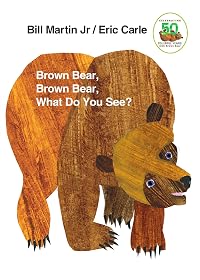
Brown Bear, Brown Bear, What Do You See?
by Bill Martin, Jr., Eric Carle (Illustrator)
Brown Bear and Friends (1)
On This Page
Description
Children see a variety of animals, each one a different color, and a teacher looking at them.Tags
Recommendations


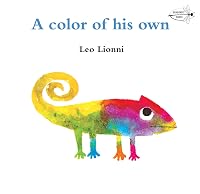
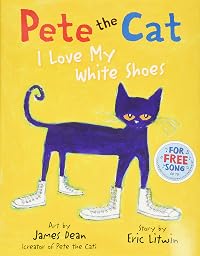
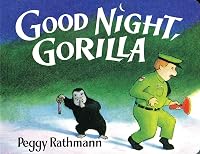
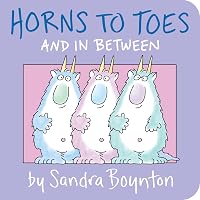
Member Recommendations
Member Reviews
This one got my little storytime visitor really engaging, without major prompting. They made animal noises and recognized animals, which made it an extra fun session. I read these books as a kid, but they're still really fun for little readers today. Highly recommend for storytimes!
Brown Bear, Brown Bear, What Do You See? is a great early childhood picture book that uses repetition and pattern to help young readers build confidence and predict what comes next. The story moves through a sequence of animals and colors, with each page repeating the same sentence structure. This makes it really effective for beginning readers and also works well as a read-aloud.
The illustrations are bright and bold, which keeps kids interested and helps connect the words to the images. The predictable text pattern supports early literacy skills because children can quickly join in and “read” along even if they don’t know every word yet. It also helps reinforce color recognition and animal identification.
In a classroom setting, show more this book is especially useful for participation and engagement. Kids can chant the lines together, practice memory skills, and connect language with visuals. Even though it’s simple, it’s very purposeful and well-designed for early learners. Overall, it’s a classic that’s both fun and educational. show less
The illustrations are bright and bold, which keeps kids interested and helps connect the words to the images. The predictable text pattern supports early literacy skills because children can quickly join in and “read” along even if they don’t know every word yet. It also helps reinforce color recognition and animal identification.
In a classroom setting, show more this book is especially useful for participation and engagement. Kids can chant the lines together, practice memory skills, and connect language with visuals. Even though it’s simple, it’s very purposeful and well-designed for early learners. Overall, it’s a classic that’s both fun and educational. show less
I really enjoyed reading "Brown Bear, Brown Bear, What Do You See?" because it is much more fun than it looks at first. The repeated question "what do you see?" made me want to keep turning the pages to find out which animal would appear next. Even though the story is very simple, it does a great job of keeping young readers involved and encouraging them to read alone. One of the best parts of the book is the bright, colorful illustrations. The pictures catch your attention right away and make each animal easy to recognize. The repetition and predictable pattern help children learn colors, animal names, and build confidence in their reading. I liked how the story kept my attention, even though there are very few words on each page.
This children's book captivates its readers with vibrant illustrations and rhythmic text. This picture book introduces children to colors, animals, and pattern recognition through its repetitive and predictable structure. This makes this book perfect for early readers. Themes of observation and curiosity allow readers to explore what each animal sees next. The bold and colorful artwork is engaging and helps children connect the visuals to text. This book encourages language development, visual learning and memory skills while keeping children entertained. This book is a perfect choice for story time with your children, it has encouraged bonding time with my own.
In Brown Bear, Brown Bear, What Do You See? by Bill Martin Jr. and Eric Carle, the theme revolves around color and animal recognition, engaging young readers through repetition and rhythm. The character development is minimal but effective, as each animal introduces a new color, creating a pattern that builds with anticipation.
The use of literary elements like rhyme and repetition is key to making the story both engaging and educational. The illustrations, bold and colorful, are integral to the design, helping children associate each animal with its corresponding color. This book fits into the educational genre, promoting early learning, language development, and cognitive skills for young children.
Personally, I vividly recall the show more reasons I cherished this book during my childhood. The evolving sequence of animals and vibrant colors, coupled with the rhythmic flow, consistently brought me joy. show less
The use of literary elements like rhyme and repetition is key to making the story both engaging and educational. The illustrations, bold and colorful, are integral to the design, helping children associate each animal with its corresponding color. This book fits into the educational genre, promoting early learning, language development, and cognitive skills for young children.
Personally, I vividly recall the show more reasons I cherished this book during my childhood. The evolving sequence of animals and vibrant colors, coupled with the rhythmic flow, consistently brought me joy. show less
I saw this in the doctor's office today and nostalgia seized me. The great thing about elementary school is that teachers read out loud, the class is usually sitting on a cozy rug surrounded by pillows, and something about the young mind likes to remember words and tones verbatim. At 26 years of age, I can read this book with the voices of my kindergarten teacher reading a line and pointing words, molding her lips without saying anything, and then the class following along.
And in all irony--or perhaps a secret purpose--the sheep is black.
And in all irony--or perhaps a secret purpose--the sheep is black.
I really enjoyed reading this book, and the style of writing that was packed inside this picture book. The book was organized, and had a pattern in the way the text was written. I liked the rhyming scheme within the text, which attracts the readers to hold their interest throughout the whole book. The illustrations were very appealing to the eye, and enhanced the story. The book did push readers to think about the message from the text of emotions, and how to handle them. The writing in the book was engaging for readers, from the catchy words to the colorful illustrations, I think this book is a good book for children.
Members
- Recently Added By
Lists

Best children's picture books
377 works; 85 members

Best Children's Books You've Read
197 works; 75 members

1001 Children's Books You Must Read Before You Grow Up
774 works; 101 members

Top-Rated Children's Books
87 works; 16 members

Best Board Books for Babies
53 works; 13 members

Brightly Beaming Curriculum Books
281 works; 8 members

75 Books for Literacy Block: Fall 2016
17 works; 2 members

Books with Colourful Titles
171 works; 8 members

Storytime
145 works; 2 members

Sense of Sight (recc titles)
10 works; 1 member

Puffin Books 70th anniversary handbook recommendations
537 works; 10 members

Youth: Zoology
128 works; 1 member

Youth: Poetry
124 works; 1 member

75 Books for Fall Literacy Block - Dr. Reed
67 works; 2 members

Youth: Arts & Crafts
156 works; 1 member

1960s
281 works; 16 members
Before Austen Comes Aesop
318 works; 9 members

Early Picture Books
467 works; 9 members
BitLife
212 works; 4 members
Favorite Picture Books
479 works; 160 members

Favorite Picture and Board Books
480 works; 1 member

Big Books for Storytime
103 works; 1 member

Read Aloud Revival
108 works; 4 members

Overdue Podcast
806 works; 9 members
Author Information

205+ Works 72,716 Members
Children's writer Bill Martin, Jr. was born and raised in Hiawatha, Kansas. Ironically, the future early childhood educator had difficulty reading until he taught himself, before graduating with a teaching certificate from Emporia State University. After graduation, he taught high school drama and journalism in Kansas. He served in the Army Air show more Force as a newspaper editor during World War II. He wrote his first book, The Little Squeegy Bug, for his brother, Bernard, an artist, to illustrate while recuperating from war wounds. It was published in 1945 and the brothers would go on to collaborate on 10 more books by 1955. He earned a master's degree and doctorate in early childhood education from Northwestern University and became principal of an elementary school in Evanston, Ill., where he developed innovative reading programs. In 1962 Martin moved to New York City to become editor of the school division of Holt, Rhinehart and Winston where he developed the literature-based reading programs Sounds of Language and The Instant Readers. Martin returned to full-time writing in 1972 and ended up writing over three hundred children's books during his career. His titles include; Brown Bear, Brown Bear, What do You See?, Polar Bear, Polar Bear, What do you Hear?, The Ghost-Eye Tree, Barn Dance, and Chicka, Chicka, Boom, Boom. He died on August 11, 2004 at the age of 88. (Bowker Author Biography) show less

Eric Carle is an award-winning, children's picture book author and illustrator whose most recognized work is The Very Hungry Caterpillar Board Book. Carle was born to German parents in 1929 in Syracuse, New York. The family returned to Germany in 1935, moving to a suburb of Stuttgart. Carle disliked high school, quitting at the age of 16 before show more graduation. He was admitted as the youngest student to the Akademie der bildenden Kunste, an art school. After finishing at the Akademie, he worked as a poster designer for the U.S. Information Center in Germany until 1952, when he moved back to New York City. He was a graphic designer at the New York Times and later worked as an art director at L.W. Frohlich & Co. In 1963, Bill Martin, Jr. saw a poster of a red lobster that Carle had designed and asked him to illustrate Brown Bear, Brown Bear, What Do You See?, thus launching his freelance career. Among his many children's books are Dream Snow, Hello, Red Fox, The Very Clumsy Click Beetle, and Pancakes, Pancakes! His title The Artist Who Painted a Blue Horse made Publisher's Weekly Best Seller List for 2011. His title Brown Bear Brown Bear What to You See? made The New York Times Best Seller List for 2012. In 2015 he made The New Zealand Best Seller List with Love from the Very Hungry Caterpillar. Eric Carle, beloved children's book author and illustrator, died on May 23, 2021. He was 91. (Bowker Author Biography) show less
Awards and Honors
Notable Lists
Series

Belongs to Publisher Series
Work Relationships
Is contained in
Common Knowledge
- Canonical title
- Brown Bear, Brown Bear, What Do You See?
- Original title
- Brown Bear, Brown Bear, What Do You See?
- Original publication date
- 1967; 1992; 1992 (newly illustrated edition) (newly illustrated edition); 1996 (board book) (board book)
- People/Characters
- Brown Bear; Red Bird; Yellow Duck; Blue Horse; Green Frog; Purple Cat (show all 10); White Dog; Black Sheep; Goldfish; Teacher
- First words
- Brown Bear, Brown Bear, What do you see?
- Quotations
- Red bird, red bird, what do you see? I see a yellow duck looking at me.
Teacher,
Teacher,
What do you see?
I see...
I see a purple cat looking at me.
"Mother, mother, What do you see?" "I see beautiful children looking at me." - Last words
- (Click to show. Warning: May contain spoilers.)That's what we see.
- Original language
- English
Classifications
Statistics
- Members
- 18,645
- Popularity
- 324
- Reviews
- 782
- Rating
- (4.29)
- Languages
- 24 — Albanian, Arabic, Bengali, Dutch, English, French, German, Gujarati, Hindi, Italian, Japanese, Korean, Kurdish, Panjabi, Farsi/Persian, Polish, Portuguese, Somali, Spanish, Tamil, Turkish, Urdu, Vietnamese, Chinese, traditional
- Media
- Paper, Audiobook, Ebook
- ISBNs
- 136
- UPCs
- 7
- ASINs
- 52