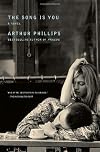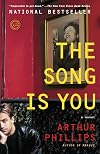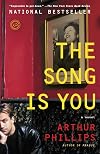
The Song is You
by Arthur Phillips 
On This Page
Description
Fiction. Literature. Romance. HTML:BONUS: This edition contains a The Song Is You discussion guide and excerpts from Arthur Phillips's The Tragedy of Arthur, Prague, The Egyptologist, and Angelica.Each song on Julian’s iPod, “that greatest of all human inventions,” is a touchstone. There are songs for the girls from when he was single, there’s the one for the day he met his wife-to-be, there’s one for the day his son was born. But when Julian’s family falls apart, even music show more loses its hold on him.
Until one snowy night in Brooklyn, when his life’s soundtrack—and life itself—start to play again. Julian stumbles into a bar and sees Cait O’Dwyer, a flame-haired Irish rock singer, performing with her band, and a strange and unlikely love affair is ignited. Over the next few months, Julian and Cait’s passion plays out, though they never meet. What follows is a heartbreaking dark comedy, the tenderest of love stories, and a perfectly observed tale of the way we live now. show less
Tags
Recommendations







Member Recommendations
elenchus Similar taste in music by the protagonists, but a very different novel. Both very good.
Member Reviews
The central concept of a person experiencing personal grief in middle age and turning to art, in this case music, in some ways functions as a set piece, there to provide Phillips a forum for commenting on love, loss, and expectation. His prose and the way he captures interpersonal dynamics, emotion and sensation, lend the novel heft, not the action or past histories revealed as the plot unfolds.
At the same time, The Song Is You is not a character piece, in that the point does not seem to be understanding any character's personality or motives, or even to focus on the character's interpersonal relationships, so much as it is to examine the pragmatic influence of ideals on the protagonist's everyday life. The novel explores this theme by show more relating the challenge of relating directly to music, rather than to the musician or various other people involved in making that music. Not that one can't relate to the musicians, too, if the musicians are interesting to you, but the challenge is whether it's possible to relate to the music in itself, to interact with it, and if so, what that would be like. It seems to me that Phillips observes that it's strangely difficult to bring music as an abstraction into one's life without somehow damaging the music or your experience of it. This theme is for me the heart of the novel.
Phillips's protagonist, Julian Donahue, shares my general musical appreciation, both specific artists and the influences shaping his overall taste (1970s and 1980s popular music, 1940s jazz standards, and all that flows from those twin tributaries). I also recognise the connection Julian has to music, how specific songs connect and even narrate experiences, without this link being constrained to just one event or experience, necessarily. In this way, the leitmotif of music is more effective here than it is in Hornsby's High Fidelity, though I enjoyed that, too.
Phillips also has an understated way of weaving musical allusion and lyrical quotations into descriptions, and it is this talent that resonated with me. He does not resort to lists or name-dropping but integrates the story or character at hand to the music, to the extent there were several occasions I could not identify the reference but felt confident there was one. In one instance, Julian's father weaves a quote from a jazz standard into his dialogue [205], and Phillips doesn't call attention to it at all, just as it's likely Julian (at the time no older than 12) doesn't recognise it as a lyric. But we know his Dad would know it, and would use it in conversation in just that way.
I had hopes that Julian and the musician Cait would never meet, even as I enjoyed their distant communications: the novel unfolded in part as a modified epistolary narrative. My wish that the two would never meet was fed largely in recognition of Julian's thrill at discovering a musician, and then fantasizing about successfully influencing that musician in their work. Here is that romantic notion again, not boy-girl romanticism but the notion of ideals and how a person might concretely uphold and become involved in, even contribute to those ideals. The thrill of being recognised / acknowledged by the artist, and in not being a groupie but authentically contributing to those aspects of the artistry which were so impressive to the fan in the first place. The invasive stalker relationship between Julian and Cait is creepy, but it also came across as perhaps inevitable given a premise of (a) exploring the idea of a fan appreciating and also influencing an artist, while (b) delaying as long as possible if not outright preventing the artist and fan from ever actually meeting. For me, this was the core of the story as well as the musical leitmotif, and it led to some disturbing places between the characters in order for that theme to be explored.
The resolution is a bit overwrought and almost anticlimactic from the standpoint of plot, then. From the standpoint of Julian trying to connect to music beyond merely sitting in his head and hearing or thinking of it, though, the resolution seems reasonable. Julian and Cait interact on several levels: as musician-fan, artist-patron, celebrity-groupie, producer-consumer, artist-mentor, artist-colleague. It was apparent to me that Phillips was aware of the dual nature of Julian and Cait as a fairly standard romantic couple, on the one hand, and as an example of an artist (Cait) linked to someone appreciating her art (Julian), and then set out to address how the two perspectives would fit together. On one level, the results are disturbing: the obsession on the part of both characters for each other, and how they reach out to one another. On another level, the developments follow necessarily from one character's intent to to pursue the romantic notion of ideals being taken seriously, rather than merely as wishes or distractions.
After reading the novel, Phillips seems to comment that romanticism is always a bit twisted, perhaps perverted when brought out from the realm of internal experience. The price of admission.
Phillips references the better part of an entire album, (Cait's fictional album Servicing All The Blue Suits) plus her demo and various performances portrayed in the book, including song titles and track sequencing. He quotes liberally the lyrics of several songs, and if anything, the lyrics read better than many lyrics do when divorced from their musical accompaniment. I'm left wondering if the songs wholly exist. Not necessarily recorded, but as more than just the scraps needed to quote in the novel. Did Phillips write or co-write a full album of material? Did he commission someone else to do it? Did he borrow existing lyrics or poetry to create the album? If there literally is nothing more than what is quoted in the book, it's impressive that he leaves the impression there's an actual album he's describing, that he's not merely using stray bits of verse and adjectives in place of actual songs. show less
At the same time, The Song Is You is not a character piece, in that the point does not seem to be understanding any character's personality or motives, or even to focus on the character's interpersonal relationships, so much as it is to examine the pragmatic influence of ideals on the protagonist's everyday life. The novel explores this theme by show more relating the challenge of relating directly to music, rather than to the musician or various other people involved in making that music. Not that one can't relate to the musicians, too, if the musicians are interesting to you, but the challenge is whether it's possible to relate to the music in itself, to interact with it, and if so, what that would be like. It seems to me that Phillips observes that it's strangely difficult to bring music as an abstraction into one's life without somehow damaging the music or your experience of it. This theme is for me the heart of the novel.
Phillips's protagonist, Julian Donahue, shares my general musical appreciation, both specific artists and the influences shaping his overall taste (1970s and 1980s popular music, 1940s jazz standards, and all that flows from those twin tributaries). I also recognise the connection Julian has to music, how specific songs connect and even narrate experiences, without this link being constrained to just one event or experience, necessarily. In this way, the leitmotif of music is more effective here than it is in Hornsby's High Fidelity, though I enjoyed that, too.
Phillips also has an understated way of weaving musical allusion and lyrical quotations into descriptions, and it is this talent that resonated with me. He does not resort to lists or name-dropping but integrates the story or character at hand to the music, to the extent there were several occasions I could not identify the reference but felt confident there was one. In one instance, Julian's father weaves a quote from a jazz standard into his dialogue [205], and Phillips doesn't call attention to it at all, just as it's likely Julian (at the time no older than 12) doesn't recognise it as a lyric. But we know his Dad would know it, and would use it in conversation in just that way.
I had hopes that Julian and the musician Cait would never meet, even as I enjoyed their distant communications: the novel unfolded in part as a modified epistolary narrative. My wish that the two would never meet was fed largely in recognition of Julian's thrill at discovering a musician, and then fantasizing about successfully influencing that musician in their work. Here is that romantic notion again, not boy-girl romanticism but the notion of ideals and how a person might concretely uphold and become involved in, even contribute to those ideals. The thrill of being recognised / acknowledged by the artist, and in not being a groupie but authentically contributing to those aspects of the artistry which were so impressive to the fan in the first place. The invasive stalker relationship between Julian and Cait is creepy, but it also came across as perhaps inevitable given a premise of (a) exploring the idea of a fan appreciating and also influencing an artist, while (b) delaying as long as possible if not outright preventing the artist and fan from ever actually meeting. For me, this was the core of the story as well as the musical leitmotif, and it led to some disturbing places between the characters in order for that theme to be explored.
The resolution is a bit overwrought and almost anticlimactic from the standpoint of plot, then. From the standpoint of Julian trying to connect to music beyond merely sitting in his head and hearing or thinking of it, though, the resolution seems reasonable. Julian and Cait interact on several levels: as musician-fan, artist-patron, celebrity-groupie, producer-consumer, artist-mentor, artist-colleague. It was apparent to me that Phillips was aware of the dual nature of Julian and Cait as a fairly standard romantic couple, on the one hand, and as an example of an artist (Cait) linked to someone appreciating her art (Julian), and then set out to address how the two perspectives would fit together. On one level, the results are disturbing: the obsession on the part of both characters for each other, and how they reach out to one another. On another level, the developments follow necessarily from one character's intent to to pursue the romantic notion of ideals being taken seriously, rather than merely as wishes or distractions.
After reading the novel, Phillips seems to comment that romanticism is always a bit twisted, perhaps perverted when brought out from the realm of internal experience. The price of admission.
Phillips references the better part of an entire album, (Cait's fictional album Servicing All The Blue Suits) plus her demo and various performances portrayed in the book, including song titles and track sequencing. He quotes liberally the lyrics of several songs, and if anything, the lyrics read better than many lyrics do when divorced from their musical accompaniment. I'm left wondering if the songs wholly exist. Not necessarily recorded, but as more than just the scraps needed to quote in the novel. Did Phillips write or co-write a full album of material? Did he commission someone else to do it? Did he borrow existing lyrics or poetry to create the album? If there literally is nothing more than what is quoted in the book, it's impressive that he leaves the impression there's an actual album he's describing, that he's not merely using stray bits of verse and adjectives in place of actual songs. show less
Music, like poetry, captures and magnifies emotions in a way that descriptive, neutral prose cannot. Nor can “real life” provide the background lyrics and sound that turn a mundane existence into a tale worthy of the silver screen. Enter the IPod. In this intelligent and poignant novel by multi-talented Arthur Phillips, the protagonist - 44-year-old Julian Donahue, turns a mid-life crisis into a rock concert movie not only by giving his life a constant soundtrack, but by pursuing one of the most affecting artists on his playlist of singers, a local Irish beauty (age 22) who fronts a rock band that often plays at a club near his home in Brooklyn.
Julian has had a painful existence of late. He and his wife have separated after a year show more of struggling, unsuccessfully, to survive the death of their two year old son Carlton. His libido is gone, his passion for life is waning, and he can’t imagine how he can get his life back on a positive track. And so he turns to the old familiar tracks he knows: he sets his IPod to shuffle, and taps into the longing expressed by the songs. Julian aches for a return to emotion in his own life, but doesn’t know where to find it, until he hears Cait O’Dwyer sing. He is convinced her songs speak only to him; that the lines she writes have gained “access to the criss-crossed wiring of [his] interior life.” The more he hears her and becomes affected by her music, the more he becomes obsessed by her:
"The dense terrine of feeling in Julian – regret, hope, sorrow, faltering ambition, longing – startles him. It could not be produced in such concentration and quantity without the voice, and so… he comes to crave the voice because it reveals the feelings he could not find in silence."
Cait’s guitarist Ian was also smitten with Cait from the moment he began to play music with her, but is afraid to tell her so. But he remembers that moment vividly: "That very first song ended, and they both knew: the sound had been a multiple of them both. And they knew. They sat in a long silence as the sound they had made traveled down the street, out to sea, up to distant stars. Only the low hum of his amp persisted, and he was afraid (as she looked at him and he considered leaping at her) that the pickup from his guitar would pick up his heartbeat and play it for her.”
Later, Ian comes to see Julian as a rival, even though Julian and Cait have never actually met. But that doesn’t mean they don’t communicate, and it is this communication and its poignant outcome that makes up the bulk of the story.
Discussion: There’s a lot to think about at the end: what makes attraction viable? How can you separate need from love, or should you even try? To what extent should we resign ourselves to our perceived fates, or should we “rage, rage, against the dying of the light”? And then there was my own personal reaction to the ending: was the reason I was so profoundly affected (sorry, can’t tell you in what way or it might spoil it for you!) because of my own personal history? I.e., was the reader in the text or would the text have that impact regardless of the reader?
Evaluation: I rarely get the reading experience I had here of a love story being a page-turning edge-of-my-seat kind of experience. And part of the love story was mine, as I fell for the author’s beautifully engineered phrases (e.g., in addition to the quotes given above, referring to face-to-face encounters as “archaic forms of human interaction” and testing the waters of a relationship as taking an “escargotically slow approach”). This is a wonderful book for reading and discussing in the company of a book club, or for reading alone in a room full of flickering candles, with a soundtrack from the moments of your life you most want to relive, when your life was full of passion, and hunger, and loving and loss. show less
Julian has had a painful existence of late. He and his wife have separated after a year show more of struggling, unsuccessfully, to survive the death of their two year old son Carlton. His libido is gone, his passion for life is waning, and he can’t imagine how he can get his life back on a positive track. And so he turns to the old familiar tracks he knows: he sets his IPod to shuffle, and taps into the longing expressed by the songs. Julian aches for a return to emotion in his own life, but doesn’t know where to find it, until he hears Cait O’Dwyer sing. He is convinced her songs speak only to him; that the lines she writes have gained “access to the criss-crossed wiring of [his] interior life.” The more he hears her and becomes affected by her music, the more he becomes obsessed by her:
"The dense terrine of feeling in Julian – regret, hope, sorrow, faltering ambition, longing – startles him. It could not be produced in such concentration and quantity without the voice, and so… he comes to crave the voice because it reveals the feelings he could not find in silence."
Cait’s guitarist Ian was also smitten with Cait from the moment he began to play music with her, but is afraid to tell her so. But he remembers that moment vividly: "That very first song ended, and they both knew: the sound had been a multiple of them both. And they knew. They sat in a long silence as the sound they had made traveled down the street, out to sea, up to distant stars. Only the low hum of his amp persisted, and he was afraid (as she looked at him and he considered leaping at her) that the pickup from his guitar would pick up his heartbeat and play it for her.”
Later, Ian comes to see Julian as a rival, even though Julian and Cait have never actually met. But that doesn’t mean they don’t communicate, and it is this communication and its poignant outcome that makes up the bulk of the story.
Discussion: There’s a lot to think about at the end: what makes attraction viable? How can you separate need from love, or should you even try? To what extent should we resign ourselves to our perceived fates, or should we “rage, rage, against the dying of the light”? And then there was my own personal reaction to the ending: was the reason I was so profoundly affected (sorry, can’t tell you in what way or it might spoil it for you!) because of my own personal history? I.e., was the reader in the text or would the text have that impact regardless of the reader?
Evaluation: I rarely get the reading experience I had here of a love story being a page-turning edge-of-my-seat kind of experience. And part of the love story was mine, as I fell for the author’s beautifully engineered phrases (e.g., in addition to the quotes given above, referring to face-to-face encounters as “archaic forms of human interaction” and testing the waters of a relationship as taking an “escargotically slow approach”). This is a wonderful book for reading and discussing in the company of a book club, or for reading alone in a room full of flickering candles, with a soundtrack from the moments of your life you most want to relive, when your life was full of passion, and hunger, and loving and loss. show less
The first half of this new novel about a sad but still-pretty-hip middle-aged New Yorker who falls in love with a young Irish rocker (or her songs?) was so damn good I had to force myself to slow down to savor it. Phillips' descriptions of popular music, and "the longing for longing" it inspires, is a revelation. His sentences are wise and stylish, his characters (save for one or two) richly drawn. Perhaps inevitably, the falling action is a relative let-down--despite the author's obvious talent, he can't sustain the bursting energy through to the end. Nevertheless, a work of great promise that I'll happily recommend to all music fanboys/girls.
Arthur Phillips has been called one of the best writers in America. Having read two previous novels of his, reviewed here and here, it was with great anticipation I opened his new book. With each successive book he is climbing closer to the pinnacle.
I find I read more critically when I know I have to write a review and I was disappointed to discover I didn't like the book initially. Phillips is such a good writer that he slowly and inexorably drew me in until at the end I found my pulse was affected by the action of the story.
The Song Is You is the story of Julian Donahue, a recently bereaved father whose marriage has fallen apart. He has retreated from the world in grief and lives through the music on his i-pod. Julian has accumulated show more music that counterpoints not just his life but that of his father as well. His songs range from WWII Billie Holliday to the present. Any particular song on his playlist will remind him of a place or person or a period in his past. Phillips' writing is so beautiful I will let him explain this:
"A piece of music's conquest of you is not likely to occur the first time you hear it, though it is possible that the aptly named 'hook' might barb your ear on its first pass. More commonly, the assailant is slightly familiar and has leveraged that familiarity to gain access to the crisscrossed wiring of your interior life. And then there is a possession, a mutual possession, for just as you take the song as part of you and your history, it is claiming dominion for itself, planting fluttering eighth notes in your heart."
Who doesn't know the experience of a fragment of music reviving a poignant memory?
Julian is a director of television commercials. He has an older brother, Aidan, who is something of a genius who unfortunately embarrassed himself on the game show Jeopardy! and has had great difficulty overcoming this. ( Arthur Phillips himself is a five time Jeopardy! champion.) Aidan desperately wants Julian and his estranged wife, Rachel, to reconcile but Julian is in his own electronic world - impotent and alone. Until one snowy night he stops into a club near his home and hears the enigmatic Irish singer, Cait O'Dwyer. He decides to leave her some directorial advice on the eve of her recording debut. Over a period of months, or possibly a year or more, an electronic relationship develops between Cait and Julian. He sends her more advice and she uses his ideas to create songs which propel her to international stardom. Pressure mounts for them to meet but both keep edging away at the last minute. As the denouement is reached it would seem that the two have been muses for each other - one creatively and the other regeneratively. As Julian says: "This was how life could feel now, again or for the first time. Some part of him insisted upon it: he'd been pardoned up there, readmitted to a world from which he'd been brutally exiled. When he'd blithely lived in that world, he'd been too young to know what life could do to you. Now he'd been given the chance to start again, wiser but not paralyzed by wisdom or pain. Now he desired, deeply, and therefore deserved another chance."
Philips' earlier books have been exceptionally enjoyable. With this new one he has become a highly sophisticated and nuanced observer of the contemporary relationship - be it with grief or each other.
The title song is a Kern/Hammerstein collaboration for the show Music In The Air. You can listen to the song, performed by Mario Lanza, here. Listening to it after reading the book makes me wonder whether the song inspired the story or if he fit the song into it. There is a considerable amount of music lore in this book and, in the background, the story of Julian's father and mother is beautifully rendered. I would like to go back to the first page of the story and begin again. I know I would love every word of it. The book will be released on Tuesday, April 7th. show less
I find I read more critically when I know I have to write a review and I was disappointed to discover I didn't like the book initially. Phillips is such a good writer that he slowly and inexorably drew me in until at the end I found my pulse was affected by the action of the story.
The Song Is You is the story of Julian Donahue, a recently bereaved father whose marriage has fallen apart. He has retreated from the world in grief and lives through the music on his i-pod. Julian has accumulated show more music that counterpoints not just his life but that of his father as well. His songs range from WWII Billie Holliday to the present. Any particular song on his playlist will remind him of a place or person or a period in his past. Phillips' writing is so beautiful I will let him explain this:
"A piece of music's conquest of you is not likely to occur the first time you hear it, though it is possible that the aptly named 'hook' might barb your ear on its first pass. More commonly, the assailant is slightly familiar and has leveraged that familiarity to gain access to the crisscrossed wiring of your interior life. And then there is a possession, a mutual possession, for just as you take the song as part of you and your history, it is claiming dominion for itself, planting fluttering eighth notes in your heart."
Who doesn't know the experience of a fragment of music reviving a poignant memory?
Julian is a director of television commercials. He has an older brother, Aidan, who is something of a genius who unfortunately embarrassed himself on the game show Jeopardy! and has had great difficulty overcoming this. ( Arthur Phillips himself is a five time Jeopardy! champion.) Aidan desperately wants Julian and his estranged wife, Rachel, to reconcile but Julian is in his own electronic world - impotent and alone. Until one snowy night he stops into a club near his home and hears the enigmatic Irish singer, Cait O'Dwyer. He decides to leave her some directorial advice on the eve of her recording debut. Over a period of months, or possibly a year or more, an electronic relationship develops between Cait and Julian. He sends her more advice and she uses his ideas to create songs which propel her to international stardom. Pressure mounts for them to meet but both keep edging away at the last minute. As the denouement is reached it would seem that the two have been muses for each other - one creatively and the other regeneratively. As Julian says: "This was how life could feel now, again or for the first time. Some part of him insisted upon it: he'd been pardoned up there, readmitted to a world from which he'd been brutally exiled. When he'd blithely lived in that world, he'd been too young to know what life could do to you. Now he'd been given the chance to start again, wiser but not paralyzed by wisdom or pain. Now he desired, deeply, and therefore deserved another chance."
Philips' earlier books have been exceptionally enjoyable. With this new one he has become a highly sophisticated and nuanced observer of the contemporary relationship - be it with grief or each other.
The title song is a Kern/Hammerstein collaboration for the show Music In The Air. You can listen to the song, performed by Mario Lanza, here. Listening to it after reading the book makes me wonder whether the song inspired the story or if he fit the song into it. There is a considerable amount of music lore in this book and, in the background, the story of Julian's father and mother is beautifully rendered. I would like to go back to the first page of the story and begin again. I know I would love every word of it. The book will be released on Tuesday, April 7th. show less
Arthur Phillips has for a while now been one of those writers I hadn't read anything from but I wanted to, when I'd gotten through a small percentage of the ocean of books I wanted to read. Without reading them, I already knew and was surprised at how diverse a writer Phillips is:
Prague: Western expatriates living in Budapest
The Egyptologist: a 1920's explorer seeking the tomb of an Egyptian king
Angelica: a Victorian ghost story told through four different perspectives
Now add to these The Song Is You: a 2009 tale about the power of music, the power music has over people, and the power people have over other people. On an October New York City day, Julian is listening to a favorite old song, trying to figure out what this feeling of show more longing is for. Years later, he still feels the same. He becomes a muse for Cait, an Irish singer on the rise. Julian's knowledge of music influences Cait, just as Cait's music itself influences Julian, though they are always just barely out of each others orbit.
There is no quicker way for a book to make its way into my heart than to involve my other love -- music. Knowing there will be musical references is enough to get me interested. I love that when Julian is trying to guess Cait's favorite musicians and bands, he lists a lot of MY favorites. However, the musical references started to taper off towards the second half of the book because of Julian's obsession with Cait and only Cait, which starts to get a little creepy. I realized at times that I hadn't taken a breath in a while due to the high tension of the characters, maybe I was expecting the worst in the end. This would not be a fairy tale ending. Julian and Cait would not find complete happiness. I started to think maybe the final page would reveal I was reading a book about a completely insane stalker/murderer of famous singers and I was only seeing it from Julian's point of view. But Cait is in on it too! I hardly think that some of the things that happened between Julian and Cait would really happen, but Phillips makes up for it by alluding to what an almost famous singer might be thinking (and maybe she is also a tinsy bit insane).
Phillips writing style is very clever. I must mention though --it is not okay to use a character to invent the stunning word "psychopharmacoddling" and have no other existence for that character in the book otherwise! Also, who can compete with "mustered relish"?!?! Possibly two of my all time favorite phrases. I would have also liked to see Julian's brother, Aidan and Julian's father be more than minor characters.
I can think of no better fictional read for a music lover. Phillips writes so well on the minute details of the relationships between people and music, that any other novel with an emphasis on music may not be necessary. On top of that, Phillips can describe bits of human nature that is spot on, just little things that I've never seen another novelist write about so accurately, or even notice in a human being at all. "That is exactly right" is what I was thinking a lot.
Julian's father's "belief in joy" is restored by hearing his own voice request a song on a Billie Holiday recording, while lying in the hospital as an almost-victim of the Korean War. Sometimes when times are tough, joy may only be found in music (and books). The Song Is You is the essential book on music, human nature, memory, loss, and nostalgia. I will be looking forward to Phillips' next book. Now it's time for me to catch up on the other novels by Phillips! show less
Prague: Western expatriates living in Budapest
The Egyptologist: a 1920's explorer seeking the tomb of an Egyptian king
Angelica: a Victorian ghost story told through four different perspectives
Now add to these The Song Is You: a 2009 tale about the power of music, the power music has over people, and the power people have over other people. On an October New York City day, Julian is listening to a favorite old song, trying to figure out what this feeling of show more longing is for. Years later, he still feels the same. He becomes a muse for Cait, an Irish singer on the rise. Julian's knowledge of music influences Cait, just as Cait's music itself influences Julian, though they are always just barely out of each others orbit.
There is no quicker way for a book to make its way into my heart than to involve my other love -- music. Knowing there will be musical references is enough to get me interested. I love that when Julian is trying to guess Cait's favorite musicians and bands, he lists a lot of MY favorites. However, the musical references started to taper off towards the second half of the book because of Julian's obsession with Cait and only Cait, which starts to get a little creepy. I realized at times that I hadn't taken a breath in a while due to the high tension of the characters, maybe I was expecting the worst in the end. This would not be a fairy tale ending. Julian and Cait would not find complete happiness. I started to think maybe the final page would reveal I was reading a book about a completely insane stalker/murderer of famous singers and I was only seeing it from Julian's point of view. But Cait is in on it too! I hardly think that some of the things that happened between Julian and Cait would really happen, but Phillips makes up for it by alluding to what an almost famous singer might be thinking (and maybe she is also a tinsy bit insane).
Phillips writing style is very clever. I must mention though --it is not okay to use a character to invent the stunning word "psychopharmacoddling" and have no other existence for that character in the book otherwise! Also, who can compete with "mustered relish"?!?! Possibly two of my all time favorite phrases. I would have also liked to see Julian's brother, Aidan and Julian's father be more than minor characters.
I can think of no better fictional read for a music lover. Phillips writes so well on the minute details of the relationships between people and music, that any other novel with an emphasis on music may not be necessary. On top of that, Phillips can describe bits of human nature that is spot on, just little things that I've never seen another novelist write about so accurately, or even notice in a human being at all. "That is exactly right" is what I was thinking a lot.
Julian's father's "belief in joy" is restored by hearing his own voice request a song on a Billie Holiday recording, while lying in the hospital as an almost-victim of the Korean War. Sometimes when times are tough, joy may only be found in music (and books). The Song Is You is the essential book on music, human nature, memory, loss, and nostalgia. I will be looking forward to Phillips' next book. Now it's time for me to catch up on the other novels by Phillips! show less
 This review was written for LibraryThing Early Reviewers.
Beautiful, joyful (yet terribly sad), haunting, frustrating. That's how I'd describe The Song is You in ten words or less.
Now for more words.
Reading it, I often found myself in an intense state of panic. The action itself crawls, and yet the future of the story constantly feels frighteningly urgent. Arthur Phillips completely ignores the rule of "show, don't tell" by filling the vast majority of his story with exposition over action and dialogue, and yet it seems okay. Even necessary. Through so much rambling description and explanation, he is able to craft perhaps the most vivid characters I've ever read. Even the most minor of characters feel like real people. You can imagine what they smell like, how they walk and move, the sound of show more their voice (even the non-accented ones). And boy, can this guy craft some powerful suspense from the simplest situations.
BUT. I wanted more. That's my major gripe. It feels incomplete. And not cleverly or intentionally so. Rather, it feels slightly stunted and wanting. In a story about two hungry people circling each other, fantasizing about each other, building each other up to impossible heights doomed for mutual disappointment, perhaps it's only appropriate that the story does the same to the reader. Right?
If that is truly the feeling that Phillips is trying to evoke, crafting an emotion to match the flow of the narrative, forcing the reader into submission of the characters' sufferings, then I must say bravo. He succeeds. Still, what an awful feeling to evoke. How cruel to cause such a constant intake of breath and never give the reader a chance to exhale, choosing instead to let them linger in the discomfort of a held breath.
The writing is wonderful. The story feels so unique, fresh, and creative while focusing on such classical themes that could very well be cliches in the hands of a lesser author. Definitely one of the most intriguing books I've read in a very, very long time. And yet (without revealing any particular details) I sincerely will never forgive him for tying things up with -- figuratively as well as quite literally in the case of the protagonist's father -- a fart. I would've rather preferred to exhale my 250-page deep breath, and instead I was coughing. Great book though, truly. show less
Now for more words.
Reading it, I often found myself in an intense state of panic. The action itself crawls, and yet the future of the story constantly feels frighteningly urgent. Arthur Phillips completely ignores the rule of "show, don't tell" by filling the vast majority of his story with exposition over action and dialogue, and yet it seems okay. Even necessary. Through so much rambling description and explanation, he is able to craft perhaps the most vivid characters I've ever read. Even the most minor of characters feel like real people. You can imagine what they smell like, how they walk and move, the sound of show more their voice (even the non-accented ones). And boy, can this guy craft some powerful suspense from the simplest situations.
BUT. I wanted more. That's my major gripe. It feels incomplete. And not cleverly or intentionally so. Rather, it feels slightly stunted and wanting. In a story about two hungry people circling each other, fantasizing about each other, building each other up to impossible heights doomed for mutual disappointment, perhaps it's only appropriate that the story does the same to the reader. Right?
If that is truly the feeling that Phillips is trying to evoke, crafting an emotion to match the flow of the narrative, forcing the reader into submission of the characters' sufferings, then I must say bravo. He succeeds. Still, what an awful feeling to evoke. How cruel to cause such a constant intake of breath and never give the reader a chance to exhale, choosing instead to let them linger in the discomfort of a held breath.
The writing is wonderful. The story feels so unique, fresh, and creative while focusing on such classical themes that could very well be cliches in the hands of a lesser author. Definitely one of the most intriguing books I've read in a very, very long time. And yet (without revealing any particular details) I sincerely will never forgive him for tying things up with -- figuratively as well as quite literally in the case of the protagonist's father -- a fart. I would've rather preferred to exhale my 250-page deep breath, and instead I was coughing. Great book though, truly. show less
This review was written for LibraryThing Early Reviewers.I expected a lot from the author of one of my favorite books, The Egyptologist, and I was only slightly disappointed. Both narratives include literary teasing and delayed gratification, but this one ends on a less satisfying (to some readers?) note. I enjoyed the entire journey and did not mind the lack of a "money shot" at the end.
The descriptions of music, and its emotional impact, were quite lovely, and the humor was sly.
Favorite lines:
"...as the bassist's left hand crept up and down his instrument's black neck like half of a hesitantly aggressive spider..."
"He had accepted that he was older than baseball players (even knuckleballers), older than astronauts, older than Playboy models, older than rock stars and Oscar-winning show more directors, but now he was reminded that he was older than people who went to nightclubs to hear live music, as his parents used to do. He calculated to be sure: yes, he was older than his father had been in those memories of his parents going out on the town."
"The best of him was a child's drawing of her on an off day."
"...the dual, peelable scallops of bronzed calf joining under the muscular H at the back of her knee..."
"The target was only microns wide, and history's great singers may simply have been those who happened to make a record in the brief time between learning and forgetting how to manage their power."
"That matronizing sentiment--one Rachel used to flash from time to time--combined with the slow insertion of food into red mouth, was a hardwired tactic of the human female. They would offer themselves sexually at the same moment they insisted they understood their potential mate better than he understood himself. The praying mantis just bites her male's head off, and only after the fun; the human insists upon dissolving her mate's personality before the pleasure."
[At the dog park] "...whimpering Labradoodles and Lhasapuggles, rotthuahuas, cocksunds, schnorkies, and shiht-boxes."
"She flared and glowed, the hot yellow center of a solar system planeted by these concentric eccentrics."
[At the dog park again] "...and a black Lab supposedly training to become a Seeing Eye dog but who threw herself on her back for tummy rubs so promiscuously for any passing pedestrian that her unlucky eventual blind man would be daily spun to the ground like a volunteer in a judo class." show less
The descriptions of music, and its emotional impact, were quite lovely, and the humor was sly.
Favorite lines:
"...as the bassist's left hand crept up and down his instrument's black neck like half of a hesitantly aggressive spider..."
"He had accepted that he was older than baseball players (even knuckleballers), older than astronauts, older than Playboy models, older than rock stars and Oscar-winning show more directors, but now he was reminded that he was older than people who went to nightclubs to hear live music, as his parents used to do. He calculated to be sure: yes, he was older than his father had been in those memories of his parents going out on the town."
"The best of him was a child's drawing of her on an off day."
"...the dual, peelable scallops of bronzed calf joining under the muscular H at the back of her knee..."
"The target was only microns wide, and history's great singers may simply have been those who happened to make a record in the brief time between learning and forgetting how to manage their power."
"That matronizing sentiment--one Rachel used to flash from time to time--combined with the slow insertion of food into red mouth, was a hardwired tactic of the human female. They would offer themselves sexually at the same moment they insisted they understood their potential mate better than he understood himself. The praying mantis just bites her male's head off, and only after the fun; the human insists upon dissolving her mate's personality before the pleasure."
[At the dog park] "...whimpering Labradoodles and Lhasapuggles, rotthuahuas, cocksunds, schnorkies, and shiht-boxes."
"She flared and glowed, the hot yellow center of a solar system planeted by these concentric eccentrics."
[At the dog park again] "...and a black Lab supposedly training to become a Seeing Eye dog but who threw herself on her back for tummy rubs so promiscuously for any passing pedestrian that her unlucky eventual blind man would be daily spun to the ground like a volunteer in a judo class." show less
Members
- Recently Added By
Lists

Books Read in 2010
631 works; 11 members
Author Information

6+ Works 5,244 Members
Arthur Phillips was born in Minneapolis and educated at Harvard. He has been a child actor, a jazz musician, a speechwriter, a failed entrepreneur and a five-time Jeopardy champion. He lived in Budapest from 1990 to 1992 and now lives in Paris with his wife and son. (Publisher Fact Sheets)
Arthur Phillips is a LibraryThing Author, an author who lists their personal library on LibraryThing.
Awards and Honors
Awards
Distinctions
Common Knowledge
- Canonical title
- The Song is You
- Original publication date
- 2009-04-07
- People/Characters
- Julian Donahue; Cait O'Dwyer; Rachel Donahue; Ian Richfield; Aidan Donahue; Alec Stamford (show all 7); Carston Donahue
- Important places
- Brooklyn, New York, New York, USA; Dublin, Ireland; London, England, UK; Budapest, Hungary; Paris, France
- Epigraph
- The Muses are virgins....Cupid, when sometimes asked by his mother Venus why he did not attach the Muses, used to reply that he found them so beautiful, so pure, so modest, bashful, and continually occupied...in the arrangeme... (show all)nt of music, that when he drew near them he unstrung his bow, closed his quiver, and put out his torch, since they made him shy and afraid of injuring them.
--Francois Rabelais, Gargantua and Pantagruel, 3:31
Ground control to Major Tom:
Commencing countdown, engines on.
-Lincoln-Mercury ad
And I keep hoping you are the same as me.
And I'll send you letters. . .
-the Sundays, "My Finest Hour"
I touched you at the soundcheck. . .
In my heart I begged, "Take me with you."
-the Smiths, "Paint a Vulgar Picture"
The number one I hope to reap
Depends upon the tears you weep, so cry!
-the Beautiful South, "Song for Whoever" - Dedication
- For Jan, of course
- First words
- Julian Donahue's father was on a Billie Holiday record.
- Quotations
- A piece of music's conquest of you is not likely to occur the first time you hear it, though it is possible that the aptly named "hook" might barb your ear on its first pass. More commonly, the assailant is slightly fam... (show all)iliar and has leveraged that familiarity to gain access to the criss-crossed wiring of your interior life. And then there is a possession, a mutual possession, for just as you take the song as part of you and your history, it is claiming dominion for itself, planting fluttering eighth notes in your heart. [51]
Julian tried music in the hope that it would restore some part of himself, some ability to desire someone or something. He hoped that music might, at least, seep into cuts, smooth over a surface, be useful, pay him back... (show all) for all his years of commitment to it. And music succeeded, a little, or was the coincidental soundtrack to some recovery that would have occurred in any case: Julian did, now and again, regain that sense of pleasant unfulfillment. He replaced, for a few minutes at a time, his agony with a benign pop-music ache, admittedly adolescent but now oddly specific: he longed for Rachel, for his own wife, in a way he had never longed for her before, even when they had first met and she was not yet his. [77]
He couldn't even claim he'd failed to make a great film, as he had never tried. He remembered wanting to make one. He wished he still did, but he didn't. He wished he were an artist, a great artist, but some... (show all)times he also wished he was an astronaut. [82]
She was not "in despair"; despair had taken residence in her as a boarder who came and left according to his own whims, rather than the posted hours the landlady respectfully requested. [87]
Julian had decided not to sleep with his assistant because a CD told him not to. This, obviously, meant something else; his own brief therapy had succeeded at least that far. ... He told himself that the od... (show all)dly affecting experience with Cait O'Dwyer really meant that he had a hunger not for the singer but, like his father always had, for live music, and what a wonder it was, a privilege, to live in this city of sound. [88-89]
One lovely, red-haired, green-eyed woman sang beautifully and fiddled well and joked between songs and introduced her bandmates with gentle teasing, and the pub crowd loved her, and Julian found her entertaining, and he never... (show all) thought of her again the second his foot touched the sidewalk. [89]
"The thing is, Cannonball, if you're ever lucky enough to see one of the truly great ones perform, you don't walk out the door the same man that walked in." [90]
In fact, Cait was almost certainly quite the same, in some way, as this patent-leather-spatted fool tipping the second bottle until its curling tongue of wine drooped. They were all, unfortunately, just people, these so... (show all)rcerors and sorceresses. His treasured feeling that Cait understood him -- was in some way singing to him -- was not only an illusion but a commonplace one, like a belief in lucky numbers, and not only that but a manufactured and manipulated illusion, hacked together by a performer with ambitions (deathless ones, like Stamford's), with handlers and market advisers and career plans. [172]
The pilot, fiddling with knobs behind his folding door, was younger than Julian by nearly a whole grown-up. [201]
Julian considered how he would save his iPod in the unlikely event of a water landing. [201] - Last words
- (Click to show. Warning: May contain spoilers.)"Are you coming to bed, baby?"
- Publisher's editor
- Hershey, Jennifer
- Blurbers
- Andersen, Kurt
Classifications
Statistics
- Members
- 484
- Popularity
- 62,667
- Reviews
- 38
- Rating
- (3.46)
- Languages
- English, French
- Media
- Paper, Audiobook, Ebook
- ISBNs
- 12
- ASINs
- 6