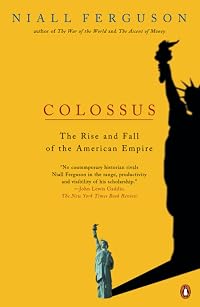
Colossus: The Rise and Fall of the American Empire
by Niall Ferguson
On This Page
Description
Argues that the United States is both economically and militarily the most powerful empire in history and will feel negative consequences as a result of imposing unrealistic timescales on interventions abroad.Tags
Recommendations
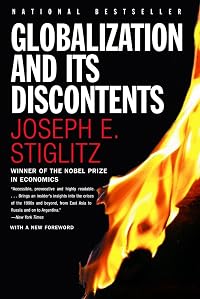
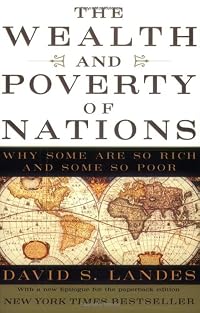
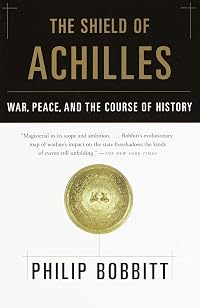
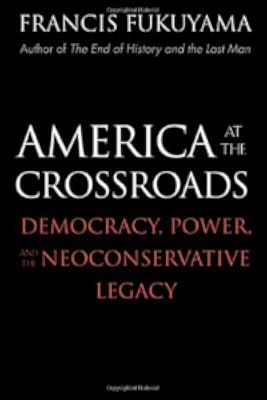
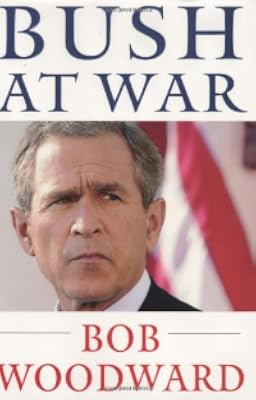
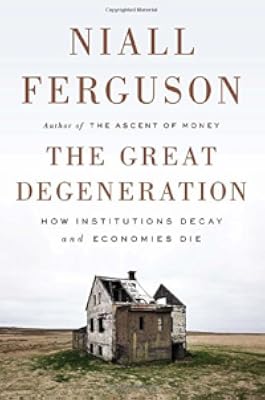
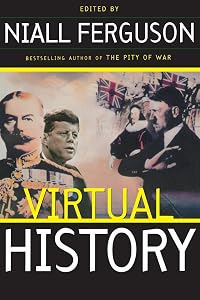
Member Recommendations
by anonymous user
Member Reviews
Niall Fergueson, having examined the workings of the British empire, makes the case for an American empire. His book is divided into two parts. The first part is a splendid analysis of US imperialism up to the Iraq invasion. Arrived to the present, the historian tries to analyze America and the world in the second part. The first part is a joy to read and filled with insights. The second part is a stumbling hack job. Unnecessary errors (the Schwarzenegger Terminator is not the only one, Kosovo is not a city, ...) and weak excursions (about the byzantine European Union, the British empire or modern China) can barely conceal that a historian is not equipped to predict the future. Ferguson is overconcerned with the Iraqi occupation which show more in the long run will be an episode of American Folly but hardly relevant for US history.
Unfortunately, Ferguson never clearly defines 'empire'. He dismisses the exact definition in the introduction which clearly do not apply to the US. Most clearly, America lacks subject peoples (as it did in Cuba and the Philippines). It sometimes occupies countries but no longer for keeping the territory. What Ferguson is talking about, and what his title 'Colossus' implies, is not empire but superpower. Trying to translate his knowledge about the British empire to the US is a flawed approach. He predicts the fall of the American empire due to three deficits: the economic deficit, the manpower deficit and the attention deficit. The last one shows the basic flaw in his argument: Most Americans do not care for empire, they barely know much about the world outside the US, they do not speak foreign languages, they do not travel abroad. Compare this to the British empire where the elite was deeply involved with India and their other colonies.
Read the brilliant first part, especially the lessons of the Philippine adventure, and forget the second part. show less
Unfortunately, Ferguson never clearly defines 'empire'. He dismisses the exact definition in the introduction which clearly do not apply to the US. Most clearly, America lacks subject peoples (as it did in Cuba and the Philippines). It sometimes occupies countries but no longer for keeping the territory. What Ferguson is talking about, and what his title 'Colossus' implies, is not empire but superpower. Trying to translate his knowledge about the British empire to the US is a flawed approach. He predicts the fall of the American empire due to three deficits: the economic deficit, the manpower deficit and the attention deficit. The last one shows the basic flaw in his argument: Most Americans do not care for empire, they barely know much about the world outside the US, they do not speak foreign languages, they do not travel abroad. Compare this to the British empire where the elite was deeply involved with India and their other colonies.
Read the brilliant first part, especially the lessons of the Philippine adventure, and forget the second part. show less
Скучновата книга, която описва защо САЩ е империя, но не се държи като такава, какво печели светът, че именно САЩ (а не примерно Русия) е господстващата империя в момента и какво ще спечели САЩ ако се осъзнае и започне да се държи като империя.
Общо взето тезата му е, че САЩ имат военно, политическо, икономическо и културно влияние над по-голямата част от планетата, но го използват доста умерено, предвид колко show more огромно е превъзходството им във всички тия области над всички останали държави и тази умереност се дължи както на вътрешнополитическа неосъзнатост и разделение, така и на общественото отхвърляне на имперската идея от самите американци.
Колкото до това добре ли е САЩ да е господстваща империя, смятам няма какво толкова да се обяснява хубаво ли щеше да е да речем Путин да разполага с такава държавна мощ, или (в редкия от историческа гледна точка случай) ако липсва господстваща световна империя, хубаво ли щеше да е десетки такива като Ахмединеджад да си разиграват коня. show less
Общо взето тезата му е, че САЩ имат военно, политическо, икономическо и културно влияние над по-голямата част от планетата, но го използват доста умерено, предвид колко show more огромно е превъзходството им във всички тия области над всички останали държави и тази умереност се дължи както на вътрешнополитическа неосъзнатост и разделение, така и на общественото отхвърляне на имперската идея от самите американци.
Колкото до това добре ли е САЩ да е господстваща империя, смятам няма какво толкова да се обяснява хубаво ли щеше да е да речем Путин да разполага с такава държавна мощ, или (в редкия от историческа гледна точка случай) ако липсва господстваща световна империя, хубаво ли щеше да е десетки такива като Ахмединеджад да си разиграват коня. show less
Having read "Virtual History", a book where Mr. Ferguson served as editor AND contributor, I was looking forward to reading this. But I must admit, it got a bit drudgerous at times.
Now, it is no secret that Ferguson is a staunch conservative, but his digressions, jabs at "Old Europe" and his seeming infatuation (at the time) with the prospects of the Iraq War got a bit tedious at times.
His central tenet in this book seems to be, that America needs to own up to its position, don the purple mantle, and get down to the business of being the military governor pro tem of the underdeveloped world - insinuating that the manpower for such an endeavour could be mustered by introducing a conscription scheme inspired by the ancient Roman one, show more where convicts and illegal immigrants could achieve social status and citizenship by donning the uniform. Europe, by contrast, is described as a somewhat dysfunctional federation of states where the workers and unions have too much power.
If you take it for what it is - and take its age into account, it's allright. I wasn't blown away, but there were quite a few tidbits of trivia that I did not know before. show less
Now, it is no secret that Ferguson is a staunch conservative, but his digressions, jabs at "Old Europe" and his seeming infatuation (at the time) with the prospects of the Iraq War got a bit tedious at times.
His central tenet in this book seems to be, that America needs to own up to its position, don the purple mantle, and get down to the business of being the military governor pro tem of the underdeveloped world - insinuating that the manpower for such an endeavour could be mustered by introducing a conscription scheme inspired by the ancient Roman one, show more where convicts and illegal immigrants could achieve social status and citizenship by donning the uniform. Europe, by contrast, is described as a somewhat dysfunctional federation of states where the workers and unions have too much power.
If you take it for what it is - and take its age into account, it's allright. I wasn't blown away, but there were quite a few tidbits of trivia that I did not know before. show less
Extremely interesting view of America's role and behavior in world history. Ferguson assets that 1) the United States has unconsciously been an empire throughout much of history, 2) The U.S. is not just a 'traditional' empire, as it also focuses on soft/economic power, 3) Both U.S. citizens and foreigners have had mixed feelings towards Empire, 4) The U.S.'s imperialism may yet be a positive in world affairs. Covers a wide range of topics, from the Middle East to economics to the relationships between U.S. and Asian and European and Middle Eastern powers. Bold and incisive book, and one very much worth thinking about.
In general, I would think that this is a pretty good book. The analysis is succinct, however, I do find fault when Niall goes on to defend the US attack on Iraq. I agree that Saddam was no angel, but he was, as far as I know, set up by the US! The biggest problem, again as far as I can see, is that they have often meddled in the affairs of other countries, and in recent times, this has cost them monetarily, as well as in terms of friendship.
The scary part is that I would rather have a world where the US is the dominant country, to a world where China is the dominant country. I really like the Chinese people. It's Chinese politicians that I am scared off.
The US does need to look at it's own economy a little more carefully, to avoid show more losing it's dominance too fast.
Sadly, I doubt that this will happen. This is something that Niall Ferguson could have covered: what happens if the US fails? show less
The scary part is that I would rather have a world where the US is the dominant country, to a world where China is the dominant country. I really like the Chinese people. It's Chinese politicians that I am scared off.
The US does need to look at it's own economy a little more carefully, to avoid show more losing it's dominance too fast.
Sadly, I doubt that this will happen. This is something that Niall Ferguson could have covered: what happens if the US fails? show less
Ferguson argues that the US ought to take on the imperial role once held by the British. Still, he doubts the US has the willingness to do the job.
My first and last NF read. Written by a conservative Brit in the early after math of Gulf War II I could sense his lust for the ol British Empire. But his re-definition of the word "empire" is done to include the US. A true hegemon but Imperium? He also omits and shades, as all authors, but his leaving out of Iran in benefiting from GW II was an obvious neo-con omission. Full of back handed compliments and some interesting asides.i can see why he's backing Romney. Where's kaplan when you need hi,
Members
- Recently Added By
Lists

Entender el mundo
46 works; 1 member
Author Information

53+ Works 18,113 Members
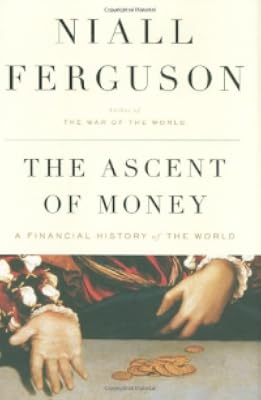
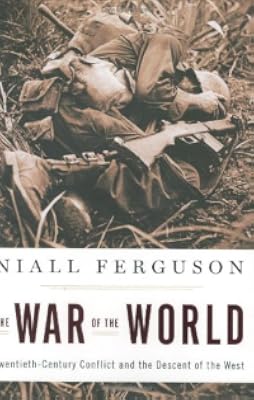
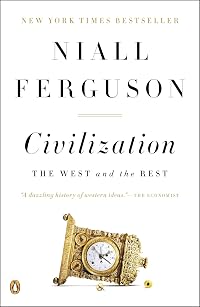
Niall Ferguson was born April 18, 1964, in Glasgow. He is a Scottish historian. He specializes in financial and economic history as well as the history of empire. He is the Laurence A. Tisch Professor of History at Harvard University and the William Ziegler Professor of Business Administration at Harvard Business School. His books include Paper show more and Iron: Hamburg Business and German Politics in the Era of Inflation 1897-1927 (1993), Virtual History: Alternatives and Counterfactuals (1997), The Pity of War: Explaining World War One (1998), The World's Banker: The History of the House of Rothschild (1998), The Cash Nexus: Money and Power in the Modern World, 1700-2000 (2001), Empire: The Rise and Demise of the British World Order and the Lessons for Global Power (2003), Colossus: The Rise and Fall of the American Empire (2004), The War of the World: Twentieth-Century Conflict and the Descent of the West (2006) and The Ascent of Money: A Financial History of the World (2008), Civilization: The West and the Rest (2011) , The Great Degeneration: How Institutions Decay and Economies Die, and The Square and the Tower: Networks and Power, from the Freemasons to Facebook. (Bowker Author Biography) show less
Awards and Honors
Notable Lists
Common Knowledge
- Important events
- Spanish-American War (1898)
- Related movies
- American Colossus (2004 | IMDb)
Classifications
- Genres
- History, Nonfiction, General Nonfiction, Politics and Government
- DDC/MDS
- 327.73 — Society, government, & culture Political science International Relations: Spies North America United States
- LCC
- JZ1480 .F47 — Political Science International relations International relations Scope of international relations. Political theory. Scope of international relations with regard to
- BISAC
Statistics
- Members
- 1,353
- Popularity
- 17,728
- Reviews
- 13
- Rating
- (3.51)
- Languages
- 8 — Czech, Dutch, English, German, Italian, Portuguese, Romanian, Spanish
- Media
- Paper, Ebook
- ISBNs
- 18
- ASINs
- 6