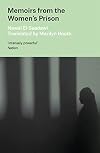
Memoirs from the Women's Prison
by Nawal El Saadawi
On This Page
Description
Often likened to Rigoberta Menchu and Nadine Gordimer, Nawal El Saadawi is one of the world's leading feminist authors. Director of Health and Education in Cairo, she was summarily dismissed from her post in 1972 for her political writing and activities. In 1981 she was imprisoned by Anwar Sadat for alleged "crimes against the State" and was not released until after his assassination. Memoirs from the Women's Prison offers both firsthand witness to women's resistance to state violence and show more fascinating insights into the formation of women's community. Saadawi describes how political prisoners, both secular intellectuals and Islamic revivalists, forged alliances to demand better conditions and to maintain their sanity in the confines of their cramped cell. Saadawi's haunting prose makes Memoirs an important work of twentieth-century literature. Recognized as a classic of prison writing, it touches all who are concerned with political oppression, intellectual freedom, and personal dignity. show lessTags
Recommendations
















































Member Reviews
She was arrested in September 1981, suddenly, without a warning or warrant. Police showed up at her door, broke it down, and took her away to the prison. No formalities, no lawyers, no charges. Just like that--from your house into a cell.
And, as it transpires, it could have been worse. The prison she was taken to was not the worst; she was locked up in the "political" cell, with more than a dozen other "political" prisoners, and they were treated somewhat more cautiously than the ordinary criminals.
The conditions were nevertheless more appalling than anyone in the West might expect (and, again, this is AFTER the fact of the totally tyrannical manner of the arrest).
The cell was dirty, ill-equipped, overrun with vermin, the furniture show more scant and broken, BUT... the cell next to it, of the same size, housed about three hundred women plus their children--Saadawi reckons maybe 600 people.
When she arrived the two cells were not properly isolated, so the political women lived with the constant shrieking and howling of the mothers and babies next door. It was so unbearable that it prompted the first collective action of the politicals (who ranged from communists to religious fundies), a demand to the authorities to extend the separating wall all the way to the ceiling. This was actually granted, one small mercy among a myriad torments. And, a sign of the camaraderie that would establish itself among almost all these women regardless of their affiliations, including even a few of the prison guards.
Saadawi was released less than three months later but you can tell the prison existence weighed a lifetime.
Her energy is amazing. This is the person you'd want to go explore other planets with, or fight a war, or build a city. She exercises every day in the morning and soon an entire line of prisoners from the criminal cell, who can see her routine, join her and follow her lead every day. A prison guard tells her about her niece who seeks out every word Saadawi published, and who wants to become a doctor like her. And about other prisoners.
"They've all had miserable lives. Fathiyya-the-Murderess was a poor miserable woman, planting and harvesting with her own hands, while her husband lounged around the house, a lazy bum. Eating, burping, smoking his waterpipe. One day she came back from the field and found him on top of her daughter, her nine-year-old daughter. She struck him on the head with her hoe and got a life sentence." show less
And, as it transpires, it could have been worse. The prison she was taken to was not the worst; she was locked up in the "political" cell, with more than a dozen other "political" prisoners, and they were treated somewhat more cautiously than the ordinary criminals.
The conditions were nevertheless more appalling than anyone in the West might expect (and, again, this is AFTER the fact of the totally tyrannical manner of the arrest).
The cell was dirty, ill-equipped, overrun with vermin, the furniture show more scant and broken, BUT... the cell next to it, of the same size, housed about three hundred women plus their children--Saadawi reckons maybe 600 people.
When she arrived the two cells were not properly isolated, so the political women lived with the constant shrieking and howling of the mothers and babies next door. It was so unbearable that it prompted the first collective action of the politicals (who ranged from communists to religious fundies), a demand to the authorities to extend the separating wall all the way to the ceiling. This was actually granted, one small mercy among a myriad torments. And, a sign of the camaraderie that would establish itself among almost all these women regardless of their affiliations, including even a few of the prison guards.
Saadawi was released less than three months later but you can tell the prison existence weighed a lifetime.
Her energy is amazing. This is the person you'd want to go explore other planets with, or fight a war, or build a city. She exercises every day in the morning and soon an entire line of prisoners from the criminal cell, who can see her routine, join her and follow her lead every day. A prison guard tells her about her niece who seeks out every word Saadawi published, and who wants to become a doctor like her. And about other prisoners.
"They've all had miserable lives. Fathiyya-the-Murderess was a poor miserable woman, planting and harvesting with her own hands, while her husband lounged around the house, a lazy bum. Eating, burping, smoking his waterpipe. One day she came back from the field and found him on top of her daughter, her nine-year-old daughter. She struck him on the head with her hoe and got a life sentence." show less
Ratings
Members
- Recently Added By
Author Information

69+ Works 3,153 Members
Nawal El Saadawi was born in 1931. She is an Egyptian feminist author, acitvist, physician and psychiatrist whose writings focus on the subject of women in Islam. She is founder and president of the Arab Women's Solidarity Association, and co-founder of the Arab Association for Human Rights.
Series
Belongs to Publisher Series
Common Knowledge
- Canonical title
- Memoirs from the Women's Prison
- Original title
- Memoirs from the Women's Prison
Classifications
- Genres
- Biography & Memoir, Nonfiction, General Nonfiction, Sexuality and Gender Studies, History
- DDC/MDS
- 365.45 — Society, Government, and Culture Social problems and social services Punishment Institutions for specific classes of inmates Institutions for political prisoners and related groups of people
- LCC
- PJ7862 .A3 .Z47313 — Language and Literature Oriental languages and literatures Oriental philology and literature Arabic Arabic literature Individual authors or works
- BISAC
Statistics
- Members
- 165
- Popularity
- 197,801
- Reviews
- 1
- Rating
- (4.03)
- Languages
- Dutch, English, Indonesian, Spanish
- Media
- Paper
- ISBNs
- 8