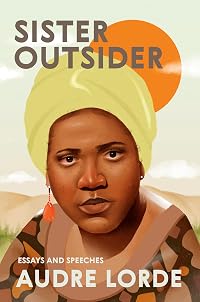
Sister Outsider: Essays and Speeches
by Audre Lorde
On This Page
Description
Presenting the essential writings of black lesbian poet and feminist writer Audre Lorde, Sister Outsider celebrates an influential voice in twentieth-century literature. In this charged collection of fifteen essays and speeches, Lorde takes on sexism, racism, ageism, homophobia, and class, and propounds social difference as a vehicle for action and change. Her prose is incisive, unflinching, and lyrical, reflecting struggle but ultimately offering messages of hope. This commemorative edition show more includes a new foreword by Lorde scholar and poet Cheryl Clarke, who celebrates the ways in which Lorde's philosophies resonate more than twenty years after they were first published. show lessTags
Recommendations

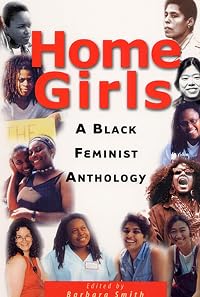

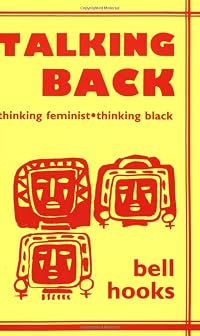
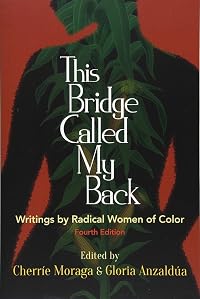
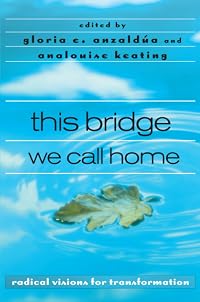
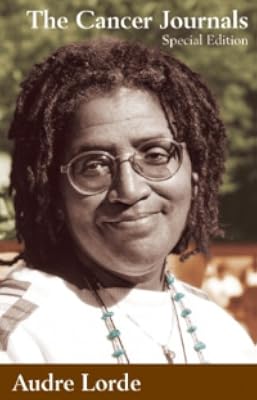
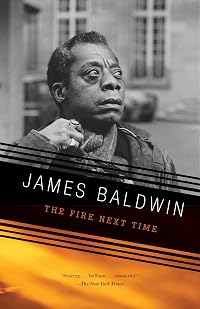
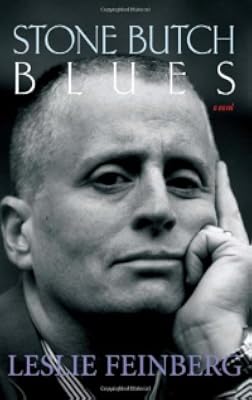
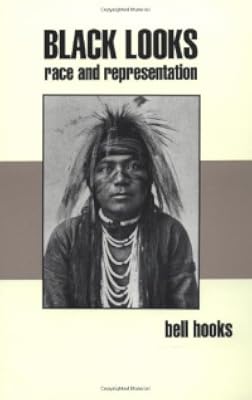
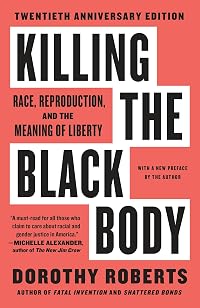
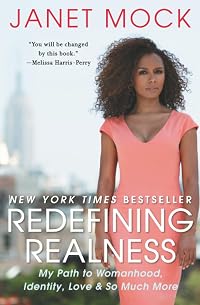
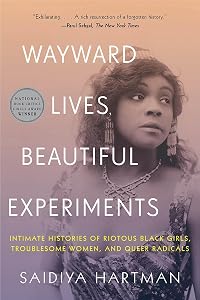
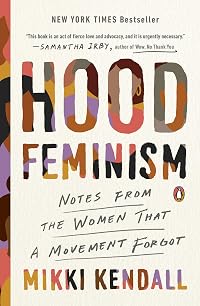
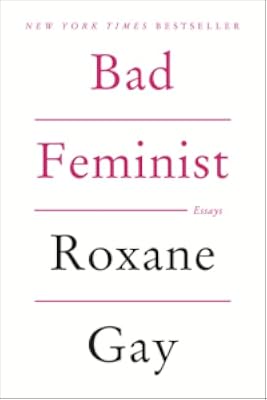

Member Recommendations

jillianhistorian This is an edited collection of Audre Lorde's teaching materials, drawn from materials in Lorde's papers in the Spelman College Archives.
Member Reviews
It's at once amazing and depressing just how many of the pieces in this collection by Audre Lorde—some of them more than 40 years old—could believably be responses to the events of 2020 with only one or two minor edits. True, there are some dated elements—invocations of the Goddess spirit which inhabits all women, etc, are so 70s to me that you can just about smell the patchouli, and they don't resonate with my feminism at all. But wow, when Lorde was good she was good—able to craft a short sentence that seems simple at first glance but that knocks you flat on your metaphorical ass as soon as you start to think about it in a combination intellectual/moral/ethical challenge.
Even before I had come before this book, I knew I would be reading a kind of bible. I say this because through glimpses of her words from 'Sister Outsider' and several essays I had read before, there was a certain blunt holiness, a certain transcendental knowing. When I read 'Uses of the Erotic: The Erotic As Power' a kind of deep knowing flooded me. I felt like I was finally able to access the very power she spoke of within us simply because she had turned my attention to it. What a person, to be able to see what so many of us can't! When a poet speaks feminist praxis, something magical happens. And I am aware of course that her knowing cannot be divorced from her identity as a black lesbian woman, an identity that does not give her show more the privilege of being ignorant of so much of the pain the society she lived in would heap at her. The fact that she would point out the lack of acknowledgement repeatedly (to Mary Daly, to a conference full of white women..) seems to me acts of immense courage. It must have been incredibly challenging at the time, and at no point does she 'toughen' herself to be able to withstand the difficulty of her praxis. She is guided, so obviously, by a love for her community & ultimately for all. She wants a frank discussion & acknowledgement of our difference, which to so many appears like a divisive thing.
The language of our activism is often empirical, social language. Of course this isn't bad, but when I read this book of essays, I realised how utterly visceral, powerful, human, one could be if we to speak about our (political) pain with both some kind of primordial vulnerability and with eruditeness. I utterly value her call to collapse the binaries that tell us that to speak our deepest pain with emotion is to be called weak, or less 'rational'. I had actually initially thought that Sister Outsider was a book of theory, then I thought it was a kind of poetics. But why can't these categories collapse? Why can't our praxis be poetic? Maybe I am being sentimental, but I felt like only a poet like Audre Lorde, so unabashedly vulnerable & unabashedly courageous, could have understood so presciently and deeply for example, the reason why women can turn against each other. Only that kind of knowing could relay to us that deep insecurity & pain within us, and in the same essay suggest to us an antidote.
I am so thankful for her presence & her contributions. She has a spellbinding power that seems so rare. I will go back to her words repeatedly, I know. show less
The language of our activism is often empirical, social language. Of course this isn't bad, but when I read this book of essays, I realised how utterly visceral, powerful, human, one could be if we to speak about our (political) pain with both some kind of primordial vulnerability and with eruditeness. I utterly value her call to collapse the binaries that tell us that to speak our deepest pain with emotion is to be called weak, or less 'rational'. I had actually initially thought that Sister Outsider was a book of theory, then I thought it was a kind of poetics. But why can't these categories collapse? Why can't our praxis be poetic? Maybe I am being sentimental, but I felt like only a poet like Audre Lorde, so unabashedly vulnerable & unabashedly courageous, could have understood so presciently and deeply for example, the reason why women can turn against each other. Only that kind of knowing could relay to us that deep insecurity & pain within us, and in the same essay suggest to us an antidote.
I am so thankful for her presence & her contributions. She has a spellbinding power that seems so rare. I will go back to her words repeatedly, I know. show less
Sister Outsider by Audre Lorde pushed me to think about equality from yet another angle. It's easy to think about equality from the point of view of one's own benefit, but when one expands out to think about equality from the point of view of people with myriad experiences, the struggle isn't quite as easily defined as once thought. Sister Outsider explores myriad attitudes toward people facing inequality and explores how a one size fits all feminism isn't going to fix the problems of inequality. She explores division and judgment and conflicting attitudes mirroring racial issues, class issues, and ingrained belief systems. The essays and speeches included in Sister Outsider drive home the point that we need to listen to one another and show more find ways to work together instead of assuming one group's work will benefit everyone or that other people's equality can wait until later. Lorde spoke from her experience to provoke thought and perhaps an understanding that could bring together myriad interests by opening a dialogue. Sister Outsider gave me insight into the complexity of the struggle for equality created by the fracturing of the groups seeking equality. show less
While reading the chapter "An Interview: Audre Lorde and Adrienne Rich," I realized that while I was earning my English major, I read plenty of Adrienne Rich, but I don't recall hearing about Audre Lorde until I saw a quote by her on a poster in the basement of my UU church.
I looked back in my copy of "The Norton Anthology of Literature by Women" and Lorde was there, about five poems' worth of her work and a brief bio, but I have no memory of reading her poetry for any class assignments. Why was this, I wondered?
I suspect it's for the very reasons that Lorde suggests in these essays. She's a Black lesbian radical feminist. People can engage with her if she identifies as one thing at a time, but Lorde insists on being a whole human show more being, offering the entire nuanced package in everything she does making her tough to categorize neatly.
This insistence on wholeness is also the source of great strength and meaning within her writing. It took me a while to read this book because every other page, it blew my mind. First, I engaged with it on a personal level. Lorde's essay on "The Transformation of Silence into Language and Action" arrived for me at a moment when I felt a great need to speak but also feared the exposure of speaking out. Lorde writes:
I derived---and continue to derive---great comfort from this. It feels like a call-to-arms.
Lorde also writes about the totality of human experience in her essay, "Uses of the Erotic: The Erotic as Power," which I read with my hands carefully placed over key words while sitting on the sidelines of a homeschool nature class my children were in. Lorde's words struck me because she talks about the importance of engaging with every experience, from a loving encounter to a heated argument, with awareness of how it affects the entire body. My interpretation of Lorde's words is likely more prudish than Lorde intended, but I think it's still within the spirit of her meaning. This is a powerful message of wholeness that I think is too often pushed aside in favor of the brain-only intellectual way of viewing things.
I was surprised, also, to connect with Lorde as a mother. In her essay "Man Child: A Black Lesbian Feminist's Response," she writes about the way her own personal fury and issues with power manifest themselves in her raising of her son. Although I only identify with one of the three descriptors in the subtitle, I absolutely see the power dynamics in my relationship and in my spouse's relationship with our son, even though I'd not really thought about it in those terms before.
I connected to this book in all of these ways, but what really hit me across the face while reading this book was the raw and open discussion about race. I'd read about the division between white feminists and Black feminists, but to hear about that division from the perspective of a Black feminist was eye-opening. I am very familiar with the ways in which women are devalued and victimized and encouraged to fight amongst ourselves within our culture, but I didn't really consider that extra layer that racism adds for women of color until I read Sister Outsider. I recognize that the awareness that I'm feeling is just the tip of the iceberg, but even that little bit is overwhelming.
The conversation between Audre Lorde and Adrienne Rich was so encouraging to me, though. I read it and I thought, "This is how it can happen. This is how we can have a dialogue of mutual respect between races." It involves recognizing at the outset that it's not always going to be pretty. It will be messy and it will be painful and it will be scary, but the only way we can move forward is by walking through the fear and pain and messiness and staying by one another's side throughout the process.
Another huge message that I got from this book, which came at a time when I've been pondering this exact same thing while reading and listening to coverage of Black Lives Matter protests and protests on college campuses, is the recognition that rage makes sense as a reaction to racism. In "The Uses of Anger: Women Responding to Racism," the keynote address at the National Women's Studies Association Conference in June 1981, Lorde says:
Lorde makes a distinction between "anger" and "hatred": "Hatred is the fury of those who do not share our goals, and its object is death and destruction. Anger is a grief of distortions between peers, and its object is change." (129) Hatred intends to destroy, but anger is potentially creative. I think about this---and thought about it before without a framework---when I hear people minimizing protests about race on college campuses or the demonstrations in Ferguson or Baltimore or Chicago in the wake of events and actions that absolutely call for anger, arguing that it's safe to discount these reactions because they're too emotional. Not reasoned and dispassionate. Maybe we can get to reasoned and dispassionate, but I don't think it makes sense nor is it healthy to jump right past emotion as though the heart and head aren't part of the same body. At the very least, it doesn't make sense to discount someone else's reaction because it makes me feel uncomfortable.
The most difficult thing for me about reading this book is that it's clear just how much in the same place the United States has stayed in the past 40 years. Lorde refers to a case in the late 70's or early 80's in which a white police officer shot a Black child and was acquitted. (106) I could have looked it up but I didn't because I didn't want to cope with the details of yet another case like this. I felt confident accepting her comments and reaction at face value. Reading this, I thought, it doesn't change, does it? It doesn't stop. Our---white people's---awareness might ebb and flow but the violence and the hatred against Black people in this country has never stopped. So the most difficult thing for me while reading this book was seeing the words through my tears.
I'm not unaware of these problems. These revelations aren't entirely new to me, but still this book turns my perception of my race and the way in which my aligning myself with the dominant culture necessarily subjugates other people, not just in the U.S., but around the world. If it's this difficult to read for someone already partially aware, I can only imagine how challenging it would be for someone who's not thought about these things at all. Is this why Audre Lorde's writings weren't assigned to my classes at our majority white, middle- to upper-middle-class liberal arts college?
One quote to close out this review:
I don't generally feel aligned with the mainstream, but this is just one more reason to reevaluate my relationship to the power structures of my culture. Who benefits if I stay in the dark? Who benefits if I stay silent? show less
I looked back in my copy of "The Norton Anthology of Literature by Women" and Lorde was there, about five poems' worth of her work and a brief bio, but I have no memory of reading her poetry for any class assignments. Why was this, I wondered?
I suspect it's for the very reasons that Lorde suggests in these essays. She's a Black lesbian radical feminist. People can engage with her if she identifies as one thing at a time, but Lorde insists on being a whole human show more being, offering the entire nuanced package in everything she does making her tough to categorize neatly.
This insistence on wholeness is also the source of great strength and meaning within her writing. It took me a while to read this book because every other page, it blew my mind. First, I engaged with it on a personal level. Lorde's essay on "The Transformation of Silence into Language and Action" arrived for me at a moment when I felt a great need to speak but also feared the exposure of speaking out. Lorde writes:
"[W]e have been socialized to respect fear more than our own needs for language and definition, and while we wait in silence for the final luxury of fearlessness, the weight of that silence will choke us.” (44)
I derived---and continue to derive---great comfort from this. It feels like a call-to-arms.
Lorde also writes about the totality of human experience in her essay, "Uses of the Erotic: The Erotic as Power," which I read with my hands carefully placed over key words while sitting on the sidelines of a homeschool nature class my children were in. Lorde's words struck me because she talks about the importance of engaging with every experience, from a loving encounter to a heated argument, with awareness of how it affects the entire body. My interpretation of Lorde's words is likely more prudish than Lorde intended, but I think it's still within the spirit of her meaning. This is a powerful message of wholeness that I think is too often pushed aside in favor of the brain-only intellectual way of viewing things.
I was surprised, also, to connect with Lorde as a mother. In her essay "Man Child: A Black Lesbian Feminist's Response," she writes about the way her own personal fury and issues with power manifest themselves in her raising of her son. Although I only identify with one of the three descriptors in the subtitle, I absolutely see the power dynamics in my relationship and in my spouse's relationship with our son, even though I'd not really thought about it in those terms before.
I connected to this book in all of these ways, but what really hit me across the face while reading this book was the raw and open discussion about race. I'd read about the division between white feminists and Black feminists, but to hear about that division from the perspective of a Black feminist was eye-opening. I am very familiar with the ways in which women are devalued and victimized and encouraged to fight amongst ourselves within our culture, but I didn't really consider that extra layer that racism adds for women of color until I read Sister Outsider. I recognize that the awareness that I'm feeling is just the tip of the iceberg, but even that little bit is overwhelming.
The conversation between Audre Lorde and Adrienne Rich was so encouraging to me, though. I read it and I thought, "This is how it can happen. This is how we can have a dialogue of mutual respect between races." It involves recognizing at the outset that it's not always going to be pretty. It will be messy and it will be painful and it will be scary, but the only way we can move forward is by walking through the fear and pain and messiness and staying by one another's side throughout the process.
Another huge message that I got from this book, which came at a time when I've been pondering this exact same thing while reading and listening to coverage of Black Lives Matter protests and protests on college campuses, is the recognition that rage makes sense as a reaction to racism. In "The Uses of Anger: Women Responding to Racism," the keynote address at the National Women's Studies Association Conference in June 1981, Lorde says:
"Anger is an appropriate reaction to racist attitudes, as is fury when the actions arising from those attitudes do not change. To those women here who fear the anger of women of Color more than their own unscrutinized racist attitudes, I ask: Is the anger of women of Color more threatening than the woman-hatred that tinges all aspects of our lives?" (129)
Lorde makes a distinction between "anger" and "hatred": "Hatred is the fury of those who do not share our goals, and its object is death and destruction. Anger is a grief of distortions between peers, and its object is change." (129) Hatred intends to destroy, but anger is potentially creative. I think about this---and thought about it before without a framework---when I hear people minimizing protests about race on college campuses or the demonstrations in Ferguson or Baltimore or Chicago in the wake of events and actions that absolutely call for anger, arguing that it's safe to discount these reactions because they're too emotional. Not reasoned and dispassionate. Maybe we can get to reasoned and dispassionate, but I don't think it makes sense nor is it healthy to jump right past emotion as though the heart and head aren't part of the same body. At the very least, it doesn't make sense to discount someone else's reaction because it makes me feel uncomfortable.
The most difficult thing for me about reading this book is that it's clear just how much in the same place the United States has stayed in the past 40 years. Lorde refers to a case in the late 70's or early 80's in which a white police officer shot a Black child and was acquitted. (106) I could have looked it up but I didn't because I didn't want to cope with the details of yet another case like this. I felt confident accepting her comments and reaction at face value. Reading this, I thought, it doesn't change, does it? It doesn't stop. Our---white people's---awareness might ebb and flow but the violence and the hatred against Black people in this country has never stopped. So the most difficult thing for me while reading this book was seeing the words through my tears.
I'm not unaware of these problems. These revelations aren't entirely new to me, but still this book turns my perception of my race and the way in which my aligning myself with the dominant culture necessarily subjugates other people, not just in the U.S., but around the world. If it's this difficult to read for someone already partially aware, I can only imagine how challenging it would be for someone who's not thought about these things at all. Is this why Audre Lorde's writings weren't assigned to my classes at our majority white, middle- to upper-middle-class liberal arts college?
One quote to close out this review:
"Mainstream communication does not want women, particularly white women, responding to racism. It wants racism to be accepted as an immutable given in the fabric of your existence, like eveningtime or the common cold." (128)
I don't generally feel aligned with the mainstream, but this is just one more reason to reevaluate my relationship to the power structures of my culture. Who benefits if I stay in the dark? Who benefits if I stay silent? show less
Beyond amazing. This book provides a tool kit for reshaping the self to implement our most positive aspects, and is itself an example of the work done.
"We share a common interest, survival, and it cannot be pursued in isolation from others simply because their difference make us uncomfortable. We know what it is to be lied to. The 60s should teach us how important it is not to lie to ourselves. Not to believe that revolution is a one-time event, or something that happens around us rather than inside of us. Not to believe that freedom can belong to any one group of us without the others also being free. How important it is not to allow even our leaders to define us to ourselves, or to define our sources of power to us."
So many truths so show more well expressed. Alas, I haven't read this woman's poems. I should get right on it! show less
"We share a common interest, survival, and it cannot be pursued in isolation from others simply because their difference make us uncomfortable. We know what it is to be lied to. The 60s should teach us how important it is not to lie to ourselves. Not to believe that revolution is a one-time event, or something that happens around us rather than inside of us. Not to believe that freedom can belong to any one group of us without the others also being free. How important it is not to allow even our leaders to define us to ourselves, or to define our sources of power to us."
So many truths so show more well expressed. Alas, I haven't read this woman's poems. I should get right on it! show less
This book is incredible and changed my life in so many ways. So much of it is so important to queer theory (or should be) and feminist theory, and the way she challenges the reader to feel is so important. Although "The Master's Tools" is obviously an incredible (and incredibly widely cited) essay in this collection, and perhaps the most famous essay in here (with "The Uses of the Erotic" and/or "Poetry is Not a Luxury" coming in close second,) the piece that stands out to me the most is probably the conversation she has with Adrienne Rich--which, Rich's transphobic politics aside, needs to be required reading for any white woman who calls herself a feminist (and really should be required reading for all white women in general.) I know show more I will be going back to this book again and again, and learning new things from it each time, and I feel like it is really a gift to have read it.
--
Reread 3/11/20: Just as incredible if not more incredible the second/third time. Each essay feels deeply relevant in this moment, from Lorde's visit to Russia in the 1980s to her writing on anger and rage, to the essays that are more often cited like "Use of the Erotic" and "Master's Tools." I definitely think everyone should read this book at least twice, and I am so glad I reread it now. If you haven't read it before, please check it out (if only because I'm convinced no one has ever done these essays justice in summing them up.) show less
--
Reread 3/11/20: Just as incredible if not more incredible the second/third time. Each essay feels deeply relevant in this moment, from Lorde's visit to Russia in the 1980s to her writing on anger and rage, to the essays that are more often cited like "Use of the Erotic" and "Master's Tools." I definitely think everyone should read this book at least twice, and I am so glad I reread it now. If you haven't read it before, please check it out (if only because I'm convinced no one has ever done these essays justice in summing them up.) show less
As the intersection between racism, sexism, homophobia, and other forms of dehumanization gain greater attention, I had to read this books. Lorde's life as a Black lesbian mother really is unique. But as she says, she doesn't want to diminish any of those parts by focusing on them. Instead, at its best ("Scratching the Surface: Some Notes on Barriers to Women and Loving", "The Master's Tools Will Never Dismantle the Master's House", and "Man Child: A Black Lesbian Feminist's Response") she unpacks how all of those things tie together. A couple of the pieces were almost too poetic for my taste, but that makes sense seeing as how she is a poet. Still, this is inspired writing and should be read.
Members
- Recently Added By
Lists

500 Great Books by Women
507 works; 60 members

Rainbow Gardens: Parent Collection
19 works; 1 member

Queer Nonfiction (Owned TBR)
25 works; 1 member

Reading LIst
648 works; 1 member

Sapph-Lit
78 works; 4 members

top 100
39 works; 1 member

important
24 works; 1 member

feminism & gender studies
17 works; 1 member

essays
6 works; 1 member

Female Author
1,234 works; 67 members

Best Feminist Literature
188 works; 26 members

Books Read in 2021
5,361 works; 114 members

Literary Witches
86 works; 4 members

Top Five Books of 2020
982 works; 350 members

Rebel Women Reading List
25 works; 2 members

The Zora Canon
98 works; 4 members

Zora Canon
100 works; 6 members
The Black Archives: All Power To the People! Reading List
79 works; 10 members
Penguin Random House
458 works; 4 members

The Best LGBTQ Nonfiction
159 works; 68 members
Author Information

66+ Works 10,398 Members
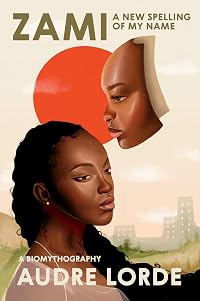
An African American lesbian feminist critic and writer, Lorde was born in Harlem and educated at National University of Mexico, Hunter College, and Columbia University. She married in 1962 and divorced in 1970, after having two children. Lorde first came to critical attention with her poetry. Her first poem was published in Seventeen magazine show more while she was in high school; it had been rejected by her high school newspaper because it was "too romantic" (Lorde considered her "mature" poetry, which focuses on her lesbian relationships, to be romantic also). Other early poems were published in many different journals, many of them under the pseudonym Rey Domini. Her first volume of poetry, "The First Cities," was published in 1968. Lorde then quit her job as head librarian at a school in New York City in order to devote her time to teaching and writing. She was a professor of English at Hunter College from 1980 until her untimely death from cancer in 1992. Although many of Lorde's poems are about love, many are about anger, particularly anger about racism, sexism, and homophobia in America. "The Brown Menace or Poem to the Survival of Roaches" likens African Americans to cockroaches---hated, feared, and poisoned by whites but survivors nevertheless. Other poems express a daughter's anger toward her mother; still others eschew anger for affirmation and inspiration, which are represented as coming from lesbian love and traditional African myths because, as Lorde has said, "the master's tools will not dismantle the master's house." Lorde is also well known for her prose. Her courageous account of her struggle with breast cancer and the mastectomy that she underwent is movingly chronicled in "The Cancer Journals" (1980), her first major prose publication. "Zami, a New Spelling of My Name" (1982) is, in Lorde's words, a "biomythography," combining history, biography, and myth. In "Zami," Lorde focuses on her developing lesbian identity and her response to racism in the white feminist and gay communities, and to sexism and homophobia in the African American community. Lorde's critical essays, collected in "Sister/Outsider" (1984) and "A Burst of Light "(1988), have been quite influential, particularly "Uses of the Erotic: The Erotic as Power," in which she discusses the relationship of poetry to politics and the erotic. Lorde was the recipient of several grants---from the National Endowment for the Arts in 1968 and 1981 and from the Creative Artists Public Service in 1972---as well as the Borough of Manhattan President's Award for Literary Excellence in 1987. She was also nominated for the National Book Award for poetry in 1974 for her third volume of verse, "From a Land Where Other People Live"(1973). (Bowker Author Biography) show less
Some Editions
Awards and Honors
Series
Belongs to Publisher Series
Work Relationships
Is contained in
Has as a student's study guide
Common Knowledge
- Canonical title
- Sister Outsider: Essays and Speeches
- Original publication date
- 1984
- People/Characters
- Audre Lorde
- Important places
- New York, USA
- First words
- Since I've returned from Russia a few weeks ago, I've been dreaming a lot.
- Quotations
- ...poetry is not a luxury...
- Last words
- (Click to show. Warning: May contain spoilers.)Forward Ever, Backward Never is more than a mere whistle in the present dark.
- Publisher's editor
- Bereano, Nancy K.
Classifications
Statistics
- Members
- 3,338
- Popularity
- 5,077
- Reviews
- 33
- Rating
- (4.39)
- Languages
- 9 — Dutch, English, Finnish, French, German, Italian, Polish, Portuguese, Spanish
- Media
- Paper, Audiobook, Ebook
- ISBNs
- 29
- UPCs
- 1
- ASINs
- 13