On This Page
Description
"Nathan Peake, an officer in the British Royal Navy, fights against the French during the French Revolution"--Provided by publisher.Tags
Recommendations















Member Reviews
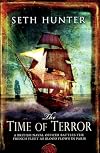
This book was a random selection from the library shelves, chosen solely on the strength of the clue in the title, but the gamble paid off. A well written, engrossing blend of fact and fiction, combining naval adventures like the Hornblower books of C.S. Forester, espionage, and my favourite historical era - the French Revolution. (The old idiom is wrong - you can judge a book by its cover, very successfully!)
Commander Nathan Peake is roped into smuggling counterfeit money into France by the British government, but his mission is far more complicated and dangerous than he knows. Along the way, he finds himself involved with Thomas Paine, the doomed Georges Danton, Mary Wollestonecraft and various other historical figures, not to mention show more a beautiful French widow. Weaving 'cameo' roles into stories doesn't usually work for me, but I warmed to the lesser known Imlay, and got a vivid sense of Robespierre and Thomas Paine.
The plot isn't exactly convoluted, but the intrigue grows, and doubles back on itself, with every chapter. The ending, perhaps, is weak, and should focus more on Nathan's story and not the downfall of Robespierre, but the temptation to retell history was probably too strong to resist. Part of the story is set at sea, sailing back and forth across the Channel, and Hunter does not pause to explain the various nautical terms used by the characters. The action is not impeded by this jargon, however, and the usual recourse when faced with unfamiliar terms is always available : a dictionary. Apart from touching base in England occasionally, the rest of the book takes place in suspicious, violent revolutionary Paris, and although there is more exposition in these scenes, the information imparted is educational and not patronising (depending on prior knowledge of that era). The trip through the Catacombs is facsinating, befitting the gothic portrayal of the city, and whole of the author's research underpinning the story comes across with subtle accuracy. Part of the enjoyment to be found in reading historical fiction is learning new trivia and achieving a better understanding of the past, and I truly got a sense of both the drama and procedure of a life at sea, and the brutal reality of the Terror.
Nathan Peake is a stock hero, thoroughly masculine but charming enough, yet I enjoyed his company so much that I would love to read the second and third books in this series. Seth Hunter has a droll sense of humour that comes through in his writing, which I found to be amusing and yet still appropriate to the era in which the story is set. show less
Commander Nathan Peake is roped into smuggling counterfeit money into France by the British government, but his mission is far more complicated and dangerous than he knows. Along the way, he finds himself involved with Thomas Paine, the doomed Georges Danton, Mary Wollestonecraft and various other historical figures, not to mention show more a beautiful French widow. Weaving 'cameo' roles into stories doesn't usually work for me, but I warmed to the lesser known Imlay, and got a vivid sense of Robespierre and Thomas Paine.
The plot isn't exactly convoluted, but the intrigue grows, and doubles back on itself, with every chapter. The ending, perhaps, is weak, and should focus more on Nathan's story and not the downfall of Robespierre, but the temptation to retell history was probably too strong to resist. Part of the story is set at sea, sailing back and forth across the Channel, and Hunter does not pause to explain the various nautical terms used by the characters. The action is not impeded by this jargon, however, and the usual recourse when faced with unfamiliar terms is always available : a dictionary. Apart from touching base in England occasionally, the rest of the book takes place in suspicious, violent revolutionary Paris, and although there is more exposition in these scenes, the information imparted is educational and not patronising (depending on prior knowledge of that era). The trip through the Catacombs is facsinating, befitting the gothic portrayal of the city, and whole of the author's research underpinning the story comes across with subtle accuracy. Part of the enjoyment to be found in reading historical fiction is learning new trivia and achieving a better understanding of the past, and I truly got a sense of both the drama and procedure of a life at sea, and the brutal reality of the Terror.
Nathan Peake is a stock hero, thoroughly masculine but charming enough, yet I enjoyed his company so much that I would love to read the second and third books in this series. Seth Hunter has a droll sense of humour that comes through in his writing, which I found to be amusing and yet still appropriate to the era in which the story is set. show less
Summary: Nathan Peake is a captain in the British Navy in 1793, whiling away his time chasing down smugglers in the Channel. After one such mission leads to his ship being fired upon by French guns - an act of war - he is summoned to the Admiralty, where he receives a new mission: he must pose as an American captain, aboard a newly-captured American ship, and deliver a mysterious cargo to the French, as well as various communiques to British agents in Paris. Peake agrees readily enough, but soon finds himself smack in the middle of French politics - not a safe place to be during the middle of the Reign of Terror that followed the French Revolution... particularly not for a British spy.
Review: I really enjoy historical fiction as a genre show more because, amongst other things, it teaches me about historical times, people, and places in a way that's more interesting and more memorable than the lists of names and dates we get in school. In the case of The Time of Terror, however, I felt like the story really never gave me an "in," instead expecting me to know the history already. My knowledge of the French Revolution is spotty at best, though, so for much of the book I was mildly lost: understanding what was happening in the story, but being mostly ignorant of the broader context. Sp many key players of the Terror show up so briefly that they never really emerge as characters, and instead of bringing the history to life, it just started to feel like one of the name-dropping history lessons from high school. Perhaps it's because fictionalizing events in the lives of well-known historical figures is difficult; perhaps it's because Nathan doesn't really interact with important political figures more than obliquely. Whatever the reason, I felt like this book relied on a background that I didn't have.
There were also a few subplots that didn't quite connect for me; the romance in particular felt a bit rushed and thus not entirely credible. That's not to say that there wasn't anything enjoyable about this book. Nathan's a sympathetic protagonist, and individual scenes and vignettes were quite good: Hunter's good at evoking a setting, has a good ear for dialogue, and can write exciting naval battles. (I do love me some boys on boats, although this book didn't have as many as the cover had led me to believe.) I just wish he'd focused more on the things he was good at, and less on trying to encapsulate the entirety of the Terror into a single novel. There's definitely the potential there, and I'd be interested to read Hunter's next book to see how he develops the story, but this one didn't manage to hit everything it was aiming for with me. 3 out of 5 stars.
Recommendation: Readers with a stronger background in French history may have better luck with it than I did; for me, while it certainly had potential, it wasn't quite what I wanted it to be. show less
Review: I really enjoy historical fiction as a genre show more because, amongst other things, it teaches me about historical times, people, and places in a way that's more interesting and more memorable than the lists of names and dates we get in school. In the case of The Time of Terror, however, I felt like the story really never gave me an "in," instead expecting me to know the history already. My knowledge of the French Revolution is spotty at best, though, so for much of the book I was mildly lost: understanding what was happening in the story, but being mostly ignorant of the broader context. Sp many key players of the Terror show up so briefly that they never really emerge as characters, and instead of bringing the history to life, it just started to feel like one of the name-dropping history lessons from high school. Perhaps it's because fictionalizing events in the lives of well-known historical figures is difficult; perhaps it's because Nathan doesn't really interact with important political figures more than obliquely. Whatever the reason, I felt like this book relied on a background that I didn't have.
There were also a few subplots that didn't quite connect for me; the romance in particular felt a bit rushed and thus not entirely credible. That's not to say that there wasn't anything enjoyable about this book. Nathan's a sympathetic protagonist, and individual scenes and vignettes were quite good: Hunter's good at evoking a setting, has a good ear for dialogue, and can write exciting naval battles. (I do love me some boys on boats, although this book didn't have as many as the cover had led me to believe.) I just wish he'd focused more on the things he was good at, and less on trying to encapsulate the entirety of the Terror into a single novel. There's definitely the potential there, and I'd be interested to read Hunter's next book to see how he develops the story, but this one didn't manage to hit everything it was aiming for with me. 3 out of 5 stars.
Recommendation: Readers with a stronger background in French history may have better luck with it than I did; for me, while it certainly had potential, it wasn't quite what I wanted it to be. show less
 This review was written for LibraryThing Early Reviewers.
I received this book as part of the Early Reviewers program. It took me a while to settle in to the story, but in the end it was an enjoyable, if light read. The protagonist seemed to wander through the story and forever get out of impossible situations. In reality, he would likely not have survived the first trip to Paris, let alone the subsequent trips. One striking oversight seemed to be the last time he was captured. He had stuffed counterfeit money in his pocket prior to being captured and tortured, yet the fact never comes up, even though it was an obvious indicator to his nemesis as to why he was there.
I thought the author did a creditable job of making the haphazard way people were chosen for execution during the Reign of show more Terror, and of how the beast ultimately ate its parents, but overall the story line was predictable and too formulaic. The author could have done with a few less characters and given them all a bit more flesh and blood. I think my biggest quibble with the book was that it didn't seem to know what it was--a political/spy novel or a naval story. The sea battles really did nothing to move the story along. It was more of an after thought, or perhaps it was the author's real love and he needed to find a way to work it into the story.
This is a light summer, sitting by the pool or on the beach read, but not something I would likely put on my bookshelf to recommend to others as a "must read" book. I will pass my copy along for others to read. show less
I thought the author did a creditable job of making the haphazard way people were chosen for execution during the Reign of show more Terror, and of how the beast ultimately ate its parents, but overall the story line was predictable and too formulaic. The author could have done with a few less characters and given them all a bit more flesh and blood. I think my biggest quibble with the book was that it didn't seem to know what it was--a political/spy novel or a naval story. The sea battles really did nothing to move the story along. It was more of an after thought, or perhaps it was the author's real love and he needed to find a way to work it into the story.
This is a light summer, sitting by the pool or on the beach read, but not something I would likely put on my bookshelf to recommend to others as a "must read" book. I will pass my copy along for others to read. show less
This review was written for LibraryThing Early Reviewers.Seth Hunter makes the time and place come alive. You can almost see Robespierre and the people of the revolution, feel the menace of them and the power that they wielded. There is danger in the streets and violence everywhere. You can feel the terror of the time when you could be killed for not having a tricolor in your hat. It is a very vivid picture of the turmoil of the politics and the capricious nature of the people that Nathan Peake was thrust into. It is a story of the French Revolution and the war with England but it is more the story of Nathan Peake. It follows the course of this one man as he tries to navigate safely though all the perils, handle all his personal conflicts and still do his duty to his country. It makes it a show more very personal story while still giving a detailed and interesting account of the history that is all around him. It is an exciting tale with naval battles, trips through the catacombs and sewers, near hangings, beheadings, and intrigue. The tension builds as you wait to see how the story will unfold for our hero. And all of it told with a touch of wit that I thought was a wonderful counterpoint to the horror. It is a wonderful historical novel with a likable hero and lots of action and suspense. You’ll want to know what happens to Nathan next. show less
This review was written for LibraryThing Early Reviewers.The Time of Terror is an incredibly well done romp through the tensions in France and between France and England at the time of the French Revolution. Action, intrigue, romance, politics, and humor all weave through without any theme going so far over the top as to create a work of caricature. The end result is a believable telling of some highly improbable events.
The story centers around Nathan Peake, a young man who sees to find himself in the right place at the right time (or the wrong place at the wrong time, depending on your perspective). He is caught up in a whirlwhind of chaos not of his own making or choosing, but which he always strives to make the best of. He has a strong ability to assess a situation and make a plan based show more on his usually accurate assessments. His plans are the sort that we all make - never overly complicated, with a clear positive goal in mind, and acknowledging the difficulties and realities of circumstances. Unlike pulp heroes of past novels, his plans usually fall apart through no fault of his own. Sometimes, though, he can turn misfortune and come up smelling like roses (except for one or two trips through the sewers... no smelling like roses there!).
All in all this makes for a strong central character, surrounded by a thinner group of supporting characters. Many of these characters are well known historical and literary luminaries, and serve to further tie the character of Nathan Peake into the very real events of the day.
Seth Hunter's research shows through in the flavor he gives to people and places, and helps him weave fact and fiction into a highly entertaining book. show less
The story centers around Nathan Peake, a young man who sees to find himself in the right place at the right time (or the wrong place at the wrong time, depending on your perspective). He is caught up in a whirlwhind of chaos not of his own making or choosing, but which he always strives to make the best of. He has a strong ability to assess a situation and make a plan based show more on his usually accurate assessments. His plans are the sort that we all make - never overly complicated, with a clear positive goal in mind, and acknowledging the difficulties and realities of circumstances. Unlike pulp heroes of past novels, his plans usually fall apart through no fault of his own. Sometimes, though, he can turn misfortune and come up smelling like roses (except for one or two trips through the sewers... no smelling like roses there!).
All in all this makes for a strong central character, surrounded by a thinner group of supporting characters. Many of these characters are well known historical and literary luminaries, and serve to further tie the character of Nathan Peake into the very real events of the day.
Seth Hunter's research shows through in the flavor he gives to people and places, and helps him weave fact and fiction into a highly entertaining book. show less
This review was written for LibraryThing Early Reviewers.This wasn't quite the book I was expecting to encounter. I thought it would be a naval adventure along the lines of Forester, Kent or O'Brian. Instead, while the main character is a naval officer and there is a small bit of naval action, most of the story takes place on land as Nathan Peake gets involved in espionage in the Paris of 1793...more Richard Sharpe than Jack Aubrey. I found this a pleasant adjustment since the "naval officer's career" series have been done often and well.
Hunter also did a good job of evoking his setting, weaving Mary Wollstonecraft, Gilbert Imlay and the Pitt brothers in as important characters. He inserted several small scenes that particularly conveyed the senseless insanity of the Terror, when people were show more dragged off the streets and killed for no reason.
For all that, however, I didn't particularly enjoy this book. The characters were not well-developed. We never get a real sense of who Nathaniel Peake is, let alone understand why Gillet is so malevolent and omnipresent. Robespierre and Danton are drawn with more depth than the people the author has created...and, while I understand that they were colorful figures in history, bursting with substance, it represents a failure of imagination on the part of the author that his own inventions should seem so pale in comparison.
I also found the story's pace herky-jerky. No scene was ever really developed; they are simply thrust upon the reader in rapid succession: Peake is in Paris undertaking a clandestine mission, a few pages later he's suddenly back in England having a conference with the Prime Minster, only to have another few pages place him back in France participating in another desperate undertaking.
I wanted very much to like this as I enjoy this type of book, but I don't envision trying the forthcoming second book in the series. show less
Hunter also did a good job of evoking his setting, weaving Mary Wollstonecraft, Gilbert Imlay and the Pitt brothers in as important characters. He inserted several small scenes that particularly conveyed the senseless insanity of the Terror, when people were show more dragged off the streets and killed for no reason.
For all that, however, I didn't particularly enjoy this book. The characters were not well-developed. We never get a real sense of who Nathaniel Peake is, let alone understand why Gillet is so malevolent and omnipresent. Robespierre and Danton are drawn with more depth than the people the author has created...and, while I understand that they were colorful figures in history, bursting with substance, it represents a failure of imagination on the part of the author that his own inventions should seem so pale in comparison.
I also found the story's pace herky-jerky. No scene was ever really developed; they are simply thrust upon the reader in rapid succession: Peake is in Paris undertaking a clandestine mission, a few pages later he's suddenly back in England having a conference with the Prime Minster, only to have another few pages place him back in France participating in another desperate undertaking.
I wanted very much to like this as I enjoy this type of book, but I don't envision trying the forthcoming second book in the series. show less
This review was written for LibraryThing Early Reviewers.The Time of Terror is a strongly-written novel that pulls the reader into the world of revolutionary France and Britain's attempts to come to terms with the new republic. Lieutenant Nathan Peake, in command of the brig-sloop Nereus, tracks a smuggler as far as the coast of France only to receive the opening shots of the newly-declared war between Britain and revolutionary France. It is January 1793 and Peake is launched on an adventure which will take him deep into the reign of terror. Peake's father is a retired admiral; his mother -- half American and half French -- hosts a republican salon in London that boasts such luminaries as Thomas Paine and Mary Wollstonecraft. Who could be more suitable for the Admiralty to send to do its show more bidding in Paris? Peake, posing as an American merchant captain and aided by the mysterious Gilbert Imlay, finds himself in the company of all the important participants of the Convention. In particular, he is thrust into the conflict between Danton and Robespierre. Given a mission as fluid as the changing times, he variously tries to destroy the French economy, find a faction which will favor peace with England, save Thomas Paine from the guillotine and bring an end to the Terror. He also falls in love with the beautiful widow of a French aristocrat.
Peake travels back and forth between France and England several times, and with each return to his ship comes a naval adventure. One trip brings him aboard Howe's flagship just in time for the Glorious First of June. Hunter handles the naval passages well, and they make for engaging reading, but his passion seems to be for the city of Paris and the labyrinthine politics of France's revolutionary government. Here the descriptions are rich and detailed, the characters fully fleshed out and the terror genuine. From salons to prisons and from the spectacle of the guillotine to the darkness of the catacombs, the reader is treated to a vivid experience of late 18th Century Paris. Still, as most of the book is taken up with action ashore, I would have preferred a more even balance with the naval scenes.
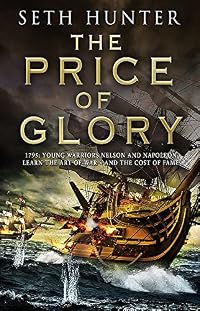
It takes a particularly strong suspension of disbelief to imagine a junior naval officer taken into the confidences of the prime minister and the first lord of the Admiralty (the brothers Pitt) on one side of the Channel, and of Danton, Robespierre and the leaders of the Convention on the other side (not to mention Lord Howe in between). I was happy to go along with these conceits for the sake of the story, but I did feel the stretch. Quibbles aside, no reader of historic naval fiction should miss this book. There is a second novel in the Nathan Peake series, The Tide of War, where the action largely shifts to the New World, and a third volume, The Price of Glory, due for release in July, 2010. show less
Peake travels back and forth between France and England several times, and with each return to his ship comes a naval adventure. One trip brings him aboard Howe's flagship just in time for the Glorious First of June. Hunter handles the naval passages well, and they make for engaging reading, but his passion seems to be for the city of Paris and the labyrinthine politics of France's revolutionary government. Here the descriptions are rich and detailed, the characters fully fleshed out and the terror genuine. From salons to prisons and from the spectacle of the guillotine to the darkness of the catacombs, the reader is treated to a vivid experience of late 18th Century Paris. Still, as most of the book is taken up with action ashore, I would have preferred a more even balance with the naval scenes.
It takes a particularly strong suspension of disbelief to imagine a junior naval officer taken into the confidences of the prime minister and the first lord of the Admiralty (the brothers Pitt) on one side of the Channel, and of Danton, Robespierre and the leaders of the Convention on the other side (not to mention Lord Howe in between). I was happy to go along with these conceits for the sake of the story, but I did feel the stretch. Quibbles aside, no reader of historic naval fiction should miss this book. There is a second novel in the Nathan Peake series, The Tide of War, where the action largely shifts to the New World, and a third volume, The Price of Glory, due for release in July, 2010. show less
Members
- Recently Added By
Author Information

25 Works 548 Members
Series

Common Knowledge
- Canonical title
- The Time of Terror
- Original publication date
- 2008; 2010-04-01 (US) (US)
- People/Characters
- Nathan Peake; Thomas Paine; Georges Danton; Mary Wollstonecraft; Gilbert Imlay
- Important places
- France; England, UK
- Important events
- French Revolution ; Reign of Terror
- Epigraph
- If there must be trouble, let it be in my day, that my child may have peace. - Thomas Paine
- First words
- It was a time when you could not leave home and know that you would return alive and in one piece.
- Last words
- (Click to show. Warning: May contain spoilers.)"I think she is in a place called Tourrettes," said Nathan, stroking the boy's hair gently back from his eyes, "sitting in the market square drinking lemonade and eating little cakes made of oranges and waiting for us there."
Classifications
Statistics
- Members
- 130
- Popularity
- 250,484
- Reviews
- 40
- Rating
- (3.41)
- Languages
- English
- Media
- Paper, Ebook
- ISBNs
- 13
- ASINs
- 2