On This Page
Description
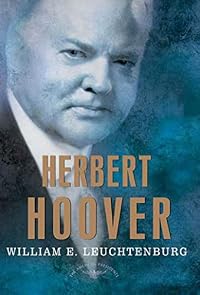
Renowned New Deal historian Leuchtenburg offers a frank, thoughtful portrait of the lifelong public servant, and shrewdly assesses Hoover's policies and legacy in the face of one of the darkest periods of American history--the Great Depression.Tags
Recommendations




















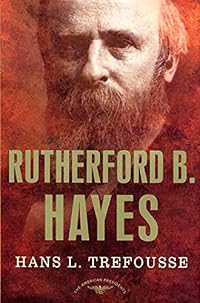
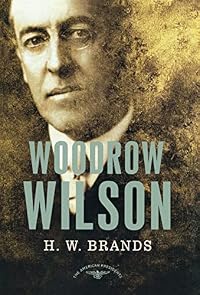



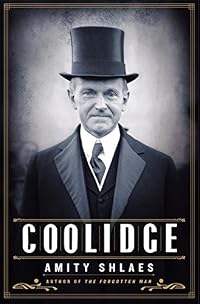

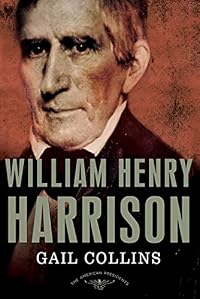


Member Reviews
This brief biography is part of the American President’s series and in my opinion, Herbert Hoover is a good subject for the series. Whereas Presidents such as Washington, Jefferson, Adams, Lincoln and Roosevelt (both) are not particularly well suited for treatment in a 200 page book, I would probably not be interested in investing the time required to peruse a 500+ page book on the life of Herbert Hoover.
Nevertheless, the life history of Herbert Hoover is certainly interesting and instructional. A very successful businessman, administrator and bureaucrat, Hoover is widely blamed for the Great Depression and for failing to take the necessary actions to address the mounting crisis. Of course, this is certainly a simplistic argument, as show more Franklin Roosevelt, despite taking radical action, made only modest headway in economic recovery through the first eight years of his reign. Only the outbreak of World War II did the trick. Had Japan bombed Pearl Harbor in 1931 instead of 1941, perhaps Herbert Hoover would have been elevated to the pantheon of U. S. Presidents. As it is however, Hoover joins Buchanan among the ranks of failed Presidents whose successors (Lincoln in the case of Buchanan) are deemed to have cleaned up the messes they left behind.
Great Presidents are molded and elevated by the challenges they are forced to meet. Certainly, confronted by the Great Depression, Hoover had an historical opportunity, though perhaps an impossible task. Nevertheless, the autocratic skills that served him so well in his relief efforts in Belgium, the Soviet Union and the Mississippi Valley after the Great Flood of 1927 were ill suited to address the mounting economic ills of the Great Depression.
From a personal standpoint, Leuchtenburg paints Hoover to be a pretty miserable human being. A rapacious businessman, Hoover performed most effectively in the role of an absolute dictator; perhaps the best model for some of his pre-war business ventures and WWI relief and humanitarian roles, but not the ideal personality for a politician in our “checks and balances” republic. Not surprisingly, his management style did not mesh well with Congressional leaders or members of his own Cabinet. At a time when such cooperation was vital, Hoover was ill suited for the task. A wooden and colorless personality made it difficult to connect to the American public, especially when delivering the kind of message no one wanted to hear (pull yourself up by your own bootstraps!).
A worthwhile, brief primer on a much maligned (perhaps deservedly) American figure. show less
Nevertheless, the life history of Herbert Hoover is certainly interesting and instructional. A very successful businessman, administrator and bureaucrat, Hoover is widely blamed for the Great Depression and for failing to take the necessary actions to address the mounting crisis. Of course, this is certainly a simplistic argument, as show more Franklin Roosevelt, despite taking radical action, made only modest headway in economic recovery through the first eight years of his reign. Only the outbreak of World War II did the trick. Had Japan bombed Pearl Harbor in 1931 instead of 1941, perhaps Herbert Hoover would have been elevated to the pantheon of U. S. Presidents. As it is however, Hoover joins Buchanan among the ranks of failed Presidents whose successors (Lincoln in the case of Buchanan) are deemed to have cleaned up the messes they left behind.
Great Presidents are molded and elevated by the challenges they are forced to meet. Certainly, confronted by the Great Depression, Hoover had an historical opportunity, though perhaps an impossible task. Nevertheless, the autocratic skills that served him so well in his relief efforts in Belgium, the Soviet Union and the Mississippi Valley after the Great Flood of 1927 were ill suited to address the mounting economic ills of the Great Depression.
From a personal standpoint, Leuchtenburg paints Hoover to be a pretty miserable human being. A rapacious businessman, Hoover performed most effectively in the role of an absolute dictator; perhaps the best model for some of his pre-war business ventures and WWI relief and humanitarian roles, but not the ideal personality for a politician in our “checks and balances” republic. Not surprisingly, his management style did not mesh well with Congressional leaders or members of his own Cabinet. At a time when such cooperation was vital, Hoover was ill suited for the task. A wooden and colorless personality made it difficult to connect to the American public, especially when delivering the kind of message no one wanted to hear (pull yourself up by your own bootstraps!).
A worthwhile, brief primer on a much maligned (perhaps deservedly) American figure. show less
When looking for books on Hoover, there were two that were the most popular and got the best ratings. This one, and one that had some 500 pages. Since I've been reading quite a bit about this time period, and since Hoover only served a term, I figured I could read the shorter book, and come out with the information I wanted to read. However, this book only piqued my interest even more. Probably one of the least understood, and unfairly judged Presidents in our history. This guy went from greedy Capitalist, to great humanitarian (WWI and Mississippi floods of 1927), then once president, became staunchly rigid in his Conservative political/economic views. Anyway, about the book, it was well-written and had a decent bibliography but I show more ended up wanting more depth and detail. All in all though, a good read about an interesting man. show less
This biography was a less than a compelling read. The author, I think, in trying to be even handed, basically wrote a book in which the reader is hoping against hope that the man would die sooner rather than later, just to spare them more of his fatuous arguments against helping the starving in the US while rushing aid after WWII to Europe and Russia.
I thought it was interesting to note that only three times or so was Hoover's Quakerism alluded to, and never was it seen to be (or not) behind his rationales.
Boring, with some factual data.
I thought it was interesting to note that only three times or so was Hoover's Quakerism alluded to, and never was it seen to be (or not) behind his rationales.
Boring, with some factual data.
Ratings
Members
- Recently Added By
Author Information

29+ Works 2,007 Members
Born in Ridgewood (Queens), New York, William Leuchtenburg is currently William Rand Kenan, Jr. Professor of History at the University of North Carolina at Chapel Hill. He was educated at Cornell University and at Columbia University, from which he received his Ph.D. in 1951. After teaching briefly at Smith College and Harvard University, he began show more a 30-year tenure on the faculty at Columbia, where he became De Witt Clinton Professor of American History in 1971. He has served as president of the Organization of American Historians, the Society of American Historians, and most recently (1991) the American Historical Association. He has also been Harmsworth Professor at Oxford University. Leuchtenburg is an expert on twentieth-century U.S. political history, especially the era of the New Deal. His book Franklin D. Roosevelt and the New Deal, 1932--1940 (1963) won both the Bancroft and Parkman prizes. (Bowker Author Biography) show less
Series

Common Knowledge
- Canonical title
- Herbert Hoover
- Original publication date
- 2009
- People/Characters
- Herbert Hoover; Calvin Coolidge; Warren G. Harding; Lou Hoover (wife of Herbert Hoover); Andrew Mellon; Franklin Delano Roosevelt (show all 8); Ray Lyman Wilbur; Woodrow Wilson
- Important places
- Stanford University, Stanford, California, USA
- Important events
- Election of 1928; Election of 1932
- Epigraph
- "Writing about Herbert Hoover is like trying to describe the interior of a citadel where every drawbridge is up and every portcullis down."
-- George Creel - First words
- 1
---
The Great Engineer
Little wonder that David Copperfield was Herbert Hoover's favorite tale.
Classifications
- Genres
- History, Nonfiction, Biography & Memoir, General Nonfiction
- DDC/MDS
- 973.91 — History & geography History of North America United States 1901- 1901-1953
- LCC
- E802 .L48 — History of the United States United States Twentieth century 1919-1933. Harding-Coolidge-Hoover era. "The Hoover's administration, 1919-1933
- BISAC
Statistics
- Members
- 174
- Popularity
- 185,119
- Reviews
- 3
- Rating
- (3.42)
- Languages
- English
- Media
- Paper, Ebook
- ISBNs
- 3
- ASINs
- 2