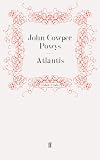
Atlantis
by John Cowper Powys
On This Page
Description
Published in 1954, John Cowper Powys called this novel, a 'long romance about Odysseus in his extreme old age, hoisting sail once more from Ithaca'. As usual there is a large cast of human characters but Powys also gives life and speech to inanimates such as a stone pillar, a wooden club,and an olive shoot. The descent to the drowned world of Atlantis towards the end of the novel is memorably described, indeed, Powys himself called it 'the best part of the book'. Many of Powys's themes, such show more as the benefits of matriarchy, the wickedness of priests and the evils of modern science which condones vivisection are given full rein in this odd but compelling work. show lessTags
Recommendations
























Member Reviews
It is a very rare occurrence, but I have abandoned the attempt to read this book. I got through the first three or four chapters, skipping more and more verbiage on each page, until I couldn't stand it any longer. Ye gods! and I thought Henry James was tough going.
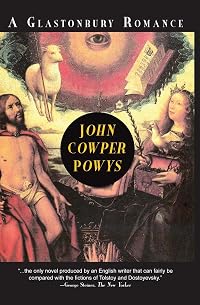
I should have known, really. Many years ago, a friend gave me A Glastonbury Romance solely because it was the only book he had found that was thicker than The Lord of the Rings. The prose style was so turgid, so convoluted, so pretentious, that I caused much hilarity among my schoolfellows by reading out a sentence or two from the first chapter. This book is no better. Powys is verbose; relenstlessly verbose; oppressively verbose. He never uses one word where six would do; he show more stacks ideas and piles up subordinate clauses until the reader is desperately grasping, or gasping, for the end of the sentence. He ladles in classical reference in such a way that you feel he is giving you information about his mythological sources, but you seem to end up none the wiser, and battered by the onslaught of names and attributes. After several pages of philosophizing and rumination on the part of a range of mysteriously sentient characters such as a fly, a moth, a large wooden club, and a pillar of Odyseuss's palace, the author has both exhibited and then obscured whatever deep and cosmic idea it was that motivated his writing.
I just lost patience with it. Life is really too short to spend time on such an annoying book!
MB 31-iii-2024 show less
I should have known, really. Many years ago, a friend gave me A Glastonbury Romance solely because it was the only book he had found that was thicker than The Lord of the Rings. The prose style was so turgid, so convoluted, so pretentious, that I caused much hilarity among my schoolfellows by reading out a sentence or two from the first chapter. This book is no better. Powys is verbose; relenstlessly verbose; oppressively verbose. He never uses one word where six would do; he show more stacks ideas and piles up subordinate clauses until the reader is desperately grasping, or gasping, for the end of the sentence. He ladles in classical reference in such a way that you feel he is giving you information about his mythological sources, but you seem to end up none the wiser, and battered by the onslaught of names and attributes. After several pages of philosophizing and rumination on the part of a range of mysteriously sentient characters such as a fly, a moth, a large wooden club, and a pillar of Odyseuss's palace, the author has both exhibited and then obscured whatever deep and cosmic idea it was that motivated his writing.
I just lost patience with it. Life is really too short to spend time on such an annoying book!
MB 31-iii-2024 show less
Tennyson’s poem Ulysses was suggested to Powys as a subject. He’s finished his 'chief work' Porius and he’s getting on for eighty; he’s said to have cheerily 'thrown control to the winds' in his novels thereafter, and you get the sense he’s out to enjoy himself. I swear he’s pulling his own leg half the time. 'Atlantis' isn’t in Tennyson’s heroic temper. It’s a… metaphysical comedy? A comedy of ideas? (people liken him to Dostoyevsky, who wrote tragedies of ideas). It’s a candidate for strangest work by a major novelist, is what.
While old Odysseus endeavours to set sail from Ithaca - he meets a lot of halts and interruptions – there is news of an upheaval in the world: rumours of revolution, on a cosmic scale. As show more you imagine is the case with revolutions, no-one’s sure what’s going on, but every creature has his or her pet interpretation. Every creature, because in this novel things are given voice. The action is commented upon by a fly and a moth, who are engaged in an inter-species love affair, and travel about with Odysseus in a crack of his club – the club that once, in Herakles’ hands, slew the Nemean lion, and that also has a consciousness (unutterably proud of its history). Everything has a stake in events, if there’s a cosmic revolution.
It’s important for Odysseus to sail. Half the island is out to hinder him, the other half to help. The Olympian gods have sunk Atlantis, from whence came the first salvo in the revolt against them, this revolt "of the older gods against the newer gods, of the great old giant-gods, animal-gods, dragon-gods, serpent-gods, women-gods". Odysseus feels a need to cross the sea-site of the drowned city. "It may be that the gulfs will wash us down: It may be we shall touch the Happy Isles" (Tennyson). His crew aren’t his old comrades, but include Nausikaa, arrived in Ithaca to start up an old romance; Arsinoe, a Trojan captive and nostalgic daughter of Hector; Zeuks, fathered by Pan, named in blasphemous satire on Zeus.
Powys writes of lives with an intimacy and a pathos, if I can say that, no matter who or what they are. As an example, can I introduce you to the old Dryad who lives in a tree outside Odysseus’ window and keeps her 'garden' - one of those "divine sanctuaries where the smallest insects and the weakest worms could be safe at last from all those abominable injustices and cruel outrages, and all those stupid brutalities and careless mutilations that lack even the excuse of lust. /But it was not only of things like these that the aged Dryad Kleta constructed what she called her garden… Anyone, whether human or more than human, who turns nature into a garden is liable to find an unbelievable number of very small things that have once been part of other things but are now entities on their own, such as bits of wood, bits of stalk, bits of fungus, bits of small snail-shells, bits of empty birds’ eggs, bits of animals’ hair, bits of birds’ feathers, bits of broken sheaths of long-perished buds and shattered insect-shards, strewn remnants of withered lichen-clusters, and scattered fragments of acorns and berries and oak-apples that have survived in these lonely trails and tracks to be scurf upon the skin of one world and the chaos-stuff for the creation of another world." This gentle eccentric has early-morning confabulations with Odysseus, until the beleaguered Zeus, who "has got one thunder-bolt left, a very little one, but large enough to dispose of my oak and me", blasts her. show less
While old Odysseus endeavours to set sail from Ithaca - he meets a lot of halts and interruptions – there is news of an upheaval in the world: rumours of revolution, on a cosmic scale. As show more you imagine is the case with revolutions, no-one’s sure what’s going on, but every creature has his or her pet interpretation. Every creature, because in this novel things are given voice. The action is commented upon by a fly and a moth, who are engaged in an inter-species love affair, and travel about with Odysseus in a crack of his club – the club that once, in Herakles’ hands, slew the Nemean lion, and that also has a consciousness (unutterably proud of its history). Everything has a stake in events, if there’s a cosmic revolution.
It’s important for Odysseus to sail. Half the island is out to hinder him, the other half to help. The Olympian gods have sunk Atlantis, from whence came the first salvo in the revolt against them, this revolt "of the older gods against the newer gods, of the great old giant-gods, animal-gods, dragon-gods, serpent-gods, women-gods". Odysseus feels a need to cross the sea-site of the drowned city. "It may be that the gulfs will wash us down: It may be we shall touch the Happy Isles" (Tennyson). His crew aren’t his old comrades, but include Nausikaa, arrived in Ithaca to start up an old romance; Arsinoe, a Trojan captive and nostalgic daughter of Hector; Zeuks, fathered by Pan, named in blasphemous satire on Zeus.
Powys writes of lives with an intimacy and a pathos, if I can say that, no matter who or what they are. As an example, can I introduce you to the old Dryad who lives in a tree outside Odysseus’ window and keeps her 'garden' - one of those "divine sanctuaries where the smallest insects and the weakest worms could be safe at last from all those abominable injustices and cruel outrages, and all those stupid brutalities and careless mutilations that lack even the excuse of lust. /But it was not only of things like these that the aged Dryad Kleta constructed what she called her garden… Anyone, whether human or more than human, who turns nature into a garden is liable to find an unbelievable number of very small things that have once been part of other things but are now entities on their own, such as bits of wood, bits of stalk, bits of fungus, bits of small snail-shells, bits of empty birds’ eggs, bits of animals’ hair, bits of birds’ feathers, bits of broken sheaths of long-perished buds and shattered insect-shards, strewn remnants of withered lichen-clusters, and scattered fragments of acorns and berries and oak-apples that have survived in these lonely trails and tracks to be scurf upon the skin of one world and the chaos-stuff for the creation of another world." This gentle eccentric has early-morning confabulations with Odysseus, until the beleaguered Zeus, who "has got one thunder-bolt left, a very little one, but large enough to dispose of my oak and me", blasts her. show less
Tennyson’s poem Ulysses was suggested to Powys as a subject. He’s finished his 'chief work' Porius and he’s getting on for eighty; he’s said to have cheerily 'thrown control to the winds' in his novels thereafter, and you get the sense he’s out to enjoy himself. I swear he’s pulling his own leg half the time. Atlantis isn’t in Tennyson’s heroic temper. It’s a… metaphysical comedy? A comedy of ideas? (people liken him to Dostoyevsky, who wrote tragedies of ideas). It’s a candidate for strangest work by a major novelist, is what.
While old Odysseus endeavours to set sail from Ithaca - he meets a lot of halts and interruptions – there is news of an upheaval in the world: rumours of revolution, on a cosmic scale. As show more you imagine is the case with revolutions, no-one’s sure what’s going on, but every creature has his or her pet interpretation. Every creature, because in this novel things are given voice. The action is commented upon by a fly and a moth, who are engaged in an inter-species love affair, and travel about with Odysseus in a crack of his club – the club that once, in Herakles’ hands, slew the Nemean lion, and that also has a consciousness (unutterably proud of its history). Everything has a stake in events, if there’s a cosmic revolution.
It’s important for Odysseus to sail. Half the island is out to hinder him, the other half to help. The Olympian gods have sunk Atlantis, from whence came the first salvo in the revolt against them, this revolt of the older gods against the newer gods, of the great old giant-gods, animal-gods, dragon-gods, serpent-gods, women-gods. Odysseus feels a need to cross the sea-site of the drowned city. "It may be that the gulfs will wash us down: It may be we shall touch the Happy Isles" (Tennyson). His crew aren’t his old comrades, but include Nausikaa, arrived in Ithaca to start up an old romance; Arsinoe, a Trojan captive and nostalgic daughter of Hector; Zeuks, fathered by Pan, named in blasphemous satire on Zeus.
Powys writes of lives with an intimacy and a pathos, if I can say that, no matter who or what they are. As an example, can I introduce you to the old Dryad who lives in a tree outside Odysseus’ window and keeps her 'garden' - one of those divine sanctuaries where the smallest insects and the weakest worms could be safe at last from all those abominable injustices and cruel outrages, and all those stupid brutalities and careless mutilations that lack even the excuse of lust. /But it was not only of things like these that the aged Dryad Kleta constructed what she called her garden… Anyone, whether human or more than human, who turns nature into a garden is liable to find an unbelievable number of very small things that have once been part of other things but are now entities on their own, such as bits of wood, bits of stalk, bits of fungus, bits of small snail-shells, bits of empty birds’ eggs, bits of animals’ hair, bits of birds’ feathers, bits of broken sheaths of long-perished buds and shattered insect-shards, strewn remnants of withered lichen-clusters, and scattered fragments of acorns and berries and oak-apples that have survived in these lonely trails and tracks to be scurf upon the skin of one world and the chaos-stuff for the creation of another world. This gentle eccentric has early-morning confabulations with Odysseus, untilthe beleaguered Zeus, who has got one thunder-bolt left, a very little one, but large enough to dispose of my oak and me, blasts her. show less
While old Odysseus endeavours to set sail from Ithaca - he meets a lot of halts and interruptions – there is news of an upheaval in the world: rumours of revolution, on a cosmic scale. As show more you imagine is the case with revolutions, no-one’s sure what’s going on, but every creature has his or her pet interpretation. Every creature, because in this novel things are given voice. The action is commented upon by a fly and a moth, who are engaged in an inter-species love affair, and travel about with Odysseus in a crack of his club – the club that once, in Herakles’ hands, slew the Nemean lion, and that also has a consciousness (unutterably proud of its history). Everything has a stake in events, if there’s a cosmic revolution.
It’s important for Odysseus to sail. Half the island is out to hinder him, the other half to help. The Olympian gods have sunk Atlantis, from whence came the first salvo in the revolt against them, this revolt of the older gods against the newer gods, of the great old giant-gods, animal-gods, dragon-gods, serpent-gods, women-gods. Odysseus feels a need to cross the sea-site of the drowned city. "It may be that the gulfs will wash us down: It may be we shall touch the Happy Isles" (Tennyson). His crew aren’t his old comrades, but include Nausikaa, arrived in Ithaca to start up an old romance; Arsinoe, a Trojan captive and nostalgic daughter of Hector; Zeuks, fathered by Pan, named in blasphemous satire on Zeus.
Powys writes of lives with an intimacy and a pathos, if I can say that, no matter who or what they are. As an example, can I introduce you to the old Dryad who lives in a tree outside Odysseus’ window and keeps her 'garden' - one of those divine sanctuaries where the smallest insects and the weakest worms could be safe at last from all those abominable injustices and cruel outrages, and all those stupid brutalities and careless mutilations that lack even the excuse of lust. /But it was not only of things like these that the aged Dryad Kleta constructed what she called her garden… Anyone, whether human or more than human, who turns nature into a garden is liable to find an unbelievable number of very small things that have once been part of other things but are now entities on their own, such as bits of wood, bits of stalk, bits of fungus, bits of small snail-shells, bits of empty birds’ eggs, bits of animals’ hair, bits of birds’ feathers, bits of broken sheaths of long-perished buds and shattered insect-shards, strewn remnants of withered lichen-clusters, and scattered fragments of acorns and berries and oak-apples that have survived in these lonely trails and tracks to be scurf upon the skin of one world and the chaos-stuff for the creation of another world. This gentle eccentric has early-morning confabulations with Odysseus, until
Ratings
Members
- Recently Added By
Author Information

111+ Works 3,652 Members
British novelist, poet and philosopher John Cowper Powys was born in Shirley, Derbyshire on October 8, 1872. He was a lecturer for more than three decades, traveling across America but eventually returned to Great Britain. He has written regional romances, historical fiction and critical studies including A Glastonbury Romance and Wolf Solent. He show more died on June 17, 1963. (Bowker Author Biography) show less
Common Knowledge
- Canonical title
- Atlantis
- First words
- There had been an unusual tension all that Spring night in the air of the arched corridor that led into the royal dwelling.
- Last words
- (Click to show. Warning: May contain spoilers.)"'Yes, let us burn our ship!'"
Classifications
Statistics
- Members
- 37
- Popularity
- 781,209
- Reviews
- 3
- Rating
- (3.42)
- Languages
- English
- Media
- Paper, Ebook
- ISBNs
- 3
- ASINs
- 2