On This Page
Description
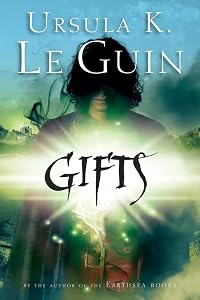
When a young man in the Uplands blinds himself rather than use his gift of "unmaking"--a violent talent shared by members of his family--he upsets the precarious balance of power among rival, feuding families, each of which has a strange and deadly talent of its own.Tags
Recommendations


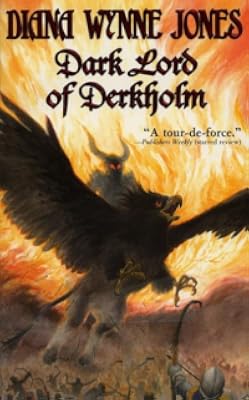
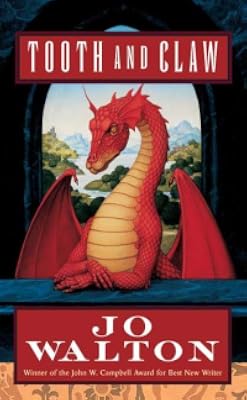
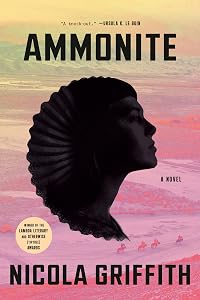
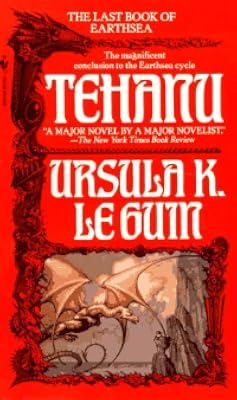
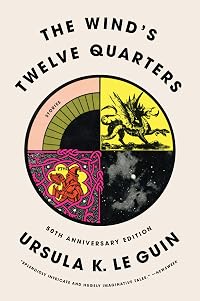

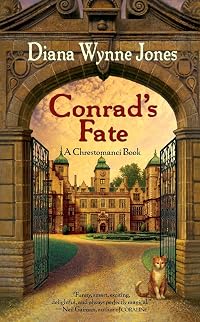
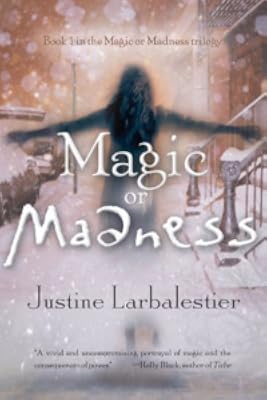
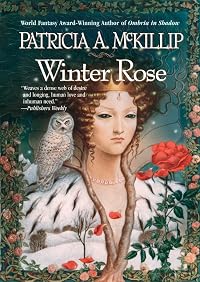



Member Recommendations
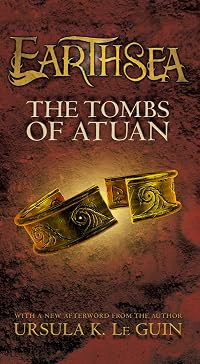
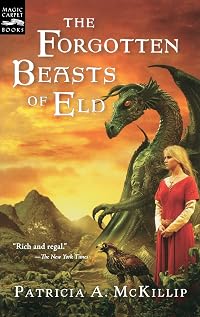
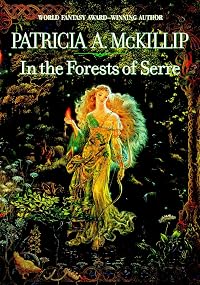
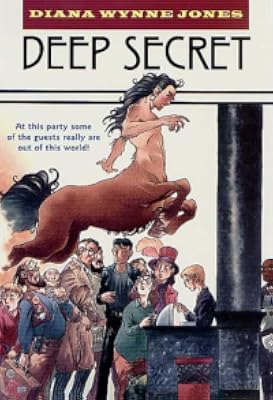
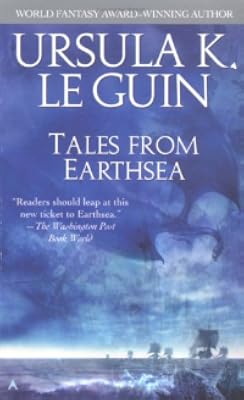
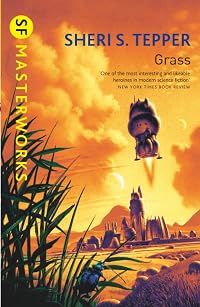
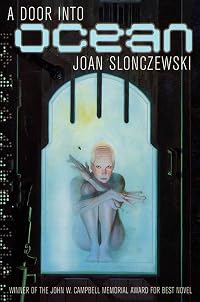
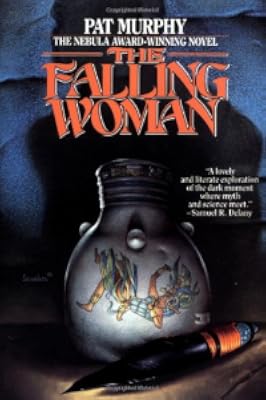
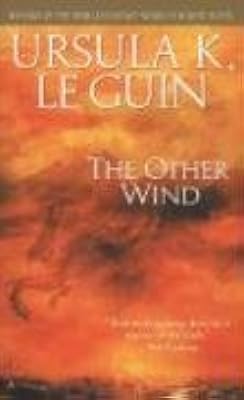
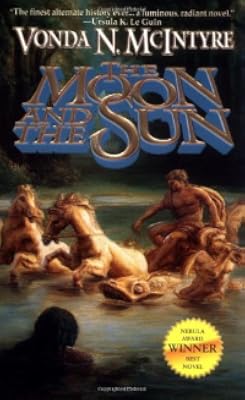
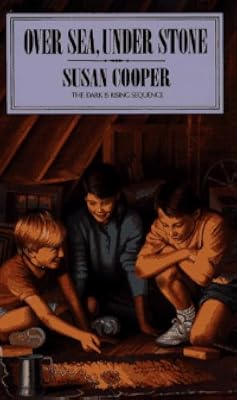
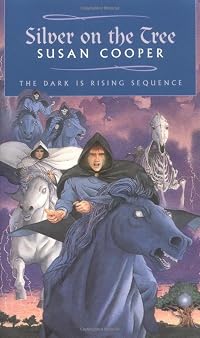
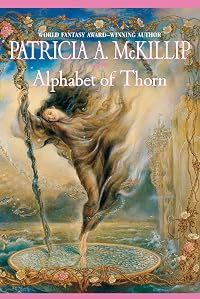
ed.pendragon Both fantasy novels are part of their respective sequences, very engaging and integral to well-thought-through alternative worlds.
10
Member Reviews
Gifts is a coming of age story about the gifts our parents give us and what we choose to do with them.
It says something about my stage in life that I relate less to the main characters, the children in this story, than I do to their parents. When we give someone a gift, we can hope they use it the way we choose, we can hope they appreciate it as we'd like them to, but in the end, it's theirs to do with as they choose. We give it away and it belongs to them.
I offer my children what I can, and they make of that what makes sense to them, even if it doesn't make sense to me. I think about the teenagers---my children's generation---demonstrating for safety from gun violence. I think about my generation, Generation X and Millennials---I'm show more not convinced that there should be as distinct a division between those groups as some would like to imagine---and how those older than us have chosen to criticize our use of what they've passed on to us, of how resistant they are even to let us have these gifts as our own. When we try to assert our adulthood and our right to use those gifts, they seek to discredit us by treating us like disobedient children. (The image that comes to my mind is of the second debate of the 2008 presidential campaign when John McCain gestured towards Barack Obama and referred to him as "that one.")
Maybe that's the way of every older generation, maybe it's the way of parents to want to hold on to the illusion of control over their children and to forget how fervently they themselves wanted the freedom to be separate from their own parents, to see what they could do in the world. "Do as I say, not as I do." Maybe that's the nature of parents, but I hope it's something my generation of parents can set aside.
I hope, at least for myself, that I can let my children make the gifts I give them their own, to feel their own sense of power and beauty and wholeness, whether I can make sense of it or not. show less
It says something about my stage in life that I relate less to the main characters, the children in this story, than I do to their parents. When we give someone a gift, we can hope they use it the way we choose, we can hope they appreciate it as we'd like them to, but in the end, it's theirs to do with as they choose. We give it away and it belongs to them.
I offer my children what I can, and they make of that what makes sense to them, even if it doesn't make sense to me. I think about the teenagers---my children's generation---demonstrating for safety from gun violence. I think about my generation, Generation X and Millennials---I'm show more not convinced that there should be as distinct a division between those groups as some would like to imagine---and how those older than us have chosen to criticize our use of what they've passed on to us, of how resistant they are even to let us have these gifts as our own. When we try to assert our adulthood and our right to use those gifts, they seek to discredit us by treating us like disobedient children. (The image that comes to my mind is of the second debate of the 2008 presidential campaign when John McCain gestured towards Barack Obama and referred to him as "that one.")
Maybe that's the way of every older generation, maybe it's the way of parents to want to hold on to the illusion of control over their children and to forget how fervently they themselves wanted the freedom to be separate from their own parents, to see what they could do in the world. "Do as I say, not as I do." Maybe that's the nature of parents, but I hope it's something my generation of parents can set aside.
I hope, at least for myself, that I can let my children make the gifts I give them their own, to feel their own sense of power and beauty and wholeness, whether I can make sense of it or not. show less
I read these books before when they first came out and always wanted to revisit the series as a whole -- it did not disappoint. One of the things I really love about Le Guin is the way she builds worlds: with day to day details, totally centered on the life of her characters. In some ways, each character is the world, and the story that plays out is the story of their day-to-day lives. I find it riveting to read. This series, with each novel set in a different part of the Western Shore and each main character shining in different ways, is a beautiful example of that kind of storytelling. There are big things that happen in these books! But they are grounded in context and situation and nuance.
I've been reading a lot of middle grade and show more YA lately. I've read a lot of fantasy in my day, and have been feeling kind of burnt out on it. I started the first story in this book and was completely enthralled almost at once, and the contrast between Le Guin's writing and the vast majority of the books I've read lately is stark and revealing. Incomparable storytelling.
Advanced Reader's Copy provided by Edelweiss. show less
I've been reading a lot of middle grade and show more YA lately. I've read a lot of fantasy in my day, and have been feeling kind of burnt out on it. I started the first story in this book and was completely enthralled almost at once, and the contrast between Le Guin's writing and the vast majority of the books I've read lately is stark and revealing. Incomparable storytelling.
Advanced Reader's Copy provided by Edelweiss. show less
Another masterpiece of young adult literature that can be read by this much older adult who loves the gift of words. While the protagonist, Orrec, is young, I never felt as though Le Guin was talking down to me, or to him. Instead, Orrec is the son of the main landholder who has the gift of undoing: of destroying what the eye and will perceive.
Child Orrec is horrified by this gift though fascinated by stories of Blind Caddard who committed a heinous act with his gift and then unmade his own eyes. Yet when his father continues to push him to use the gift, and he unmakes a dog and devastates a hillside, he can no longer trust that his gift will fall under his will. He is close friends with a girl whose gift is to call animals and she, show more too, is beginning to refuse to call game to the hunt.
Teenage Orrec finally binds his eyes shut so that he cannot even be tempted to use his gift, and the neighboring land owner is convinced (partly through his own fears, partly through Orrec's father) that Orrec's gift is the greatest known in a generation. Then trouble ensues, death happens, and Orrec learns the meaning of love and loss and adventure. show less
Child Orrec is horrified by this gift though fascinated by stories of Blind Caddard who committed a heinous act with his gift and then unmade his own eyes. Yet when his father continues to push him to use the gift, and he unmakes a dog and devastates a hillside, he can no longer trust that his gift will fall under his will. He is close friends with a girl whose gift is to call animals and she, show more too, is beginning to refuse to call game to the hunt.
Teenage Orrec finally binds his eyes shut so that he cannot even be tempted to use his gift, and the neighboring land owner is convinced (partly through his own fears, partly through Orrec's father) that Orrec's gift is the greatest known in a generation. Then trouble ensues, death happens, and Orrec learns the meaning of love and loss and adventure. show less
Orrec and Gry are teenagers in a world in which certain families are endowed with special gifts, or abilites, passed down through the generations. Orrec's gift is Undoing, which means that members of his family can destroy with a look and a word, while Gry's ability is communication with animals, which she is expected to use during the hunt to call animals to their death. Their world is governed by the constant fear that enemy clans will attack with their gifts, and so gifts are used as weapons and threats. Within this society, Orrec and Gry make the decision not to use their gifts and both face consequences for their decisions.
The surface story here is a good one, but I also loved it for the underlying themes: the difficulties of show more growing up with ideas that differ from those of the traditions of your family, the burden of rule and the hard decisions that come with it, and the danger of pride and anger. Definitely recommended, and the audio version is great, too. show less
The surface story here is a good one, but I also loved it for the underlying themes: the difficulties of show more growing up with ideas that differ from those of the traditions of your family, the burden of rule and the hard decisions that come with it, and the danger of pride and anger. Definitely recommended, and the audio version is great, too. show less
Straightforward, quintessential Ursula LeGuin. I get the feeling that her recent adult novels are the experimental ones, and in that in these YA novels, she sticks much closer to her unique Ursula LeGuin formula. In this book, as well as the Earthsea novels, there is something of an inverted lifestyle porn. LeGuin protagonists seem to own a few goats, the ragged leather shirt on their backs, and perhaps a single jewel, but they can cause an entire mountain to fall on their enemies. It doesn't make that much economic sense. However, her writing is deep, rich, kind of slow, and usually a bit tragic with some acute observations about human nature. The most memorable one in this novel is that about conversational bullies (they always have show more the advantage at the beginning). I am looking forward eagerly to the next one. show less
With the recent publication of the third volume of the Annals of the Western Shore, I decided to go back to the start and re-read the first two and follow it up with the latest.
Gifts is the first book. It is narrated by Orrec Caspro son of his clan's leader. The clans of the uplands have uncanny powers, Gifts, at least if the family blood runs true, but Orrec's mother is not of the clan or even of the Uplands where the clans lead their isolated impoverished existence, feuding and farming. Orrec's Gift has gone awry, apparently uncontrollable, and it is the Gift of Unmaking - destructive, deadly and a threat to the neighbouring clans. Orrec goes blindfolded to protect those around him, for the Gift cannot operate without looking at that show more which is to be Unmade. Meanwhile his friend, Gry, whose clan Gift is that of calling animals, finds that she is Gifted indeed - but she cannot bring herself to call animals to the hunt. Training horses and dogs is useful but it is calling to the hunt that really provides income to her family.
Orrec and Gry grow up together and find themselves increasingly at odds with their families and the whole Uplands way of life, which brings tragedy to Orrec.
Gifts examines the relationship between parents and their children with particular regard to parents' expectations: It concludes that it would be better to support and encourage the talents that a child manifests, not those the parents have or want their child to have - which may be absent altogether. Trying to force parental will on the child might lead to total estrangement....
Another theme is the relationship between the Gifts as used by the clans and the clan way of life, which is full of poverty and fear. Gry suggests that there might be a link between the two - that there might be more constructive ways to use the Gifts that would in turn make life more peaceful and fulfilling.
It is no great leap (though it had to be suggested to me before I noticed) to believe that LeGuin is using the Gifts as an analogy with the general talents shown by humanity - engineering can be used for warmaking or peaceful purposes, the arts can be used to propagandise or enlighten. LeGuin would prefer we chose the constructive use of our talents.
As usual with LeGuin, one is left with plenty to think about, but as sometimes happens with her books, plot is almost an afterthought and the languid prose does not provide much drive either, so I cannot consider this volume to be top-notch by the exceptionally high standards she has set with books such as A Wizard of Earthsea, The Farthest Shore or The Left Hand of Darkness (among others). Nevertheless second-rate LeGuin is a goal most authors can strive for but never obtain. show less
Gifts is the first book. It is narrated by Orrec Caspro son of his clan's leader. The clans of the uplands have uncanny powers, Gifts, at least if the family blood runs true, but Orrec's mother is not of the clan or even of the Uplands where the clans lead their isolated impoverished existence, feuding and farming. Orrec's Gift has gone awry, apparently uncontrollable, and it is the Gift of Unmaking - destructive, deadly and a threat to the neighbouring clans. Orrec goes blindfolded to protect those around him, for the Gift cannot operate without looking at that show more which is to be Unmade. Meanwhile his friend, Gry, whose clan Gift is that of calling animals, finds that she is Gifted indeed - but she cannot bring herself to call animals to the hunt. Training horses and dogs is useful but it is calling to the hunt that really provides income to her family.
Orrec and Gry grow up together and find themselves increasingly at odds with their families and the whole Uplands way of life, which brings tragedy to Orrec.
Gifts examines the relationship between parents and their children with particular regard to parents' expectations: It concludes that it would be better to support and encourage the talents that a child manifests, not those the parents have or want their child to have - which may be absent altogether. Trying to force parental will on the child might lead to total estrangement....
Another theme is the relationship between the Gifts as used by the clans and the clan way of life, which is full of poverty and fear. Gry suggests that there might be a link between the two - that there might be more constructive ways to use the Gifts that would in turn make life more peaceful and fulfilling.
It is no great leap (though it had to be suggested to me before I noticed) to believe that LeGuin is using the Gifts as an analogy with the general talents shown by humanity - engineering can be used for warmaking or peaceful purposes, the arts can be used to propagandise or enlighten. LeGuin would prefer we chose the constructive use of our talents.
As usual with LeGuin, one is left with plenty to think about, but as sometimes happens with her books, plot is almost an afterthought and the languid prose does not provide much drive either, so I cannot consider this volume to be top-notch by the exceptionally high standards she has set with books such as A Wizard of Earthsea, The Farthest Shore or The Left Hand of Darkness (among others). Nevertheless second-rate LeGuin is a goal most authors can strive for but never obtain. show less
A coming-of-age story about power; having it, not having it, using it. It is a fully imagined world, where we see one of a multitude of cultures, and people struggle to get by despite very strong psychic powers, and the hero's emotional life is well drawn. Nonetheless, I found it less satisfying than her best.
Members
- Recently Added By
Lists

Best Fantasy Novels
821 works; 361 members

Female Author
1,234 works; 66 members
Speculative Fiction to Read
706 works; 32 members

Fantasy by Women Who Broke Away from Europe
144 works; 12 members

ESP, psychic powers -- children's/young adult fiction
230 works; 8 members

2000s decade
85 works; 7 members

Books Read in 2009
464 works; 11 members

al.vick-wishlist-YA
127 works; 3 members

al.vick-series
381 works; 2 members
Books We Couldn't Put Down
443 works; 197 members
Author Information

502+ Works 167,680 Members
Ursula K. Le Guin was born Ursula Kroeber in Berkeley, California on October 21, 1929. She received a bachelor's degree from Radcliffe College in 1951 and a master's degree in romance literature of the Middle Ages and Renaissance from Columbia University in 1952. She won a Fulbright fellowship in 1953 to study in Paris, where she met and married show more Charles Le Guin. Her first science-fiction novel, Rocannon's World, was published in 1966. Her other books included the Earthsea series, The Left Hand of Darkness, The Dispossessed: An Ambiguous Utopia, The Lathe of Heaven, Four Ways to Forgiveness, and The Telling. A Wizard of Earthsea received an American Library Association Notable Book citation, a Horn Book Honor List citation, and the Lewis Carroll Shelf Award in 1979. She received the Medal for Distinguished Contribution to American Letters in 2014. She also received the Nebula Award and the Hugo Award. She also wrote books of poetry, short stories collections, collections of essays, children's books, a guide for writers, and volumes of translation including the Tao Te Ching of Lao Tzu and selected poems by Gabriela Mistral. She died on January 22, 2018 at the age of 88. (Bowker Author Biography) show less
Some Editions
Awards and Honors
Awards
Distinctions
Notable Lists
Series

Belongs to Publisher Series
Work Relationships
Common Knowledge
- Canonical title
- Gifts
- Original title
- Gifts
- Original publication date
- 2004
- People/Characters
- Orrec Caspro; Gry Barre; Canoc Caspro; Ogge Drum; Melle Caspro (nee Aulitta); Emmon (show all 7); Parn Barre
- Important places
- Caspromant; Drummant
- First words
- He was lost when he came to us, and I fear the silver spoons he stole from us didn't save him when he ran away and went up into the high domains.
- Quotations
- I had no sense of the sacredness of a story, or rather they were all sacred to me, the wonderful word-beings which, so long as I was hearing or telling them, made a world I could enter seeing, free to act: a world I knew and ... (show all)understood, that had its own rules, yet was under my control as the world beyond the stories was not. In the boredom and inactivity of my blindness, I lived increasingly in these stories, remembering them, asking my mother to tell them, and going on with them myself, giving them form, speaking them into being as the Spirit did in Chaos. (Ch. 12)
- Last words
- (Click to show. Warning: May contain spoilers.)"Maybe they'll remember what they gave Canoc, too," I said, and Gry said, "Then they'll know you're the gift's gift."
- Original language
- English
Classifications
- Genres
- Fantasy, Fiction and Literature, Teen, Young Adult
- DDC/MDS
- 823.914 — Literature & rhetoric English & Old English literatures English fiction 1900- 1901-1999 1945-1999
- LCC
- PZ7 .L5215 .G — Language and Literature Fiction and juvenile belles lettres Fiction and juvenile belles lettres Juvenile belles lettres
- BISAC
Statistics
- Members
- 2,348
- Popularity
- 8,439
- Reviews
- 65
- Rating
- (3.70)
- Languages
- 13 — Czech, Dutch, English, Finnish, French, German, Greek, Italian, Korean, Polish, Slovak, Spanish, Swedish
- Media
- Paper, Audiobook, Ebook
- ISBNs
- 38
- ASINs
- 9